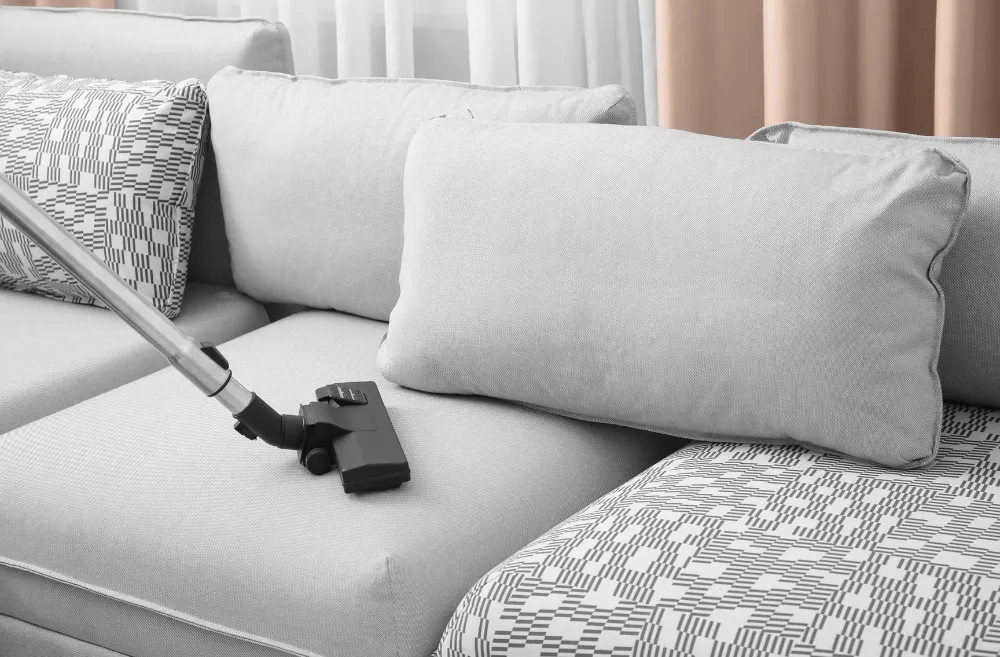
Finding a wet spot on the couch, or worse, catching that unmistakable smell and realizing it’s been there a while, is one of those moments every dog owner eventually deals with. Couches are particularly frustrating for this kind of accident because the cushions, the fabric, and the foam underneath can all absorb urine at the same time, which means the smell you’re noticing on the surface might just be the tip of what’s actually soaked in.
The reason this smell is so stubborn comes down to uric acid, a compound in dog urine that doesn’t dissolve in water and crystallizes into whatever it’s absorbed into. Those crystals sit there completely odorless until humidity or warmth reactivates them, which is exactly why a couch that smelled fine all week can suddenly smell like urine again on a warm, humid afternoon. Regular cleaning products and fabric sprays do nothing to these crystals, they just clean around them or mask the smell temporarily.
The right method depends on whether the accident is fresh, how deep it’s soaked, and what your couch cushions are actually made of underneath the fabric. Here are six ways to handle it properly.
Why This Needs a Different Approach Than a Regular Stain
Before getting into the methods, it’s worth understanding why a couch presents a slightly different challenge than a rug or carpet when it comes to urine. Most couch cushions have a removable or semi-removable cover over a foam insert, and that foam is highly absorbent. Urine that soaks through the fabric cover and into the foam underneath needs to be treated at that level too, not just on the surface, or the smell will persist even after the visible fabric looks completely clean.
This is also why heat is something to avoid throughout this whole process. A hair dryer feels like a reasonable way to dry a wet cushion faster, but heat actually bonds the proteins in urine more permanently into both fabric and foam, making the smell significantly harder to remove afterward. Every method below uses cold or lukewarm water and air drying for this exact reason.
What You’ll Need
- An enzyme-based pet odor cleaner (this is essential for actually eliminating the smell, not just masking it)
- White vinegar
- Baking soda
- A small amount of dish soap
- 3% hydrogen peroxide
- Clean white towels or paper towels
- Rubber gloves
- A wet vacuum or shop vac if available
- A spray bottle
- Cold water
Method 1: Blot Immediately If the Accident Is Fresh
If you’ve caught the accident while it’s still wet, this first step makes every method afterward significantly more effective, since the less urine sitting in the cushion when you start treating it, the less work any cleaner has to do.
Press a thick stack of clean towels directly onto the wet spot and apply firm, steady pressure, standing on it gently if it’s on a cushion you can press down on, or pressing with your hands and full body weight if needed. Hold for 20 to 30 seconds, then move to a dry section of towel and repeat.
Continue this blotting process until barely any moisture transfers to the towel anymore. Resist any urge to rub or scrub at this stage, since that pushes urine further into the cushion fabric and foam rather than lifting it back out.
If the cushion cover is removable, take it off at this point if the urine has soaked through, since treating the cover and the foam insert separately is often more effective than trying to treat both at once while they’re still together.
Method 2: Enzyme Cleaner Treatment (The Method That Actually Works)
This is the method that matters most here, and it’s worth using even if you try one of the others first, since enzyme cleaner is the only product that actually breaks down uric acid rather than just cleaning around it or masking the smell temporarily.
After blotting up as much fresh urine as possible, saturate the affected area generously with an enzyme-based pet odor cleaner, making sure it reaches as deep into the cushion as the urine did. Don’t hold back on the amount here, since under-applying is one of the most common reasons this method doesn’t fully work the first time.
For cushions where the urine has soaked through to the foam, you may need to apply the cleaner from both the front and back of the cushion if it’s a removable insert, or use a syringe-style applicator (some enzyme cleaners come with one specifically for this kind of deep application) to get the solution down into the foam itself.
Let the cleaner sit for the dwell time specified on the product label, often anywhere from 10 minutes for fresh, light contamination to several hours for older or more deeply soaked stains. The bacteria in the cleaner need this time to actually break down the compounds, and cutting this short reduces how effective the whole treatment is.
Blot up the excess cleaner with clean towels, but don’t try to rinse it out completely. Leaving a small amount in the fabric and foam allows it to keep working as everything dries.
Allow the cushion to air dry completely, ideally somewhere with good airflow, and avoid using the couch or replacing the cushion until it’s fully dry, since trapping moisture against the rest of the couch frame or other cushions can spread the problem rather than letting it resolve.
Repeat the application if any smell remains once everything is fully dry, since cushions with significant absorption sometimes need a second round to fully address contamination that didn’t get treated evenly on the first pass.
Method 3: Baking Soda and Vinegar for Lighter or Fresher Stains
This combination works well for accidents that are caught relatively early or for adding extra odor-neutralizing power after an enzyme treatment, though it shouldn’t be relied on as a complete replacement for enzyme cleaner on anything that’s soaked in deeply or sat for a while.
Mix equal parts white vinegar and cold water in a spray bottle and saturate the affected area thoroughly, working it gently into the fabric. Blot with clean towels, working from the outer edge of the stain toward the center to avoid spreading it further outward.
Once the area is damp rather than fully wet, sprinkle a generous layer of baking soda across the spot. In a separate small bowl, combine about half a cup of hydrogen peroxide with a teaspoon of dish soap, then drizzle this mixture over the baking soda and gently work it into the fabric with a soft brush or your gloved fingers.
Let this sit for 15 to 20 minutes, then blot up as much as you can. Once the area is fully dry, vacuum up any remaining baking soda residue from the fabric surface.
Always test hydrogen peroxide on a hidden section of the couch first, particularly on darker or more vibrant fabric colors, since it has mild bleaching properties that can lighten certain dyes.
Method 4: Dish Soap and Hydrogen Peroxide Solution
This method tends to work particularly well on lighter colored upholstery and handles both the visible discoloration and a good portion of the odor in a single treatment, which makes it a solid option when an enzyme cleaner isn’t immediately on hand.
Combine one cup of hydrogen peroxide, a tablespoon of dish soap, and a tablespoon of baking soda in a bowl, stirring gently rather than shaking to avoid excessive foaming.
Apply the mixture directly to the stained area, working it into the fabric with a soft brush using a gentle dabbing motion, moving from the outside of the stain inward. Let it sit for 10 to 15 minutes before blotting thoroughly with clean towels.
Rinse the area lightly with a spray of cold water and blot again, repeating this rinse step once or twice to remove any leftover soap residue, since soap left behind in upholstery tends to attract dirt over time and creates an ongoing problem of its own.
Sprinkle a final layer of baking soda over the damp area and leave until fully dry before vacuuming it away.
Method 5: Deep Cleaning the Foam Cushion Insert
If urine has soaked all the way through to the foam beneath the fabric cover, treating the cover alone often isn’t enough, and this is the method that addresses contamination at that deeper level specifically.
Remove the cushion cover if it’s removable, and set it aside to be treated separately, either using one of the methods above or washed according to its care label if machine washable.
For the foam insert itself, mix a solution of enzyme cleaner diluted according to the product’s instructions in a bucket or basin large enough to accommodate the cushion if it’s removable and reasonably sized.
Submerge or thoroughly saturate the affected section of foam with the enzyme solution, pressing down repeatedly to help the solution work all the way through the foam’s structure rather than just sitting on the surface.
Let the foam sit saturated for at least 30 minutes to allow the enzyme cleaner adequate time to work through the depth of the material, then press out as much liquid as possible without wringing or twisting, which can damage the foam’s structure.
Rinse the foam with clean cold water, pressing to flush out the cleaner along with the broken-down contamination, then press out excess water again.
Stand the foam upright in a well-ventilated area, ideally with a fan directed at it, and allow it to dry completely, which can take a day or two depending on foam density and how saturated it was. Foam that isn’t allowed to dry completely before being reassembled into the cushion cover can develop mold, so this step shouldn’t be rushed.
Method 6: Wet Vacuum Extraction for Couches That Can’t Be Disassembled
For couches with cushions that aren’t removable, or for larger sections of fabric contamination that aren’t practical to treat with the methods above, a wet vacuum or shop vac provides a more thorough extraction without needing to take the couch apart.
Apply enzyme cleaner generously to the affected area and allow it to sit for the full dwell time recommended on the product label before beginning extraction.
Run the wet vacuum slowly over the treated area, making several passes to pull as much moisture and dissolved contamination out of the fabric and underlying foam as the suction allows.
Follow with a few dry passes, without dispensing any additional liquid, specifically to extract as much remaining moisture as possible from the deeper layers of the cushion.
If any smell remains once the area is fully dry, apply a second round of enzyme cleaner, since the extraction process can dilute some of the cleaner before it’s had a chance to fully break down all the contamination present.
Quick Fixes for Common Problems
| Problem | Potential Solution | Alternative Approach |
|---|---|---|
| Smell returns on humid days even after cleaning | Uric acid wasn’t fully broken down—reapply enzyme cleaner with a longer dwell time | Check if the foam underneath was treated, not just the fabric surface |
| Couch fabric feels stiff or discolored after cleaning | Soap or cleaner residue wasn’t fully rinsed out—go over the area again with a damp cloth and plain water | Try a fabric-safe enzyme cleaner that doesn’t leave residue, checking the product label specifically |
| Cushion cover shrank after washing | Hot water was likely used—always wash pet-soiled cushion covers in cold water going forward | Air dry rather than using a dryer, since heat is what typically causes shrinkage |
| Foam insert still smells after treating the fabric cover | The contamination soaked through and needs direct foam treatment | Try the deep cleaning method specifically for the foam insert rather than treating the cover alone |
| Can’t remove the cushion cover to clean it properly | Use a wet vacuum to extract as deeply as possible without disassembly | Consider professional upholstery cleaning for cushions that can’t be removed |
| Dog keeps returning to the same spot on the couch | The scent signal likely wasn’t fully eliminated—reapply enzyme cleaner thoroughly | Use a pet deterrent spray on the area once it’s completely clean and dry |
Why Dogs Return to the Same Spot
A dog’s sense of smell is far more sensitive than a human’s, which means even a couch that smells completely clean to you can still carry a faint trace of urine scent that’s enough to draw the dog back to the same spot. This is exactly why thorough cleaning matters beyond just making the couch pleasant for people to sit on.
If accidents on the couch have become a pattern rather than a one-time incident, it’s worth considering why. House-training gaps, anxiety or stress related to changes in the household, a medical issue like a urinary tract infection, or simply not enough access to appropriate bathroom breaks throughout the day can all contribute. A vet visit is a reasonable step if accidents are sudden, frequent, or paired with any other changes in behavior, since ruling out a medical cause is worth doing before assuming it’s purely behavioral.
How to Protect the Couch Going Forward
Once everything has been cleaned and the smell is fully gone, a few small additions help prevent the same situation from becoming a repeat problem.
A washable, waterproof couch cover or throw specifically designed to protect against pet accidents adds a layer of protection that’s much easier to clean than treating the couch itself every time, particularly useful for puppies still being house-trained or older dogs that may have occasional accidents due to age-related incontinence.
For cushions, a waterproof cushion liner placed between the foam insert and the fabric cover catches accidents before they reach the foam at all, which means future incidents only require treating the removable cover rather than the deeper, harder-to-clean foam layer.
FAQ
How do I know if the smell is coming from the foam or just the fabric?
Press firmly on the affected cushion area, and if you can smell urine more strongly when pressure is applied (releasing trapped odor from within), the foam is likely contaminated. If the smell stays consistent regardless of pressure and seems to be coming from the surface only, the fabric cover alone may be the source.
Can I just throw the cushion covers in the washing machine?
If they’re machine washable according to the care label, yes, but pretreat with enzyme cleaner first and use cold water rather than hot, since heat sets urine odor more permanently into fabric rather than washing it out.
Will regular fabric freshener spray get rid of the smell?
No, fabric freshener masks the smell temporarily by adding a different scent on top, but it does nothing to break down the uric acid actually causing the odor. The smell will return, often within days, once the fresh scent fades.
Is it possible to fully remove dog urine smell from foam cushions?
Yes, in most cases, particularly if the foam is treated relatively soon after the accident happens. Foam that’s been contaminated repeatedly over a long period without treatment is harder to fully restore and may eventually need replacing if the smell persists despite thorough cleaning attempts.
How long does the whole process take from start to finish?
For a fresh accident treated promptly, expect same-day cleaning with full drying taking anywhere from several hours to overnight depending on how saturated the area was. For older stains requiring deeper foam treatment, plan for the cushion to be out of use for a day or two to allow complete drying before reassembling and using the couch normally again.
Conclusion
Getting dog urine smell fully out of a couch comes down to reaching wherever the urine actually traveled, which often means treating the foam underneath in addition to the fabric surface rather than just cleaning what’s visible. Blot first if the accident is fresh, use enzyme cleaner rather than relying on masking sprays or regular fabric cleaners, and give everything enough time to dry completely with good airflow before putting the couch back together. Handle it thoroughly once and the smell genuinely stays gone, rather than reappearing every time the weather gets warm and humid.
Enjoyed this project? Get even more DIY ideas that save (and make) you money.
Join our free newsletter for profitable DIY projects, clever cleaning hacks, home ideas, and creative crafts delivered straight to your inbox.
✓ Free forever • No spam • Unsubscribe anytime