Every dog owner has been there. You hear that unmistakable sound in the middle of the night, turn on the light, and there it is—right in the middle of the carpet. Or worse, you come home and find it already dried and crusted into the fibers.
Dog vomit on carpet is unpleasant, but it’s also one of the more manageable stains if you handle it correctly. The two biggest mistakes people make are using hot water (which sets the stain and the odor permanently) and scrubbing instead of blotting (which pushes the mess deeper into the fibers and spreads it). Avoid those two things and you’re already ahead of most people.
This guide covers seven methods for cleaning dog vomit from carpet—from a simple dish soap solution to enzymatic cleaners that eliminate odor at the source—organized by situation so you can go straight to what you need.
Before You Start: The First 60 Seconds Matter
What you do in the first minute makes everything easier. Before reaching for any cleaning product:
- Remove the solid matter first. Use a spoon, a piece of cardboard, or a plastic bag over your hand to scoop up as much of the vomit as possible. Work from the outside edges inward to avoid spreading it. The more you remove physically before introducing liquid, the less you’re trying to clean out of the fibers.
- Blot—don’t scrub—any remaining moisture. Press a thick layer of paper towels firmly onto the area and hold for several seconds to absorb liquid. Lift straight up. Repeat with fresh paper towels until you’ve absorbed as much as possible.
- Never use hot water at any stage. Hot water sets proteins—and vomit is largely protein-based—into carpet fibers, making both the stain and the odor significantly harder to remove. Always use cold or lukewarm water.
With the bulk removed and excess moisture blotted, you’re ready to treat the stain itself.
What You’ll Need (Depending on the Method)
- Paper towels or clean white cloths
- A spoon or piece of cardboard (for initial removal)
- Dish soap
- Baking soda
- White vinegar
- Hydrogen peroxide (for light-colored carpets only)
- Rubbing alcohol
- Enzymatic pet stain cleaner
- Cold water
- A spray bottle
- A soft-bristle brush
- Rubber gloves
Method 1: Dish Soap and Cold Water (Best First Response for Fresh Vomit)
This is the simplest approach and the right starting point for most fresh vomit stains. It’s gentle enough for all carpet types and colors, and effective at lifting the bulk of the stain before it sets.
- After removing solids and blotting excess moisture, mix one tablespoon of dish soap with two cups of cold water in a bowl. Stir gently to combine without making it overly sudsy.
- Apply the solution to a clean white cloth—never directly onto the carpet. Direct application can over-saturate the area and push the stain deeper into the backing.
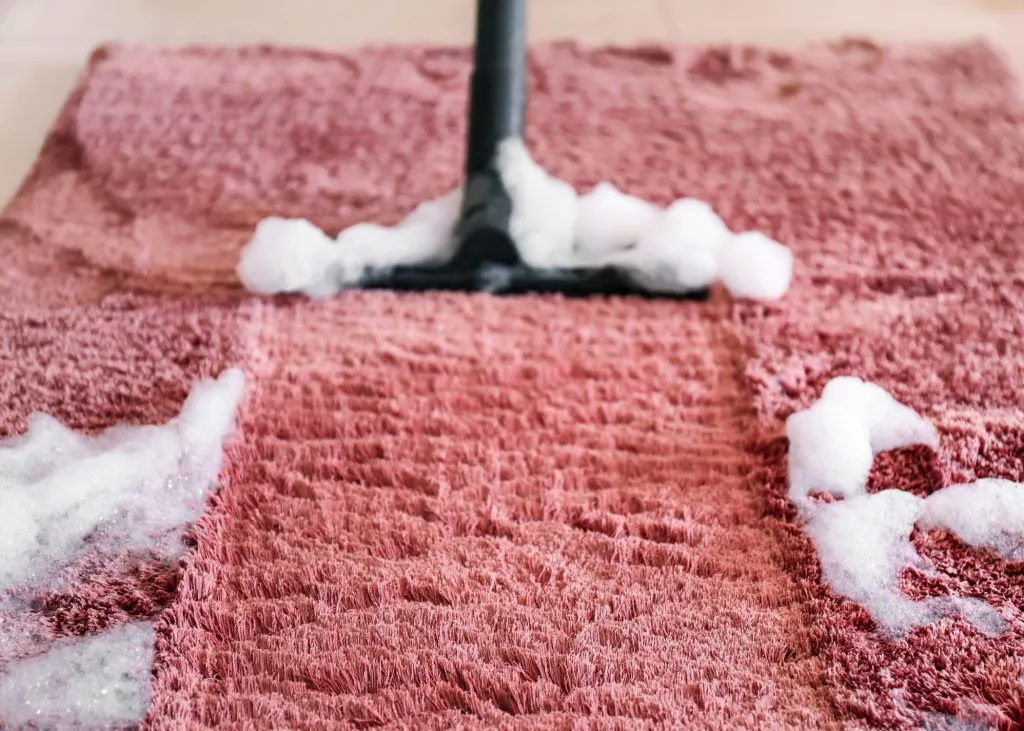
- Blot the stained area firmly, starting from the outer edge of the stain and working inward in slow, deliberate motions toward the center. Press down and lift straight up each time—no rubbing, no circular scrubbing.
- Switch to a clean section of cloth every few blots. Reusing the same area just deposits the vomit back onto the carpet.
- Continue blotting until no more stain is transferring onto the cloth. This may take more rounds than you expect—be patient and keep working inward.
- Rinse the area by blotting with a clean cloth dampened with plain cold water. Removing all soap residue from the carpet is important—leftover soap attracts dirt and causes resoiling over time.
- Blot dry with a clean dry cloth, pressing firmly to absorb as much moisture as possible. Place a thick stack of paper towels over the area, weigh them down with a heavy book, and leave for 30 minutes to draw out remaining moisture.
- Allow to air dry completely before walking on the area or assessing whether further treatment is needed.
Method 2: Baking Soda Treatment (Best for Odor and Moisture Absorption)
Baking soda is one of the best tools you have for dog vomit cleanup—not because it removes the stain particularly aggressively, but because it neutralizes odor and draws moisture out of the carpet fibers simultaneously. Use it after the initial dish soap clean, or on its own for a mild, recent mess.
- After removing solids and blotting up as much moisture as possible, sprinkle a generous, even layer of baking soda directly over the entire affected area. Don’t be stingy—a thin layer won’t absorb enough moisture or odor to make a meaningful difference.
- Press the baking soda lightly into the carpet with a clean cloth or your hand (gloved). You want it in contact with the damp fibers, not just sitting on top.
- Leave it for a minimum of 15–30 minutes for a fresh stain, or several hours—ideally overnight—for a stain with significant odor. The baking soda needs time to absorb moisture and neutralize the acidic odor compounds in vomit.
- Vacuum thoroughly once the baking soda has fully dried. Make several passes in different directions to remove all the powder from the fibers. Don’t vacuum while it’s still damp—it will clog your vacuum.
- Assess the area. If a stain or odor remains, follow up with Method 1 (dish soap) or Method 5 (enzymatic cleaner) for the residual mark.
Method 3: Baking Soda and White Vinegar (Best for Stain and Odor Together)
This combination tackles both the visible stain and the odor in one treatment. The fizzing reaction when vinegar meets baking soda helps lift stain particles out of the fibers while simultaneously neutralizing odor compounds. It’s particularly effective on vomit that has a strong smell alongside visible discoloration.
- Remove solids and blot dry, then sprinkle a generous layer of baking soda over the stained area. Let it sit for five minutes to begin absorbing moisture.
- Mix equal parts white vinegar and cold water in a spray bottle. A 50/50 solution is the right concentration—undiluted vinegar can be too acidic for some carpet dyes.
- Spray the vinegar solution over the baking soda-covered area. It will fizz immediately—this is the reaction working, lifting stain particles upward out of the fibers.
- Let the fizzing reaction run its course—usually one to two minutes. Don’t blot during this time; let the reaction do the work.
- Once the fizzing subsides, blot the area firmly with a clean white cloth, working from the outside in. The combination of lifted stain and neutralized odor compounds should transfer onto the cloth.
- Continue blotting with clean cloth sections until no more stain or moisture is transferring.
- Rinse by blotting with a cloth dampened with plain cold water to remove vinegar and baking soda residue.
- Blot dry, cover with paper towels, and weigh down to draw out remaining moisture while the carpet dries.
Method 4: Hydrogen Peroxide Solution (Best for Light-Colored Carpets with Stubborn Stains)
Hydrogen peroxide is a mild oxidizing agent that breaks down the organic compounds in vomit stains. It’s particularly effective on the yellowish discoloration vomit can leave behind—but because it has a mild bleaching effect, it should only be used on white, cream, or very light-colored carpets. Always test on a hidden area first.
- Complete the initial removal and blotting steps, then treat with the dish soap method first to remove as much of the stain as possible before introducing hydrogen peroxide.
- Mix one part 3% hydrogen peroxide (standard drugstore concentration) with two parts cold water to dilute it slightly. For very stubborn stains on white carpet, you can use it undiluted, but test first.
- Apply the solution to a clean white cloth—not directly to the carpet—and blot onto the stained area, working from the outer edges inward.
- Allow it to sit for 5–10 minutes. You may see slight bubbling as it reacts with organic matter in the stain. This is normal and indicates it’s working.
- Blot firmly with a clean cloth to lift the loosened stain. Switch to clean sections of cloth frequently.
- Rinse thoroughly by blotting with a cold damp cloth to remove all peroxide residue. Hydrogen peroxide left in carpet fibers can continue to lighten them over time.
- Blot dry completely and allow to fully air dry before assessing.
Method 5: Enzymatic Cleaner (Best for Odor Elimination and Repeat Soiling)
If your dog has vomited in the same spot more than once, or if previous cleaning attempts have left a lingering smell, an enzymatic cleaner is the most effective solution available. Enzymatic cleaners work differently from every other method on this list—instead of masking or diluting odor, they contain live enzymes that biologically break down the organic compounds in vomit, urine, and other pet messes at a molecular level. No organic compound, no odor.
- Remove solids and blot up as much moisture as possible before applying the cleaner. The less physical material in the carpet, the better the enzymatic cleaner can penetrate to the source of the odor.
- Read the product instructions carefully. Enzymatic cleaners vary in concentration and dwell time. Some require dilution; others are used full strength. Following the specific directions matters more with enzymatic cleaners than with any other method.
- Apply the cleaner generously to the affected area, making sure it penetrates down to the carpet backing—not just the surface fibers. Odor compounds often settle into the backing and padding, and a superficial application won’t reach them.
- Allow the cleaner to dwell for the time specified on the label—usually 10–15 minutes, sometimes longer for severe odors. Don’t rush this step. The enzymes need time to break down the organic compounds fully.
- Blot up the excess cleaner with clean cloths, working from the outside in.
- Allow the area to air dry completely. Enzymatic cleaners continue working while damp—letting them dry naturally rather than rinsing immediately gives better results.
- Assess the odor once fully dry. If any smell remains, repeat the application. Severe or deeply set odors may need two or three treatments.
Product note: Look for enzymatic cleaners specifically formulated for pet messes—brands like Nature’s Miracle, Rocco & Roxie, or Bissell’s Pet Stain & Odor Remover. General household cleaners don’t contain the same enzyme formulations.
Method 6: How to Clean Dried Dog Vomit from Carpet
Dried vomit is harder to deal with than fresh, but the approach is systematic: rehydrate, remove, then clean. Trying to clean dried vomit without rehydrating it first just grinds it further into the fibers.
- Rehydrate the dried vomit by spraying or dabbing cold water lightly over the area—just enough to soften the material without soaking the carpet. Let it sit for two to three minutes.
- Loosen the softened material using a stiff brush or the edge of a spoon, working from the outside edges inward. Be firm but don’t scrub—you’re loosening, not spreading.
- Remove the loosened material by scooping it up with a spoon or cardboard, or vacuuming once it’s broken up and dry enough. If vacuuming, use the hose attachment rather than running the full vacuum head over it.
- Apply baking soda over the area and let sit for 15 minutes to absorb any remaining moisture from the rehydration step. Vacuum up.
- Treat the remaining stain with the dish soap and cold water method (Method 1) or the baking soda and vinegar method (Method 3), using the same blotting technique as with fresh stains.
- Follow up with an enzymatic cleaner (Method 5) if any odor remains after the stain has been treated. Dried vomit that has been in the carpet for hours or days almost always has some residual odor that only enzymatic treatment fully resolves.
Method 7: Rubbing Alcohol (Best for Colored or Dye-Based Stains in Vomit)
Sometimes dog vomit contains strongly colored material—from food dyes, grass, or bile—that leaves a stubborn colored stain even after the bulk of the mess has been cleaned. Rubbing alcohol is effective at dissolving these dye-based stains without the bleaching risk of hydrogen peroxide, making it safer for use on colored carpets.
- Complete the initial removal and blotting, then treat with dish soap and cold water first to clean the main stain before targeting the colored residue specifically.
- Test rubbing alcohol on a hidden carpet area first. It’s generally safe on most carpet fibers and dyes, but testing takes 30 seconds and prevents potential color lifting.
- Apply a small amount of rubbing alcohol to a clean white cloth—not directly to the carpet—and blot the stained area firmly, working from the outer edge toward the center.
- Use a fresh section of cloth with each blot to avoid redepositing the dissolved dye back onto the carpet.
- Continue until the colored stain stops transferring onto the cloth. For bile stains (yellow-green), this usually takes four to six rounds. For food dye stains, it may take more.
- Rinse by blotting with a cold damp cloth to remove alcohol residue, then blot dry thoroughly.
Method Comparison at a Glance
| Method | Best For | Safe for Dark Carpets | Addresses Odor |
|---|---|---|---|
| Dish soap + cold water | Fresh vomit, all carpet types | Yes | Partially |
| Baking soda | Odor absorption, moisture | Yes | Yes |
| Baking soda + vinegar | Stain and odor together | Yes | Yes |
| Hydrogen peroxide | Stubborn stains, light carpets | Light carpets only | Partially |
| Enzymatic cleaner | Odor elimination, repeat soiling | Yes | Fully |
| Dried vomit method | Old, set-in messes | Yes | With follow-up |
| Rubbing alcohol | Colored/dye-based stains | Yes (test first) | No |
Why Does My Dog Keep Vomiting on the Carpet?
It’s not your imagination—dogs do seem to preferentially vomit on carpet over hard floors. The most likely reason is tactile: carpet provides traction and stability when a dog is feeling nauseous, similar to how humans brace against a surface when sick. Some behaviorists also suggest the texture gives dogs a sense of security. It’s not deliberate, but it is consistent—which is why having a cleaning method ready matters.
If your dog is vomiting frequently, that’s a separate conversation to have with your vet. Occasional vomiting (eating too fast, eating grass, motion sickness) is normal. Frequent or repeated vomiting, vomiting with blood, or vomiting combined with lethargy or other symptoms warrants a veterinary visit.
Tips to Protect Your Carpet Going Forward
- Keep an enzymatic cleaner stocked at all times if you have a dog. It’s the one product that genuinely eliminates pet odors rather than masking them, and having it on hand means you can treat messes immediately.
- Act within the first five minutes whenever possible. Fresh vomit is exponentially easier to clean than dried vomit.
- Use a washable area rug in your dog’s most-used resting spots. It won’t prevent accidents, but it gives you something machine-washable to deal with instead of wall-to-wall carpet.
- Never use a steam cleaner on vomit stains. The heat sets the proteins and odor compounds permanently into the fibers—the exact opposite of what you want.
FAQ
What’s the best commercial product for dog vomit on carpet? An enzymatic cleaner is the most effective category of product for pet messes. Nature’s Miracle and Rocco & Roxie are consistently well-regarded. For stain removal without odor focus, a carpet-specific stain remover like Folex also performs well.
Can I use a carpet cleaner machine on dog vomit? Yes—after you’ve done the initial removal and treated the stain with one of the methods above. Using a machine first without treating the stain risks spreading it and setting it with the machine’s water and agitation. Treat manually first, then use a machine for a final deep clean if needed.
Will the smell ever fully go away? With an enzymatic cleaner applied correctly and given adequate dwell time, yes. The smell persists when cleaners mask it rather than eliminating the organic compounds causing it. If the odor keeps returning, the vomit has likely soaked into the carpet padding—in that case, a professional cleaning that reaches the backing and padding is the most reliable solution.
Is baking soda safe for pets after application? Once vacuumed up thoroughly, yes. Don’t let pets walk on or sniff large amounts of dry baking soda before vacuuming—it can cause mild respiratory irritation in large quantities. Vacuum completely and let the area air out before allowing pets back onto it.
The Bottom Line
Dog vomit on carpet is one of those inevitabilities of pet ownership, but it doesn’t have to mean a permanent stain or a lasting smell. Remove the solids immediately, blot—never scrub—and use cold water at every stage. For fresh stains, dish soap handles most situations. For odor, reach for baking soda or an enzymatic cleaner. For dried messes, rehydrate before doing anything else. Get those fundamentals right and your carpet will come through it looking and smelling fine.
Enjoyed this project? Get even more DIY ideas that save (and make) you money.
Join our free newsletter for profitable DIY projects, clever cleaning hacks, home ideas, and creative crafts delivered straight to your inbox.
✓ Free forever • No spam • Unsubscribe anytime