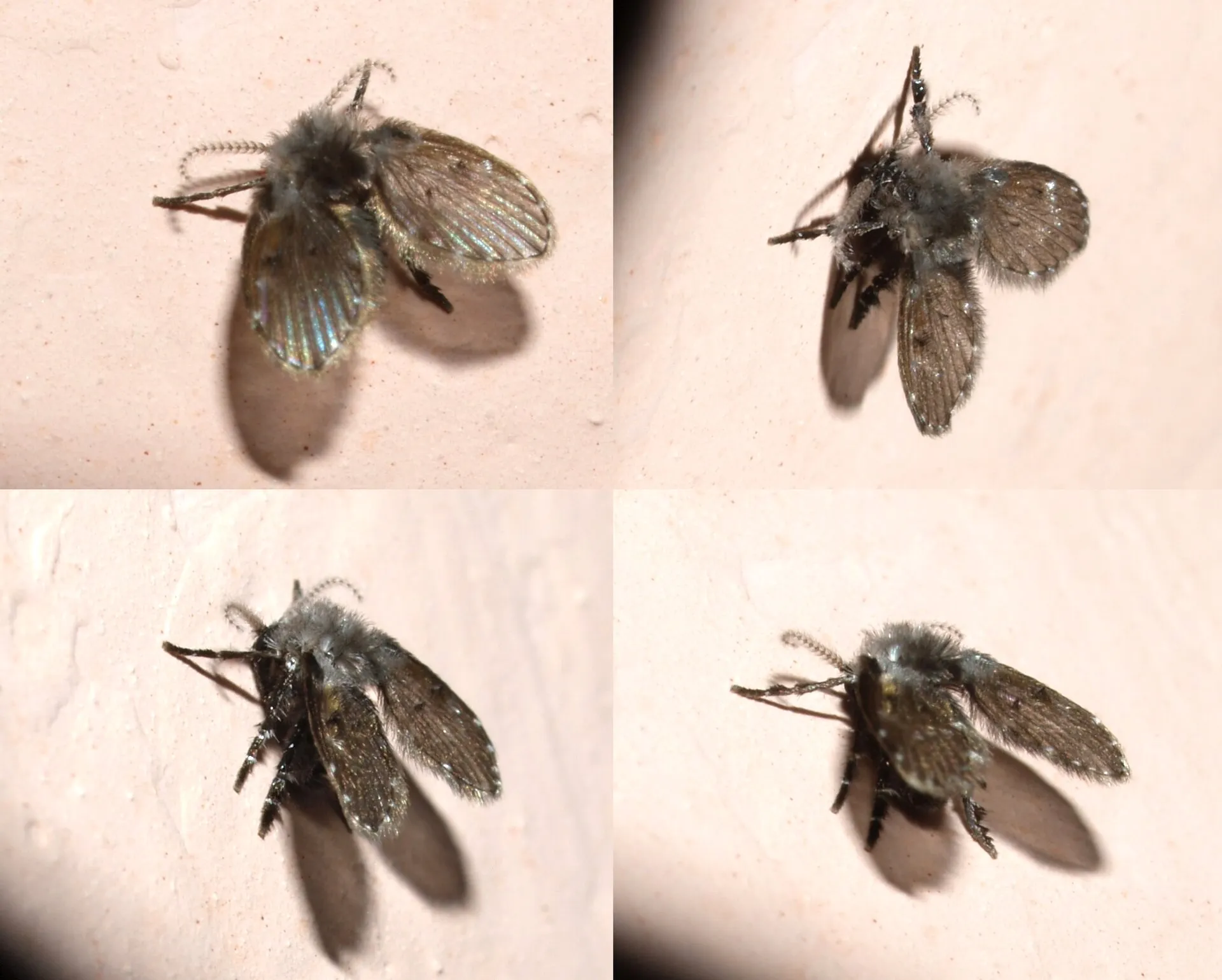
Drain flies have a habit of showing up in clusters around a sink or bathtub, hovering lazily near the drain, and then somehow being right back the next morning even after you’ve swatted every single one you could see. That cycle happens because killing the flies you can see does almost nothing to the actual problem, which is happening down inside the drain itself, completely out of sight. The flies are just the visible symptom of a much bigger buildup that’s been quietly accumulating for a while.
Drain flies, sometimes called moth flies or sink flies because of their fuzzy, moth-like appearance, lay their eggs in the slimy organic buildup that coats the inside of drain pipes. That gunk—a combination of hair, soap scum, grease, food particles, and general organic decay—is exactly what their larvae feed on, and it’s also exactly what most people never think to clean since it’s invisible from above the drain opening. Until that buildup is actually removed, new flies keep hatching no matter how many of the current generation you eliminate.
Here are seven ways to deal with them properly, starting with how to confirm where they’re actually coming from.
How to Confirm It’s Actually Drain Flies (Not Fruit Flies)
Before diving into solutions, it’s worth confirming the identification, since drain flies and fruit flies are commonly confused and the treatment for each is different.
Drain flies are fuzzy and moth-like in appearance, with a triangular wing shape when at rest, and they tend to fly in short, erratic hops rather than the more direct flight pattern of fruit flies. They’re typically dark gray or brown and roughly an eighth of an inch long. Fruit flies, by contrast, have a more typical fly body shape, tend to be reddish-brown with visible red eyes, and are usually found near ripening produce, recycling bins, or anywhere sugary residue sits out rather than specifically around drains.
If you’re seeing the flies cluster specifically around sink, shower, or floor drains, and especially if they seem to emerge directly from the drain opening when you run water, drain flies are almost certainly what you’re dealing with.
Why Drain Flies Keep Coming Back
Understanding the lifecycle here is what makes the difference between a fix that lasts and one that doesn’t. Adult drain flies typically only live for about a week to two weeks, but in that time a single female can lay dozens of eggs directly into the organic film inside a drain. Those eggs hatch into larvae within 48 hours, the larvae feed on the organic matter for one to two weeks, and then emerge as new adult flies. This means a drain with an established population can produce new flies continuously, with one generation overlapping the next, which is exactly why simply killing visible adults never solves the problem on its own.
The organic buildup that makes this whole cycle possible accumulates in drains that aren’t used often (guest bathrooms, basement floor drains, rarely-used utility sinks), in drains with slow-moving water due to a partial clog, or in any drain that regularly has hair, soap, or food residue going down it without enough water flow to fully flush the buildup away.
Method 1: The Boiling Water Flush
This is the simplest starting point and worth doing first in any drain showing fly activity, since it’s quick, requires no special products, and gives you an immediate sense of how bad the buildup actually is.
Boil a full kettle or pot of water. Carefully pour it directly down the affected drain in two or three stages rather than all at once, giving it a moment between pours to work through the pipe.
This loosens and flushes some of the organic buildup coating the pipe walls, particularly buildup that’s relatively fresh rather than deeply hardened over a long period.
Repeat this once a day for three to four days if flies are still present, since a single flush often isn’t enough to fully clear an established buildup, but consistent repetition makes a noticeable difference.
This method works best as a starting step or for relatively minor infestations, and is often combined with the more targeted methods below for anything more established.
Method 2: Baking Soda and Vinegar Drain Treatment
This combination creates a foaming reaction that helps physically dislodge buildup from the pipe walls, in addition to the mild disinfecting properties of both ingredients.
Pour half a cup of baking soda directly into the drain, followed by half a cup of white vinegar. The mixture will foam up immediately, so have this ready to go right after pouring the baking soda in.
Let the foaming mixture sit in the drain for at least 30 minutes, ideally a full hour, since the foaming action needs time to work its way into the buildup along the pipe walls rather than just sitting at the drain opening.
Flush the drain thoroughly with hot water afterward to clear out the loosened debris along with the reaction byproducts.
Repeat every few days for a week if the infestation is established, since this method addresses surface buildup well but may need repetition for buildup that’s accumulated over a longer period.
Method 3: Drain Fly Gel or Foaming Drain Cleaner
Commercial drain fly treatments are specifically formulated to coat the inside of the pipe and break down the organic gel layer that regular drain cleaners (which are designed for clogs, not biological buildup) often miss entirely.
Look specifically for a product labeled for drain flies or organic drain buildup rather than a standard drain declogger, since the formulations target different problems even though they’re applied the same way.
Apply according to the product instructions, which typically involves pouring the gel or foam directly into the drain and allowing it to sit, often overnight, so it has time to coat the full interior surface of the pipe rather than just rinsing straight through.
Avoid running water in the drain for the period specified on the product label, since doing so washes the product through before it’s had a chance to work on the buildup along the pipe walls.
Flush with hot water once the recommended dwell time has passed, and repeat after a few days if flies are still emerging, since severe buildup sometimes requires more than one treatment cycle.
Method 4: The Tape Trap (For Identifying and Confirming the Source Drain)
If you have multiple drains in a bathroom or kitchen and aren’t sure exactly which one is the source, this simple trap method identifies it definitively before you spend time and product treating the wrong one.
Cover the drain opening completely with a piece of clear tape, sticky side facing down toward the drain, leaving no gaps around the edges.
Leave it in place overnight. If flies are breeding in that specific drain, you’ll find them stuck to the underside of the tape by morning, having emerged from the drain and gotten caught trying to fly upward.
Repeat this on any other suspect drains in the same room to confirm whether one or multiple drains are actively breeding flies, since it’s common for people to assume only one drain is the source when actually two or three are contributing.
Once confirmed, focus your treatment efforts specifically on the drains that test positive rather than treating every drain in the house unnecessarily.
Method 5: Mechanical Pipe Cleaning
For buildup that’s significant or has been accumulating for a long time, the chemical and hot water methods above sometimes aren’t enough on their own, and physically cleaning the inside of the pipe makes a real difference.
Use a drain brush, which is a long, narrow brush specifically designed to reach down into pipes, inserting it into the drain and scrubbing the interior walls as far down as it will reach.
For drains with a removable stopper or strainer, take this piece out entirely and clean it separately, since these components often accumulate significant organic buildup on their underside that contributes heavily to the fly problem and is easy to overlook since it’s not visible from above.
Follow mechanical cleaning with one of the chemical methods above, since physically scrubbing loosens buildup that a chemical treatment then helps fully break down and flush away.
For drains connected to a P-trap that’s accessible (commonly under a bathroom or kitchen sink), removing and manually cleaning the P-trap addresses buildup that’s accumulated in that curved section, which is a common hotspot for drain fly breeding that’s completely inaccessible from above the drain opening.
Method 6: Apple Cider Vinegar Trap for Adult Flies
While this method doesn’t address the breeding source, it’s effective for reducing the visible adult population while you’re working on the underlying drain treatment, and is particularly useful for an active, visible swarm that’s bothering you in the meantime.
Fill a small bowl or jar with apple cider vinegar and add a few drops of dish soap, stirring gently to combine.
Cover the container with plastic wrap and poke several small holes in the top, then place it near the affected drain or in the general area where flies are most active.
The vinegar attracts the flies, and the dish soap breaks the surface tension of the liquid so flies that land are unable to fly back out, effectively trapping and drowning them over time.
Use this as a supplementary method alongside drain treatment rather than a standalone fix, since it manages the visible adult population without doing anything for the larvae developing inside the pipe.
Method 7: Preventing Future Infestations Through Regular Drain Maintenance
Once an active infestation has been cleared, preventing it from returning comes down to not letting organic buildup accumulate to the point where it supports breeding again.
Run water through infrequently used drains at least once a week, even for just a minute, since stagnant drains with no water flow are far more likely to develop the kind of buildup that supports fly breeding compared to drains that see regular use.
Use a drain strainer in sinks and showers to catch hair and larger food particles before they go down the drain and contribute to organic buildup over time, emptying and cleaning the strainer regularly rather than letting it accumulate its own buildup.
Flush drains with boiling water or a baking soda and vinegar treatment on a monthly basis as routine maintenance, particularly for drains that handle grease or significant organic matter like kitchen sinks, rather than waiting until a fly problem develops to address buildup.
Address any slow-draining sinks or tubs promptly rather than letting them persist, since slow drainage is often the underlying cause that allows organic buildup to accumulate faster than it would in a properly flowing drain, and fixing the flow issue addresses the root cause rather than just the fly symptom.
Quick Fixes for Common Problems
| Problem | Potential Solution | Alternative Approach |
|---|---|---|
| Flies keep returning after boiling water treatment | The buildup is likely too established for hot water alone—follow up with a commercial drain fly gel treatment | Try mechanical cleaning with a drain brush to physically remove buildup the water alone can’t reach |
| Not sure which drain is the source | Use the clear tape trap method overnight on each suspect drain to confirm | Check less obvious drains too, including floor drains and rarely used utility sinks |
| Flies appearing even though the sink looks completely clean | The buildup causing this is inside the pipe, not visible from the drain opening | Remove and clean the P-trap directly, since this is a common hidden breeding spot |
| New flies still emerging after a week of treatment | The larvae cycle takes one to two weeks—continue treatment consistently for the full cycle rather than stopping early | Combine chemical treatment with mechanical brushing for more thorough buildup removal |
| Flies seem to be coming from a floor drain in the basement | These drains often have minimal water flow and significant buildup—treat the same as any other drain | Pour water down the drain regularly even when not actively used to prevent the trap from drying out |
| Adult flies are a nuisance while waiting for drain treatment to work | Set up an apple cider vinegar trap near the affected area to catch adults in the meantime | Continue drain treatment simultaneously, since the trap alone won’t stop new flies from emerging |
What Doesn’t Work (And Why)
A few common responses to drain flies feel intuitive but don’t actually solve the problem, and it’s worth understanding why before wasting time on them.
Spraying insecticide directly at visible flies kills the adults you can see in that moment but does nothing for the eggs and larvae developing inside the drain, which means new adults emerge within days regardless of how thoroughly you sprayed.
Standard drain declogging products, the kind designed to dissolve hair clots or grease clogs, are formulated for a different type of blockage and often aren’t effective against the thin organic film that drain flies actually breed in, which is why people sometimes report using a clog remover with no improvement in fly activity.
Simply closing off or covering a drain temporarily reduces visible flies in that moment but doesn’t address the breeding source, and flies will either find another way out or the population will simply build up more before becoming visible again once the cover is removed.
How Long It Takes to Fully Resolve a Drain Fly Problem
Because of the breeding cycle, expect this to take one to two weeks of consistent treatment rather than a single fix. Even with thorough cleaning, any eggs or larvae already present in the buildup at the time of treatment will continue their cycle and emerge as adults over the following one to two weeks. Consistent treatment during this window prevents those emerging adults from laying new eggs and starting the cycle over, which is what eventually breaks the infestation completely rather than just temporarily reducing it.
FAQ
Do drain flies bite or carry disease?
No, drain flies don’t bite people and aren’t known to transmit disease to humans. They’re a nuisance pest rather than a health hazard, though their presence does indicate organic buildup in your plumbing that’s worth addressing for general hygiene and odor reasons.
Can drain flies come from a drain that looks completely clean?
Yes, and this is one of the most common points of confusion. The buildup that supports drain fly breeding coats the inside of the pipe well below what’s visible from the drain opening, including inside the P-trap, so a drain can look spotless at the surface while still harboring an active breeding population.
How do I know if I have a drain fly problem versus a fruit fly problem?
Drain flies have a fuzzy, moth-like appearance and are found specifically near drains, while fruit flies have a more typical fly shape with reddish eyes and are usually found near produce or anywhere sugary residue sits out. If flies are clustering specifically around your sink or shower drain rather than your fruit bowl, drain flies are the likely culprit.
Will a garbage disposal make drain flies worse?
A garbage disposal can contribute to drain fly buildup if it’s not cleaned regularly, since food particles can collect in less accessible areas of the disposal and surrounding pipe. Running ice cubes through the disposal periodically along with regular cleaning helps prevent buildup from accumulating there specifically.
Is it normal for drain flies to come back even after thorough cleaning?
A few flies emerging in the days immediately following treatment is normal, since eggs and larvae already in the pipe at the time of cleaning will still complete their cycle. If flies are still appearing in significant numbers after two full weeks of consistent treatment, the buildup likely wasn’t fully addressed and a more thorough mechanical cleaning or professional plumbing inspection is worth considering.
Conclusion
Getting rid of drain flies for good means treating the actual buildup inside the pipe rather than just the flies you can see hovering around the sink. Boiling water and baking soda treatments handle moderate buildup, commercial drain fly gel and mechanical brushing handle more established infestations, and consistent weekly maintenance afterward keeps it from coming back. Give it the full one to two week cycle to fully resolve rather than giving up after a few days when you still see the occasional fly, since that’s just the existing larvae finishing their cycle rather than a sign the treatment failed.
Enjoyed this project? Get even more DIY ideas that save (and make) you money.
Join our free newsletter for profitable DIY projects, clever cleaning hacks, home ideas, and creative crafts delivered straight to your inbox.
✓ Free forever • No spam • Unsubscribe anytime