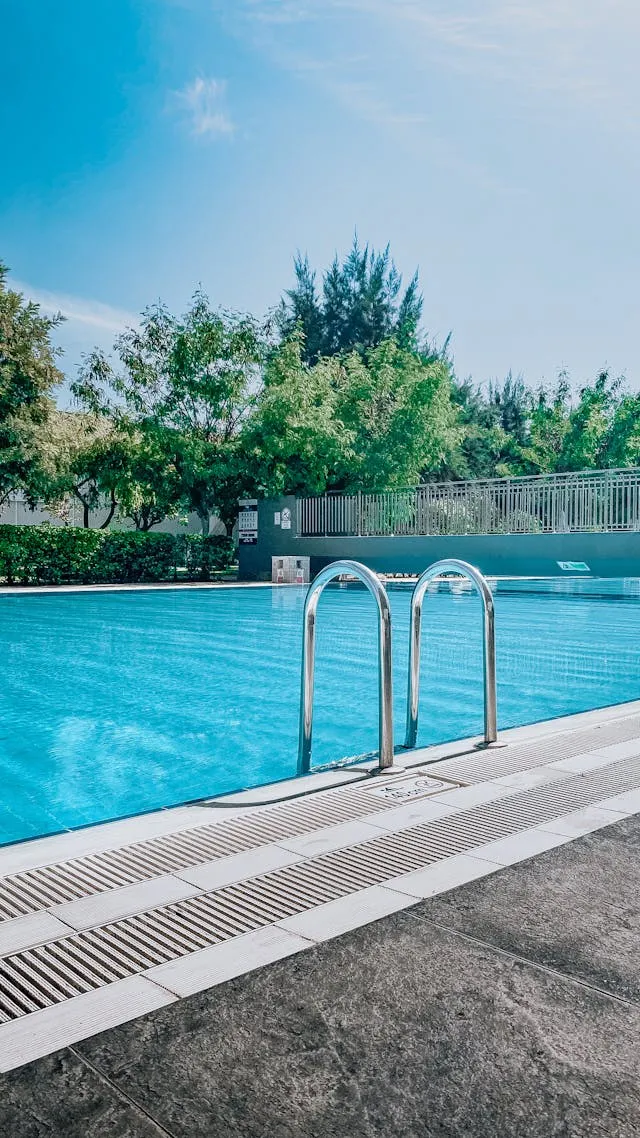
A dirty pool bottom is one of those problems that feels more stubborn than it actually is. Debris settles, algae starts to take hold, and the instinct is to reach for the vacuum—but what if you don’t have one, the vacuum isn’t working, or the debris is the kind that a standard pool vacuum struggles with anyway?
The good news is that a pool vacuum is not the only way to clean the bottom of a pool, and in many situations it’s not even the best way. Leaf rakes handle large debris more efficiently. Flocculant clears fine particles that a vacuum misses. Brushing loosens algae that no suction device can remove without physical agitation first. And for pools that need ongoing bottom maintenance without constant manual effort, there are passive and semi-passive options that work continuously between manual cleaning sessions.
This guide covers eight methods for cleaning the bottom of a pool without a vacuum—from the immediate and manual to the chemical and automated—organized so you can match the method to the specific problem your pool has.
Why Pool Bottoms Get Dirty (And Why It Matters)
Understanding what’s settling on the bottom of your pool determines which cleaning method is most effective:
- Leaves and large debris: Settle quickly and begin decomposing within days, releasing tannins that stain the pool surface and nutrients that feed algae growth. Large debris is best handled by physical removal before it breaks down.
- Fine debris and dust: Enters the pool through wind, rain, and swimmer activity. Too fine for most physical removal methods—requires flocculant or improved filtration to clear.
- Algae: Either growing directly on the pool bottom surface (green, black, or mustard algae depending on species) or settling as dead algae after treatment. Requires brushing and chemical treatment rather than just suction.
- Sand and sediment: Particularly common in pools near construction, unpaved areas, or after heavy rain. Settles in the lowest points of the pool and resists standard cleaning without directed water movement or flocculant.
- Dead algae after treatment: After shocking and algaecide treatment, dead algae settles as a grey-green cloud on the bottom. This is one of the most common pool bottom problems and responds specifically to certain methods.
Before You Start: Check Your Filter and Chemistry
No bottom-cleaning method works properly if the filter is dirty or the water chemistry is significantly off. A clogged filter can’t process the debris stirred up by cleaning; unbalanced chemistry means algae returns immediately after cleaning.
- Backwash or clean the filter before beginning any major cleaning session.
- Check pH (should be 7.2–7.6), alkalinity (80–120 ppm), and sanitizer levels before cleaning. Correct any significant imbalances first.
- Run the filter throughout and after any cleaning session to process disturbed debris.
What You’ll Need (Depending on the Method)
- A pool brush (nylon for vinyl and fiberglass, stainless steel for concrete and plaster)
- A leaf rake or skimmer net (fine mesh net for debris)
- A pool flocculant or clarifier
- Shock (calcium hypochlorite or dichlor)
- Algaecide
- A garden hose with jet nozzle
- A submersible pump or sump pump
- A robotic pool cleaner
- A pool water circulation wand or jet tool
- Pool clarifier tablets
- Clean water for backwashing
Method 1: Pool Brush (Essential First Step for Every Situation)
Brushing the pool bottom is the most fundamental cleaning action available—and it’s the one that makes every other method on this list more effective. Brushing dislodges debris and algae from the pool surface and puts it in suspension in the water where the filter can capture it, or where it can be removed by other methods. No suction device, chemical, or tool works as well on debris that’s firmly attached to the pool surface as a brush.
- Choose the right brush for your pool surface. Nylon-bristle brushes are correct for vinyl liner pools and fiberglass pools—stainless steel bristles damage these surfaces permanently. Stainless steel or combination brushes are appropriate for concrete and plaster pools where algae adheres more firmly and requires more aggressive bristle action. Using the wrong brush type doesn’t just clean less effectively—it causes surface damage that creates microscopic rough patches where future algae attaches more easily.
- Attach the brush to a telescoping pole and adjust the pole to a length that allows you to reach the deepest point of the pool without excessive stretching.
- Start at the shallow end and work methodically toward the deep end. Work in overlapping strokes, pushing debris and algae toward the main drain at the bottom of the deep end where the pool’s circulation system picks it up most effectively.
- Use firm, overlapping strokes rather than random scrubbing. Cover every section of the pool floor systematically—overlapping each stroke by about 30% ensures no areas are missed.
- Pay particular attention to corners, steps, and the transitions between the floor and wall where debris collects and algae establishes most readily. These areas require shorter, more directed strokes.
- For algae spots, scrub with significant pressure using a back-and-forth motion across the affected area. Green algae detaches from surfaces relatively easily; black algae has a protective coating and requires repeated, aggressive brushing over multiple sessions to fully dislodge.
- Brush toward the main drain to direct loosened debris into the pool’s circulation for filter capture. If your pool’s main drain is off or the filtration is poor, brush toward the areas where you can use the leaf rake method (Method 2) to collect the concentrated debris.
- Run the filter for at least four to six hours after brushing to allow the circulation system to capture the suspended debris.
Frequency: Weekly brushing prevents algae establishment and debris bonding to the pool surface. Monthly brushing is the minimum to prevent serious buildup.
Best for: All pool types as a first step, algae removal, loosening debris from the pool surface before other removal methods.
Method 2: Leaf Rake and Fine Mesh Net (Best for Large Debris Removal)
A leaf rake—a deep-bag net designed specifically for pool debris collection—is the most direct and immediate tool for removing leaves, insects, and organic debris from the pool bottom without a vacuum. Unlike a flat skimmer net that struggles to collect bottom debris without stirring it back up, a leaf rake’s deep bag scoops and contains debris as it moves through the water.
- Use a deep-bag leaf rake, not a flat skimmer net. The deep bag is critical for bottom debris—a flat net pushes water and debris aside as it moves, while the bag shape scoops and contains debris for removal.
- For a fine mesh rake, the mesh size determines what you can collect. Standard leaf rakes collect leaves and large debris; fine mesh rakes collect smaller organic matter including dead algae. For fine debris and dust settled on the pool bottom, a fine mesh net is significantly more effective than a standard one.
- Lower the rake slowly to the pool bottom to avoid disturbing the debris before the bag is in position. Fast movements create water currents that lift debris off the bottom and re-suspend it before you can collect it.
- Drag the rake slowly along the pool floor, keeping the rim in contact with the surface. Slow, consistent movement maintains the debris in the bag rather than pushing it ahead of the rake.
- Lift the rake straight up out of the water rather than dragging it across the surface toward the pool edge—dragging the loaded bag across the water surface spills the collected debris back into the pool. Lift vertically, move to the pool edge with the net over the side, then lower it out of the water.
- Empty the bag frequently—an overloaded bag is harder to maneuver and more likely to spill debris back into the water when lifting.
- For heavy leaf accumulation on the pool floor, work in sections from the shallow end toward the deep end, collecting from each section before moving to the next rather than trying to cover the entire pool in one sweep.
- Follow with brushing for any debris that the rake has disturbed but not collected, and run the filter to capture fine particles stirred up during the raking process.
Best for: Leaves, large organic debris, dead insects, anything large enough to be captured by the rake bag. Not effective for fine particles, sediment, or algae attached to the surface.
Method 3: Flocculant (Best for Cloudy Water and Fine Debris)
Flocculant is one of the most powerful tools for clearing fine debris from pool water—including the fine particles that create cloudy or hazy water and the settled grey-green layer of dead algae after a shock treatment that brushing and raking can’t fully remove. Flocculant works by causing fine particles suspended in the water to clump together into larger masses that are heavy enough to sink to the bottom, where they can be collected.
- Turn off the pool pump and filter before adding flocculant. Flocculant needs the water to be still for the particles to clump and sink rather than being circulated back into suspension by the pump.
- Dilute the flocculant according to the product instructions before adding—most flocculants are concentrated and should be diluted in a bucket of pool water before being distributed around the pool.
- Walk around the pool perimeter pouring the diluted flocculant evenly across the pool surface. Even distribution is important—concentrated application in one area clumps only the particles in that area, leaving the rest of the pool unaffected.
- Allow the flocculant to work for 8–12 hours with the pump off—overnight is ideal. During this time, all suspended particles clump and settle to the bottom. The water will look progressively clearer from the top down as particles sink.
- After the settling period, you’ll see a layer of flocculated material on the pool bottom—it may look like a thin grey or white film, or like visible clumped particles depending on what was in the water.
- Collect the settled material using a fine mesh leaf rake or collect it manually with a fine mesh bag. Work very slowly and carefully—flocculant clumps are fragile and re-suspend easily if disturbed by fast movements. Move the rake across the bottom at the absolute minimum speed needed to collect the material.
- Drain and refill a portion of the water if the flocculant layer is very thick—removing heavily contaminated water and replacing with fresh water is more effective than trying to filter a large volume of settled contamination.
- Run the filter on the waste setting if your filtration system allows it, to discharge the disturbed flocculant material rather than cycling it through the filter where it may overwhelm the filter medium.
Important: Flocculant is different from clarifier. Clarifier helps the filter remove particles by making them larger—it works through the filter. Flocculant drops everything to the bottom, bypassing the filter entirely. Use flocculant when the debris volume would overwhelm the filter; use clarifier for ongoing water clarity maintenance.
Best for: Cloudy water, fine suspended particles, dead algae after shock treatment, sediment that’s too fine for physical removal.
Method 4: Pool Clarifier (Best for Ongoing Fine Particle Maintenance)
Pool clarifier works differently from flocculant—instead of dropping particles to the bottom, it causes fine particles to clump together into larger clusters that the filter can capture. It’s less dramatic than flocculant but requires no manual collection afterward, making it the better option for ongoing maintenance of water clarity rather than one-off heavy treatment.
- Check that the filter is clean before adding clarifier—a clogged filter can’t capture the clumped particles clarifier produces, and the treatment will be ineffective.
- Check water chemistry and balance pH and alkalinity before adding clarifier. Significantly unbalanced chemistry reduces clarifier effectiveness.
- Add clarifier according to the product dosing instructions, based on your pool’s volume. Overdosing clarifier causes the opposite of the desired effect—too much clarifier overwhelms the process and causes cloudiness rather than clearing it.
- Distribute the clarifier evenly by pouring it around the pool perimeter or through the skimmer.
- Run the filter continuously for 24–48 hours after adding clarifier to give it time to work through the water volume and capture the clumped particles.
- Clean or backwash the filter after the clarifier treatment—the filter will have captured a significant volume of particles and needs cleaning to restore flow rate.
- Use clarifier tablets in the skimmer basket as an ongoing maintenance approach—they dissolve slowly and continuously provide low-level clarification between cleaning sessions without requiring measurement or manual addition.
Best for: Ongoing water clarity maintenance, fine particles that make water slightly hazy rather than actively cloudy, maintaining clear water between manual cleaning sessions.
Method 5: Shock Treatment and Algaecide (Best for Algae on the Pool Bottom)
When green, yellow, or black algae is growing on the pool bottom, no physical cleaning method resolves the problem without chemical treatment—brushing alone removes algae from the surface but doesn’t kill the spores, which re-establish growth within days. Shock treatment combined with algaecide kills the algae first; physical removal and filtration clear the dead material afterward.
- Test water chemistry and balance pH to 7.2–7.4 before shocking. Shock is significantly less effective at higher pH—this step directly determines how well the treatment works.
- Brush the entire pool floor thoroughly before shocking to break open algae cells and expose their interior to the shock treatment. Algae has a protective outer layer that resists chemical penetration—brushing breaks this layer and dramatically increases shock effectiveness.
- Calculate the shock dose based on your pool volume and the severity of the algae. For visible algae growth, use two to three times the standard shock dose—a single standard dose rarely kills established algae completely. Dissolve granular shock in a bucket of pool water before adding to avoid bleaching or damaging pool surfaces.
- Add shock in the evening rather than during peak sunlight hours—UV light degrades free chlorine rapidly, reducing the effective concentration before it has time to kill the algae.
- Add algaecide after shocking, following the product dosing instructions. Add the algaecide to a different part of the pool from where you added the shock to prevent interaction.
- Run the filter continuously for 24–48 hours after treatment to circulate the treatment and process dead algae.
- Brush the pool floor again 12–24 hours after shocking to dislodge dead algae that has settled.
- The pool will likely look worse before it looks better—a grey-green cloud of dead algae is a sign the treatment worked. Allow 48–72 hours for the filter and clarifier to clear the dead algae, or follow with flocculant (Method 3) to accelerate the clearing process.
- Test water chemistry again after treatment and rebalance before swimming.
Best for: Algae growth on the pool bottom, green or cloudy water caused by algae bloom, mustard (yellow) algae particularly common in warm climates.
Method 6: Drain and Manual Clean (Best for Severe Contamination)
For pool bottoms with severe contamination—thick layers of debris, heavy algae that hasn’t responded to chemical treatment, staining from decomposed organic material, or sediment buildup that no in-water method can address—partial or complete draining and manual scrubbing is the most thorough cleaning option available.
Important considerations before draining:
- Never completely drain an inground fiberglass or vinyl liner pool without professional guidance. The weight of water prevents these structures from floating or shifting—removing it risks structural damage that costs significantly more than professional cleaning. In-ground concrete and plaster pools are safer to drain but still carry risks in areas with high water tables.
- Above-ground pools can generally be drained and manually cleaned safely.
- Partial draining—removing 30–50% of the water volume—is often sufficient for most severe contamination and is safer than full draining for most pool types.
The process for partial draining:
- Use a submersible pump or sump pump to remove water to the desired level. Position the pump at the deepest point of the pool for maximum water removal.
- Scrub the exposed pool surface with a pool brush and an appropriate pool surface cleaner. For concrete and plaster, a diluted acid wash (muriatic acid diluted to 10%) removes severe staining and algae; for vinyl and fiberglass, use a non-abrasive pool surface cleaner.
- Rinse the scrubbed surfaces thoroughly with a garden hose before refilling—cleaning product residue left on the surface affects water chemistry when the pool is refilled.
- Refill the pool to the correct operating level and immediately test and balance water chemistry before running the filtration system.
- Shock the refilled pool with a startup shock dose to establish sanitizer levels in the fresh water.
For above-ground pools:
- Drain completely using a submersible pump or by removing the drain plug.
- Scrub the liner with a soft brush and pool surface cleaner—avoid abrasive tools that damage the liner surface.
- Rinse thoroughly and allow to dry briefly before refilling.
- Check the liner for damage during the empty period—small tears and holes are much easier to identify and repair when the pool is empty.
Best for: Severely contaminated pools, staining from organic material, algae that hasn’t responded to chemical treatment, pools being reopened after extended closure.
Method 7: Circulation Wand or Jet Tool (Best for Directing Debris to the Drain)
A pool circulation wand—sometimes called a water broom or jet wand—attaches to a standard garden hose and uses water pressure to create directed flow along the pool floor. It doesn’t remove debris directly but herds it toward the main drain or a specific collection point where it can be removed by the filter or manual collection.
- Connect the wand to a garden hose at the pool edge and turn the water on to operating pressure.
- Lower the wand to the pool floor and direct the jet nozzle at the angle that creates the most effective flow across the bottom surface. Most wands work best at a low angle, directing flow horizontally along the floor rather than directly downward.
- Work systematically from the shallow end toward the deep end, directing debris toward the main drain at the lowest point of the pool.
- Use slow, sweeping movements to build up a directed current that carries debris toward the drain without dispersing it in all directions.
- Focus on corners and recessed areas where debris tends to collect—direct jets into these areas to dislodge settled debris and move it toward the center of the pool floor.
- Once debris is concentrated near the main drain, switch to the leaf rake method (Method 2) to collect it or allow the drain and filter to pick it up.
- Run the filter for at least four hours after using the circulation wand to process the disturbed material.
Best for: Fine sediment that can be moved without being re-suspended indefinitely, directing debris to a collection point, above-ground pools where directing debris toward the drain is particularly effective due to the pool’s shape.
Method 8: Robotic Pool Cleaner (Best Hands-Off Ongoing Solution)
A robotic pool cleaner is the most effective automatic method for cleaning the pool bottom without manual vacuum operation. Unlike suction-side cleaners that require a working vacuum line, robotic cleaners operate independently with their own motor and filtration—they can be deployed in any pool regardless of the suction system condition.
- Choose a robotic cleaner appropriate for your pool type and size. Entry-level robotic cleaners clean the pool floor only; mid-range cleaners handle the floor and lower walls; high-end models clean the entire pool including walls and waterline. For bottom cleaning specifically, an entry-level model handles the job.
- Clean or check the robotic cleaner’s filter basket before each use—a full filter basket reduces suction and cleaning effectiveness.
- Lower the cleaner into the pool with the power cord untangled and with enough cord length to reach the entire pool floor without pulling.
- Plug in and allow the cleaner to run for a full cycle—typically two to four hours for most pool sizes, longer for larger pools or heavily soiled bottoms.
- Don’t run the pool’s filtration pump simultaneously if your robotic cleaner’s instructions advise against it—some models work best with still water; others are unaffected by filtration operation.
- Remove the cleaner from the pool after the cleaning cycle, allow it to drain fully over the pool or a drain before moving to avoid spreading pool water.
- Clean the filter basket after every use—the debris collected during the cycle needs to be emptied to maintain performance in future sessions.
- Run the pool filter for two to four hours after the robotic cleaner’s cycle to process any fine particles the cleaner stirred up but didn’t capture in its basket.
Best for: Ongoing pool bottom maintenance, regular scheduled cleaning without manual effort, pools where the suction-side vacuum system isn’t functioning.
Method Comparison at a Glance
| Method | Best For | Effort Level | Cost |
|---|---|---|---|
| Pool brush | All surfaces, algae, first step | High | Low (brush only) |
| Leaf rake | Large debris, leaves | Moderate | Low |
| Flocculant | Fine particles, cloudy water, dead algae | Moderate | Low |
| Pool clarifier | Ongoing fine particle maintenance | Low | Low |
| Shock and algaecide | Algae growth | Low-Moderate | Low-Moderate |
| Drain and manual clean | Severe contamination, staining | Very high | Low-Moderate |
| Circulation wand | Sediment, directing debris | Moderate | Low |
| Robotic cleaner | Ongoing maintenance, hands-off | Low | High (initial cost) |
How Often Should You Clean the Pool Bottom?
Frequency depends on pool usage, surrounding environment, and the time of year:
- Weekly brushing is the minimum for any actively used pool—this prevents algae from establishing and keeps debris from bonding to the surface.
- Leaf raking should happen as needed—after storms, after windy periods, or any time visible debris settles. Debris left on the pool bottom for more than two to three days begins decomposing and staining.
- Shock treatment should be done at pool opening, at closing, after heavy use or a pool party, after heavy rain, and any time the water is noticeably cloudy or algae is visible.
- Flocculant treatment is a periodic intervention rather than a routine—use when the water is genuinely cloudy or when fine debris has accumulated beyond what filtration is handling.
- Robotic cleaner cycles work best on a two-to-three-times-weekly schedule during the active swimming season to prevent buildup between manual cleaning sessions.
Tips for Keeping the Pool Bottom Cleaner Longer
- Maintain consistent water chemistry. Balanced water prevents algae establishment, which is the most difficult bottom-cleaning problem. Test and adjust chemistry twice weekly during swimming season.
- Run the filter long enough. Most pool filters need to run eight to twelve hours per day during summer to turn over the full water volume adequately. Under-filtering allows particles to settle on the bottom faster than the filter removes them.
- Use a pool cover when the pool isn’t in use. A cover dramatically reduces the leaf and debris load that settles on the bottom between cleaning sessions.
- Trim overhanging trees and vegetation. Nearby trees are the primary source of leaf and organic debris in most residential pools. Trimming branches that hang over the pool significantly reduces debris load.
- Shower before swimming. Body oils, sunscreen, and personal care products enter the pool with swimmers and contribute to the fine particle load that settles on the bottom. Even a brief rinse before entry makes a meaningful difference.
- Check and clean skimmer baskets daily. Skimmer baskets that overflow allow debris to sink to the bottom that would otherwise be captured at the surface.
FAQ
Can I use a regular garden hose to clean pool sediment? A garden hose with a jet nozzle attachment can be used to direct sediment toward the drain as described in Method 7—but it adds water to the pool, which may cause overflow or dilute the water chemistry if used extensively. Use sparingly and check water levels after use.
How do I remove black algae from the pool bottom without a vacuum? Black algae is the most difficult algae type to remove because it has a protective outer coating and deep root-like structures (holdfasts) that anchor it to the pool surface. Aggressive stainless steel brushing to break the protective coating, followed by a triple shock dose and dedicated black algae treatment, is the correct approach. Multiple treatment cycles are usually required—black algae rarely responds to a single treatment.
My pool bottom has a brown stain that won’t brush off. What is it? Brown staining that doesn’t brush away is most likely a mineral stain—iron or manganese from well water or from corroding pool equipment—rather than organic debris. Mineral stains don’t respond to brushing, shocking, or physical cleaning. A metal sequestrant product added to the pool water treats mineral staining chemically. For severe mineral staining, a diluted acid wash during a partial drain (Method 6) is the most effective treatment.
How long after adding flocculant can I swim? Wait until the flocculant has fully settled (8–12 hours minimum), you’ve collected the settled material, and the filter has run a full cycle to clear any residual particles—usually 24 hours minimum after flocculant application. Always test water chemistry and ensure sanitizer levels are in the safe range before swimming.
The Bottom Line
A pool vacuum is the convenience solution for pool bottom cleaning—but it’s not the only solution, and for some specific problems it’s not even the best one. Brushing is the essential first step that makes every other method more effective. A leaf rake handles large debris faster and more completely than any suction device. Flocculant clears fine particles that vacuum suction can’t capture. Shock and algaecide address the root cause of algae rather than just removing the symptom. Match the method to the specific problem your pool has, maintain consistent chemistry and filtration, and the pool bottom stays manageable with less effort than most pool owners assume is necessary.
Enjoyed this project? Get even more DIY ideas that save (and make) you money.
Join our free newsletter for profitable DIY projects, clever cleaning hacks, home ideas, and creative crafts delivered straight to your inbox.
✓ Free forever • No spam • Unsubscribe anytime