Some plants demand schedules, mood lighting, and whispered affirmations. The ZZ plant? It thrives on benign neglect and your chaotic life.
If you want glossy, architectural leaves with almost zero drama, you’ve met your match. Let’s make your ZZ so lush you’ll swear it’s fake (it kind of looks fake anyway).
Meet the ZZ: Your Low-Maintenance MVP
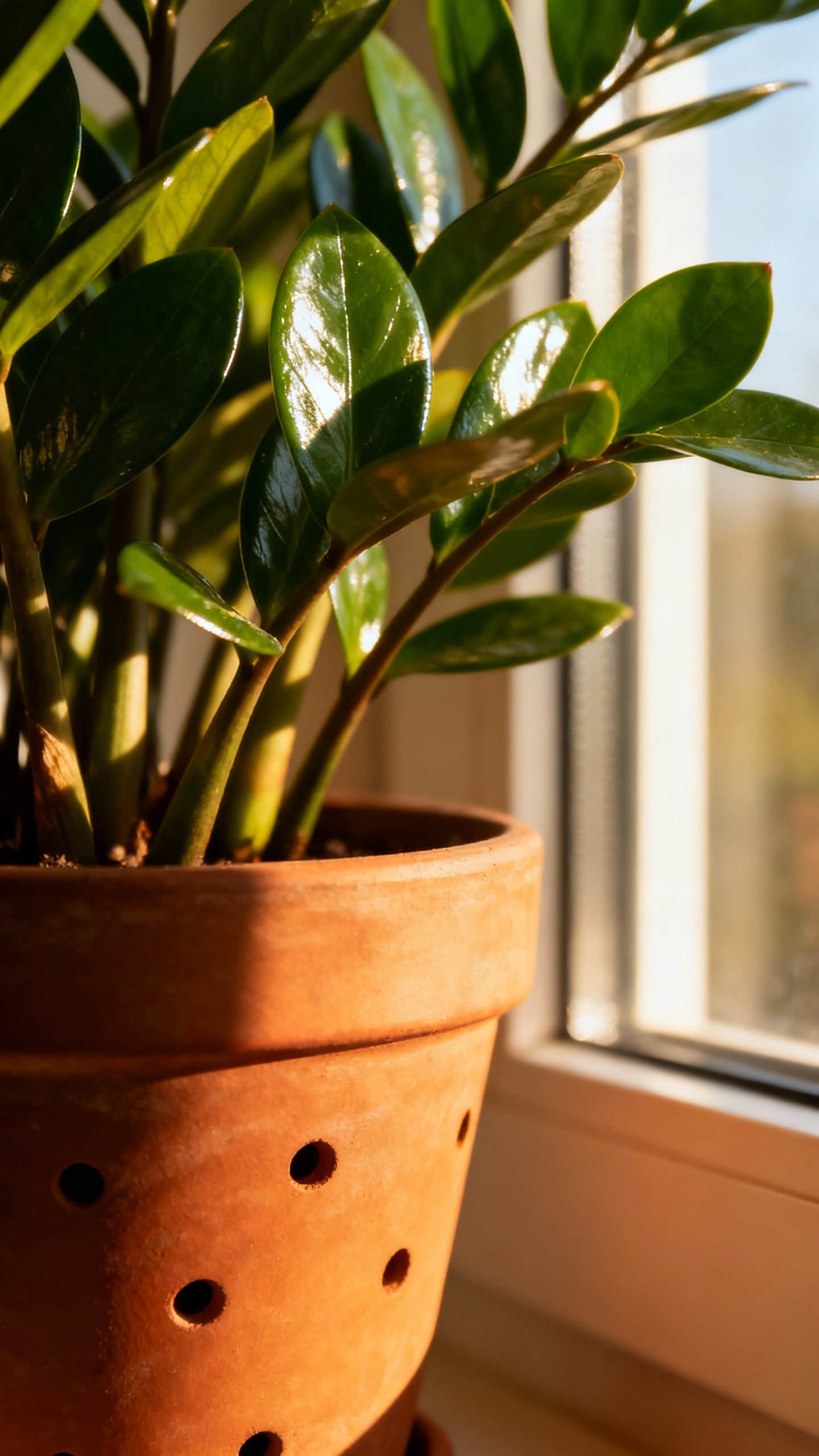
ZZ plants (Zamioculcas zamiifolia) come from dry forests in East Africa, so they store water in thick rhizomes and leaves. Translation: they don’t need constant attention.
They handle shade, missed waterings, and office lighting that screams “Monday.” Highlights you’ll love:
- Tolerates low light without sulking
- Likes to dry out between waterings (your forgetfulness = a feature)
- Slow-growing but steady and sculptural
- Dust-resistant-ish, so it stays shiny with minimal effort
Light: Bright-ish Is Best (But Not Required)
ZZ plants don’t need bright sun, but they don’t mind it either. They look happiest in bright, indirect light, yet they’ll survive in that far corner where plants usually go to “think.” Direct, hot sun can scorch leaves, so filter it if your windows face south.
Good light spots
- Near an east window = chef’s kiss
- A few feet from a bright west/south window
- Office lighting, hallways, bedrooms with ambient light
Signs your light needs tweaking
- Stretchy stems and wider spacing between leaves: needs more light
- Yellowing or crispy patches: too much direct sun
- Slow growth: normal IMO, but add more light if you want quicker results
Water: Less Is More (Seriously)
This plant stores water like it’s prepping for a drought. Overwatering kills ZZ plants way faster than underwatering.
When in doubt? Wait another week.
How to water right
- Check the soil 2–3 inches down. Wait until it’s completely dry.
- Soak thoroughly until water drains out the bottom. Never let it sit in water.
- General rhythm: every 2–4 weeks in spring/summer; every 4–6+ weeks in fall/winter. Your home’s humidity and pot size matter.
Overwatering red flags
- Mushy stems or leaves
- Yellowing leaves that drop
- Musty soil smell (not the cozy kind)
FYI: If you forget and the plant droops, water deeply and it usually rebounds.
Drama-free queen.
Soil & Potting: Drainage Or Bust
ZZ roots and rhizomes hate soggy shoes. Choose a fast-draining mix and a pot that won’t trap water.
Build a great soil blend
- 50–60% high-quality potting mix
- 20–30% perlite or pumice for airflow
- 10–20% orchid bark or coarse sand for texture
Pot tips
- Use a pot with drainage holes. Non-negotiable.
- Terracotta helps wick moisture if you overwater.
Plastic holds moisture longer.
- Repot every 2–3 years or when rhizomes bulge like bread dough. Size up just 1–2 inches.
Humidity & Temperature: Comfortably Basic
ZZ plants handle normal home conditions like champs. No misting schedules.
No pebble trays. No humidifier shrine.
- Temperature: 65–80°F (18–27°C). Avoid below 50°F (10°C).
- Humidity: Average indoor humidity is fine.
- Drafts: Keep away from blasting AC, heaters, or door drafts.
Feeding & Growth: Slow And Steady
ZZs grow slowly, so they don’t need much food.
That said, a little snack can boost gloss and growth.
Fertilizer basics
- Feed lightly in spring and summer: monthly at half strength with a balanced liquid fertilizer (like 10-10-10).
- Skip feeding in fall and winter.
- Flush the soil every few months to prevent salt buildup.
Pruning & shaping
- Trim yellow or old stems at the soil line with clean shears.
- Rotate the pot monthly for even growth.
- Want bushier? Divide crowded rhizomes during repotting and replant sections. Patience required.
Common Problems (And Chill Fixes)
Even easy plants throw curveballs.
Here’s how to read the signals without spiraling.
Yellow leaves
- Likely overwatering. Let it dry thoroughly. Check drainage.
- Old leaves naturally yellow over time.
If it’s just one, don’t panic.
Brown tips or edges
- Underwatering or very low humidity (less common). Water deeply and adjust schedule.
- Salt buildup from fertilizer. Flush with clean water.
Droopy stems
- Thirsty plant or long-term low light.
Water well and move a bit closer to light.
- If stems flop dramatically, stake temporarily and adjust care.
Pests
- Rare, but mealybugs or spider mites can show up (rude). Wipe leaves with insecticidal soap or neem oil. Repeat weekly until gone.
Styling Your ZZ (Because Aesthetic Matters)
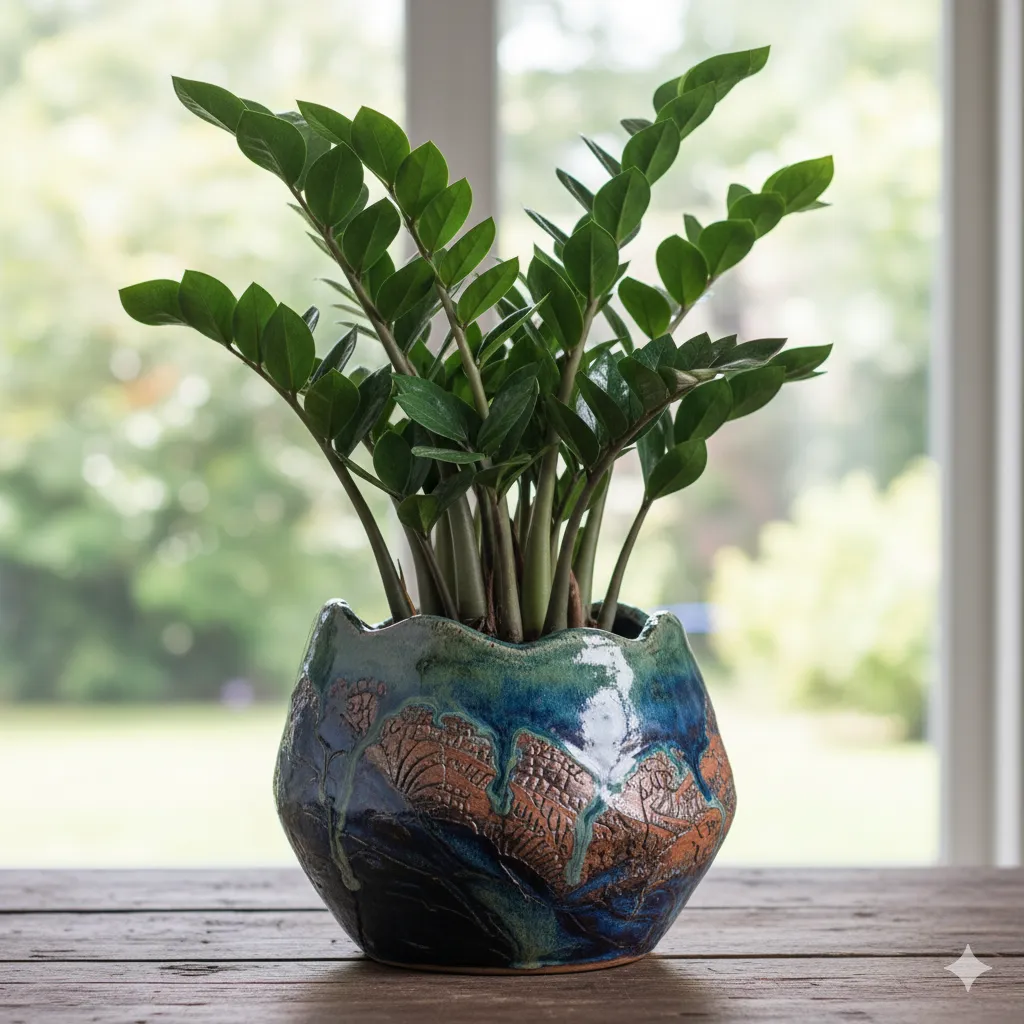
ZZ plants bring that clean, sculptural vibe that works anywhere.
Want extra oomph?
- Zenzi cultivar: Compact, dense growth for shelves and small spaces.
- Raven ZZ: New leaves start lime green and mature to inky black. Seriously cool.
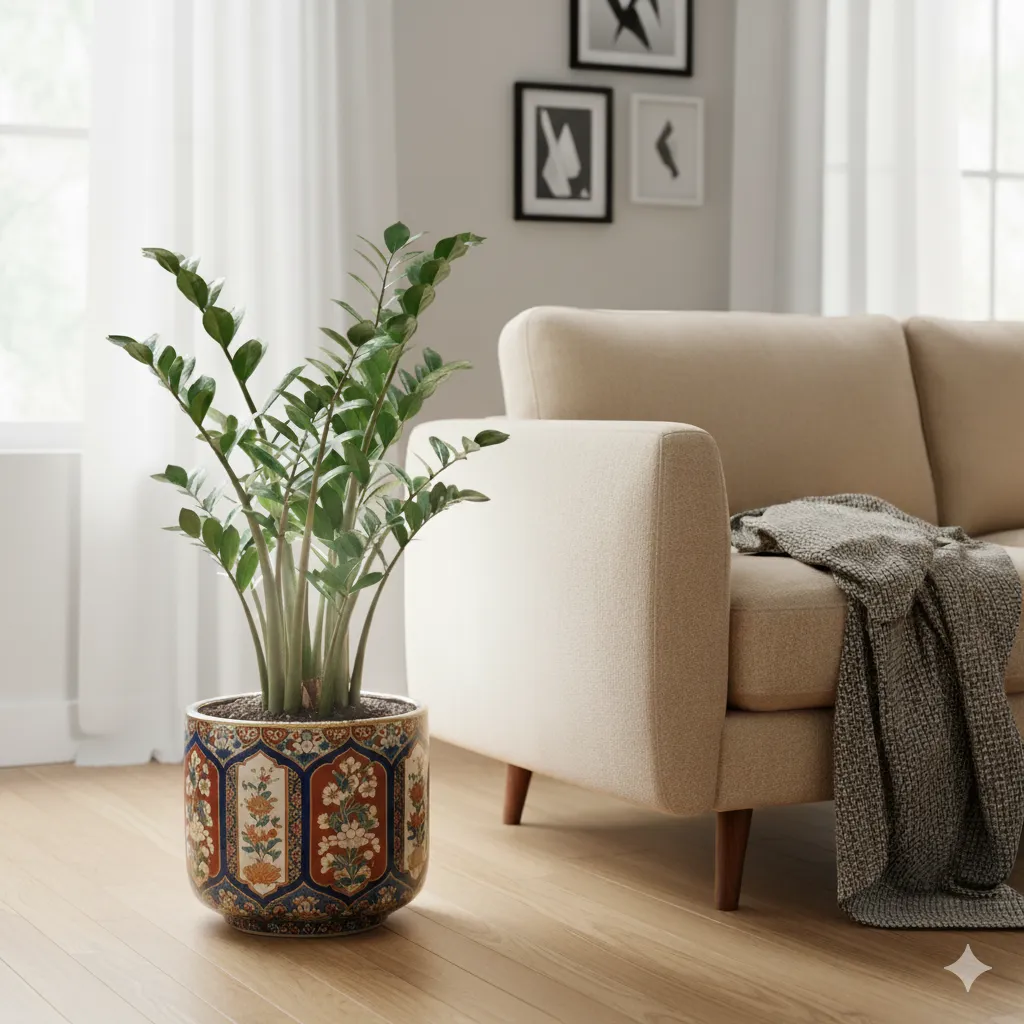
- Pair with matte ceramic pots or textured terracotta for contrast against glossy leaves.
- Group with other low-light pals like snake plants and pothos for a zero-drama corner.
Propagation: Multiply Without Tears
You can grow new ZZs two ways. Both take patience (like, months), so start now and forget about it.
Division (fast-ish)
- During repotting, gently separate rhizomes with roots attached.
- Pot each section in fresh, fast-draining mix.
- Water lightly and keep in bright, indirect light.
Leaf cuttings (slow but fun)
- Cut a healthy leaf with a little stem attached.
- Let the cut end dry for a day, then plant it 1 inch deep in moist mix.
- Keep lightly moist and warm.
Tiny rhizomes will form before new shoots. Embrace the waiting game.
Pet & Safety Notes
ZZ plants contain calcium oxalate crystals. They’re toxic to pets and humans if ingested.
Don’t freak out—just keep them out of pet nibble range. Wear gloves if you have sensitive skin when pruning. Wash hands after handling.
Common sense, IMO.
FAQs
How often should I water my ZZ plant?
Water when the top 2–3 inches of soil feel dry. That usually means every 2–4 weeks in warmer months and 4–6+ weeks in cooler months. Always adjust for your light, pot type, and home climate.
Why are my ZZ leaves turning yellow?
Overwatering causes yellowing most often.
Check for soggy soil or a pot without drainage holes. Let the plant dry out, then resume a less frequent schedule.
Can a ZZ plant live in a windowless room?
It can tolerate low light, but it needs some light to survive long-term. If you lack windows, use a small LED grow light for 8–12 hours daily.
Even a desk lamp with a bright, full-spectrum bulb helps.
Do ZZ plants clean the air?
They remove small amounts of VOCs, like many houseplants, but not enough to replace ventilation. Enjoy them for the vibe and the low effort. Your lungs still prefer open windows.
How big do ZZ plants get?
Most indoor ZZs reach 2–3 feet tall and wide.
Growth stays compact and upright. The Raven and Zenzi varieties grow a bit slower and shorter.
Should I mist my ZZ plant?
No need. Misting doesn’t help much and can leave water spots.
If dust builds up, wipe leaves with a damp cloth to keep that glossy, photoshoot look.
The Takeaway
Want a plant that thrives while you live your life? The ZZ checks every box: low light tolerance, minimal watering, and stylish, glossy leaves. Give it bright, indirect light when you can, water sparingly, and let it be.
Do that, and you’ll have lush, low-maintenance greens that make you look like a plant genius—because, FYI, you are now.
Next, learn the best Monstera Plant Care Tips.
Enjoyed this project? Get even more DIY ideas that save (and make) you money.
Join our free newsletter for profitable DIY projects, clever cleaning hacks, home ideas, and creative crafts delivered straight to your inbox.
✓ Free forever • No spam • Unsubscribe anytime