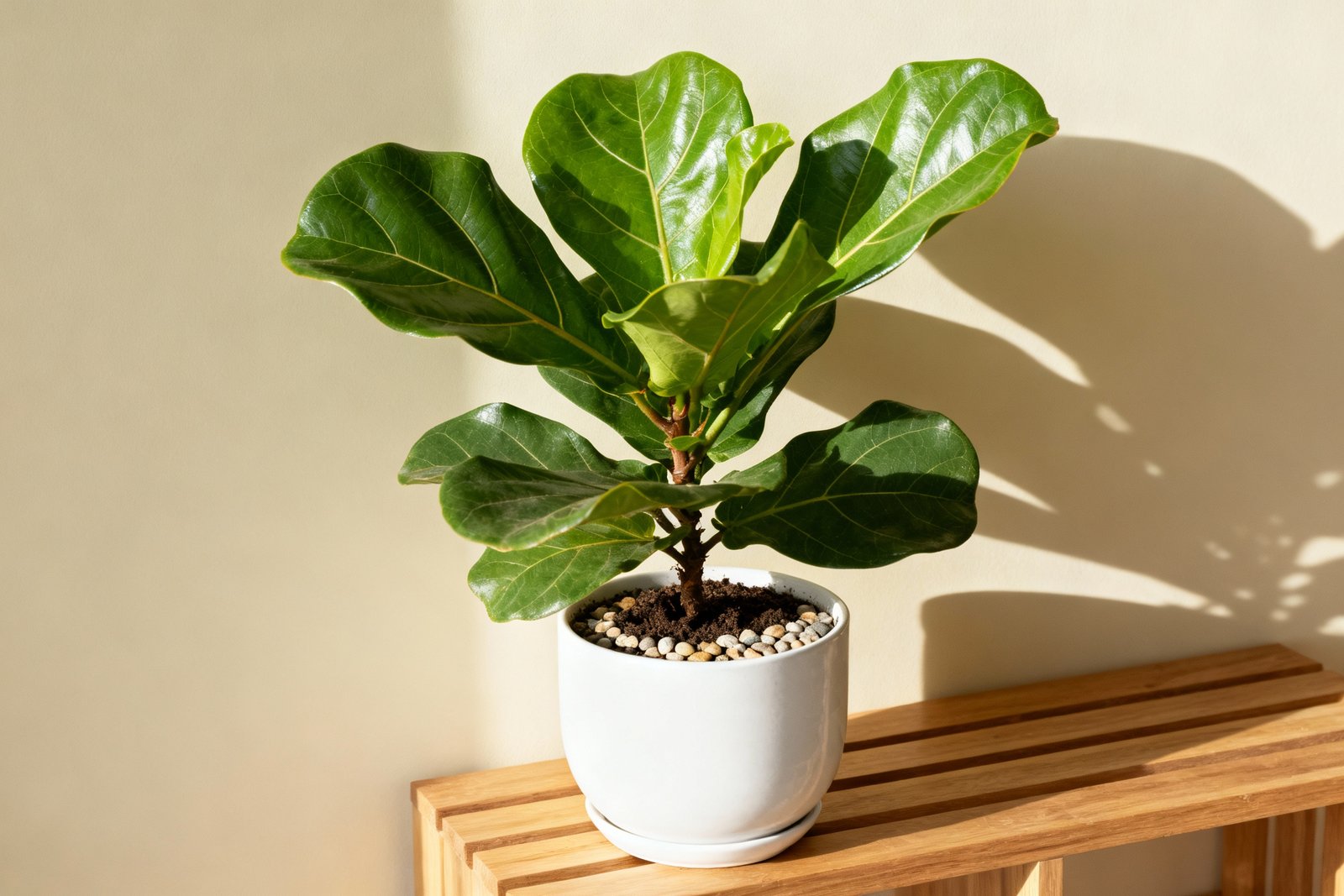
You bought a fiddle leaf fig because you wanted a stylish, sculptural plant, not a temperamental diva. Yet here we are—brown spots, droopy leaves, existential dread. Good news: your fig can glow up fast with a few tweaks.
Let’s cut the fluff and fix your plant for real.
Find the Right Light (Your Fig’s Love Language)
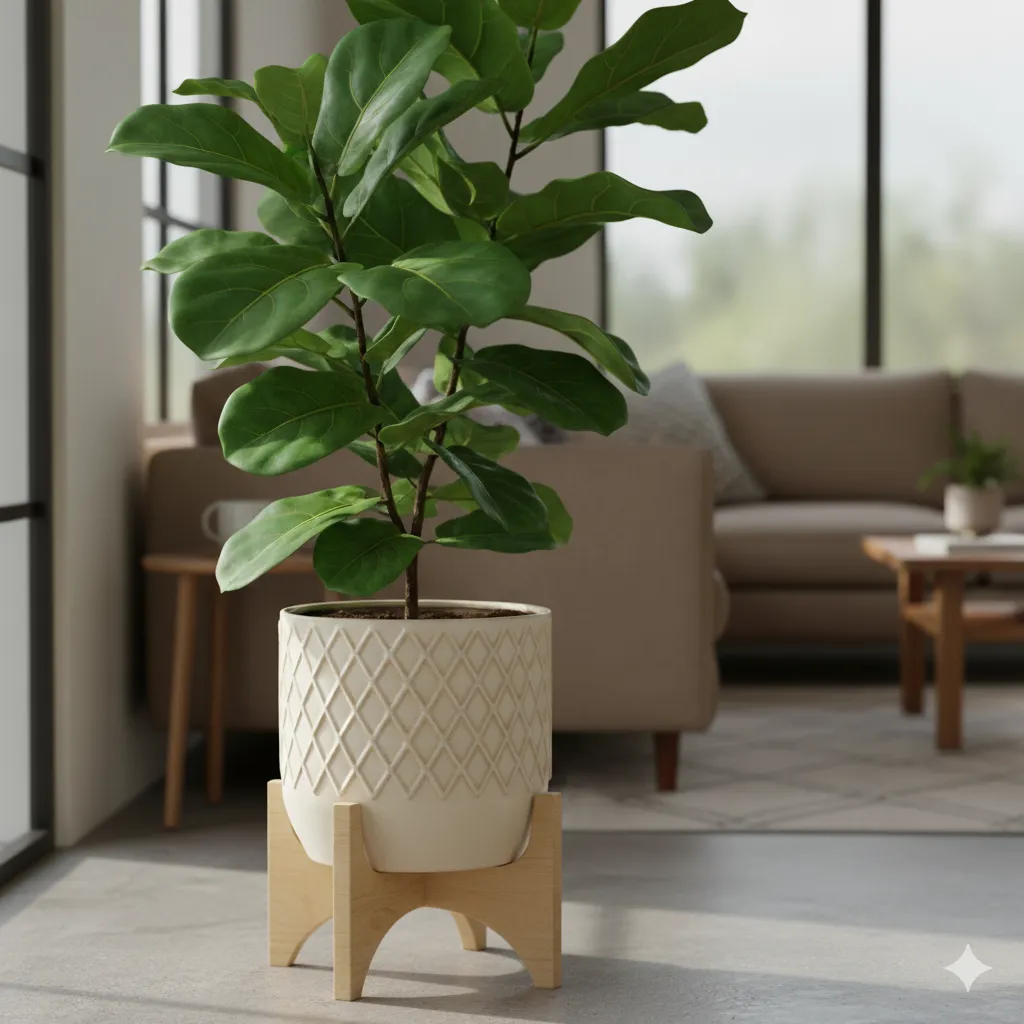
Your fiddle leaf fig wants bright, indirect light—think “near a sunny window but not baking on the glass.” East- or west-facing windows usually hit the sweet spot. If your plant leans, it’s begging for more. Pro move: Rotate the pot a quarter turn every week. That keeps growth even and prevents the dreaded “one-sided tower” look.
Direct Sun: How Much Is Too Much?
A few hours of gentle morning sun?
Perfect. Harsh afternoon sun? That’s leaf-scorch city.
If your only bright spot gets intense sun, try sheer curtains or pull the plant a few feet back. Your leaves will thank you.
Water Like a Pro (No More Guesswork)
Overwatering kills figs faster than anything. Underwatering makes them dramatic.
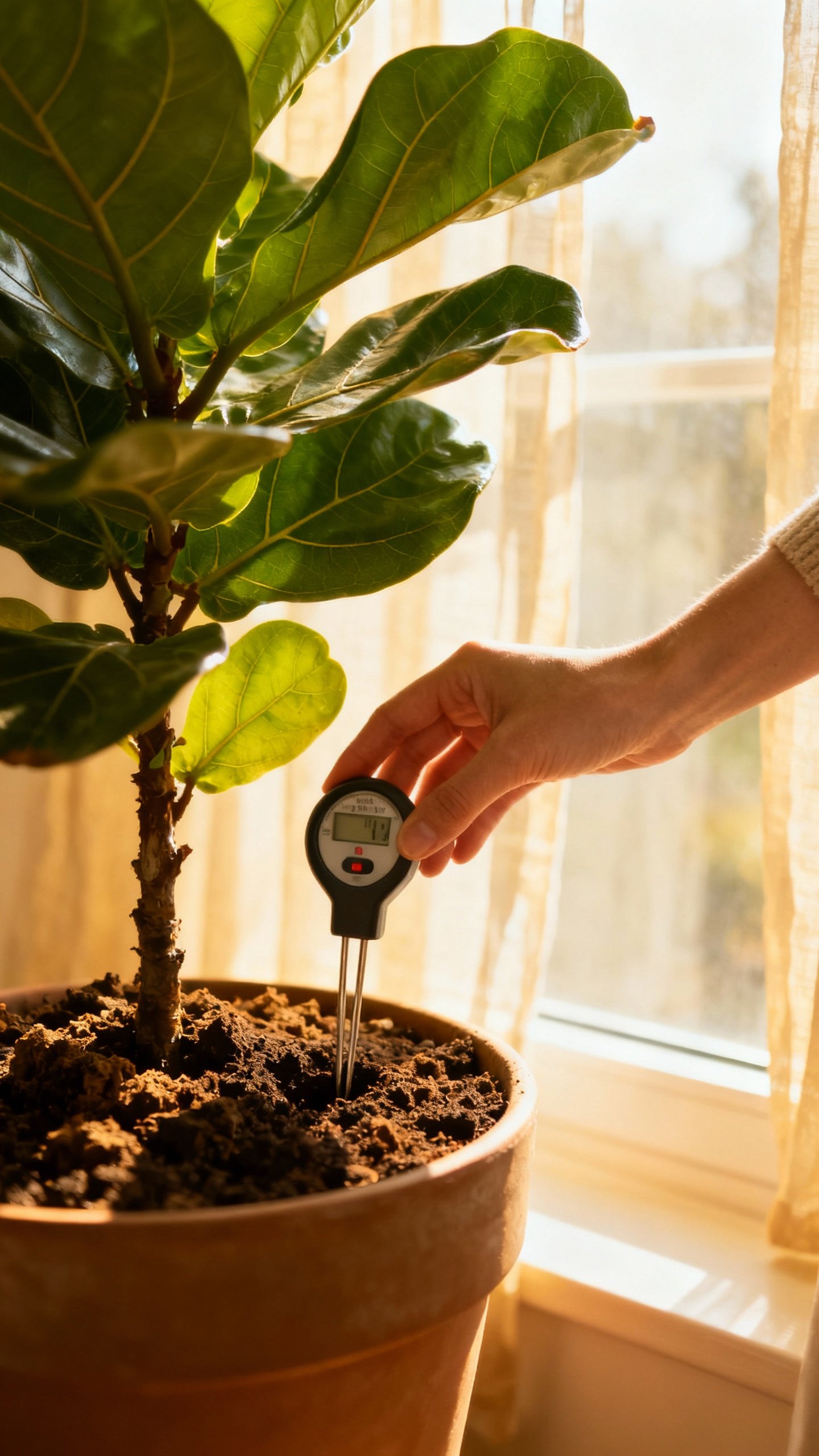
So how do you nail it? Check the top 2 inches of soil. If it’s dry, water thoroughly until it drains out the bottom.
If it’s damp, wait. Quick rules that work:
- Winter: Water less (every 10–14 days, depending on your home’s dryness).
- Summer: Water more (every 7–10 days, sometimes weekly in hot rooms).
- Use a moisture meter if you don’t trust your finger. IMO, it removes the guesswork.
Signs You Miswatered
- Brown edges, crispy leaves: You waited too long between waterings.
- Brown splotches, yellowing leaves, mushy soil: Overwatered. Ease up and check drainage.
Soil and Potting: Set the Roots Up for Success
Your fig hates wet feet.
Use a fast-draining mix and a pot with actual drainage holes. No holes? That’s a fancy vase, not a pot. Best soil combo:
- 2 parts high-quality indoor potting mix
- 1 part perlite or pumice (for drainage)
- 1 part pine bark fines or orchid bark (for structure)
Repot every 1–2 years or when roots circle the bottom.
Go up just 1–2 inches in pot diameter. Jumping to a huge pot traps water and guarantees root rot. FYI, this plant likes to be snug, not suffocated.
Drainage Hacks
- Elevate the inner nursery pot inside a decorative planter with pot feet or pebbles.
- Empty saucers quickly—don’t let the plant sit in runoff.
- Add a mesh screen over the drainage hole to keep soil from escaping.
Humidity, Temperature, and Drafts: The Comfort Zone
Fiddle leaf figs love consistency.
Keep temps between 65–80°F and humidity around 40–60%. They tolerate typical indoor air, but they thrive with a little extra moisture. Easy humidity upgrades:
- Group plants together (they share moisture like tiny humidifiers).
- Use a small humidifier nearby.
- Place on a pebble tray with water (don’t submerge the pot).
Avoid cold drafts, heating vents, and sudden temperature swings. That front door with winter gusts?
Not your fig’s vibe.
Feeding and Growth: Fuel the Glow-Up
Your fig needs food in spring and summer. During the growing season, fertilize every 4–6 weeks with a balanced liquid houseplant fertilizer at half strength. Skip fertilizing in fall and winter unless you have strong grow lights and active growth. Shortcut: Use a slow-release granular fertilizer at the start of spring.
It’s low-effort and keeps things steady. IMO, it’s perfect if you forget to feed regularly.
Signs Your Fig Wants More Nutrients
- Smaller new leaves than older ones
- Sluggish growth in spring/summer
- Pale new growth (but check light first)
Pruning, Shaping, and Cleaning: The Makeover
Want that Instagram tree shape? You’ll get it with gentle pruning and strategic support.
Use clean, sharp shears and prune in spring or early summer. For a tree form:
- Choose a central leader (the main stem) and stake it if it leans.
- Remove lower leaves gradually to expose the trunk.
- Tip-prune the top to encourage branching—cut just above a node.
For a bushier plant:
- Pinch or cut the top 1–2 inches of new growth.
- Rotate the plant so light hits each side evenly.
Dust reduces light absorption, so wipe leaves monthly with a damp cloth. No leaf-shine sprays needed. Water + a tiny drop of mild soap does the job and keeps pests less interested.
Staking and Support
If your fig grew tall and awkward (we’ve all been there), add a sturdy stake or moss pole and tie the stem loosely with soft plant ties.
Straighten gradually—no need to force it in one day.
Pests and Problems: Don’t Panic, Just Clipboard It
Common culprits: spider mites, scale, and mealybugs. Catch them early and they’re easy. Check leaves weekly, especially undersides. Look for stippling, sticky residue, cottony bits, or tiny brown bumps. Treatment toolkit:
- Shower the plant to knock off pests.
- Wipe leaves with a damp cloth and mild soapy water.
- Follow with neem oil or insecticidal soap weekly for 2–3 weeks.
If you see leaf drop after a move, don’t spiral. Figs hate change.
Give it consistent care for a few weeks and new growth should return.
Light Hacks for Low-Light Homes
No bright window? Don’t give up. Add a full-spectrum LED grow light and set it for 8–12 hours daily.
Place it 12–24 inches above the plant. You’ll get stronger stems and bigger leaves, minus the window drama. Bonus: Use a timer so you don’t forget. Your plant doesn’t care about your schedule—just the photons.
FAQs
Why is my fiddle leaf fig dropping healthy-looking leaves?
Big environmental changes trigger shedding.
Moves, drafts, or sudden light changes cause a freak-out. Stabilize light and watering, keep temps steady, and resist overwatering while it adjusts. New growth usually follows once it chills out.
How do I fix brown spots on the leaves?
Identify the cause first.
Crispy edges mean underwatering or low humidity. Dark, mushy patches usually mean overwatering or poor drainage. Adjust your watering routine, improve aeration with better soil, and consider trimming badly damaged leaves for aesthetics.
Can I propagate my fiddle leaf fig?
Yes!
Take a 6–8 inch cutting with 1–2 leaves in spring or early summer. Root it in water or damp perlite/soil, keep it warm and bright (but not in direct sun), and you should see roots in 3–6 weeks. FYI, patience helps—some cuttings take longer.
How do I make it grow taller faster?
Give it bright light, regular feeding in the growing season, and enough root space.
Keep pruning minimal if you want height. If it leans, stake it and rotate weekly so it reaches upward instead of sideways.
Is my fig safe for pets?
Nope. Fiddle leaf figs are toxic to cats and dogs if ingested.
Keep it out of reach and train pets to ignore it. If your pet chews leaves, call your vet for advice.
Should I mist my fiddle leaf fig?
Misting helps temporarily but it doesn’t raise humidity meaningfully. If you want real results, use a humidifier or a pebble tray.
Misting can still help keep dust down in a pinch.
Closing Off
Your fiddle leaf fig doesn’t want drama—it wants consistency. Bright, indirect light, a breathable soil mix, smart watering, and a little pruning will transform it from moody to magnificent. Set up the basics, add a few pro hacks, and IMO you’ll get the glossy, sculptural showpiece you wanted in the first place.
Next, learn the best Spider Plant Care Hacks.
Enjoyed this project? Get even more DIY ideas that save (and make) you money.
Join our free newsletter for profitable DIY projects, clever cleaning hacks, home ideas, and creative crafts delivered straight to your inbox.
✓ Free forever • No spam • Unsubscribe anytime