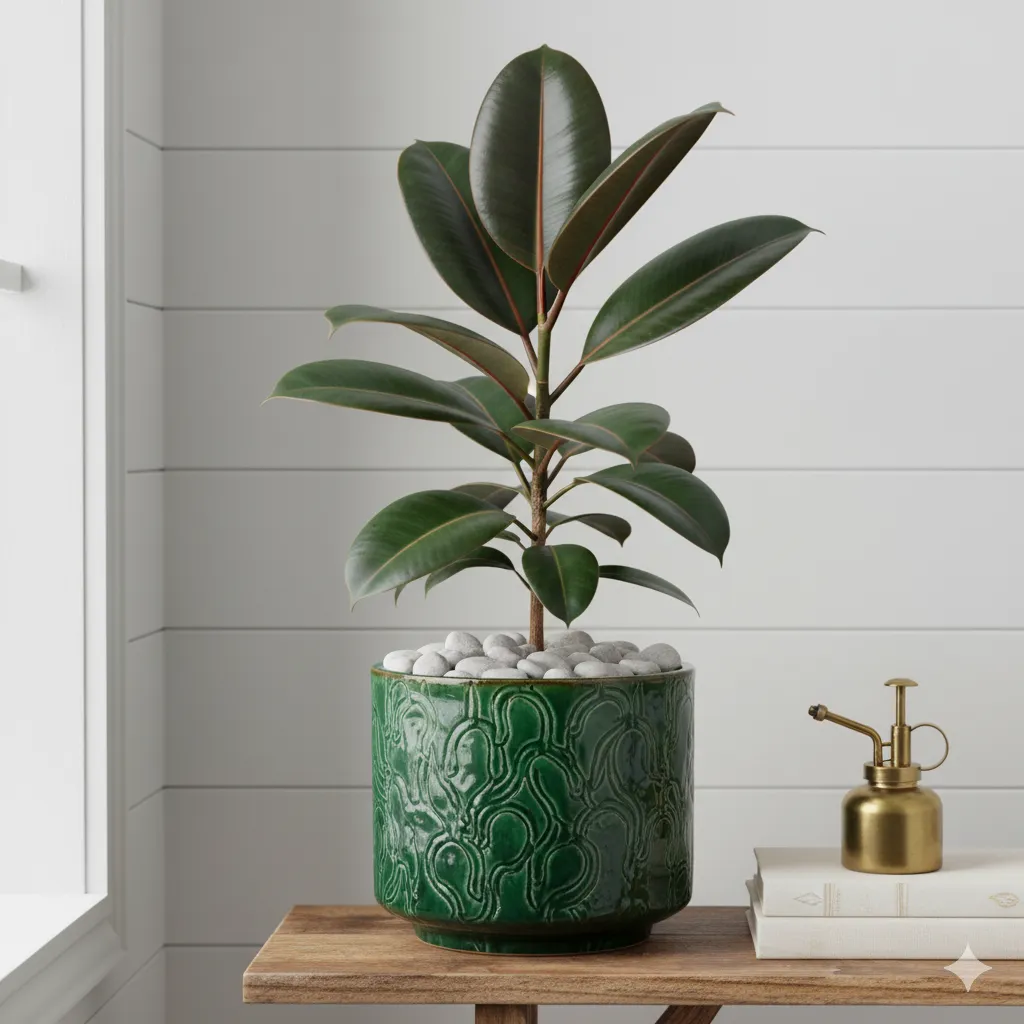
Your rubber plant can go from “cute background foliage” to “wow, who invited the indoor tree?” with a few smart tweaks. It grows fast, looks luxe, and forgives a lot—until it doesn’t. Let’s dial in the care so yours shoots up glossy leaves and dramatic height instead of dropping foliage like it’s going out of style.
Ready to transform your Ficus elastica? Let’s go.
Light That Makes Leaves Pop
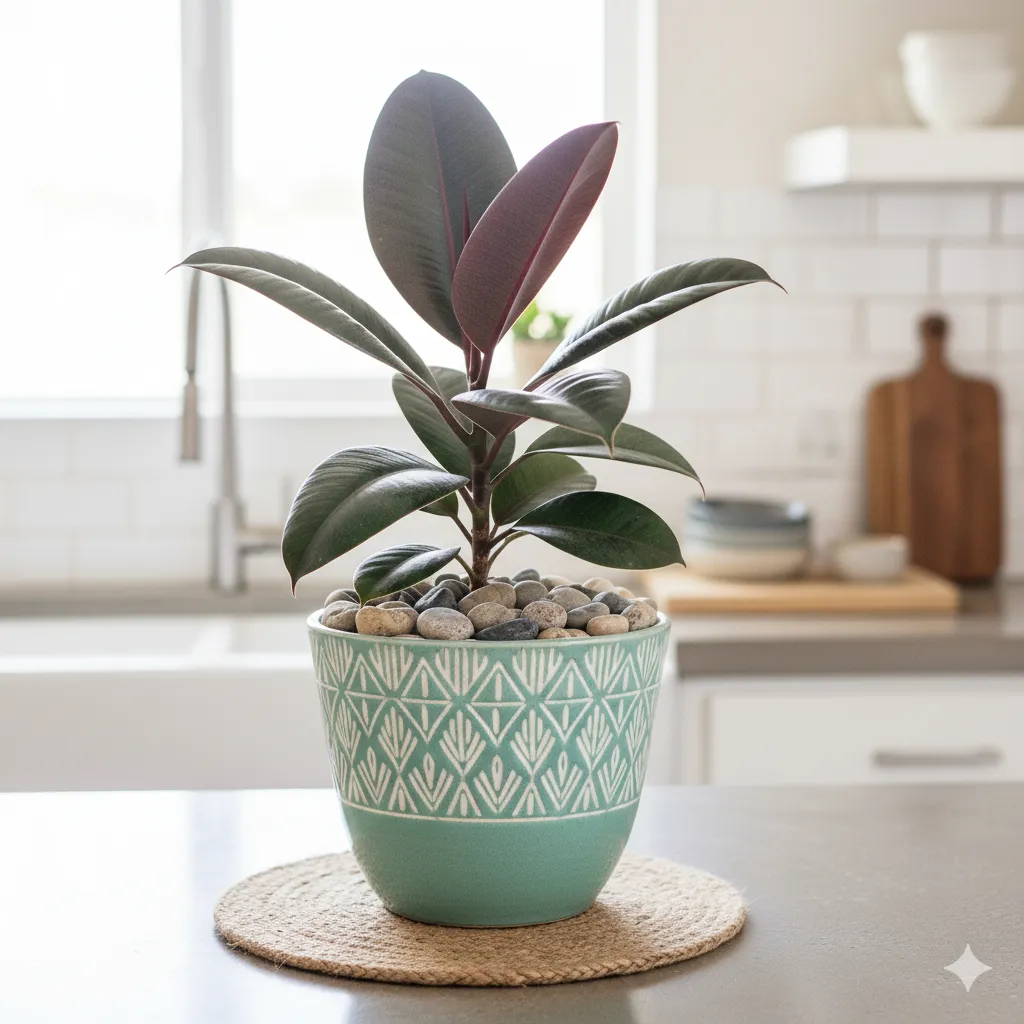
You don’t need full sun, but you do need strong, indirect light. Think bright room, away from the harsh midday beam.
East or west windows work great; a few feet back from a south window also nails it. Signs your light is off:
- Leggy, stretched stems = not enough light
- Scorched patches or crispy edges = too much direct sun
- Variegated types reverting to green = light levels too low
Best Spots in Your Home
- Next to sheer-curtained windows for filtered brightness
- On a stand near a bright wall—light bounces, plant smiles
- Under a grow light for 8–10 hours if your home lives in a shade cave
Watering: Less Guessing, More Winning
Rubber plants hate soggy feet, but they also hate drought theater. Water when the top 1–2 inches of soil feels dry. Always dump excess water from the saucer.
Always. FYI, that’s the difference between “thriving specimen” and “mushy root tragedy.” Simple watering routine:
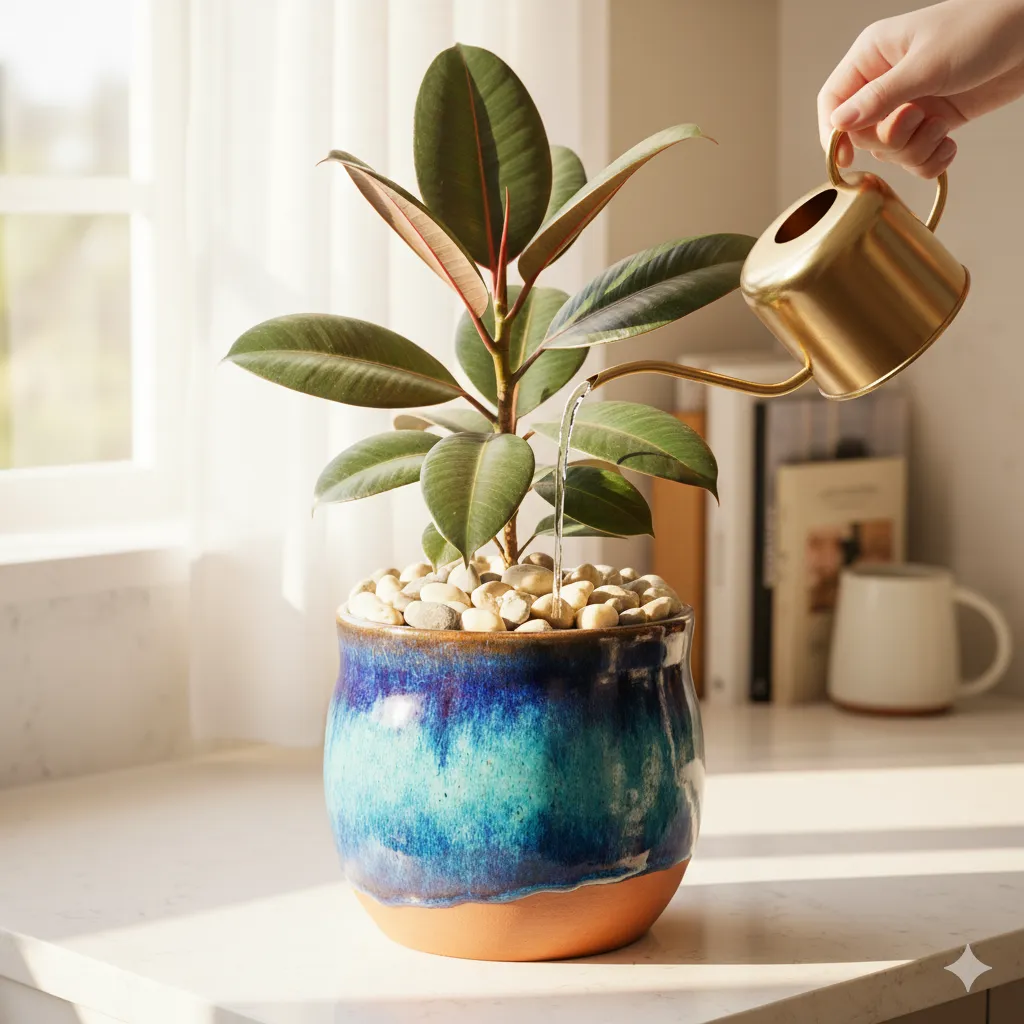
- Stick a finger into the soil up to your second knuckle.
- If it feels dry, water slowly until it drains from the bottom.
- Let it drain fully; don’t let it sit in runoff.
Watering Red Flags
- Yellow leaves + wet soil: overwatered
- Curling, crispy leaves + dry soil: underwatered
- Dropping lower leaves after a move: stress, give it time
Soil and Potting: The Root of It All
Your plant wants air around the roots. Use a quick-draining mix so the roots can breathe and grow.
IMO, your best bet is a chunky blend. Go-to potting mix:
- 2 parts high-quality potting soil
- 1 part perlite or pumice
- 1 part bark chips or coco coir
Pick a pot with a drainage hole (non-negotiable). Size up only when roots circle the bottom or push through the drainage hole. One pot size bigger is enough—no mansion needed.
Repotting Without Drama
- Water the day before so roots release nicely
- Loosen the rootball gently—trim dead or black roots
- Set at the same soil line; don’t bury the stem
Humidity, Temperature, and That Glossy Glow
Rubber plants handle typical home humidity, but they look extra fabulous with a little boost.
Aim for 40–60% humidity. They like warmth: 65–80°F works perfectly. Keep them away from cold drafts and blasting heaters. Quick upgrades:
- Group plants together to create a humidity bubble
- Use a pebble tray under the pot (water below, not touching the pot)
- Wipe leaves with a damp cloth to remove dust and boost shine
Leaf Shine?
Hard Pass.
Commercial leaf shine clogs pores. Your plant breathes through its leaves. A plain damp microfiber cloth does the job.
If you want extra, add a tiny drop of mild dish soap to the water.
Fertilizer: Fuel Growth Without Overdoing It
During spring and summer, feed lightly and regularly. In fall and winter, slow your roll because growth slows down. Feeding plan:
- Use a balanced liquid fertilizer at half strength every 4–6 weeks in the growing season
- Skip fertilizing for a month after repotting (fresh soil already feeds)
- Flush the soil every few months to prevent salt buildup
If you see brown tips and you swear you didn’t underwater, salts might be the culprit. Rinse the pot thoroughly with water to reset.
Shape Like a Pro: Pruning and Training
Want a tall, elegant tree or a bushy Netflix corner plant?
You decide. Rubber plants respond well to pruning—so don’t be shy. For a taller, single-stem look:
- Stake the main stem for support
- Rotate the pot every few weeks so it grows straight
For a fuller, bushier plant:
- Snip the top growth just above a node to encourage branching
- Prune in spring for best results
- Propagate your cuttings (free plants = instant win)
Safety Note: Milky Sap Alert
Rubber plants bleed a milky latex sap when cut. It can irritate skin and pets, so wear gloves.
Dab cuts with a clean cloth to stop the flow.
Common Problems (And Quick Fixes)
You’ll keep issues minimal when you nail the basics. But just in case, here’s your mini troubleshooting kit. Dropping leaves?
- Recent move or draft? Give it a stable spot and time.
- Sudden watering changes?
Get consistent.
Brown edges?
- Underwatering or low humidity—water thoroughly and bump humidity
- Too much fertilizer—flush the soil
Sticky spots or webbing?
- Probably pests (spider mites, scale, mealybugs)
- Wipe leaves with soapy water, then treat with neem or insecticidal soap weekly until gone
Not growing?
- Increase light
- Feed lightly in spring/summer
- Check for rootbound conditions and repot if needed
Varieties Worth Flexing
If you want to expand your collection (of course you do), try these stunners:
- ‘Burgundy’: Deep, moody leaves with a red midrib
- ‘Tineke’: Creamy variegation that demands bright light
- ‘Ruby’: Pink and blush tones—dramatic and a little high-maintenance
- ‘Decora’: Classic, broad, shiny leaves—a total crowd-pleaser
FYI: Variegated types need more light to keep their color. Skimp on light and they’ll green out to survive.
FAQs
How often should I water my rubber plant?
Water when the top 1–2 inches of soil dries out. That might mean weekly in summer and every 10–14 days in winter, but always check the soil.
Your plant doesn’t care what the calendar says.
Do rubber plants clean the air?
They look like mini air purifiers, but take the hype lightly. They do absorb some pollutants, but not at levels that replace fresh air or ventilation. Keep them for the vibes and the bonus benefits.
Can I grow a rubber plant in low light?
It will survive but won’t thrive.
Expect slower growth and leggier stems. If your space runs dim, add a grow light and thank me later.
Is the sap dangerous?
The latex sap can irritate skin and eyes. Keep it away from pets and wear gloves when pruning.
If you get sap on your skin, wash with soap and water.
Why are my leaves losing their shine?
Dust, low humidity, or low light usually cause dull leaves. Wipe them with a damp cloth, bump humidity, and give them brighter indirect light. Skip commercial leaf shine—your plant will breathe easier.
When should I repot?
Repot every 1–2 years or when roots circle the pot and water runs straight through.
Spring is best. Size up just one pot size and refresh the soil.
Conclusion
Your rubber plant doesn’t ask for perfection—just the right basics. Give it strong indirect light, a breathable potting mix, consistent watering, and a little shaping, and it will reward you with bold, glossy leaves and serious height.
Do that, and your “background plant” becomes the main character, IMO the indoor tree everyone notices first.
Next, learn how to care for a Ficus Altissima plant.
Enjoyed this project? Get even more DIY ideas that save (and make) you money.
Join our free newsletter for profitable DIY projects, clever cleaning hacks, home ideas, and creative crafts delivered straight to your inbox.
✓ Free forever • No spam • Unsubscribe anytime