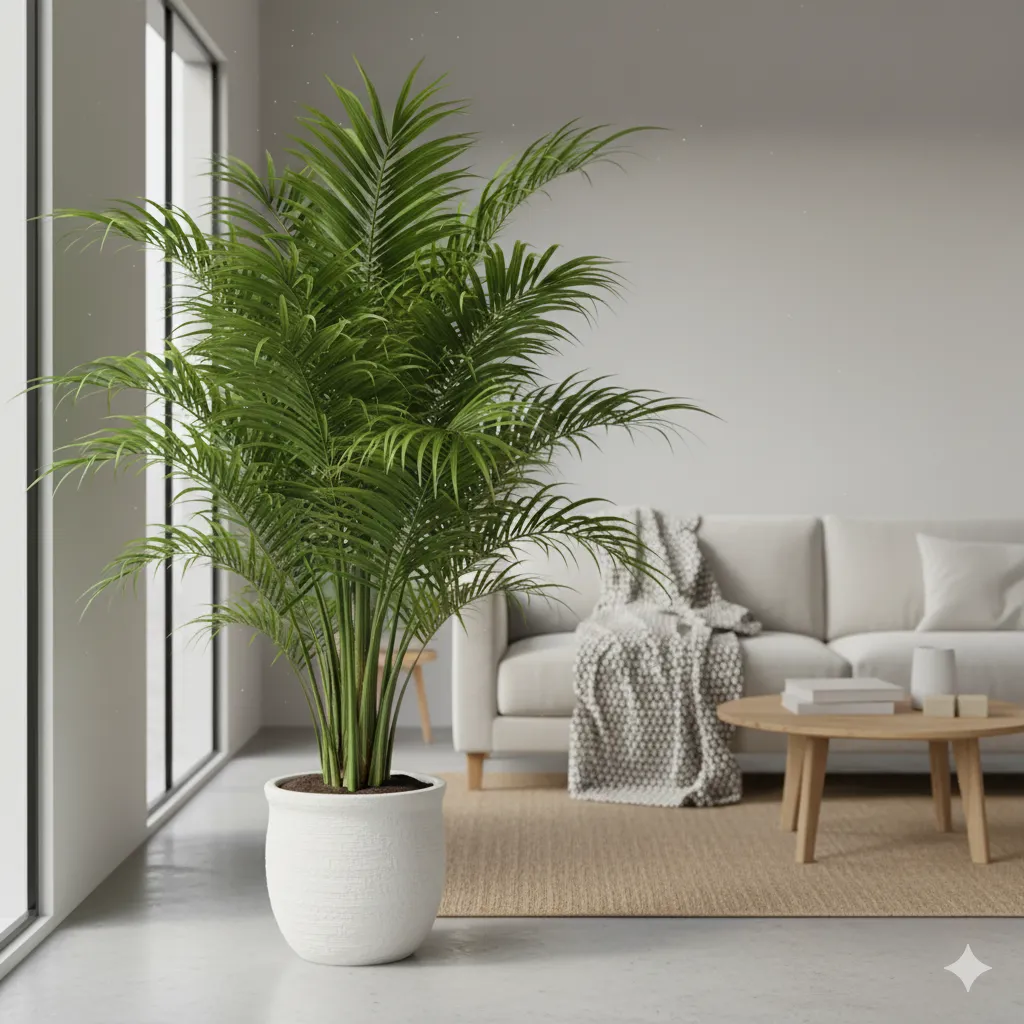
Sunshine in leaf form? That’s the Areca palm. This cheerful, feathery beauty turns any room into a mini resort faster than you can say “piña colada.” You don’t need a greenhouse or a horticulture degree to keep it lush, either.
A few smart tweaks, and your Areca will practically wave to you every time you walk by.
Pick a Bright Spot (But Not a Sunny One)
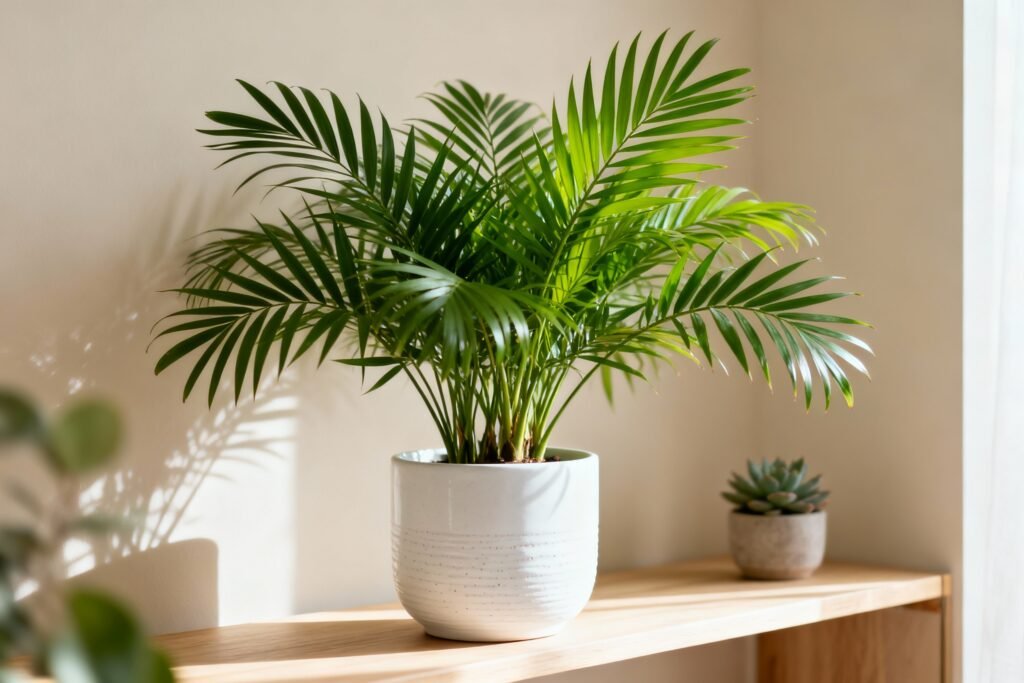
Areca palms love light, but they hate harsh, direct sun. Think bright, filtered light—like a sheer-curtained window or a spot a few feet away from a sunny sill. Direct rays can scorch those delicate fronds and turn tips crispy.
We want beach vibes, not sunburns. Pro tip: Rotate the pot every couple of weeks. Your plant grows toward the light, so a gentle spin keeps it looking balanced instead of lopsided. And if you see the fronds stretching and thinning, that’s your cue to move it closer to the light.
What if your home is dim?
No worries.
Use a grow light for a few hours a day. Choose a full-spectrum LED, place it 12–18 inches above, and run it for 6–8 hours. It’s like a mini-sun that never gets moody.
Water Like a Goldilocks: Not Too Much, Not Too Little
Overwatering kills more Areca palms than anything else.
Let the top 1–2 inches of soil dry out before watering again. Stick a finger in the soil. If it feels dry to your first knuckle, water.
If not, wait. Easy. Watering routine, simplified:
- Spring–summer: Water every 7–10 days, depending on light and heat.
- Fall–winter: Every 10–14 days. The plant slows down; your watering should too.
- Always use a pot with drainage holes.
No exceptions.
How to avoid brown tips from water issues
It’s usually one of two things: underwatering or fluoride in tap water. If your city water is harsh, use filtered or let tap water sit out 24 hours before using. IMO, your Areca will thank you with fewer crispy edges.
Humidity: The Secret Sauce for Instant Tropical Vibes
Areca palms come from humid environments, so dry air makes them pout.
Aim for 45–60% humidity. You can get there without turning your house into a rainforest. Easy humidity boosters:
- Place a tray with pebbles and water under the pot (but keep the pot above the waterline).
- Group plants together. They create a microclimate—teamwork makes the dream work.
- Run a small humidifier nearby.
FYI, your skin will love it too.
Misting: yay or nah?
Light misting can help dust off leaves, but it won’t fix low humidity for long. If you mist, do it in the morning so fronds dry by night. Wet leaves overnight can invite fungal drama we do not need.
Soil and Potting: Give Those Roots a Luxury Loft
Areca roots like air and fast drainage.
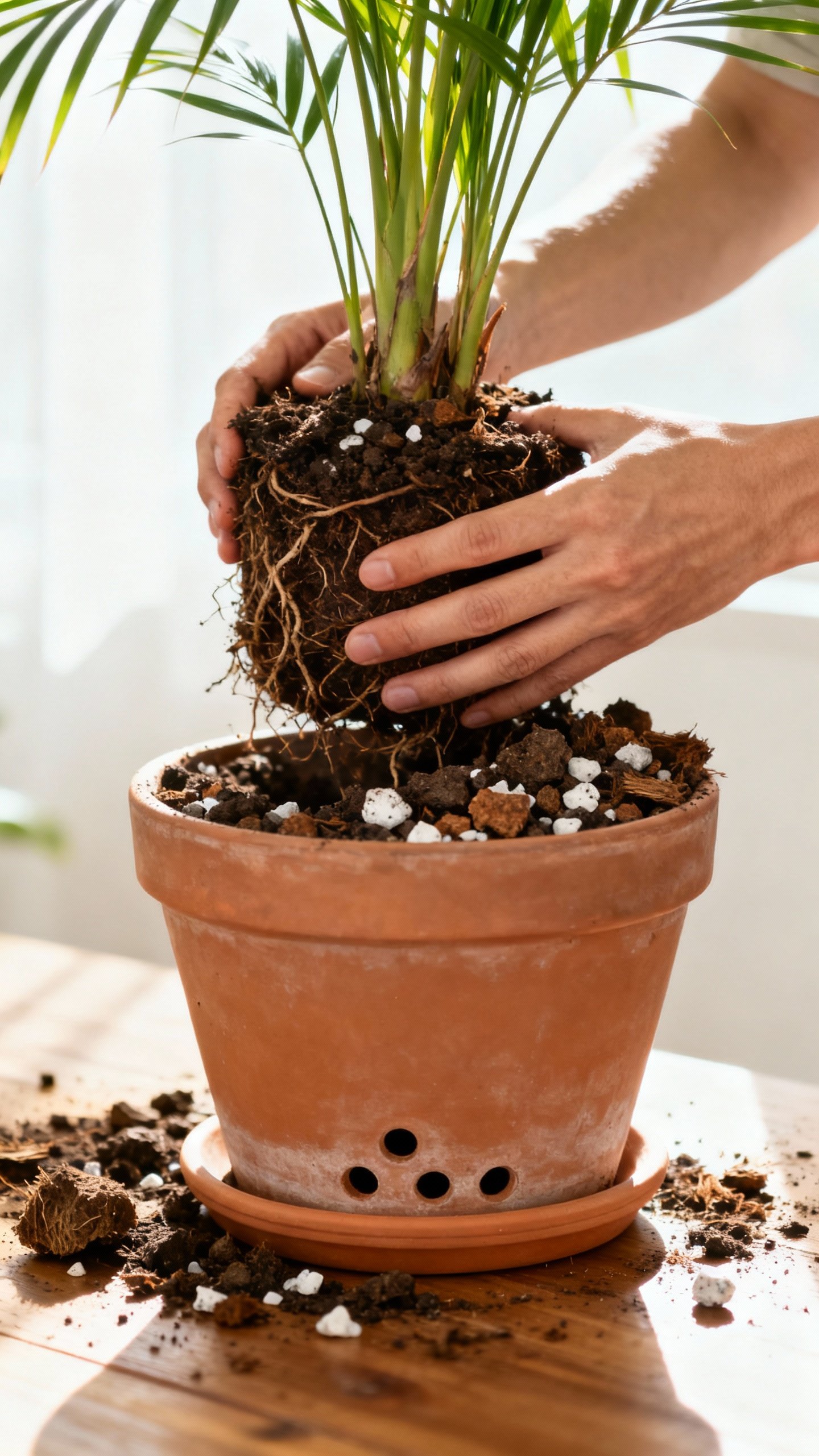
Use a light, chunky mix that holds some moisture without getting swampy. A standard indoor potting mix works if you upgrade it. Ideal mix:
- 2 parts high-quality potting soil
- 1 part perlite or pumice
- 1 part coco coir or peat moss
Pick a pot that’s just slightly bigger than the root ball. Oversized pots hold extra water and make root rot way too easy.
Repot every 2–3 years in spring when roots start circling or popping out the bottom.
Signs your Areca needs repotting
- Water runs straight through the pot in seconds
- Roots push above the soil or out of the drain holes
- Growth stalls even with good care
Fertilizer: Light Snacks, Not All-You-Can-Eat Buffet
Arecas prefer light feeding. Use a balanced, water-soluble fertilizer at half strength every 4–6 weeks in spring and summer. Skip fertilizing in fall and winter.
The plant naps, and you should let it. Avoid:
- High-phosphorus fertilizers (they can cause salt buildup)
- Overfeeding, which burns tips and looks messy
If you see crusty white residue on the soil, flush with plain water to remove excess salts. Think of it like giving your plant a detox day.
Pruning and Styling: Keep It Fluffy, Not Scruffy
Remove completely brown or yellow fronds at the base to redirect energy to new growth. But don’t go Edward Scissorhands on it—Areca palms grow from the base, so over-pruning slows things down. Dos and don’ts:
- Do trim only fully brown leaves.
Half-brown? Leave them for now.
- Do dust leaves with a soft cloth regularly. Clean leaves photosynthesize better.
- Don’t use leaf shine.
It clogs pores and looks weirdly plastic.
Shaping the plant
Want a fuller look? Place it where it gets bright light on multiple sides, or cluster multiple Areca stems in one pot. You can also pot two smaller plants together for instant fullness.
Yes, it’s a little plant hack—and it works.
Pests and Problems: Catch Them Fast
Arecas can attract spider mites, mealybugs, and scale—especially in dry air. Check under leaves and along stems weekly. Quick response plan:
- Shower the plant to knock off pests.
- Wipe leaves with diluted insecticidal soap or neem oil every 7–10 days until clear.
- Increase humidity and airflow to make life harder for mites.
If fronds look pale or new growth seems weak, upgrade the light. If tips keep browning, adjust your watering and try filtered water.
It’s usually fixable, so don’t panic.
Placement Ideas to Max Out the Tropical Mood
Let’s talk vibes. Arecas create flowy, soft texture that elevates any room. You can style them like a pro with a little intention. Best spots, IMO:
- Near big windows with sheer curtains—hotel lobby energy at home.
- On a bright landing or hallway to soften straight lines.
- In a bathroom with a window—free humidity included.
- In a corner of your living room to frame a reading chair.
Use a woven basket cover or ceramic pot to match your decor.
Pick a pot that suits the plant’s height so it doesn’t look top-heavy. And give it room to breathe—Areca palms love space to show off.
Areca Palm FAQ
How big do Areca palms get indoors?
Indoors, expect 5–8 feet with good light. They grow moderately fast in spring and summer, slower in winter.
If your ceiling is low, you can keep it smaller with selective pruning of the tallest, oldest canes.
Why are the tips of my Areca palm turning brown?
Usually low humidity, inconsistent watering, salt buildup, or fluoride in tap water. Increase humidity, water evenly, and try filtered or rested tap water. Trim brown tips with clean scissors, following the natural shape so it still looks tidy.
Can my Areca palm live outside?
If you live in a warm climate (USDA Zones 10–11), yes.
Otherwise, treat it as a summer guest. Move it outside when nights stay above 60°F, and give it shade to dappled sun. Bring it back in before temps drop.
Is the Areca palm safe for pets?
Yes!
The Areca palm is non-toxic to cats and dogs. Your cat might still treat it like a salad bar, though, so you may need to relocate it or provide cat grass as a decoy.
Do I need to wipe the leaves?
Definitely. Dust blocks light and slows growth.
Wipe with a damp microfiber cloth every few weeks. Avoid oils and heavy leaf-shine sprays. Clean equals glossy—no gimmicks needed.
Can I split my Areca palm to make more plants?
You can divide clumps in spring when repotting.
Gently separate sections with several canes and healthy roots, pot them up, and keep humidity high while they settle. It’s plant multiplication, not rocket science.
Conclusion
If you give your Areca palm bright, indirect light, smart watering, and a touch of humidity, it will return the favor with nonstop tropical drama—in the best way. Keep the soil airy, feed lightly in the growing season, and don’t skip those quick pest checks.
Do that, and your space will read “vacation mode,” even on a Monday. FYI, a woven basket and a sunny corner might be the fastest decor upgrade you make all year.
Next, learn the best Parlor Palm Care Hacks.
Enjoyed this project? Get even more DIY ideas that save (and make) you money.
Join our free newsletter for profitable DIY projects, clever cleaning hacks, home ideas, and creative crafts delivered straight to your inbox.
✓ Free forever • No spam • Unsubscribe anytime