Your money tree doesn’t need luck. It needs a little know-how, a dash of routine, and a person who doesn’t drown it out of love. Good news: that’s you.
If your Pachira aquatica looks more “meh” than “money,” let’s fix that. Here’s how to grow a lush, glossy, braided show-off you’ll actually brag about.
Meet Your Money Tree (And Its Vibes)
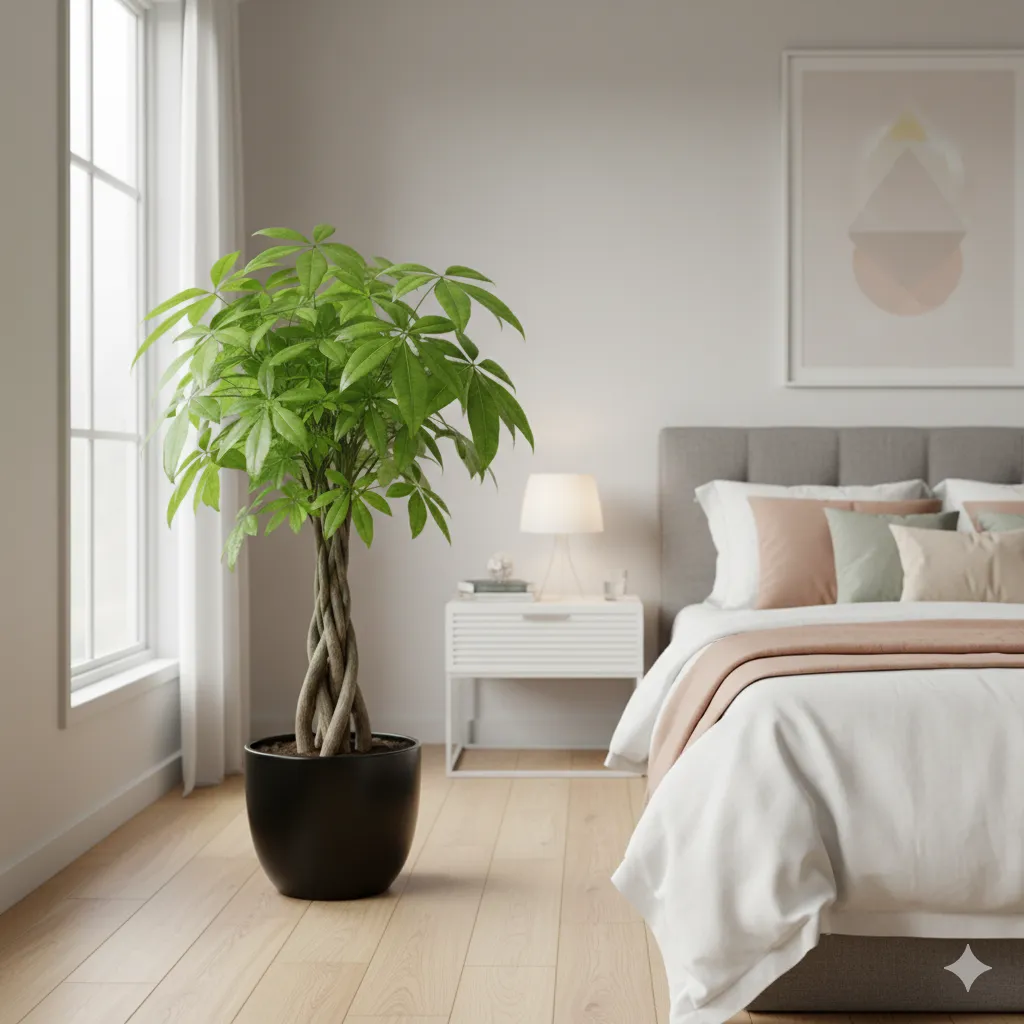
You’ll see money trees with braided trunks, shiny leaves, and an air of “I pay rent with photosynthesis.” They’re tougher than they look. Think tropical swamp native that likes bright light, light hands with water, and a pot that drains like a champ. Bottom line: give it bright, indirect light; water deeply but not often; and keep drafts and soggy soil far, far away.
Light: The Make-or-Break Factor
Money trees will tolerate low light, but they won’t thrive.
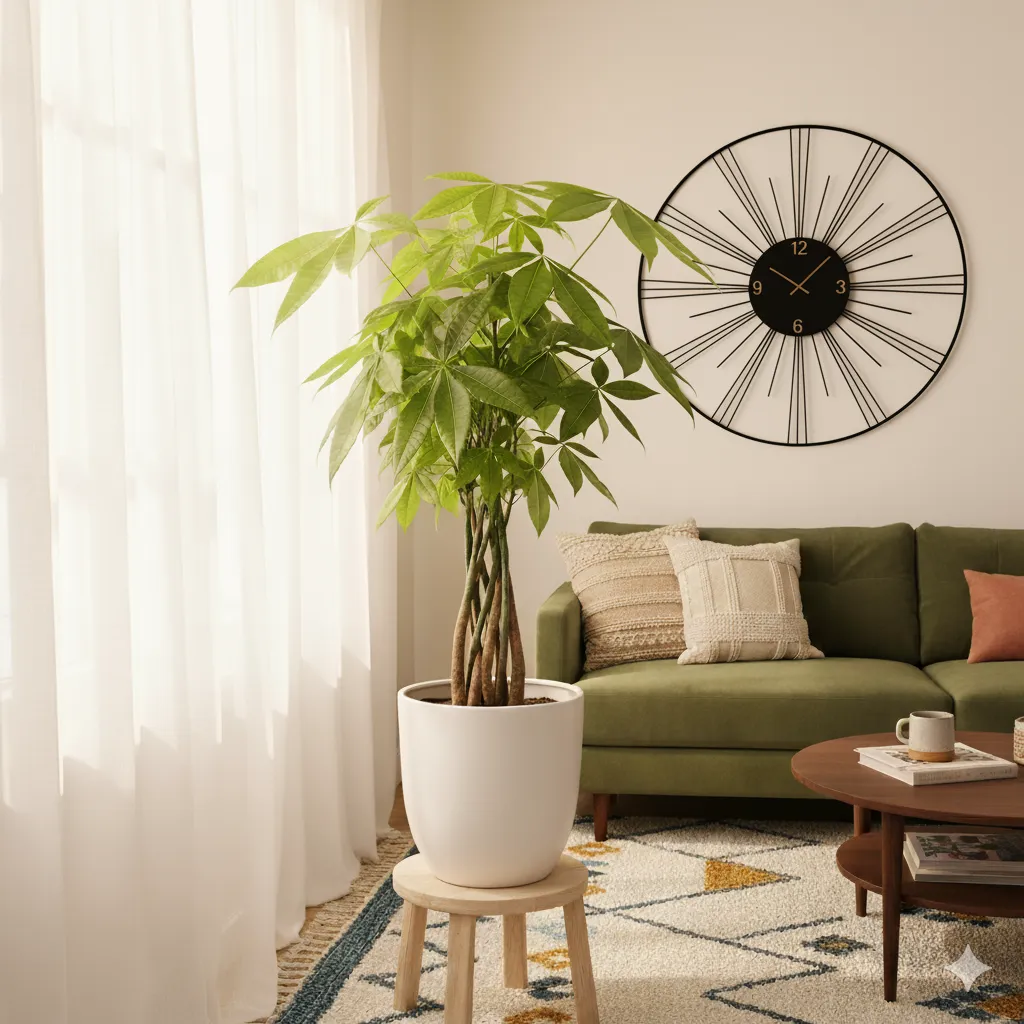
You want bright, indirect light near a window with filtered sun.
- Best spot: A few feet from an east or south window with sheer curtains.
- Too little light: It stretches, leaves grow smaller, growth slows. Sad vibes.
- Too much direct sun: Leaves scorch or bleach. Also sad vibes.
Grow Lights, FYI
No bright window?
Use a full-spectrum LED. Place it 12–18 inches above the plant and run it for 10–12 hours daily. Set a timer so you don’t forget and accidentally create a jungle rave.
Watering: Deep Drinks, Long Breaks
Overwatering kills more money trees than anything.
The trick? Water thoroughly, then wait.
- Check first: Stick your finger 1–2 inches into the soil. If it feels dry, water.
If it feels cool or damp, wait.
- How to water: Soak the soil until water drains out the bottom. Empty the saucer after 10 minutes.
- Frequency: About every 1–2 weeks in spring/summer, 2–4 weeks in fall/winter. Your home’s conditions decide, not the calendar.
Signs You’re Off
- Overwatered: Yellow leaves, mushy stems, fungus gnats, musty smell.
- Underwatered: Crispy edges, droopy leaves that perk up after watering.
Soil, Pot, and Drainage: Don’t Skimp Here
Your plant wants air around its roots and a quick drain.
Heavy, dense soil suffocates it.
- Soil mix: Use a chunky, fast-draining blend. Mix equal parts high-quality potting soil, perlite/pumice, and orchid bark (or coarse sand). IMO, this is the magic combo.
- Pot: Use a pot with a drainage hole.
Terracotta works great if you overwater because it breathes.
- Upgrade size: When roots circle the pot or you water constantly, repot into a pot 1–2 inches wider. Do this in spring for the least drama.
Repotting Quick Steps
- Water the plant the day before.
- Gently loosen the root ball and trim any black, mushy roots.
- Set in fresh mix at the same soil level as before.
- Water once, then let it settle in. Skip fertilizer for 4–6 weeks.
Humidity and Temperature: Keep It Comfy
Money trees love 50–60% humidity and temps between 65–80°F.
Basically, your living room—but not your arctic office corner.
- Avoid: Cold drafts, heat vents, and sudden temperature swings.
- Boost humidity: Group plants together, use a pebble tray, or run a small humidifier nearby.
- Misting: Feels cute, doesn’t do much. Use it for dusting, not humidity.
Feeding and Growth: Fuel the Green
Money trees grow fastest in spring and summer. Feed lightly and consistently.
- Fertilizer: Use a balanced liquid fertilizer at half strength every 4–6 weeks during the growing season.
- Skip in winter: It slows down and doesn’t need the extra calories.
- Yellowing after feeding? You might have overdone it.
Flush the soil with water and back off next time.
Pruning and Styling
Want a bushier look? Pinch back new growth at the tips. Want height?
Let it reach, then stake if needed. You can train or re-braid pliable stems, but only when young and flexible. Old, woody stems don’t negotiate.
Common Problems (And Fast Fixes)
Things happen.
Here’s your quick diagnostic guide:
- Yellow leaves: Usually overwatering or poor drainage. Check roots, adjust watering, improve soil.
- Brown tips/edges: Underwatering, low humidity, or salt buildup from fertilizer. Rinse the soil and water steadily.
- Leaf drop: Stress from a move, drafts, or abrupt light changes.
Stabilize conditions and it should bounce back.
- Pests: Spider mites, mealybugs, and scale will try to move in.
Pest Control That Works
- First step: Shower the plant to knock off freeloaders.
- Then: Wipe leaves and stems with insecticidal soap or a neem oil solution weekly for 3–4 weeks.
- Prevention: Keep leaves dust-free, quarantine new plants, and avoid soggy soil.
Seasonal Care: Read the Room
Plants follow the seasons, even indoors. You’ll win if you adjust as you go.
- Spring/Summer: More light, more growth. Water and feed more often.
Repot if needed.
- Fall/Winter: Less light, slower growth. Water less often, stop fertilizing, and watch for cold drafts.
- Rotate monthly: Give the pot a quarter turn so it grows evenly and doesn’t lean like it partied too hard.
Propagation: Make a Clone Army
Yes, you can make more. Stem cuttings root well with a little patience.
Water Prop Method
- Take a 4–6 inch cutting with 2–3 nodes.
Remove lower leaves.
- Pop it in a jar of clean water, nodes submerged, leaves above.
- Change water weekly. Roots form in 3–6 weeks.
- Pot in a chunky mix once roots are 2–3 inches long.
Soil Prop Method
- Dip the cut end in rooting hormone (optional but helpful).
- Stick into moist, airy mix and cover with a clear dome or bag for humidity.
- Vent daily to prevent mold. Tug gently after a few weeks—resistance means roots.
FAQs
Is the money tree actually “lucky” for finances?
If only.
It won’t pay your bills, but it can elevate your space and mood, which might help you stay productive. IMO, a thriving plant beats a desk troll charm any day.
Why are my money tree leaves turning yellow?
Most likely overwatering or a clogged, heavy soil. Check for soggy roots and repot into a chunky mix if needed.
Adjust watering so the top 1–2 inches dry out before you water again.
Can I keep my money tree in low light?
It will survive, but it won’t love it. Expect slower growth and smaller leaves. Add a grow light if your windows are weak—your plant will say thank you with shiny new foliage.
How big will my money tree get indoors?
Indoors, 3–6 feet is normal with good care.
You control the size with pot limits and pruning. Want a mini tree? Keep trims regular.
Want floor-to-ceiling drama? Give it light and space and let it ride.
Is it safe for pets?
Yes, Pachira aquatica is generally considered non-toxic to cats and dogs. Still, avoid making it a salad bar—chewing can upset tummies and ruin your plant’s look.
Everybody loses.
Can I unbraid or rebraid the trunk?
You can gently rebraid soft, green stems, but don’t force older woody trunks. If the braid looks tight, loosen ties to prevent scarring. Future braiding works best on young growth, FYI.
Conclusion
Your money tree wants simple, consistent care: bright indirect light, deep-but-infrequent watering, airy soil, and comfy humidity.
Dial those in, and it’ll reward you with glossy leaves and steady growth. Do that, and the only thing you’ll be “losing” is the urge to buy another replacement plant—though, IMO, one more never hurt.
Enjoyed this project? Get even more DIY ideas that save (and make) you money.
Join our free newsletter for profitable DIY projects, clever cleaning hacks, home ideas, and creative crafts delivered straight to your inbox.
✓ Free forever • No spam • Unsubscribe anytime