You brought home a cute succulent because it looked low-maintenance, right? Surprise: it’s chill, but not indestructible. If you want those plump leaves and new growth, you need a few simple habits.
Good news: none of this is rocket science, and your plants won’t judge your learning curve.
Light: The Make-or-Break Factor
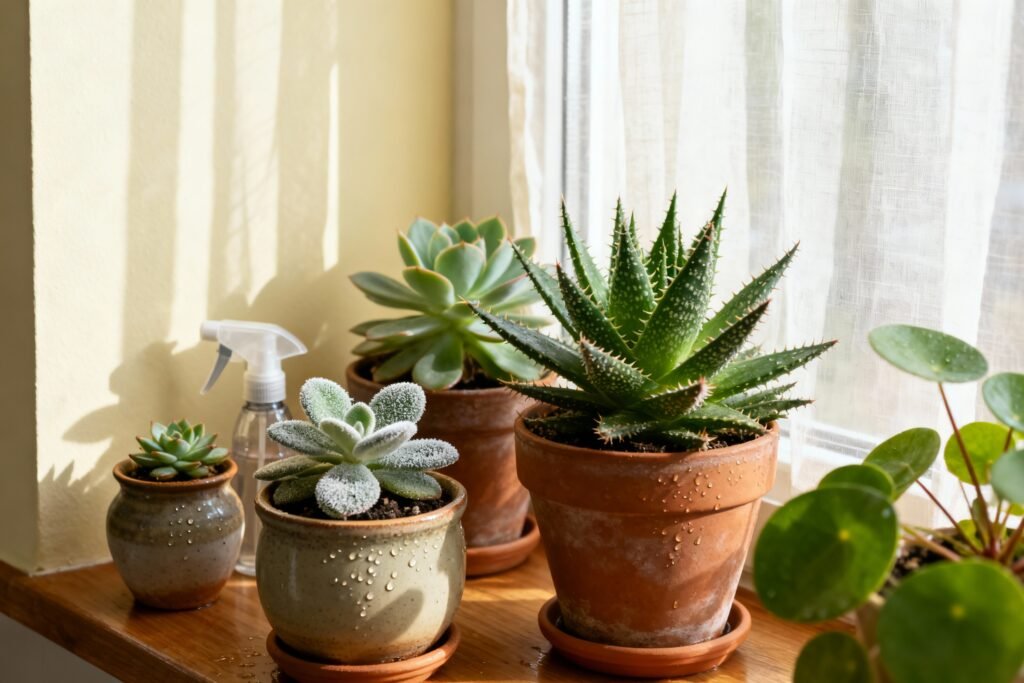
Succulents crave bright light. Indoors, that usually means a south or west-facing window. If your plant starts stretching like it’s reaching for the top shelf, it’s begging for more sun. Key signs of light issues:
- Leggy growth (etiolation): Long stems, widely spaced leaves — give it more light, stat.
- Pale color: Succulent lost its vibrant hues?
It needs brighter conditions.
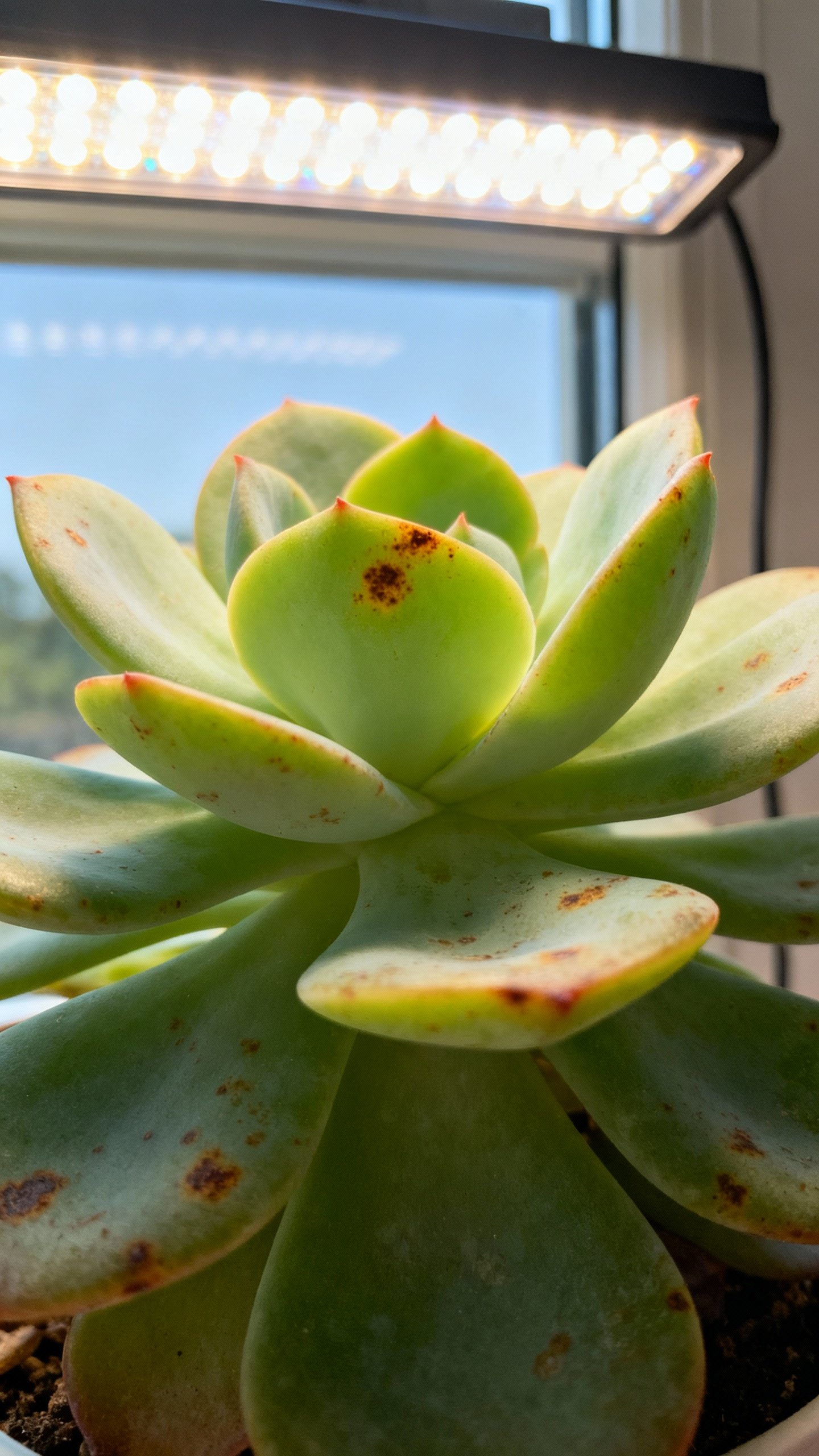
- Sunburn: Brown, crispy patches mean you moved it into direct sun too fast.
Using Grow Lights (Without Turning Your Place Into a Lab)
Don’t get precious about it — a simple full-spectrum LED grow light works wonders. Place it 8–12 inches above your plants and run it 10–14 hours daily. FYI, consistency beats intensity; aim for steady, bright exposure rather than sporadic blasting.
Watering: Less Often, More Intentionally
The quickest way to kill a succulent?
Overwatering. These plants evolved to store water, so your weekly watering schedule from fern world does not apply here. How to water properly:
- Wait until the soil dries out completely, not “mostly.”
- Water thoroughly until it drains from the bottom.
- Dump excess water from saucers — no foot baths.
Pro tip: Stick your finger into the soil or use a moisture meter. If it still feels cool or damp, wait.
IMO, it’s better to underwater slightly than to drown your plant with love.
Seasonal Rhythm Matters
Succulents slow down in winter and sip water like they’re on a budget. Reduce frequency, sometimes to once every 3–4 weeks, depending on your indoor climate. In spring and summer, resume a steadier cadence when growth picks up.
Soil and Pots: The Dynamic Duo
You can’t keep roots healthy without the right foundation.
Regular potting soil holds too much moisture, which succulents hate. Use a fast-draining mix instead. Build a great mix:
- Option A: Buy a cactus/succulent potting mix.
- Option B: Make your own: 2 parts potting soil + 1 part perlite/pumice + 1 part coarse sand or fine gravel.
Pot choice basics:
- Drainage hole: Non-negotiable. No hole, no deal.
- Material: Terracotta breathes and helps prevent soggy roots; ceramic looks cute but retains moisture longer.
- Size: Snug fits win.
Oversized pots store too much water.
Repotting Without Drama
Repot every 1–2 years or when roots circle the bottom. Let the plant dry for a day before repotting, then wait 3–5 days after repotting to water. That pause lets any root nicks heal and reduces rot risk.
Temperature, Humidity, and Airflow
Succulents prefer warm days (65–80°F) and cooler nights (50–60°F).
They also adore low humidity, so if your bathroom feels like a sauna, relocate the plants. Keep them comfy:
- Drafts: Avoid direct blasts from AC or heaters.
- Humidity: Aim for 30–50%. If your home is humid, increase airflow with a small fan.
- Sudden swings: No plant enjoys chaos — keep temps stable.
Feeding: Light Meals, Not Buffets
You won’t need to feed succulents much, but a little nutrition during active growth helps. Use a balanced, water-soluble fertilizer diluted to 1/4 strength. Feeding schedule:
- Spring and summer: Once every 4–6 weeks.
- Fall: Maybe once, if growth continues.
- Winter: Skip it.
They’re basically napping.
Signs You Overdid It
If leaves yellow quickly or growth looks soft and weak, scale back. Flush the soil with plain water once or twice to wash out excess salts. FYI, more fertilizer never equals faster success with succulents.
Common Problems (And Chill Fixes)
You’ll notice patterns.
Once you spot them, you’ll fix them fast and look like a plant whisperer. Mushy leaves or stems? That’s rot from overwatering or compact soil. Trim off mush, let the plant dry, repot in fresh mix, and water less. Wrinkly or deflated leaves? Usually underwatering. Confirm dry soil and give a deep soak.
They plump up in a day or two. Brown tips or crispy edges? Could be too much direct, hot sun or underwatering. Adjust light or watering, and check for hot afternoon rays. White fuzz or cottony bits? Mealybugs. Dab them with isopropyl alcohol on a cotton swab and repeat weekly until gone.
Is it annoying? Yes. Does it work?
Also yes.
Etiolation Recovery Plan
When a succulent stretches, it won’t magically shrink. Move it to brighter light and consider pruning the top to propagate. Re-root the cutting and let the base regrow; it’s a makeover, not a miracle.
Propagation: Because One Plant Is Never Enough
Want more plants for free?
Succulents practically invented DIY. Easy methods:
- Leaf cuttings: Gently twist off a healthy leaf, let it callus 2–3 days, then place on top of dry, gritty soil. Mist lightly every few days until roots and a rosette appear.
- Stem cuttings: Slice a healthy stem, let it callus, then plant in dry mix. Wait a few days to water.
- Pups/offsets: Many species (like Haworthia and Aloe) produce babies.
Detach and pot them up — instant gratification.
IMO: Start with one or two cuttings at a time so you can track what works in your space. Then scale your succulent empire.
Designing Your Indoor Setup
Let’s talk vibes. You can keep succulents healthy and still make your space look curated. Display ideas that also help plants thrive:
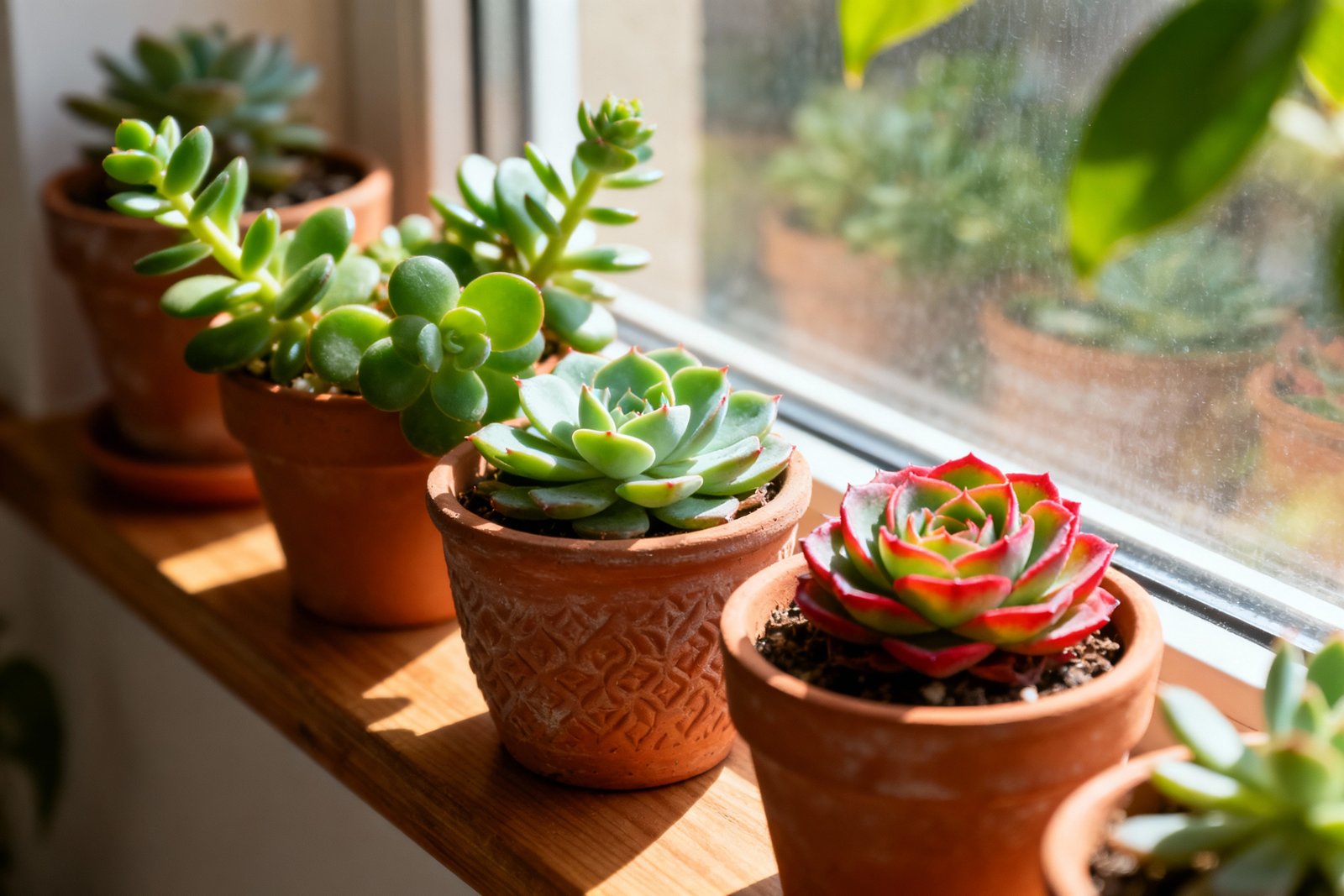
- Window ledge row: Perfect for small rosette types like Echeveria and Sempervivum in bright light.
- Staggered shelves: Put high-light lovers on top, shade-tolerant types (Haworthia, Gasteria) lower.
- Mixed bowls: Use plants with similar needs.
Don’t mix thirsty tropicals with desert divas.
- Top dressing: Add gravel for a clean look and to prevent soil splash. It also reduces fungus gnats.
Species That Play Nice Indoors
Some succulents handle indoor light better than others:
- Haworthia and Gasteria: Tolerate lower light and stay compact.
- Jade (Crassula ovata): Forgiving, long-lived, and easy to shape.
- Snake plant (Sansevieria/Dracaena): Technically succulent, thrives in many conditions.
- Aloe: Likes bright light; goes quiet in winter but stays tough.
FAQ
How often should I water my indoor succulents?
Water only when the soil dries out fully. That might mean every 10–21 days in spring and summer and every 3–4 weeks in winter.
Always check the soil rather than following a fixed calendar.
Why is my succulent stretching and losing its shape?
It’s not getting enough light. Move it to a brighter window or add a grow light. You can prune and propagate the top to restore a compact shape.
Can I use regular potting soil?
You can, but you probably won’t love the results.
Regular soil stays too wet and encourages rot. Mix in lots of perlite/pumice and coarse sand, or buy a cactus/succulent mix for better drainage.
Do succulents need fertilizer?
A little goes a long way. Feed diluted fertilizer during spring and summer about once a month.
Skip winter because plants grow slowly and won’t use the extra nutrients.
What’s the best pot for succulents?
One with a drainage hole, always. Terracotta helps prevent overwatering, while ceramic or plastic retains moisture longer. Choose a pot that fits the root ball with just a bit of extra space.
How do I get rid of pests like mealybugs?
Quarantine the plant, dab pests with isopropyl alcohol, and repeat weekly.
Improve airflow and avoid overwatering to prevent future infestations. If it’s a heavy case, consider a systemic insecticide, but try the gentle route first.
Conclusion
Indoor succulents thrive when you nail three basics: bright light, dry spells between deep waterings, and fast-draining soil. Keep temps stable, feed lightly, and fix problems early.
Do that, and your plants will repay you with new growth, vibrant color, and zero drama. FYI, once you learn their rhythm, these little weirdos practically take care of themselves.
Next, learn How To Care For An Aloe Vera Plant.
Enjoyed this project? Get even more DIY ideas that save (and make) you money.
Join our free newsletter for profitable DIY projects, clever cleaning hacks, home ideas, and creative crafts delivered straight to your inbox.
✓ Free forever • No spam • Unsubscribe anytime