Fingerprints all over the fridge again? Stainless steel loves to show off every smudge like it’s auditioning for a crime drama. The good news: you can clean it fast, keep it streak-free, and make it stay that way for weeks.
No fancy gear, no harsh chemicals, and zero stress. Let’s get those appliances gleaming without turning your kitchen into a science lab.
Watch this easy tutorial to see how to clean your stainless steel appliances:
Know Your Finish: The Grain Rules Everything
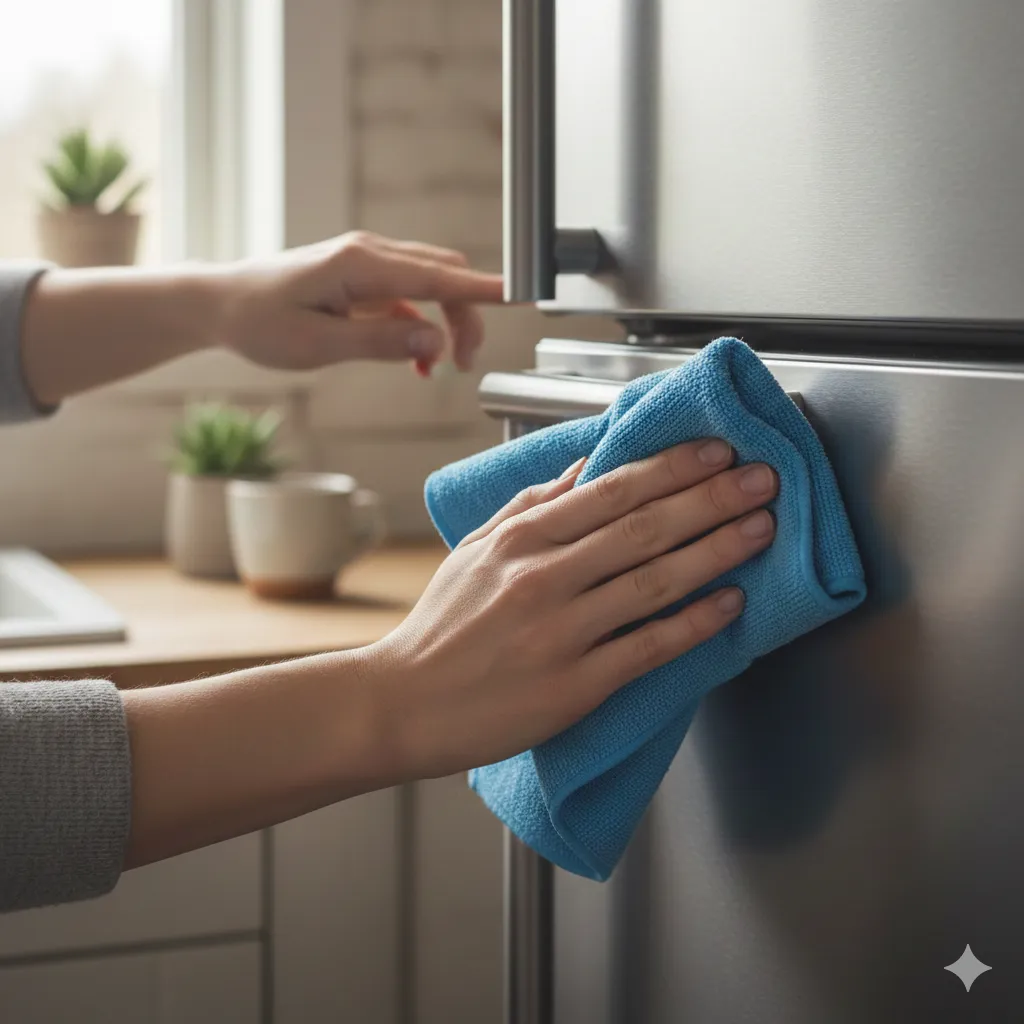
Stainless steel has a “grain” — tiny lines that run either horizontally or vertically. You’ll get the best results when you clean and polish with the grain.
Go against it and you’ll cause streaks, traps for residue, and a little heartbreak. Quick test? Shine a light and look for the direction of the faint lines.
Not sure? Start in a small corner, wipe one way, then the other, and see which direction looks cleaner. Follow that.
Gather Your Gear (Keep It Simple)
You don’t need a cart full of products.
You need a few MVPs that don’t mess around.
- Microfiber cloths (2-3): one for cleaning, one for drying, one for polishing
- Warm water and a drop of mild dish soap
- 70% isopropyl alcohol (for disinfecting and sticky spots)
- White vinegar in a spray bottle (optional, great for grease)
- Mineral oil or fractionated coconut oil (for a long-lasting, streak-free finish)
- Paper towels (only for applying alcohol, not for polishing)
FYI: Skip abrasive sponges, bleach, ammonia, and oven cleaners. They can scratch or discolor the finish. And nobody wants a tiger-striped fridge.
The Daily Clean: Fast, Safe, Effective
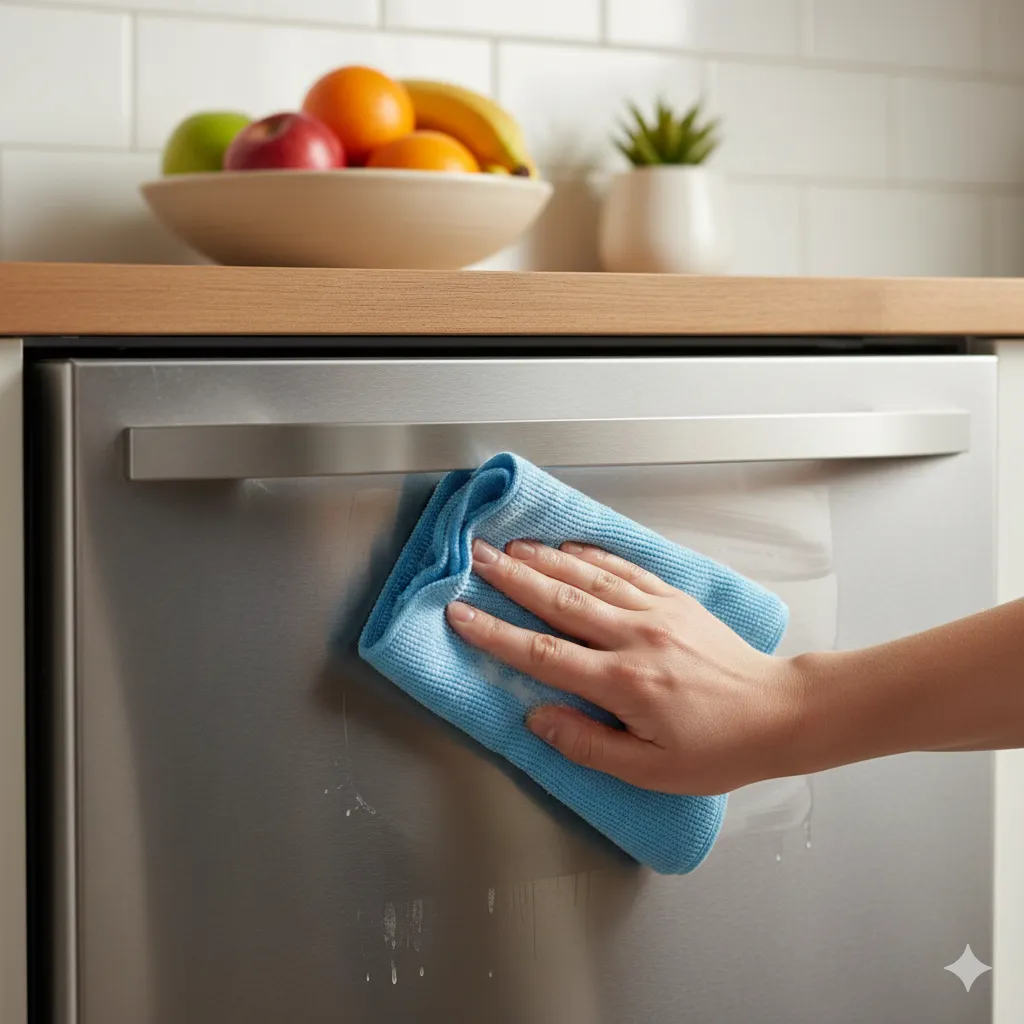
When you just need to wipe away fingerprints and splashes, this 3-step routine keeps things easy.
- Soap and water: Dampen a microfiber cloth with warm water and a drop of dish soap.
Wipe with the grain. Focus on handles and lower panels where hands and tiny mystery smudges live.
- Rinse and dry: Rinse the cloth with clean water, wring it out, and wipe again to remove soap. Then dry thoroughly with a fresh microfiber.
Drying prevents water spots and streaks.
- Optional: Alcohol spot clean: For stubborn sticky spots, dab a little 70% isopropyl alcohol on a paper towel and wipe with the grain. Follow with a dry cloth.
Pro tip: Keep one microfiber cloth on the fridge with a magnet clip. You’re way more likely to do a quick swipe when it’s right there.
Deep Clean + Streak-Proof Shine (Lasts for Weeks)
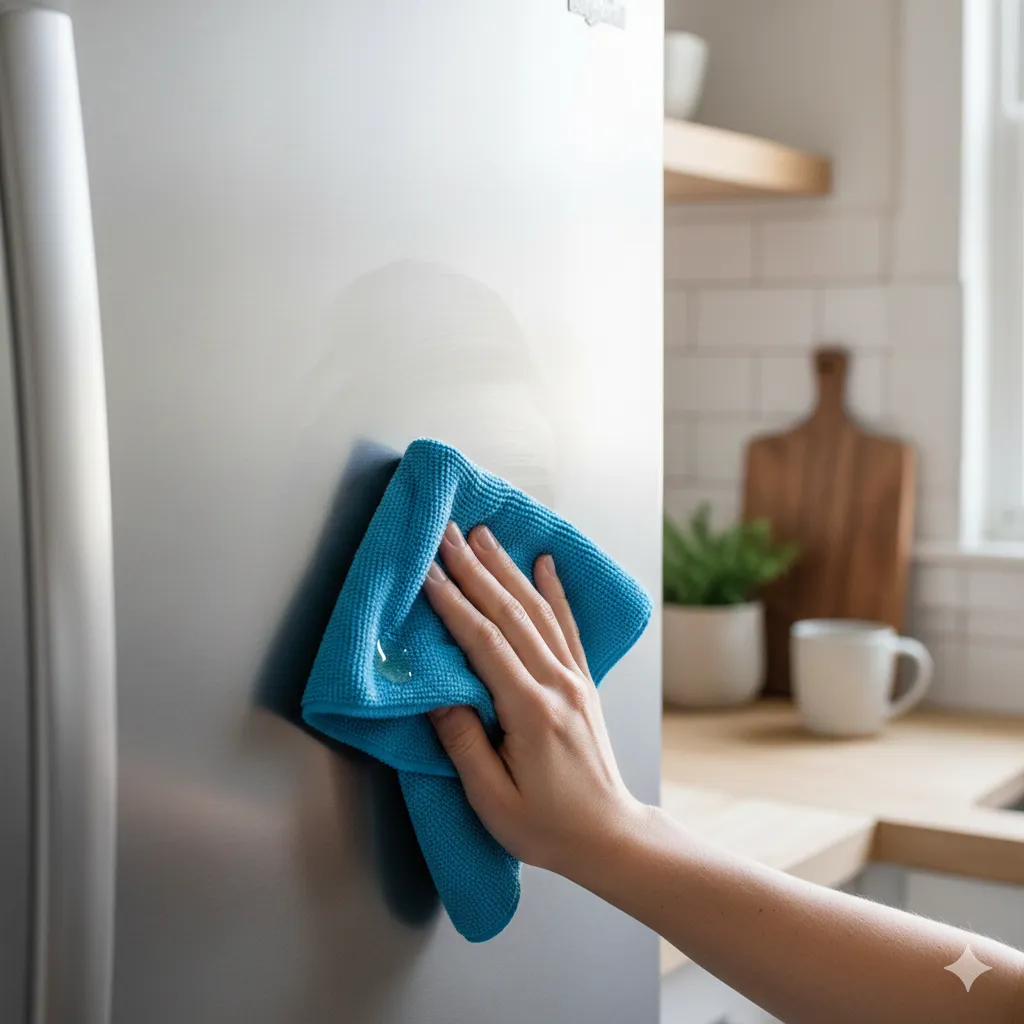
This is your “wow” moment.
Do it once, then maintain it with quick wipe-downs.
- Degrease quickly: Lightly mist white vinegar and wipe with the grain. This breaks down oils without leaving residue. If your fridge hasn’t seen a cloth in a while, do a second pass.
- Clean with soap: Use the soapy microfiber for a full wipe-down.
Rinse and dry completely.
- Polish with oil: Put a tiny drop (like pea-sized) of mineral oil or fractionated coconut oil on a clean microfiber. Buff with the grain in long, even strokes. Flip the cloth to a dry side and buff again to remove excess.
You’re not trying to make it greasy.
You’re sealing microscopic imperfections so fingerprints don’t stick. Done right, the finish looks satin, not slick. IMO, mineral oil lasts a bit longer and doesn’t go rancid, which your nose will appreciate.
How Much Oil Is Too Much?
If you can see swirl marks or feel any tackiness, you used too much.
Add nothing else. Just keep buffing with a clean, dry microfiber until the shine looks even and smooth.
Handle Stubborn Stuff Without Damage
Not all smudges deserve the same swipe. Here’s how to handle the annoying ones.
- Hard water spots: Dab vinegar on a microfiber and hold it on the spot for 30 seconds, then wipe with the grain.
Dry immediately.
- Sticky residue (tape, labels): Use a bit of rubbing alcohol. Work slowly and keep your pressure light.
- Fine scratches: You can minimize the look by polishing more carefully with oil. Deep scratches need pro kits, and those can make things worse if you don’t match the grain perfectly.
Proceed with caution.
- Heat stains or discoloration: These usually mean a factory coating got compromised. Try vinegar, then oil. If it persists, check your appliance manual for brand-specific cleaners.
When to Use Commercial Cleaners
Some brands sell stainless steel sprays that work well.
If you use them, wipe with the grain and finish with a dry microfiber to remove residue. Avoid silicone-heavy products if you plan to switch to oil later — they can create build-up.
Keep It Streak-free For Weeks (Yes, Really)
Here’s how to stretch that showroom shine.
- Do a weekly microfiber wipe: No product, just a dry or lightly damp cloth. This removes oils before they bake on.
- Re-oil every 3–4 weeks: A quick pea-sized dot per door panel keeps fingerprints from sticking.
- Attack handles daily: One quick swipe after dinner saves you from a weekend scrub-fest.
- Control splash zones: If your dishwasher vents steam onto the panel, dry it after cycles to prevent mineral spots.
- Use the right cloths: Wash microfibers separately without fabric softener.
Softener coats fibers and makes streaks worse.
IMO, the difference between streak city and streak-free bliss often comes down to drying thoroughly and not overusing product. Less is more here.
Set Up a 60-Second Routine
– After making coffee: quick wipe on the fridge handle. – While the pasta water boils: swipe the dishwasher and oven doors. – Sunday night: 2-minute oil buff on the fridge. Tiny habits, huge payoff.
Common Mistakes To Avoid
Let’s save you time (and a little dignity).
- Using paper towels to polish: They leave lint and micro-scratches.
Microfiber wins every time.
- Spraying product directly on the appliance: Overspray drips and creates streaks. Spray onto the cloth instead.
- Cleaning in circles: It looks “polished,” but reveals swirls in sunlight. Always follow the grain.
- Skipping the dry step: Water spots equal streaks.
Always dry.
- Over-oiling: Greasy film attracts dust and fingerprints faster. Buff until the surface feels clean and slick, not oily.
FAQs
Can I use olive oil instead of mineral oil?
You can, but I don’t recommend it. Olive oil can go rancid over time and leave a smell or a tacky film.
Use food-grade mineral oil or fractionated coconut oil for a longer-lasting, odorless finish.
What’s the best way to clean a black stainless finish?
Black stainless usually has a coating that scratches more easily. Use only a damp microfiber with mild soap, then dry. Skip vinegar, abrasive pads, and oil unless the manufacturer says it’s safe.
Always check your manual first.
How do I remove old product build-up?
Spray a microfiber lightly with vinegar and wipe with the grain. Follow with a clean, damp cloth, then dry thoroughly. If residue persists, use a small amount of rubbing alcohol, then re-polish with a tiny bit of oil.
Is Windex safe for stainless steel?
Standard glass cleaners can leave streaks or interact with coatings.
If you use a glass cleaner, pick an ammonia-free version and always finish with a dry microfiber buff. Personally, soap + water + oil gives a more consistent result.
How often should I polish?
Every 3–4 weeks for most kitchens. If you have kids, pets, or a fridge that’s basically a snack magnet, you might do it every 2 weeks.
The actual polish takes under two minutes once you get the hang of it.
Do I need special “stainless steel” wipes?
Convenient? Yes. Necessary?
Not really. They work in a pinch, but they can leave residue. If you use them, always buff with a dry microfiber after.
Wrap-Up: Shine That Stays
You don’t need magic sprays or a hazmat suit to keep stainless steel looking fresh.
Clean with soap and water, dry like you mean it, and finish with a whisper of oil. Follow the grain, avoid heavy products, and do quick touch-ups. Do that, and your appliances stay streak-free for weeks — with far less effort than you think.
FYI: future you will be very pleased every time the light hits that perfect, smudge-free shine.
Next, learn How To Clean Oven Racks Fast.
Enjoyed this project? Get even more DIY ideas that save (and make) you money.
Join our free newsletter for profitable DIY projects, clever cleaning hacks, home ideas, and creative crafts delivered straight to your inbox.
✓ Free forever • No spam • Unsubscribe anytime