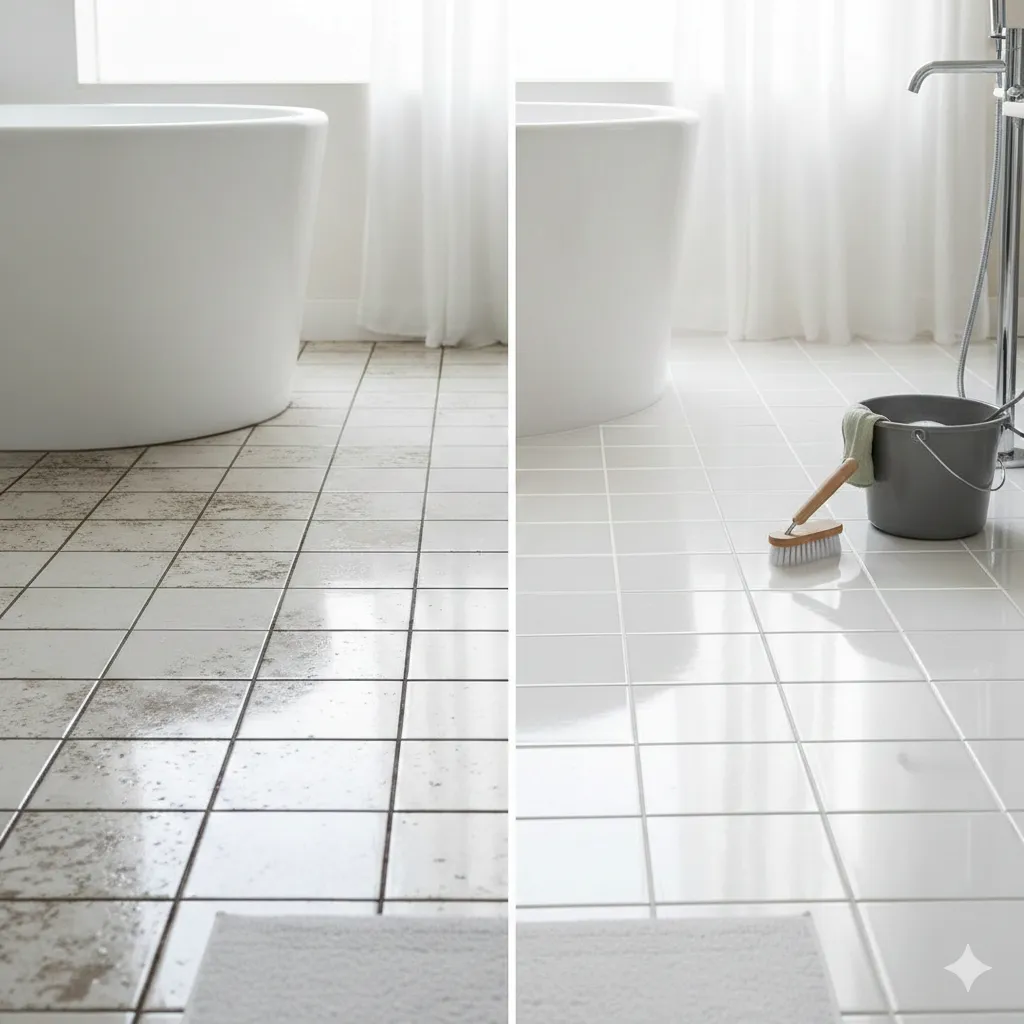
You want bright grout without the arm workout or fumes that make your eyes water? Same. Good news: you can ditch the toothbrush scrubbing and the harsh chemicals.
With a few clever tricks and the right products, your grout can look new again while you scroll TikTok and wait. Ready to clean smarter, not harder?
Watch this video to see how to clean tile grout on tile floors fast:
Why Grout Gets Gross (And Why You Don’t Need to Scrub)
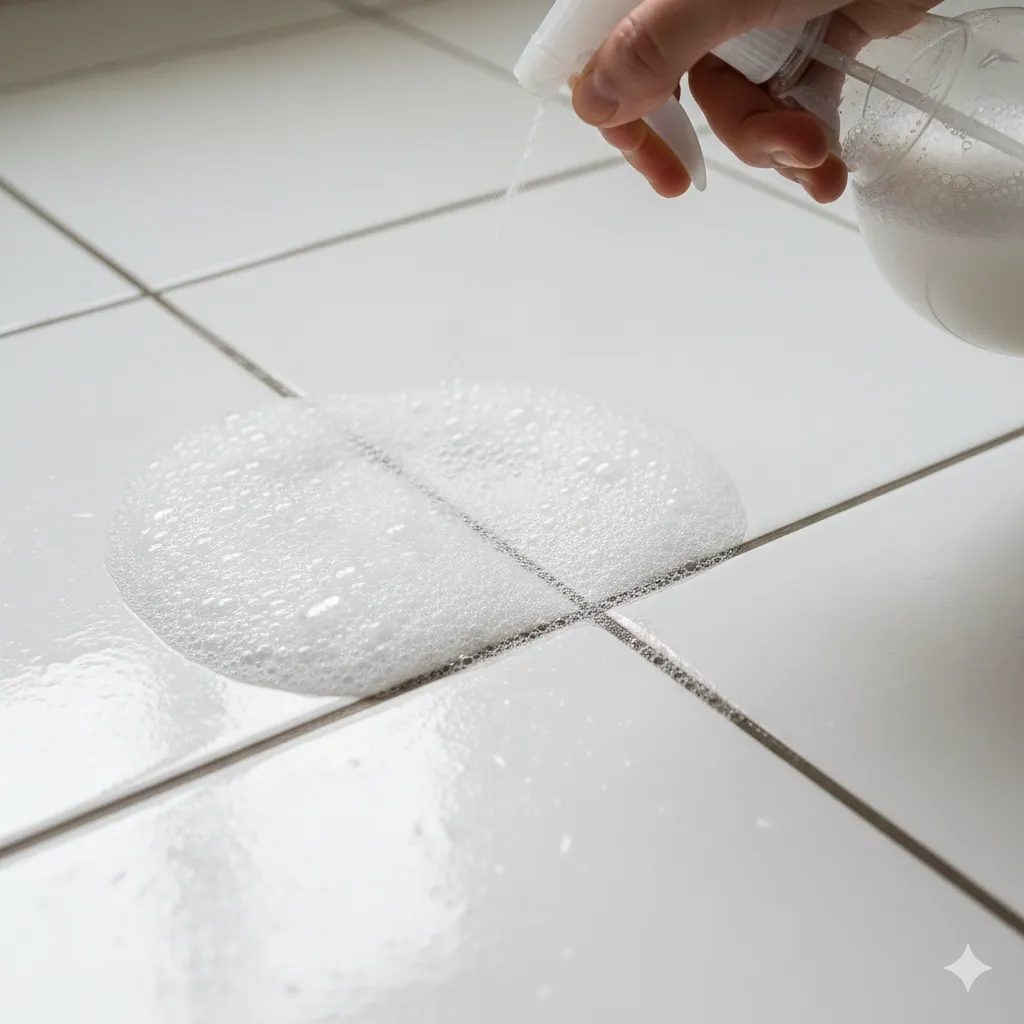
Grout is porous, which means it sucks up dirt, soap scum, and spills like a sponge. Add humidity, and you get the perfect hangout for mold and mildew.
Scrubbing helps, but it often just smears grime around and roughs up the grout. The smarter move? Let chemistry do the heavy lifting. You apply, you wait, you rinse.
Minimal effort, maximum payoff. IMO, that’s the only kind of cleaning that deserves a weekend slot.
The No-Scrub Game Plan
We’re going to use oxygen bleach or an enzyme cleaner to break down stains and gunk. Then we’ll rinse and optionally seal.
That’s it. No rubber gloves of doom required.
What You’ll Need
- Oxygen bleach powder (sodium percarbonate) like OxiClean Free or Nellie’s
- OR a strong enzyme cleaner (great for organic stains)
- Warm water
- Spray bottle or squeeze bottle
- Microfiber cloths or towels
- Wet/dry vac or squeegee (optional but clutch)
- Grout sealer for after the clean (highly recommended)
Quick Safety FYI
- Always spot test first, especially on colored grout.
- Good ventilation helps. Crack a window, run the fan.
- Never mix products, and especially never mix anything with bleach.
Method 1: Oxygen Bleach Soak (My Go-To)
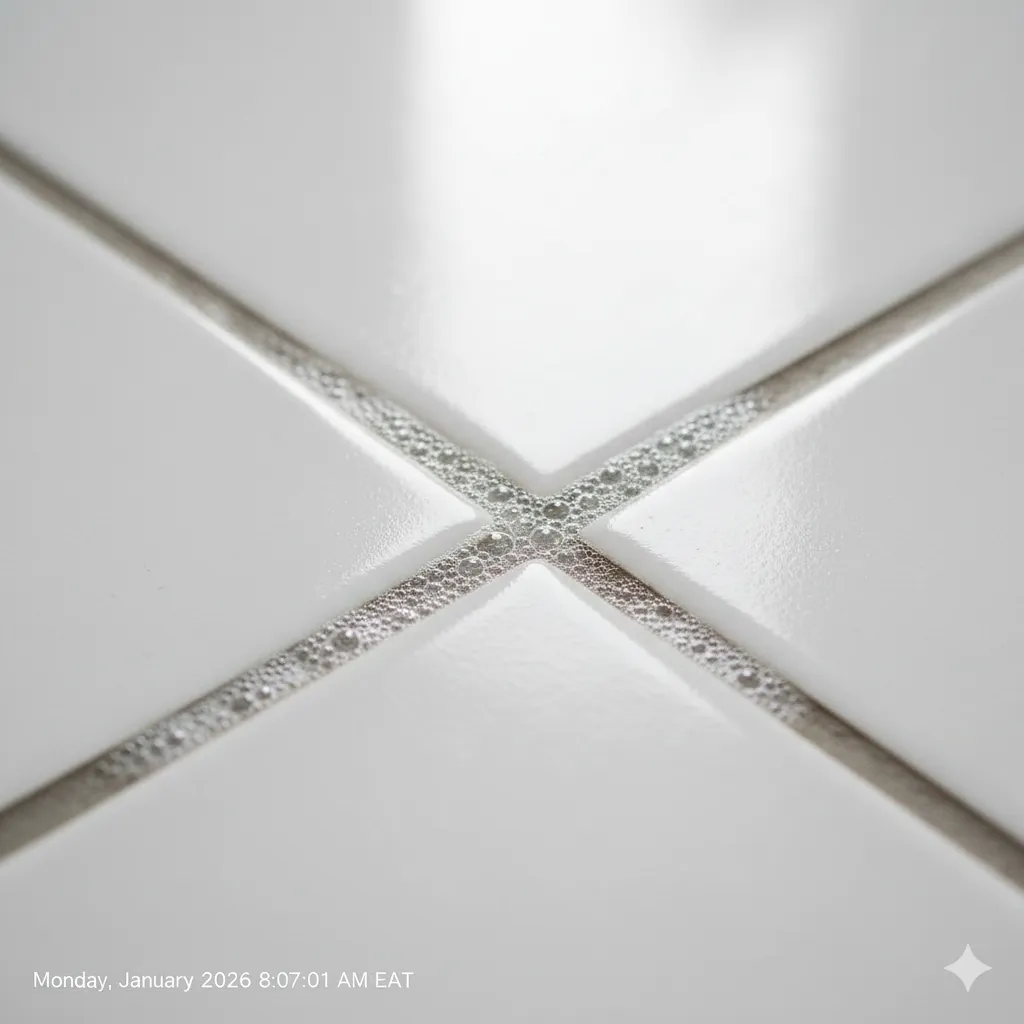
Oxygen bleach lifts stains and kills odor without the harshness of chlorine bleach.
It’s color-safe, grout-safe, and it works while you do literally anything else.
- Mix the solution: Dissolve 1–2 tablespoons of oxygen bleach powder in 2 cups warm water. Stir until fully dissolved.
- Apply generously: Pour or spray directly onto grout lines until they’re fully saturated. Don’t be shy—grout needs to drink.
- Let it sit: Wait 10–30 minutes.
Re-wet if it starts drying. The longer the set-in stain, the longer the soak.
- Light agitation (optional): Not scrubbing—just glide a soft brush once if you see stubborn spots. You can skip this and still get great results.
- Rinse well: Use warm water to rinse.
A wet/dry vac or squeegee makes this fast and keeps water out of the grout lines.
- Dry the area: Pat dry with microfiber and let grout air dry completely.
Why It Works
Oxygen bleach releases oxygen that breaks down stains and organic grime at the molecular level. Translation: it lifts out what makes grout look dingy without roughing up the surface. IMO, it’s the sweet spot of power and safety.
Method 2: Enzyme Cleaner for Funky, Organic Stains
If your grout smells off or you’re dealing with food, pet, or bathroom… situations, enzymes shine.
They digest organic matter that causes odor and discoloration.
- Choose a quality enzyme cleaner: Look for one labeled for grout or tile and safe for sealed surfaces.
- Apply and soak: Saturate grout lines. Let it sit 15–60 minutes. Keep it damp for the whole time (reapply if needed).
- Blot and rinse: Wipe away loosened grime, then rinse with warm water.
- Dry thoroughly: Enzymes keep working while damp, but you want the grout dry before sealing.
Pro Tip
Alternate oxygen bleach and enzyme treatments if you’ve got both mineral stains and organic grime.
Just rinse and wait between them. Do not mix.
Hard Water or Orange Stains? Try a Gentle Acid
If you see crusty white scale or orange/rust discoloration, you’re dealing with minerals.
Use a diluted citric acid or a vinegar solution—but only on ceramic or porcelain tile, not on natural stone like marble or travertine.
- Mix: 1 part white vinegar to 2 parts water, or follow label directions for citric acid.
- Apply: Spray the grout lightly. Let sit 5–10 minutes.
- Rinse thoroughly: Neutralize with lots of water. Dry well.
Important
Avoid acids on natural stone and colored cement grout unless the manufacturer says it’s safe.
You don’t want etching or fading. FYI: Epoxy grout laughs at most stains and acids, but always test.
Seal It So You Don’t Have to Clean It Again (Soon)
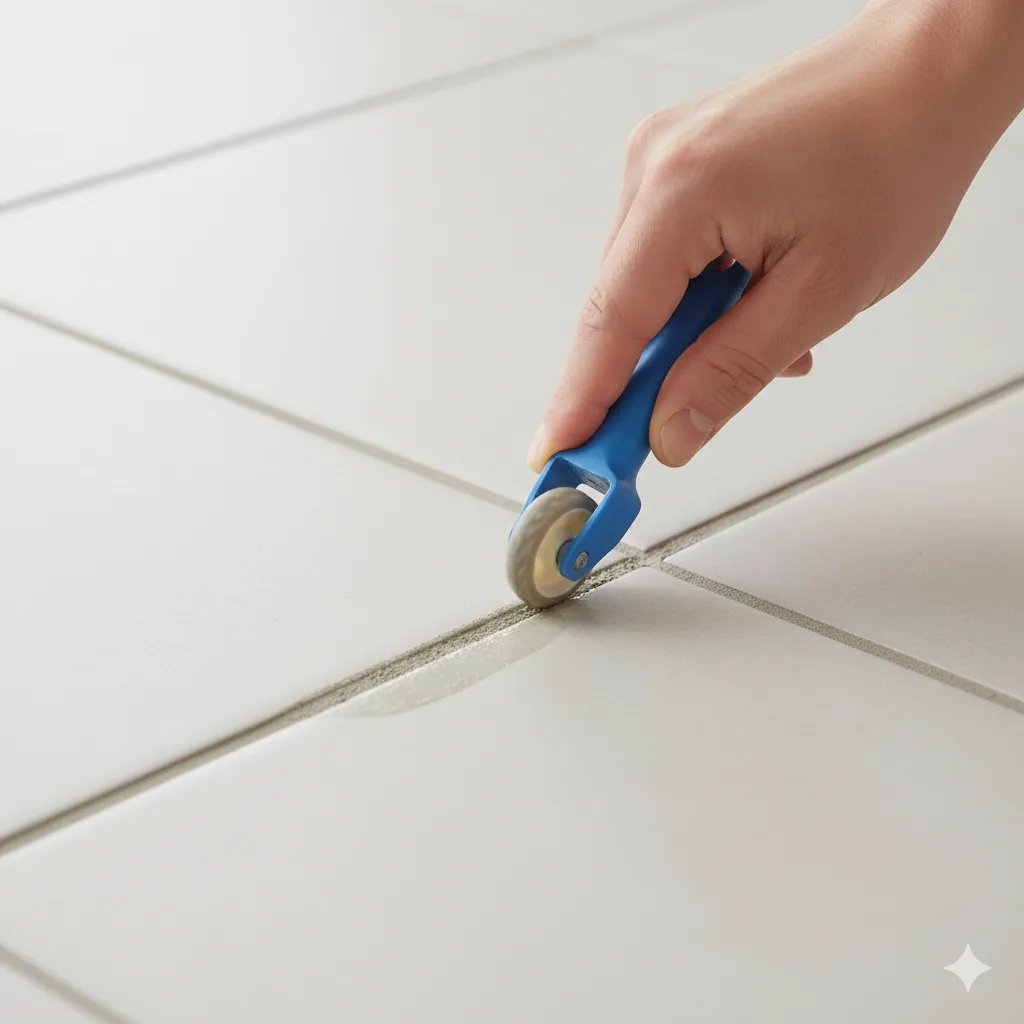
Clean grout looks amazing—until life happens again. Seal it while it’s pristine and dry.
It takes minutes and buys you months of easy maintenance.
- Choose a penetrating sealer: Water-based, low odor, and designed for grout.
- Apply carefully: Use a grout sealer bottle with a roller wheel or a small brush. Keep it on the lines.
- Let it soak and wipe excess: After 5–10 minutes, wipe tile surfaces so you don’t get haze.
- Apply a second coat: Most sealers need two light coats. Check the label.
- Cure time: Avoid heavy water use for 24 hours.
How Often to Reseal
High-traffic bathrooms: every 6–12 months.
Kitchens: 12–18 months. Quick test: drip water on grout—if it darkens immediately, it’s time.
Low-Effort Maintenance So You Never Scrub Again
Prevention beats marathon cleaning sessions. A few tiny habits save hours later.
- Squeegee after showers: Takes 30 seconds and keeps mildew away.
- Weekly oxygen-boost wipe: Light solution, spray and wipe.
No soak needed.
- Ventilate: Run fans, crack windows. Dry grout = happy grout.
- Spot treat ASAP: Spills and splashes get comfier the longer they sit.
What Not to Use (Because I Like Your Grout)
Some products and hacks sound good… until they don’t.
- Chlorine bleach: Harsh, can weaken grout over time, and fumes are nasty.
- Hard abrasives: Baking soda paste can be okay, but gritty scrubs can scratch tiles and open grout pores.
- Magic erasers on grout: They are micro-abrasive and can erode grout with repeated use.
- Unverified DIY mixes: Don’t mix vinegar and hydrogen peroxide or any acid with bleach. Chemistry class was very clear on this.
FAQs
Can I use this on colored grout?
Yes—with a spot test first.
Oxygen bleach usually works safely on colored grout, but some pigments get touchy. Apply a small amount in a hidden spot, wait 24 hours, and compare. If no lightening happens, you’re good.
What if I have natural stone tiles?
Skip acids like vinegar and be careful with strong cleaners.
Use a stone-safe, pH-neutral cleaner and oxygen bleach only if the manufacturer says it’s safe. Stone can etch faster than your patience runs out.
How long does the oxygen bleach smell last?
It barely smells at all—no chlorine pool vibes. You might notice a faint “clean” scent that disappears after rinsing and drying.
Open a window if you’re sensitive.
Is steam cleaning a good no-scrub option?
Steam can work well on sealed grout and ceramic/porcelain tile. It loosens grime and kills mildew without chemicals. Just keep the steamer moving and avoid prolonged blasts on cracked or unsealed grout.
What if stains don’t budge?
Try a second longer soak, then switch tactics: enzyme cleaner for organic stains, gentle acid for mineral stains (if safe for your surface).
Worst case, you can recolor grout with a grout colorant/sealer, which also seals it. It’s like makeup for your floor—practically cheating, IMO.
Do I really need to seal grout?
If you like easy cleaning and fewer stains, yes. Sealer keeps liquids from sinking in, which means wipes, not wars.
It’s a quick job with a big payoff.
Conclusion
You don’t need to scrub your knuckles raw to get bright, clean grout. Saturate with the right cleaner, let time and chemistry do the work, rinse, and seal. Keep it dry and hit quick weekly touch-ups, and you’ll never fear your grout lines again.
Go enjoy your weekend—you’ve earned it.
Next, learn how to clean grout without harsh chemicals.
Enjoyed this project? Get even more DIY ideas that save (and make) you money.
Join our free newsletter for profitable DIY projects, clever cleaning hacks, home ideas, and creative crafts delivered straight to your inbox.
✓ Free forever • No spam • Unsubscribe anytime