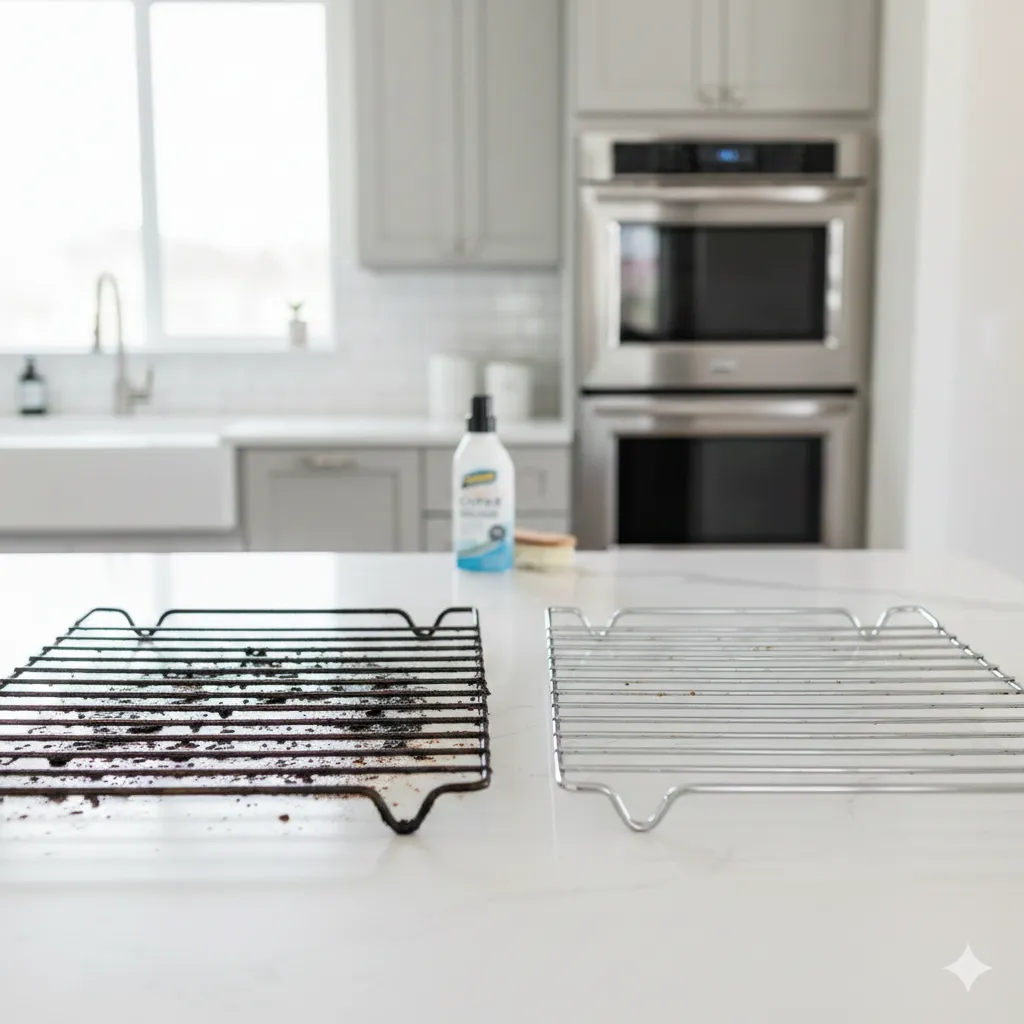
Greasy oven racks can make a clean kitchen feel grimy fast. The good news? You can get them sparkling without scrubbing your knuckles raw or babysitting a chemical cloud.
I’ll show you the fastest methods that actually work, plus a couple “set it and forget it” options for the really baked-on mess. Ready to skip the elbow grease and get results?
Know What You’re Dealing With
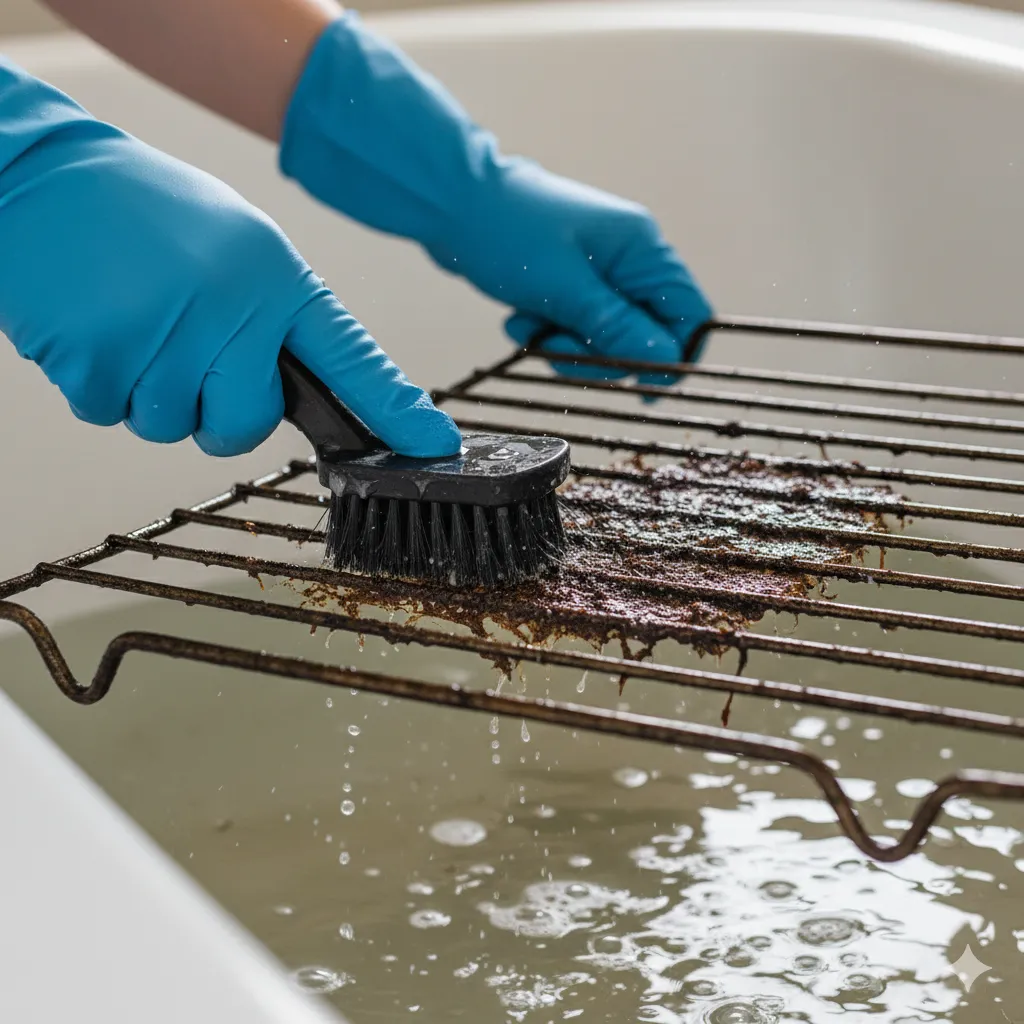
Grease isn’t just greasy—it’s sticky, polymerized oil mixed with carbon. Translation: hot, old, and stubborn.
You need the right combo of heat, alkalinity, and time to break it down. Different mess, different method:
- Fresh splatters: Go mild and quick.
- Brown gunk: Use an alkaline soak.
- Black, baked-on layers: Break out the heavy hitters (safely).
FYI: You’ll get faster results if you warm the racks slightly before cleaning. Not hot—just warm to the touch.
The Fastest Method: Hot Tub + Dishwasher Tablets
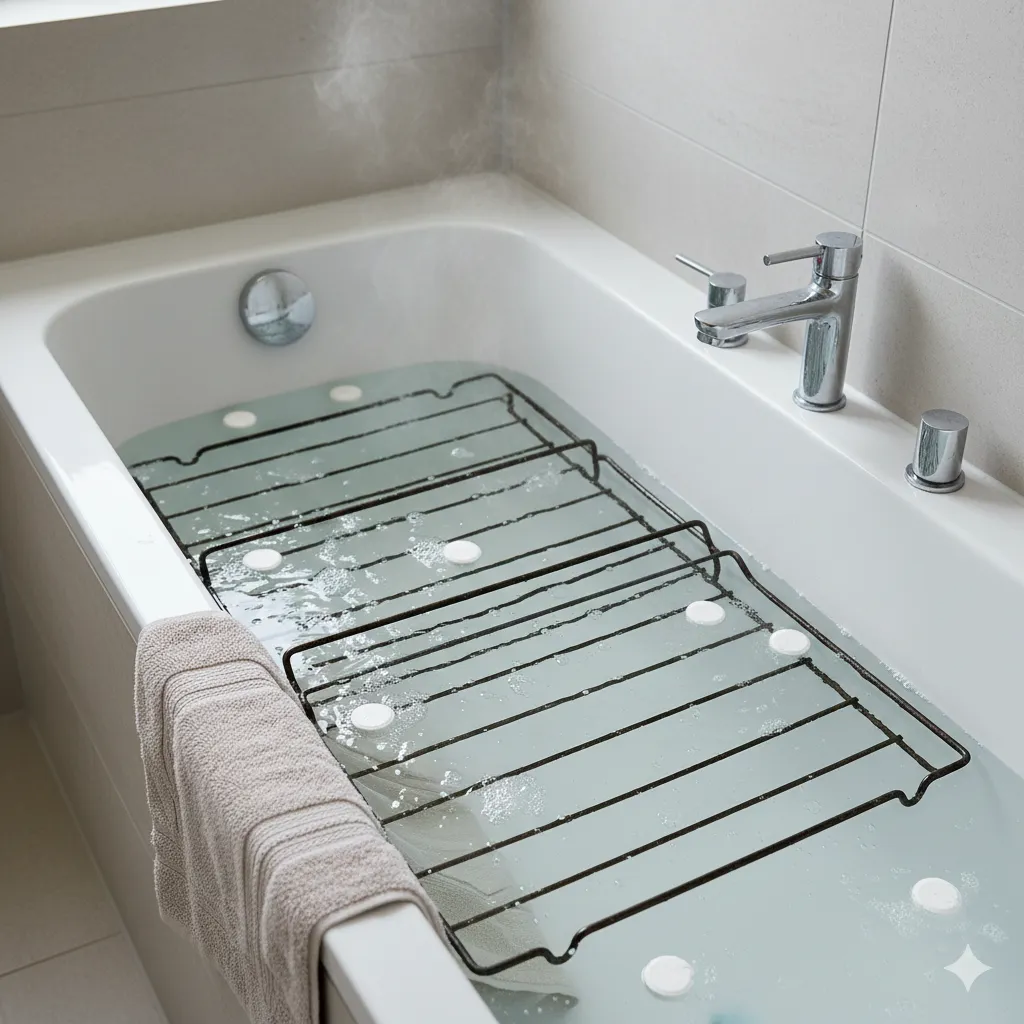
If your racks fit in a tub, this trick works like magic.
And yes, it’s as lazy as it sounds.
- Lay a towel at the bottom of your bathtub (prevents scratches).
- Set racks on the towel.
- Run hot water until racks are fully submerged.
- Toss in 1–2 dishwasher tablets (the enzyme kind).
- Wait 30–60 minutes, then scrub lightly with a non-scratch sponge.
Why it works: Heat + enzymes break down grease quickly. You mostly just wipe and rinse. IMO this wins for speed-to-effort ratio.
No tub?
Use a plastic storage bin.
Grab a heavy-duty storage bin, haul it near a shower or outdoor hose, and do the same soak. Camping spirit, clean racks.
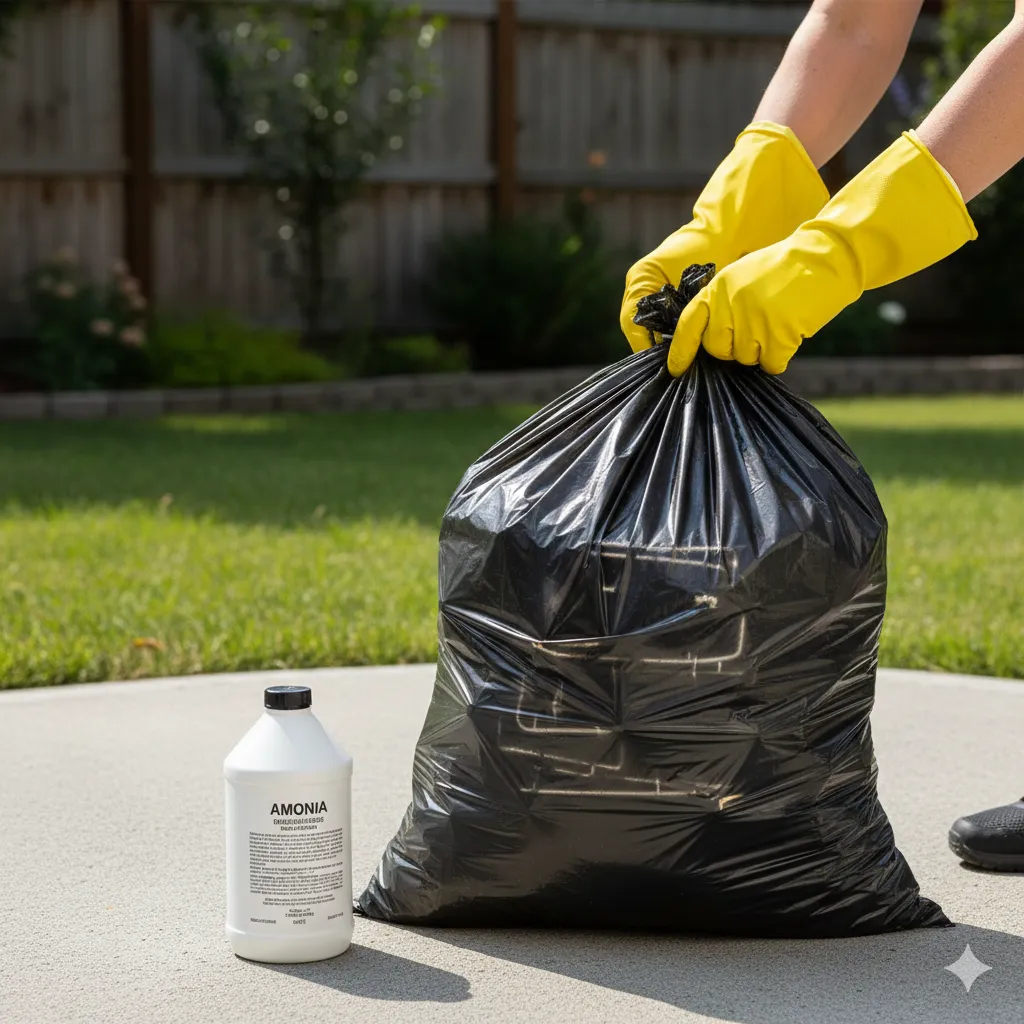
Plan B: Trash Bag Ammonia Treatment (For Heavy Buildup)
This old-school method handles racks that look like they survived a barbecue festival. It’s fast, but you need good ventilation and common sense.
- Do this outside or in a very well-ventilated area.
- Slip the racks into a thick garbage bag.
- Add about 1/4 cup household ammonia to the bag.
- Seal the bag tightly.
You want fumes, not liquid coverage.
- Wait 30–90 minutes depending on grime level.
- Open the bag away from your face, rinse racks thoroughly, and scrub with a sponge.
Important: Never mix ammonia with bleach. Like, ever. Rinse the tub/sink first if you cleaned with bleach earlier.
Also wear gloves. Your hands are not stainless steel.
Don’t want ammonia? Try oxygen bleach.
Use hot water + oxygen bleach (sodium percarbonate) in a soak.
It won’t be as rapid as ammonia, but it’s friendlier to noses and still punches grease hard.
Quick Kitchen Sink Method (For Smaller Racks or Light Grime)
No tub, no bin, minimal mess? Hit the sink.
- Fill sink with very hot water.
- Add a big squirt of degreasing dish soap and 1/4 cup baking soda.
- Soak racks 15–20 minutes.
- Scrub with a non-scratch sponge or nylon brush. Use a toothbrush for corners.
Want to speed it up more?
Sprinkle baking soda directly on greasy spots, then spritz with vinegar. It’ll foam and loosen gunk. Rinse and finish with dish soap.
Zero-Soak Option: The Oven Liner Tactic
Short on time and patience?
Clean just enough and prevent future buildup.
- Wipe racks with a hot, soapy microfiber cloth to remove loose grease.
- Spot-treat bad patches with a paste of baking soda + a little water. Let sit 10 minutes, then scrub.
- Dry thoroughly and add reusable oven liners on the lower rack or oven floor (check your oven manual!) to catch drips.
You won’t get mirror-shine, but you’ll stop the greasy cascade. Sometimes “good enough” is the fastest path to sanity.
Tools That Make It Way Easier
You don’t need a cleaning museum.
A few affordable tools save time and effort.
- Nylon brush: Faster than a sponge, safer than steel wool.
- Scrub Daddy/Power sponge: Gentle but grippy. Yes, the hype is mostly deserved.
- Old toothbrush: Gets into corners and rung joints.
- Microfiber cloths: For final polish and drying.
- Gloves: Hot water and grease don’t love skin.
What to avoid
- Steel wool: Scratches the chrome finish so grease sticks faster next time.
- Oven self-clean cycle with racks inside: Heat can discolor and warp racks, or wreck the finish. Check your manual.
My Favorite Fast Routine (Minimal Drama)
When I need racks clean ASAP—like guests arriving and I suddenly notice the crime scene—I do this:
- Warm the racks in the oven for 5 minutes at low heat, then cool until just warm to touch.
- Soak in hot water + dishwasher tablet for 30 minutes.
- While soaking, wipe the oven interior so everything feels fresh.
- Light scrub with a nylon brush.
Stubborn bits? Baking soda paste on the spot, 5 minutes, scrub again.
- Rinse, dry, and rub a tiny amount of cooking oil on the rack edges so they slide smoothly.
IMO this combo gives you the best look with the least swearing.
Prevent the Next Mess (Because Future You Deserves It)
You can avoid the “how did this get so bad?” moment. A few small habits make cleaning effortless.
- Line smartly: Use oven-safe liners or rimmed baking sheets to catch drips.
Don’t block airflow.
- Wipe while warm: After the oven cools slightly, wipe racks with a damp soapy cloth. Warm grease lifts easier.
- Quarterly soak: Set a reminder. A 20-minute soak beats a 2-hour scrub.
- Cover messy dishes: Foil tent or lid = less splatter, less regret.
FAQs
Can I use oven cleaner on racks?
Yes, but use it carefully and outdoors if possible.
Oven cleaner works fast on heavy grease, but it’s caustic and smells intense. Wear gloves, avoid breathing the spray, and rinse thoroughly. If you prefer gentler options, try the dishwasher tablet soak first.
Is it safe to run the self-clean cycle with racks inside?
I don’t recommend it.
Self-clean heat can discolor and damage the finish, and racks may warp or lose their glide. Most manufacturers say remove them first. Clean separately for better results and fewer regrets.
What if my racks are already discolored?
Discoloration happens with high heat and age.
It won’t affect performance. You can polish with a non-abrasive cleaner to improve shine, but focus on degreasing rather than perfection. Shiny is nice; clean is the goal.
Will baking soda scratch the racks?
No, baking soda is mildly abrasive but safe on chrome racks.
Just avoid steel wool and harsh scouring pads. Use a nylon brush or sponge for the scrubbing action.
How do I deal with rust spots?
Light rust? Rub with a paste of baking soda and water, then rinse and dry thoroughly.
For deeper rust, use a rust eraser or very fine (0000) steel wool lightly, then dry and oil the edges. If rust keeps spreading, consider replacing the rack.
What if my sink or tub clogs with grease?
Flush with very hot water and a squirt of dish soap right after you drain. If it still feels sluggish, follow with a kettle of boiling water and a half cup of baking soda.
Skip chemical drain cleaners right after an ammonia or bleach session—don’t mix chemicals.
Wrap-Up
You don’t need marathon scrubbing to clean oven racks fast. Use heat and the right cleaner—dishwasher tablets for speed, ammonia for heavy-duty jobs, or baking soda for everyday grime. Keep it simple, protect the finish, and set a quick routine so grease never wins again.
Your future casseroles (and your sanity) will thank you.
Next, learn How To Clean Stainless Steel Appliances.
Enjoyed this project? Get even more DIY ideas that save (and make) you money.
Join our free newsletter for profitable DIY projects, clever cleaning hacks, home ideas, and creative crafts delivered straight to your inbox.
✓ Free forever • No spam • Unsubscribe anytime