You love the look of your laminate floors, but the streaks? The cloudy patches? The mysterious dull spots that appear out of nowhere?
Hard pass. The good news: you can get squeaky-clean laminate without ruining it. The better news: you don’t need fancy gear or a PhD in floor science to do it.
This short video explains how to clean laminate floors without streaks:
Know Your Enemy: What Causes Streaks and Damage
Laminate doesn’t play well with heavy water, harsh chemicals, or waxy finishes.
Those three cause most streaks and long-term damage. If your floor looks cloudy, you probably used too much cleaner or left residue behind. Scratches tell a different story.
Grit acts like sandpaper. Drag a chair, skip the doormat, or use the wrong mop, and you’ll see micro-scratches that catch the light and make the floor look dull. Not cute.
Laminate 101: Why It’s Fussy
Laminate has a photo layer under a protective wear layer.
It’s durable, but not indestructible. Water sneaking into seams can swell the core. Strong cleaners can haze the wear layer.
So the trick is simple: clean gently, use minimal moisture, and avoid residue.
Daily Habits That Prevent 90% of Problems
Don’t wait for a big clean. A few small habits keep streaks and scratches at bay.
- Dry dust daily or every other day with a microfiber mop. It grabs dust instead of pushing it around.
- Vacuum weekly with a hard-floor setting or soft roller.
Turn off the beater bar. That thing is basically a tiny lawnmower for your finish.
- Catch spills fast. Blot liquids right away so they don’t seep into the seams.
- Shoes off if you can.
Grit + laminate = invisible sanding session.
Smart Prevention Moves
- Put felt pads on furniture legs. Yes, all of them. Even the plant stand.
Even the cat tree, IMO.
- Use doormats inside and outside. Trap the grit before it hits the floor.
- Keep a small hand vacuum or a microfiber cloth handy for crumbs and pet hair.
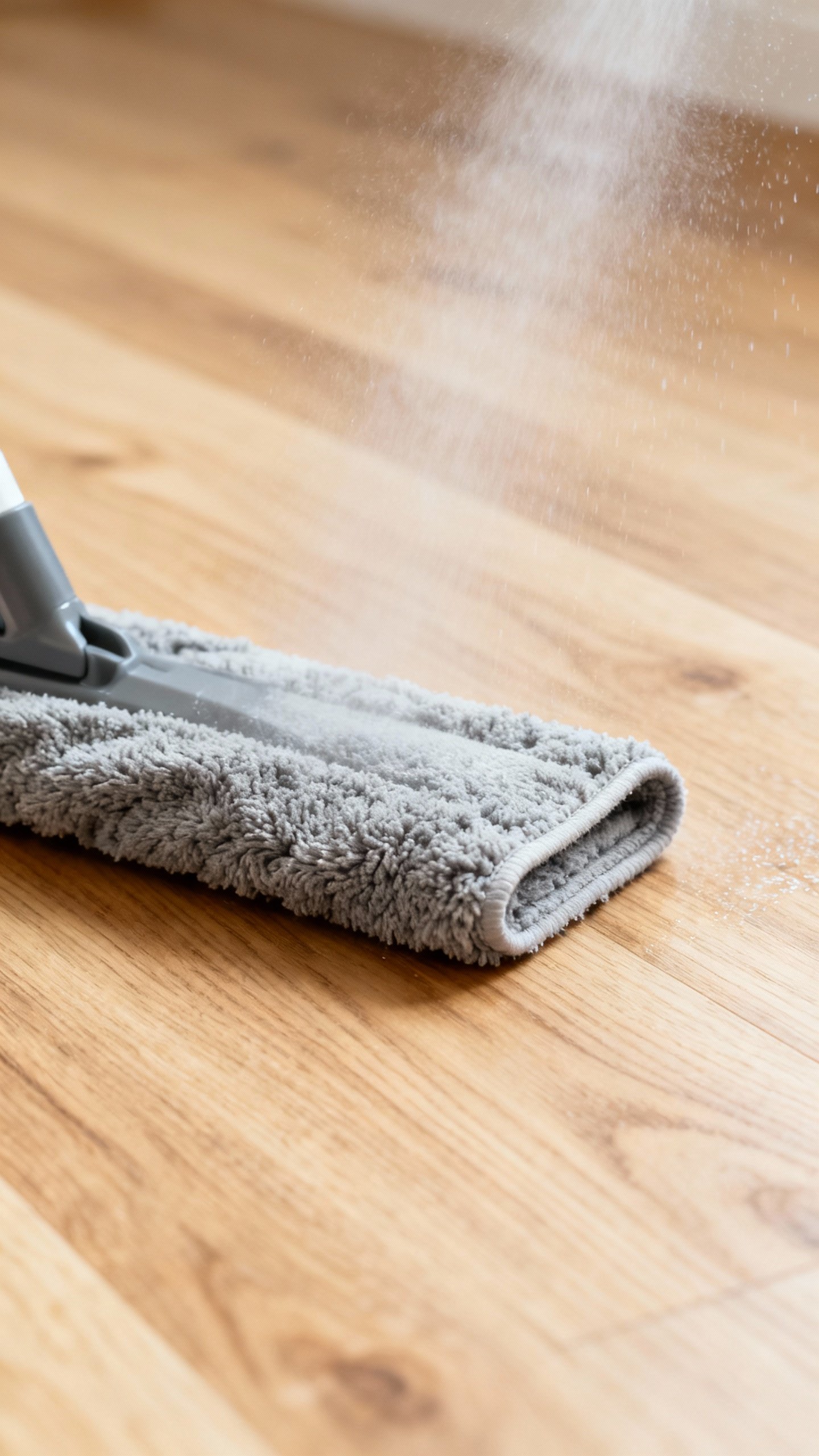
The No-Streak Cleaning Routine (Step-by-Step)
Want shiny, streak-free floors without the drama? Follow this.
- Dry dust first.
Use a clean, dry microfiber mop to remove dust, hair, and grit. Start here or you’ll smear dirt into arcs of sadness.
- Spot-treat sticky stuff. Lightly dampen a microfiber cloth with warm water and a drop of gentle dish soap.
Wipe, then rinse the cloth and wipe again. Dry the spot.
- Prep your cleaner. Use a laminate-approved spray or make a DIY mix: 1 teaspoon mild dish soap in 1 quart warm water.
For extra shine control, add 1–2 teaspoons of isopropyl alcohol (evaporates fast, reduces streaks). FYI: skip vinegar-heavy mixes—they can dull laminate over time.
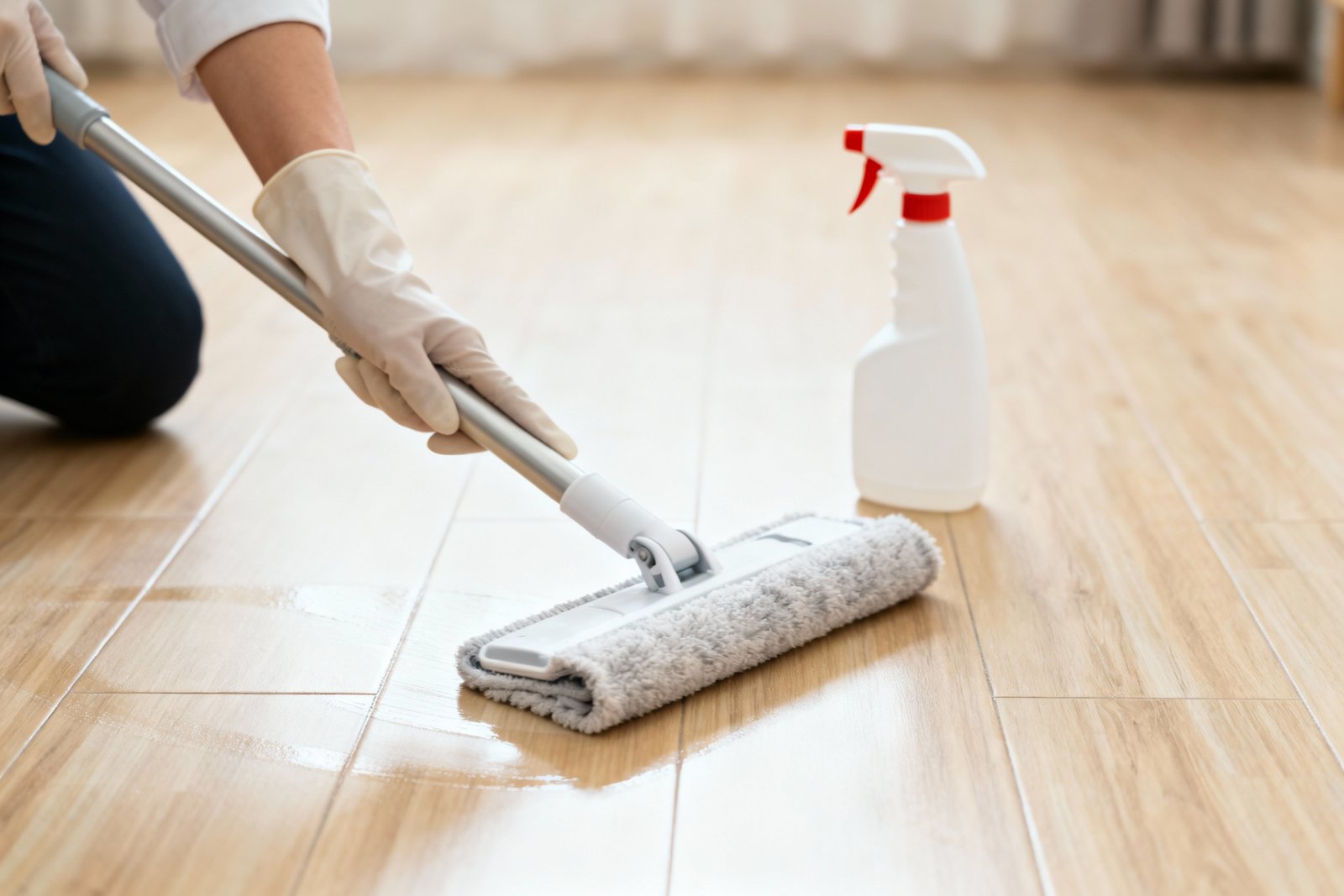
- Lightly mist and mop. Spray the floor or the mop head (better) in small sections.
Use a slightly damp microfiber mop, not wet. Mop in the direction of the planks to hide any faint lines.
- Dry as you go. Flip to a dry side of the mop head or follow with a dry microfiber cloth.
No lingering moisture, no streaks.
How Often?
- High-traffic areas: quick damp mop 1–2 times per week
- Low-traffic areas: every 1–2 weeks
- Spot-clean: as needed (kids, pets, life—say no more)
What Not To Use (Because You Like Your Floors)
Let’s save you some heartache. These are common mistakes.
- Steam mops: Heat and moisture can warp seams. The marketing is tempting, but the physics says no.
- Wax, polish, or oil soaps: They leave residue, attract dirt, and cause streaks.
Laminate doesn’t absorb; it just films over.
- Abrasive scrubbers: Scouring pads or stiff brushes can scratch the wear layer.
- Ammonia or bleach: Too harsh. They can cloud or etch the finish.
- Bucket-and-slop mopping: Excess water = swollen edges and cloudy finish.
Fixing Cloudy Film and Stubborn Streaks
Already hazy? Don’t panic.
You can usually reverse it.
De-Residue Method
- Mix warm water with a splash of isopropyl alcohol (about 1/4 cup alcohol per quart of water).
- Lightly dampen a clean microfiber pad and work in sections.
- Wipe with the damp pad, then immediately buff dry with a second, dry microfiber cloth.
Grease or Sticky Gunk
- Use a drop of dish soap on a damp cloth, rub gently, then rinse and dry.
- For gum or wax drips: place an ice pack to harden, then lift off with a plastic scraper held flat.
Scuffs and Light Scratches
- Rub scuffs with a dry tennis ball or melamine sponge (very gently).
- For visible scratches, try a laminate floor repair marker matched to your tone. It won’t fix texture, but it hides the contrast nicely.
Tools and Products That Actually Work
You don’t need a cleaning closet that looks like a chemistry lab. Keep it simple.
- Microfiber mop with removable pads: The real MVP.
Get two or three pads so you always have a clean one.
- Hard-floor vacuum or stick vac: Soft roller, no beater bar. Corded or cordless—your call.
- Spray bottle: Lets you control moisture. Your floor will thank you.
- Mild dish soap and isopropyl alcohol: Affordable, effective, streak-smart.
- Laminate-safe cleaner: Great for quick cleans.
Check the label for “no wax, no polish.”
Label-Reading Cheatsheet
If the bottle says “shine,” “gloss,” or “polish,” hard pass. If it says “residue-free,” “laminate-safe,” and “quick-drying,” you’re in business.
Dealing With Water Around Kitchens and Entryways
These zones are splash central. They need extra love.
- Use water-absorbent mats at sinks and doorways.
Wash them often.
- Keep a towel or microfiber cloth nearby to dry spills immediately.
- Seal baseboards and transitions to minimize moisture sneaking under planks (a neat bead of flexible sealant works wonders).
FAQ
Can I use vinegar on laminate floors?
You can, but I wouldn’t. Vinegar cuts grease, sure, but regular use can dull laminate over time. If you must, keep it ultra-dilute and rare.
IMO, alcohol + mild soap cleans just as well and leaves fewer streaks.
Why do my floors look streaky even after I use a “laminate” cleaner?
Two likely culprits: you used too much product, or your mop pad wasn’t clean. Use a light mist, swap to a fresh microfiber pad halfway through, and buff dry. Also check your water—hard water can leave minerals; filtered water helps.
How wet can I get the mop?
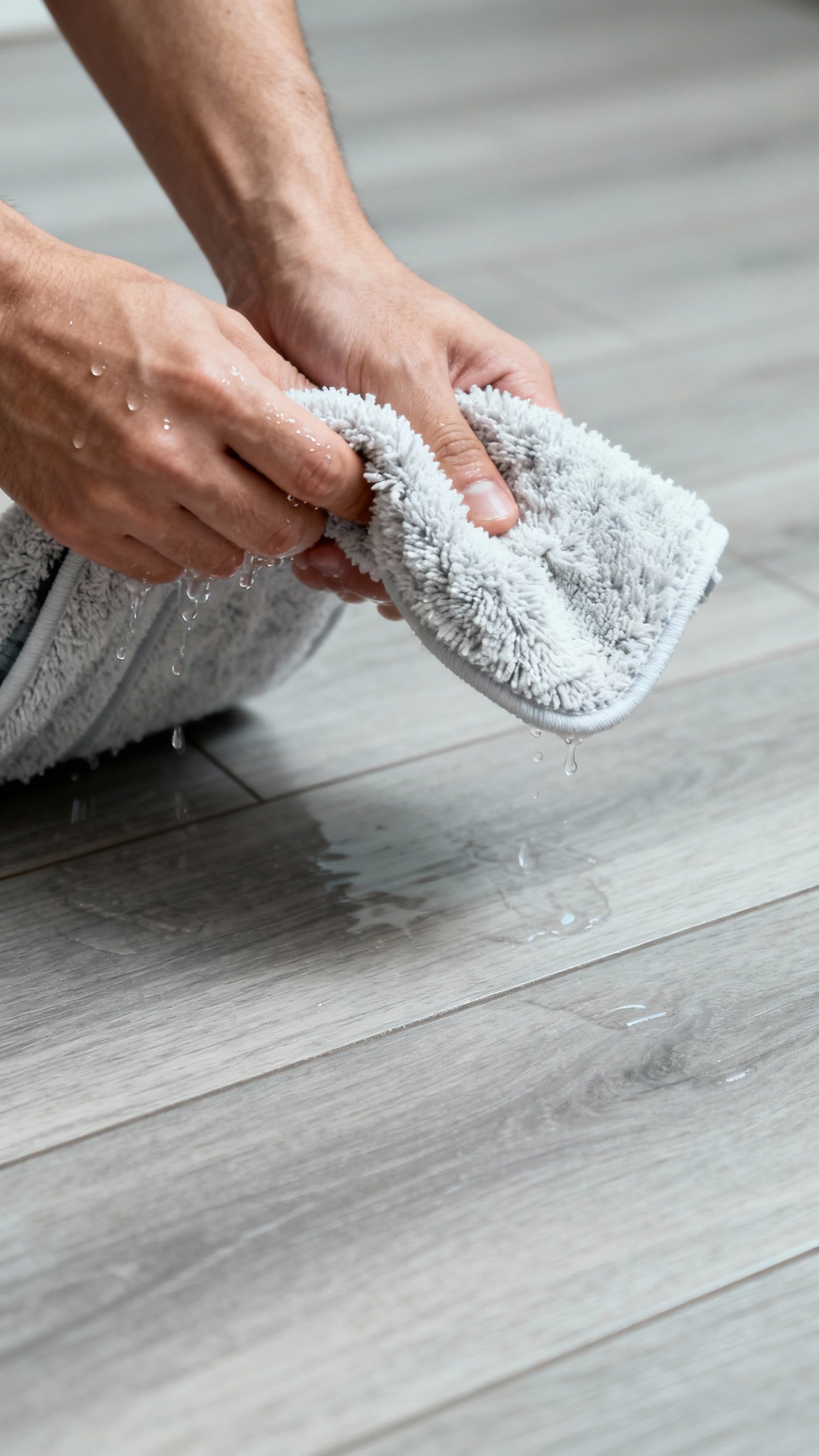
Barely damp.
If you can wring water out, it’s too wet. Aim for a light mist on the pad and dry the floor immediately after each section. Think “humid cloth,” not “soaked towel.”
Do I need to polish laminate floors?
Nope.
Laminate doesn’t absorb polish; it just builds a film that streaks and traps dirt. If you want more shine, clean well, remove residue, and consider better lighting angles. Harsh truth, but it works.
Will a steam mop void my floor warranty?
Often, yes.
Many manufacturers call out steam specifically. Heat + moisture can damage seams and the core. Read your warranty, then choose a safer method.
What’s the best way to clean up pet accidents?
Blot immediately, then clean with a damp cloth and mild soap.
Dry completely. For odor, use an enzyme cleaner labeled safe for hard floors and wipe dry after. Keep liquids from sitting on seams.
Conclusion
Laminate floors look fantastic when you treat them right.
Keep it simple: dry dust often, clean with a lightly damp microfiber mop, and avoid products that promise “shine” but leave film. Handle spills fast, ditch the steam, and use gentle, residue-free cleaners. Do that, and your floors will stay streak-free, damage-free, and smugly gorgeous—just like you planned, FYI.
Enjoyed this project? Get even more DIY ideas that save (and make) you money.
Join our free newsletter for profitable DIY projects, clever cleaning hacks, home ideas, and creative crafts delivered straight to your inbox.
✓ Free forever • No spam • Unsubscribe anytime