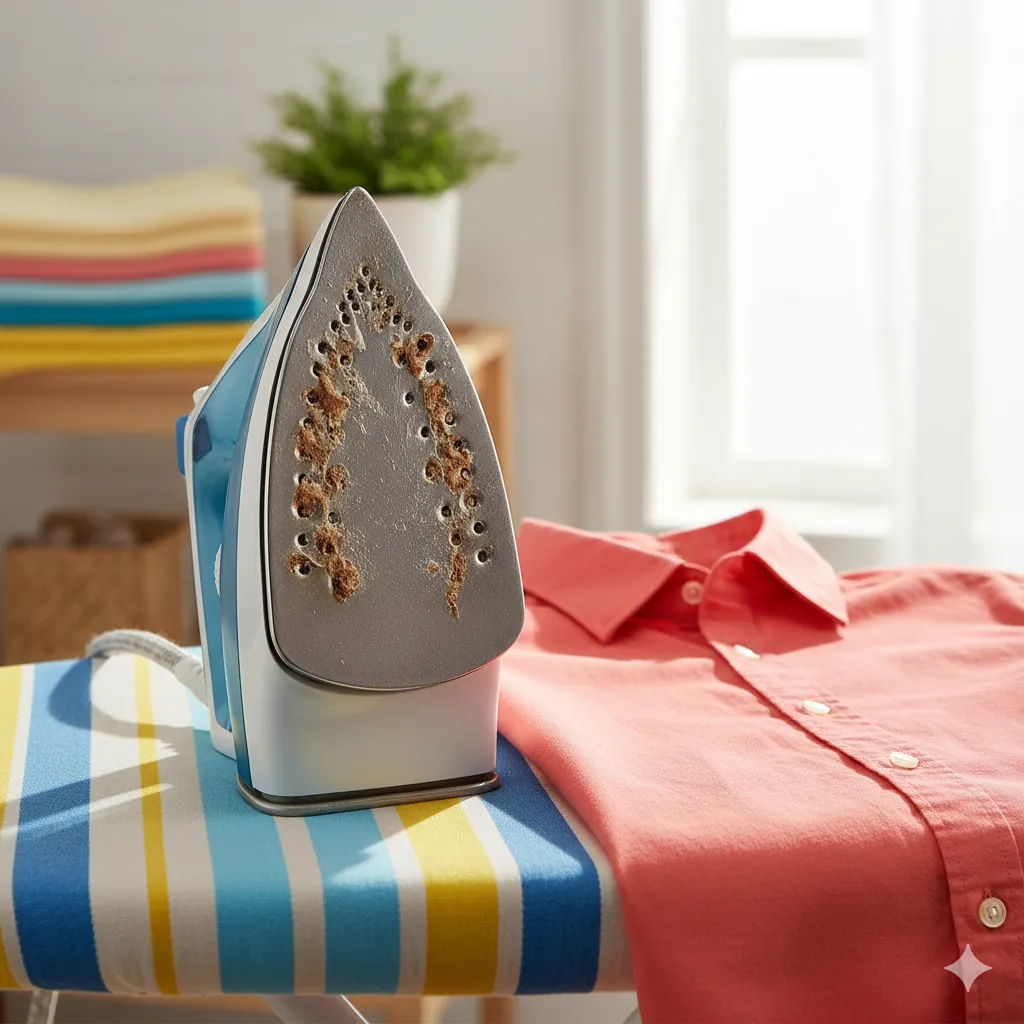
We’ve all been there: you’re smoothing out a shirt, your iron hiccups, and boom—burn mark city. The plate looks gunky, fabrics start sticking, and your mood tanks. Good news—cleaning an iron and erasing those scorch marks takes minutes, not hours.
Grab a few things from your kitchen, and let’s fix this fast.
You can also watch this video to see 3 ways to clean an iron fast:
Know Your Enemy: What’s That Gunk?
Sticky residue doesn’t come out of nowhere. Fabric melts, starch bakes on, hard water leaves minerals—your iron collects it all like a tiny, steamy hoarder. That buildup causes drag, snags delicate fabrics, and sometimes leaves brown streaks on clothes.
The burn marks? Usually a sign you ironed something synthetic on too high a heat. No judgment—labels lie, and we’re human.
The upside: you can remove both the residue and the scorch marks with a couple simple methods.
Instant Fixes: The Fastest Ways to Clean an Iron
When you need your iron ready right now, try one of these quick hitters.
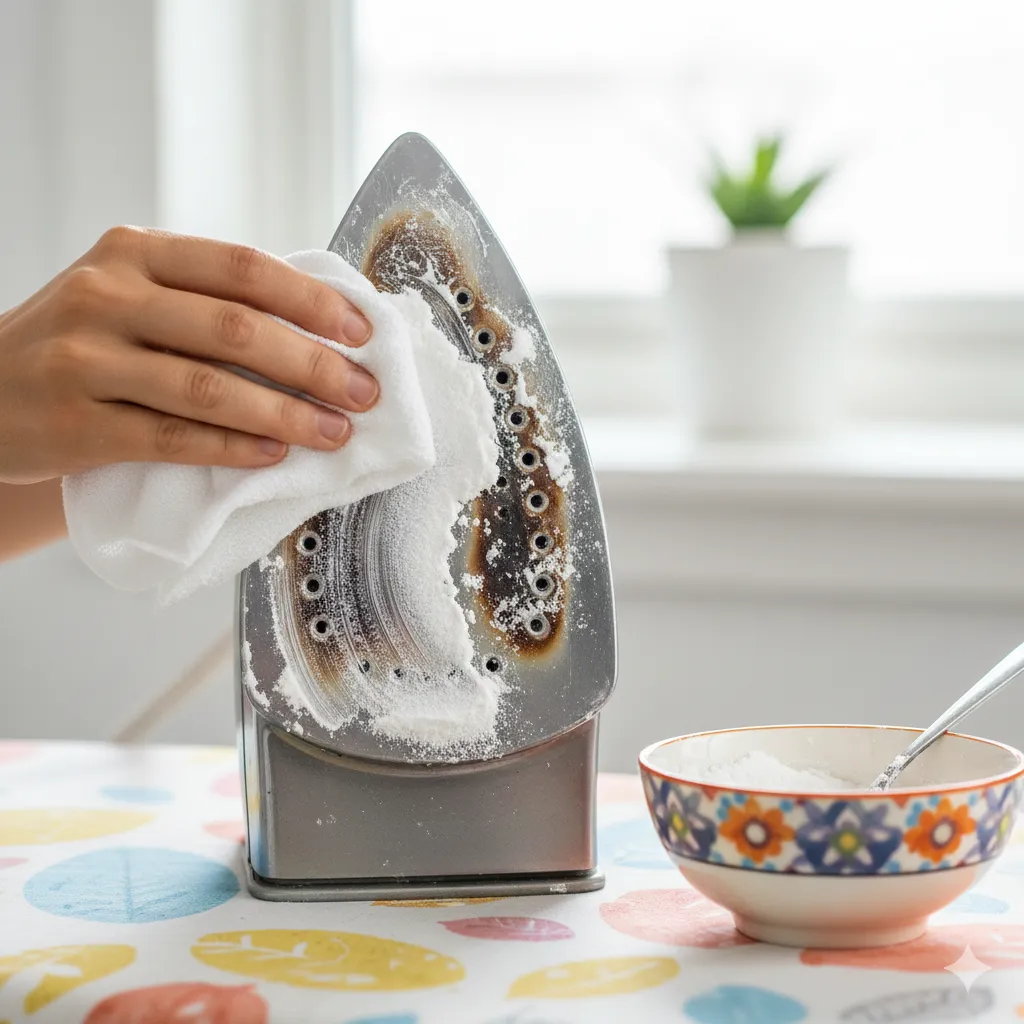
Method 1: Baking Soda Paste (for non-stick and stainless soleplates)
This one’s a classic because it works. It’s gentle but effective.
- Unplug the iron and make sure it’s completely cool.
- Mix 2 tablespoons of baking soda with 1 tablespoon of water to form a paste.
- Spread the paste over the dirty areas. Avoid the steam holes.
- Rub gently with a soft cloth or sponge.
No steel wool—ever.
- Wipe clean with a damp cloth until no residue remains.
- Use a cotton swab to clear any paste near holes.
Why it works: Baking soda is mildly abrasive and lifts gunk without scratching the soleplate.
Method 2: White Vinegar Hot Wipe (for burnt-on residue)
Stubborn, baked-on crud? Vinegar time.
- Heat white vinegar in a small pan until warm (not boiling).
- Dip a clean cloth into the vinegar and wring it out.
- Rub the soleplate while it’s unplugged and warm, not hot.
- For extra oomph, sprinkle a pinch of salt on the cloth.
- Wipe with a clean damp cloth afterward.
Heads up: Keep vinegar off aluminum soleplates if the manual warns against it. Check your manual if you’re unsure.
Method 3: Magic Eraser (mild scorch marks)
A melamine sponge can erase light discoloration fast.
- Dampen the magic eraser.
- Rub the soleplate gently while the iron is cool.
- Wipe dry and you’re done.
It’s oddly satisfying, like deleting your inbox.
Serious Scorch?
Try These Targeted Moves
Sometimes “instant” means strategic. If the burn marks dig in, go one step further.
Hydrogen Peroxide Cloth Trick
- Lay a clean cloth soaked in hydrogen peroxide on your ironing board.
- Set the iron to medium and unplug once hot.
- Run the warm iron over the peroxide cloth for 15–30 seconds.
- Wipe with a clean damp cloth to finish.
Why it helps: Peroxide breaks down organic scorch without harsh scrubbing.
Salt and Paper Scrub (old-school)
- Pour a layer of table salt onto a piece of parchment paper.
- Heat the iron to medium—no steam.
- Glide the iron over the salt for 30–60 seconds.
- Let cool, wipe with a damp cloth.
This friction trick lifts residue quickly. It’s like a tiny exfoliation for your iron.
Clean the Steam Holes and Reservoir (because gunk hides)
You’ll clean the plate, but if mineral buildup clogs the steam vents, you’ll still spit and stain.
Fix both.
Unclog Steam Holes
- Use a toothpick or wooden skewer to gently clear debris (be gentle).
- Dab cotton swabs in vinegar and clean each hole.
- Wipe the plate with a damp cloth afterward.
Do not poke with metal pins. You’ll scratch the soleplate and cry later.
Descale the Water Tank
- Mix equal parts distilled water and white vinegar.
- Fill the tank halfway and set to steam.
- Let it heat and hold the steam button over a sink or old towel for 1–2 minutes.
- Repeat with plain distilled water to rinse.
If your manufacturer forbids vinegar, use a commercial descaler or just distilled water with multiple flushes. IMO, distilled water in daily use prevents 90% of this drama.
What Not To Do (unless you like buying new irons)
Let’s save you from Internet “hacks” that don’t end well.
- No steel wool or metal scrapers. You’ll scratch the coating and make sticking worse.
- No harsh oven cleaners or bleach. They can corrode the soleplate.
- No sugar or sticky substances. That caramelizes and turns the plate into a candy apple.
- Don’t clean while plugged in. FYI, electricity wins every time.
Prevent Burn Marks So You Don’t Have To Do This Again

You can skip the cleanup marathon with a couple smart habits.
- Match fabric to heat. Start low, bump up slowly.
Synthetics scorch fast.
- Use a pressing cloth. A thin cotton cloth protects tricky fabrics and keeps starch off the plate.
- Use distilled water. Hard water equals mineral buildup equals sad iron.
- Wipe after starching. Quick damp cloth wipe while warm keeps residue from baking on.
- Park upright when hot. Face-down parking cooks the gunk.
Small habits, big payoff. Your future self says thanks.
Quick Recipes for Different Soleplates
Not all irons wear the same shoes. Treat them right.
Non-stick/Ceramic Soleplates
- Use baking soda paste or warm vinegar wipes.
- Avoid abrasives and sharp tools.
- Magic eraser for light stains works great.
Stainless Steel Soleplates
- Handle tougher buildup with salt scrub or baking soda paste.
- Vinegar wipes are safe and effective.
Aluminum Soleplates
- Go gentle—stick to mild soap and water or baking soda paste.
- Avoid acidic cleaners if your manual warns against them.
FYI: When in doubt, test any cleaner on a tiny corner of the soleplate first.
FAQs
Can I use toothpaste to clean my iron?
You can, but choose a plain white, non-gel toothpaste without microbeads.
It works like a super mild abrasive. Rub it on a cool soleplate, wipe with a damp cloth, and finish with a dry wipe. It’s fine in a pinch, but baking soda paste works better IMO.
What if my iron leaves brown water spots?
That’s mineral buildup or old water.
Descale the tank with a vinegar-and-water mix, then flush with distilled water. After that, only fill with distilled water and empty the tank after each use.
How do I remove melted plastic from an iron?
Unplug the iron immediately. While the soleplate is still warm (not hot), use a wooden spatula to lift off the plastic.
Then use a vinegar cloth or baking soda paste to clean residue. Let it cool fully before a final wipe.
Is a dryer sheet hack legit?
Surprisingly, yes—for light residue on a warm iron. Rub a dryer sheet on the soleplate (unplugged, slightly warm).
It can soften gunk, but it’s not a miracle worker. Follow with a damp cloth.
How often should I clean my iron?
If you iron weekly, do a quick wipe every couple of uses and a deeper clean monthly. Heavy starch users should clean the soleplate every 1–2 weeks.
Descale every 1–3 months depending on your water.
My iron still drags after cleaning. Now what?
Check for residue in the steam holes, descale the tank, and verify the soleplate coating isn’t scratched. If it’s heavily pitted or the non-stick layer peeled, replacement might be cheaper than frustration therapy.
Wrap-Up: From Crusty to Glide City
You don’t need fancy tools or a new iron to fix burn marks and gunk.
A little baking soda, some vinegar, and five minutes of effort turn your iron into a smooth operator again. Keep it clean, use the right heat, and grab distilled water, and you’ll avoid most messes. Your shirts will thank you—and so will your sanity.
Enjoyed this project? Get even more DIY ideas that save (and make) you money.
Join our free newsletter for profitable DIY projects, clever cleaning hacks, home ideas, and creative crafts delivered straight to your inbox.
✓ Free forever • No spam • Unsubscribe anytime