Ferns look like forest magic in plant form. They unfurl with drama, sculpt space with texture, and make your shelf feel like a mossy woodland. But they also sulk the second your air dries out and will drop fronds like a telenovela plot twist.
Good news: once you learn their quirks, ferns become easy, forgiving roommates—just slightly high-maintenance about humidity.
Watch this short video to learn how to take care of your fern plant indoors:
Know Your Fern’s Personality
Not all ferns vibe the same. Some handle apartment life just fine. Others want rainforest cosplay. Common indoor-friendly ferns:
- Boston fern (Nephrolepis) – Classic, fluffy, loves humidity and bright shade.
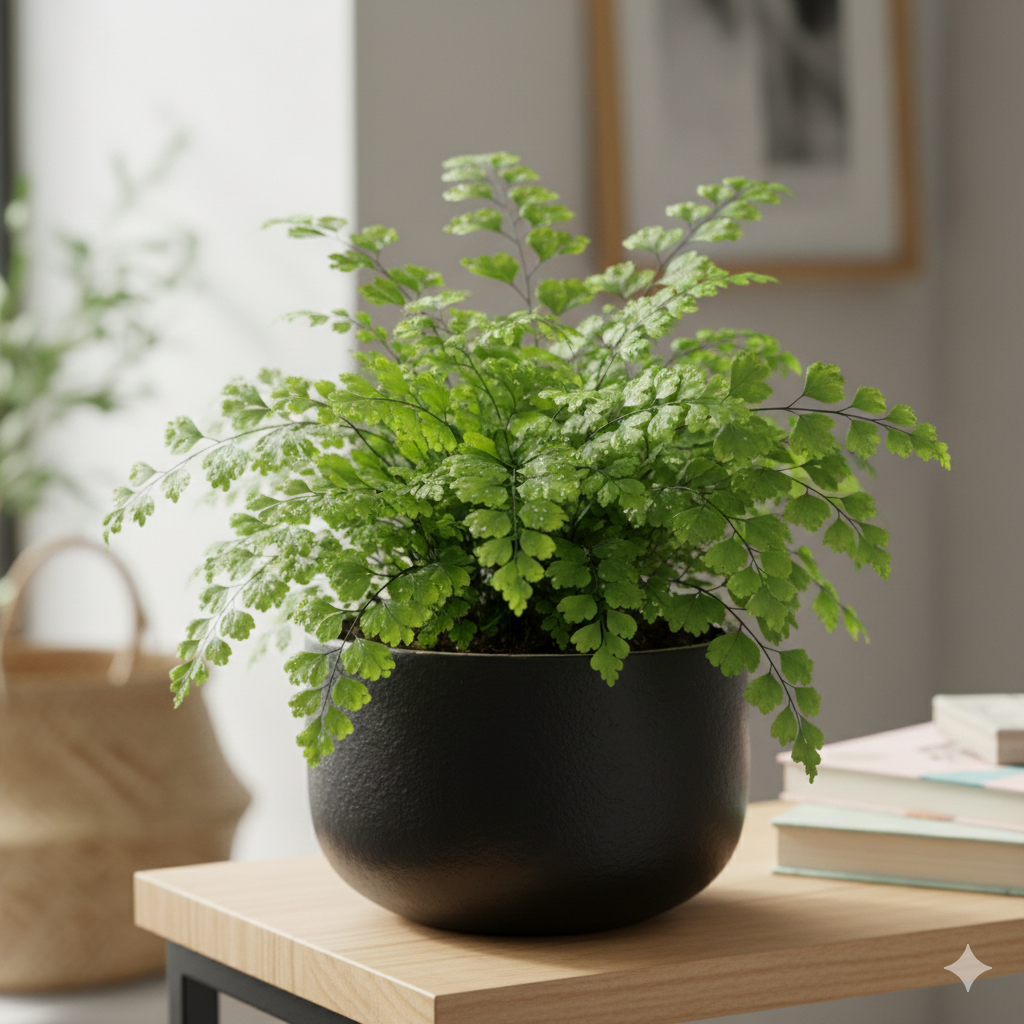
- Maidenhair fern (Adiantum) – Delicate diva, crisp leaves if you blink wrong.
Stunning though.
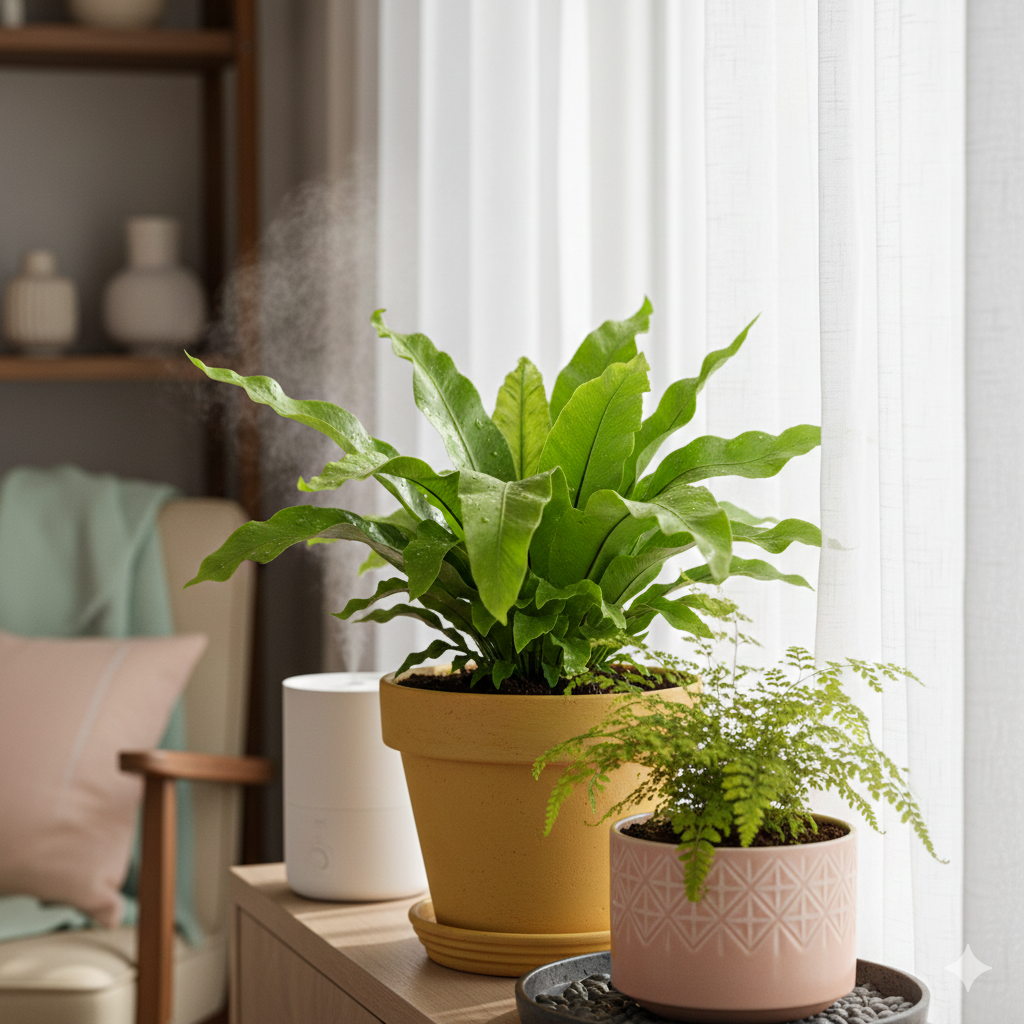
- Bird’s nest fern (Asplenium) – Wavy leaves, tougher than it looks, great for beginners.
- Rabbit’s foot fern (Davallia) – Furry rhizomes (yes, adorable), prefers even moisture.
- Staghorn fern (Platycerium) – Mounted wall art; epiphyte that needs special watering.
Match plant to your space
– Low light bathroom with a shower? Boston or maidenhair will write you a thank-you note. – Bright living room with filtered sun? Bird’s nest or rabbit’s foot will thrive. – Want a statement piece?
Mount a staghorn and pretend you live in a tropical art gallery.
Light: Bright, But Never Blazing
Ferns evolved under tree canopies. So yeah, they dislike harsh sun on their fronds. Best setup:
- Bright, indirect light near an east or north window.
- Filtered light through sheer curtains on a south or west window.
Warning signs:
- Yellow or crispy edges = too much sun.
- Slow growth, dark green but limp = too little light.
What counts as “indirect” anyway?
If you can read a book comfortably without turning on a lamp, but the sun doesn’t hit the leaves directly, you’re golden. Dappled shade outdoors works too—think under a tree or on a covered porch.
Watering: Consistent, Not Soggy
Here’s the fern paradox: they want steady moisture, yet they hate waterlogged soil.
We love a complicated queen. General rules:
- Keep soil evenly moist. Check with a finger; top 1 inch should feel slightly damp.
- Water thoroughly until it drains, then empty the saucer.
- Never let them sit in water. Ferns enjoy hydration, not a bath.
Frequency (rough guide):
- Spring/Summer: 1–3 times per week, depending on pot size and climate.
- Fall/Winter: Cut back to every 5–10 days as growth slows.
Maidenhair exception
Maidenhair hates drying out.
Water as soon as the surface feels barely dry. If it crisps, don’t panic—trim dead fronds, water well, and increase humidity. It might bounce back.
IMO, it’s worth the effort.
Humidity: The Fern Dealbreaker
Ferns breathe in humidity like it’s gossip. Dry apartments make them grumpy. Humidity targets:
- 50–60% for most ferns.
- 60–80% for maidenhair and Boston ferns if you want lush vibes.
How to raise humidity:
- Humidifier nearby—set and forget. Best option, FYI.
- Bathroom placement with good light.
Shower steam = happy fronds.
- Pebble tray under the pot. Not magic, but helps.
- Group plants to create a microclimate.
What doesn’t work well: Random misting. It boosts humidity for about five minutes and can encourage fungal issues if leaves stay wet.
Occasional mist is fine, just don’t rely on it.
Soil and Potting: Airy, Moist, Drainage for Days
Ferns like their roots cozy but breathable. Use a mix that holds moisture without going swampy. Good potting mix recipe:
- 2 parts high-quality peat or coco coir mix
- 1 part perlite
- 1 part fine bark or orchid bark
Pot choice:
- Drainage holes are non-negotiable.
- Plastic holds moisture longer; terracotta breathes and dries faster—choose based on your watering habits.
- Repot every 1–2 years or when roots circle the pot and water runs straight through.
Staghorn fern note
Mount on a board with sphagnum, or keep in a very loose mix. Soak the root ball when it feels dry to the touch, then let it drain completely.
Feeding and Growth: Slow and Steady
Ferns aren’t heavy feeders, but they appreciate snacks. Fertilizer plan:
- Use a balanced liquid fertilizer at 1/4 strength every 4–6 weeks during spring and summer.
- Skip fertilizing in winter.
- If frond tips brown after feeding, you may have salted the earth—flush the soil with plain water.
Trimming:
- Remove dead or crispy fronds at the base.
It tidies the plant and redirects energy.
- Don’t cut healthy fronds just to “shape.” Let the plant be a plant.
Common Problems (And How to Fix Them)
Crispy edges
- Cause: Low humidity, underwatering, or hot direct sun.
- Fix: Boost humidity, water consistently, move to indirect light.
Yellowing fronds
- Cause: Overwatering or poor drainage.
- Fix: Check roots for rot, improve soil, let the top inch dry before watering.
Droopy, pale growth
- Cause: Not enough light or nutrients.
- Fix: Move closer to bright light, feed lightly in growing season.
Pests
- Usual suspects: Scale, mealybugs, spider mites.
- Defense: Rinse foliage, then treat with insecticidal soap or neem weekly until gone.
- Prevention: Keep humidity up and dust off leaves. Mites hate moisture, so you win there.
Propagation: Share the Fern Love
You can grow a tiny fern army without summoning plant witchcraft. Division (easiest):
- Best for Boston, bird’s nest (careful), and rabbit’s foot.
- Lift the plant during repotting, gently tease apart clumps with roots attached.
- Pot divisions in fresh mix, keep evenly moist, and increase humidity while they settle.
Rhizome cuttings:
- Works great for rabbit’s foot fern—snip a piece of fuzzy rhizome with a few nodes.
- Lay on moist mix, pin down, and wait for new fronds.
Spores (advanced, but cool):
- Collect brown spores from the underside of mature fronds.
- Sow on sterile, moist medium; cover to keep humidity high.
- Expect a slow, nerdy science project. Rewarding, IMO, but not fast.
Placement and Styling Tips
Want that lush, layered look without chaos?
Curate it.
- Bathrooms: MVP spot for humidity-heavy ferns like maidenhair and Boston.
- Shelves near windows: Bird’s nest ferns shine here—clean silhouette, great texture.
- Hanging baskets: Let Boston ferns cascade like green waterfalls.
- Mounted staghorns: Statement piece on a bright wall out of direct sun.
Quick styling wins
– Use contrasting pots (matte black or stone) to make fronds pop. – Pair ferns with upright plants (snake plant, ZZ) for varied shapes. – Cluster 3–5 plants for a microclimate and instant jungle vibes.
FAQ
Can I keep a fern in low light?
Yes, but “low light” means bright shade, not a cave. A few feet from a north window works. If your fern looks sleepy and sparse, move it closer to the light or add a grow bulb.
Why does my fern drop fronds after I bring it home?
It’s adjusting to new light and humidity.
Trim the messy fronds, water consistently, and boost humidity. Give it 2–4 weeks and it should rebound with fresh growth.
Do ferns clean the air?
They contribute a little, like most houseplants, but don’t expect a single fern to replace your HVAC. Enjoy them for the humidity boost and the forest energy they bring, FYI.
Is tap water okay for ferns?
Usually yes, unless your water runs very hard or chlorinated.
If tips brown despite good humidity, try filtered or let tap water sit 24 hours before using.
How do I save a crispy maidenhair fern?
Cut off dead fronds, repot if soil feels compacted, water thoroughly, and place it in bright, indirect light with high humidity. Use a humidifier and keep the soil consistently moist. It might push new fronds in a few weeks.
Should I mist my fern daily?
You can, but don’t rely on misting for humidity.
Aim for a humidifier, pebble tray, or bathroom placement. Occasional misting is fine for cleaning leaves and a quick boost.
Conclusion
Ferns ask for three things: bright, indirect light, steady moisture, and juicy humidity. Nail those, and they’ll reward you with new fronds that unfurl like tiny green scrolls—seriously addictive to watch.
Start with a bird’s nest if you want easy mode, go maidenhair if you crave drama, and enjoy your personal pocket of rainforest at home.
Enjoyed this project? Get even more DIY ideas that save (and make) you money.
Join our free newsletter for profitable DIY projects, clever cleaning hacks, home ideas, and creative crafts delivered straight to your inbox.
✓ Free forever • No spam • Unsubscribe anytime