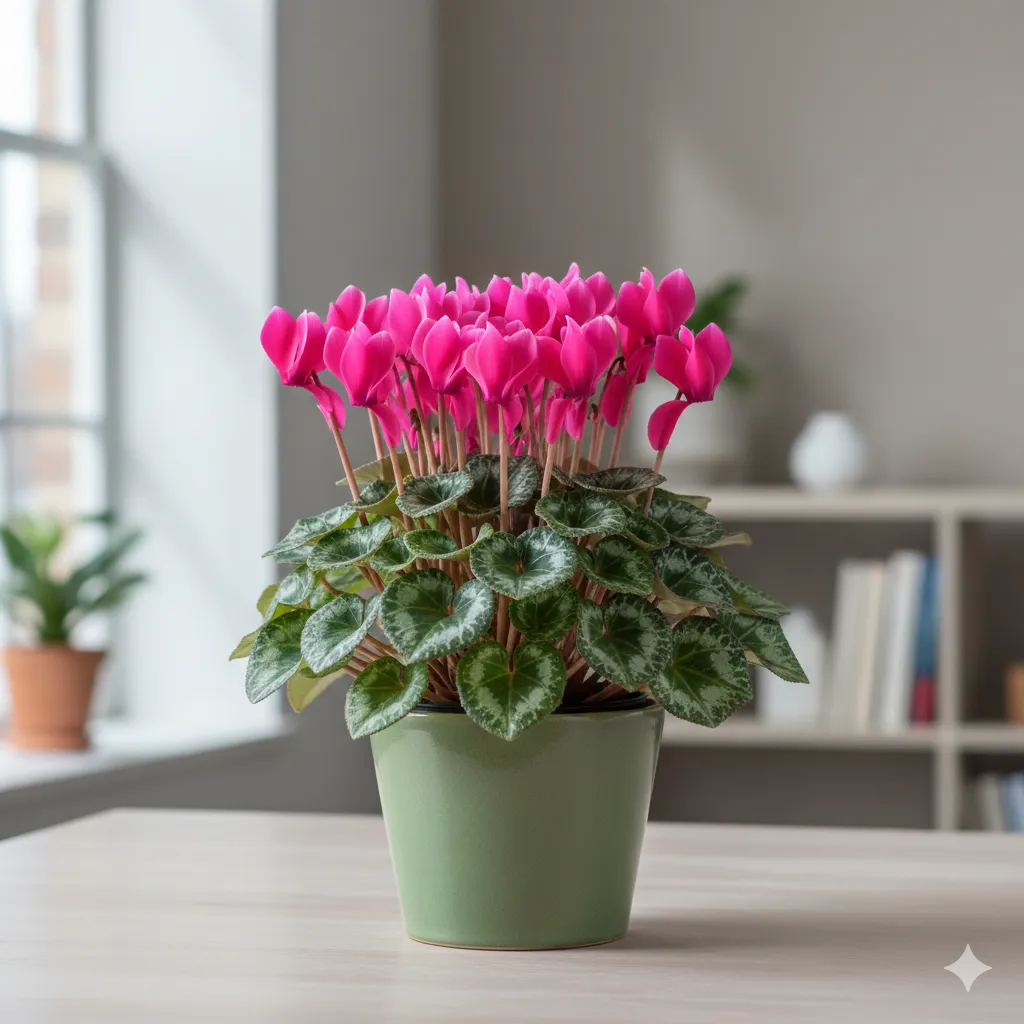
Cyclamen charm you first with those upswept petals and marbled leaves, then confuse you by pretending to die right when you start bonding. Don’t panic. They’re not drama queens—just seasonal divas with very specific preferences.
Nail a few habits, and your cyclamen will look like a tiny ballerina troupe on your windowsill for months.
Wath this short video to learn how to care for a cyclamen plant:
Meet the Cyclamen: The Winter Show-Off
You’ll find cyclamen starring in winter plant displays when everything else sulks. They bloom for ages, often from fall through late winter, with shades from white to magenta. The foliage?
Gorgeous. Those heart-shaped leaves wear silver marbling like they’re headed to a gala. The trick: keep them cool, bright, and slightly moist.
Do that, and the flowers just keep coming. Mess that up, and they melt like ice cream in August.
Light and Location: Bright, Not Blazing
Cyclamen love light—but not from the “fry your eyebrows” afternoon sun. Give them:
- Bright, indirect light near an east or north window.
- Filtered sun in winter if your home stays gloomy.
- Zero midday summer rays indoors—those scorch leaves.
Got a south or west window?
No problem. Pull the plant back a few feet or hang a sheer curtain. Think “well-lit spa,” not “tanning bed.”
Temperature: Cool Heads, Cool Roots
Cyclamen thrive in cooler temps than most houseplants.
That’s why they crush it in winter and sulk in summer.
- Ideal temp: 50–65°F (10–18°C) during bloom.
- They hate heat. If your room stays over 72°F (22°C), expect fewer flowers and droopy leaves.
- Keep them away from heaters, radiators, and hot appliances.
Pro tip: a chilly windowsill (no drafts) can extend the bloom show. If you crack a window for fresh air, shield the plant from direct icy blasts.
Watering: The “Moist but Not Soggy” Balancing Act
This part scares people.
Don’t let it. Cyclamen like steady moisture while actively growing and flowering—but never a soggy pot.
- Water when the top 1 inch of soil feels dry.
- Use room-temp water. Cold water on the tuber = cranky plant.
- Bottom-water if you can: set the pot in a dish of water for 10–15 minutes, then drain completely.
Why bottom-watering?
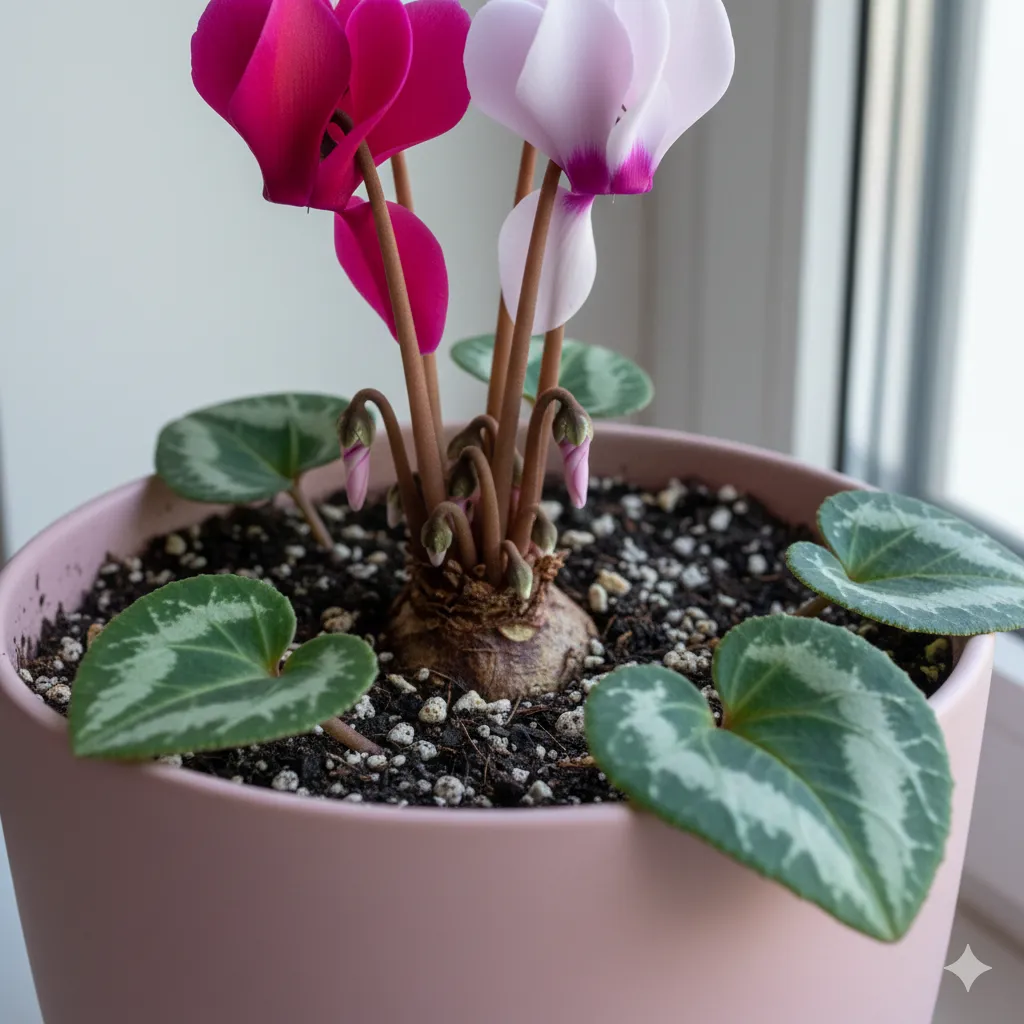
You avoid splashing the crown (the top of the tuber), which can rot if it stays wet.
If you must water from the top, water the soil edge, not the center. Cyclamen hate wet collars, FYI.
Overwatering vs. underwatering
– Overwatered: limp leaves, yellowing, mushy base—stop, drain, dry, whisper apologies. – Underwatered: wilted leaves that perk up after a drink—give more consistent sips.
Soil and Potting: Keep It Airy
Cyclamen grow from a tuber that wants air and excellent drainage.
- Use a light, well-draining mix: 2 parts high-quality potting mix + 1 part perlite or pumice.
- Choose a pot with a drainage hole. Decorative cachepots are fine as long as the grow pot drains freely.
- Pot snug, not roomy.
They bloom better slightly root-bound.
Planting depth matters
Keep the top of the tuber slightly above the soil surface. Burying it invites rot. It’s a “peekaboo” situation, not a “fully covered” situation.
Feeding: Light Snacks, Not Buffets
Cyclamen don’t demand much.
They’ll bloom happily with modest nutrition.
- Feed every 2–4 weeks during active growth with a balanced, diluted liquid fertilizer (half strength).
- Skip heavy nitrogen—prioritize balanced or bloom formulas.
- Stop feeding during dormancy. They’re napping, not bulking.
Blooming and Deadheading: Keep the Show Rolling
You’ll get more flowers if you remove the old ones properly. It’s not just for looks—it prevents rot and signals the plant to keep producing.
- Deadhead by twisting and pulling the entire flower stem from the base.
Don’t snip halfway.
- Do the same for yellowing leaves.
- Rotate the pot weekly so it grows evenly and doesn’t lean dramatically like it’s posing for album art.
Bloom length expectations
With good care, cyclamen can bloom for 8–12 weeks, sometimes longer. Keep them cool and you’ll extend the performance. Let them cook in warm rooms and the show ends early, IMO.
Dormancy: It’s Not Dead, It’s Resting
At some point—often spring—leaves yellow and die back.
Don’t freak. Your cyclamen is entering dormancy. Here’s how to handle the chill phase:
- Reduce watering gradually as leaves fade.
Stop once the foliage dies back.
- Place the pot in a cool, dry, shaded spot. No fertilizer. No soggy soil.
No guilt.
- Wait 2–3 months. The tuber stores energy.
- Wake-up routine: Late summer/early fall, bring it back to bright light, refresh the top inch of soil (or repot), then resume light watering when new growth appears.
You can also repot during dormancy if the tuber outgrew its pot. Just keep that crown exposed, and don’t drown it on day one.
Pests and Problems: Spot It, Stop It
Cyclamen don’t invite many pests, but a few crashers exist:
- Aphids: Clusters on new growth; blast with water or use insecticidal soap.
- Spider mites: Fine webbing and stippled leaves; increase humidity slightly and treat with neem or miticide.
- Cyclamen mites: Distorted growth and stunted leaves; quarantine and treat swiftly.
Sometimes disposal works best, IMO.
Common care issues:
- Yellow leaves: Normal during dormancy or too warm/too wet conditions.
- No blooms: Not enough light, too warm, or overfeeding nitrogen.
- Rot at the crown: Water hitting the tuber or poor drainage—switch to bottom-watering and lighten the mix.
Humidity: A Light Touch
Cyclamen like moderate humidity but hate water sitting on leaves and crown. Place the pot on a pebble tray with water below the pot line, or group plants together. Skip misting the leaves directly—nobody asked for fungal confetti.
Choosing Your Cyclamen: Mini vs.
Standard
At the store, you’ll see different sizes and petal styles. Here’s how to pick like a pro:
- Mini cyclamen: Compact, loads of flowers, great for small spaces.
- Standard cyclamen: Bigger blooms and leaves, a bit thirstier.
- Look for firm leaves, lots of buds peeking from the center, and no mushy base.
Transport tip: Keep the plant out of freezing drafts on the way home. A 5-minute icy blast can end the party early.
FAQ
Why did my cyclamen suddenly wilt?
Usually heat or overwatering.
If your room feels warm, move the plant somewhere cooler and brighter. Check the soil—if it’s soggy, let it dry slightly and switch to bottom-watering. If it’s bone-dry, give a thorough drink and drain well.
Can I grow cyclamen outdoors?
In mild climates, yes—especially hardy species like Cyclamen hederifolium.
They prefer dappled shade and well-draining soil under trees. In cold climates, keep florist cyclamen as indoor winter plants and move them outside only in cool shoulder seasons.
How long do cyclamen live?
For years if you respect dormancy. The tuber grows larger over time, and bloom displays often improve annually.
Many folks think the plant “dies” after blooming—it doesn’t. It naps, then returns like a tiny phoenix.
Should I repot every year?
Not always. Repot every 1–2 years, ideally just before the new growth begins after dormancy.
Use a slightly larger pot (one size up), refresh the mix, and keep the tuber top exposed.
Is tap water okay?
Usually, yes. If your tap water runs very hard, you might see mineral buildup or leaf edge browning over time. If that happens, switch to filtered or rainwater.
Room-temperature water keeps the roots happier.
Why won’t my cyclamen rebloom?
It probably skipped proper dormancy or spent summer in a hot room. Let it rest dry and cool for a few months, then reintroduce light and careful watering when new growth emerges. Also check light levels in winter—bright light fuels flowers.
Conclusion
Cyclamen reward you when you lean into their quirks: cool temps, bright indirect light, careful watering, and a real dormancy.
Do those four things and you’ll get a winter spectacle that returns year after year. They’re a bit fussy, sure—but once you sync with their rhythm, they’re low-key easy. And yes, you absolutely can keep that “holiday plant” alive past February—flex on the doubters.
Enjoyed this project? Get even more DIY ideas that save (and make) you money.
Join our free newsletter for profitable DIY projects, clever cleaning hacks, home ideas, and creative crafts delivered straight to your inbox.
✓ Free forever • No spam • Unsubscribe anytime