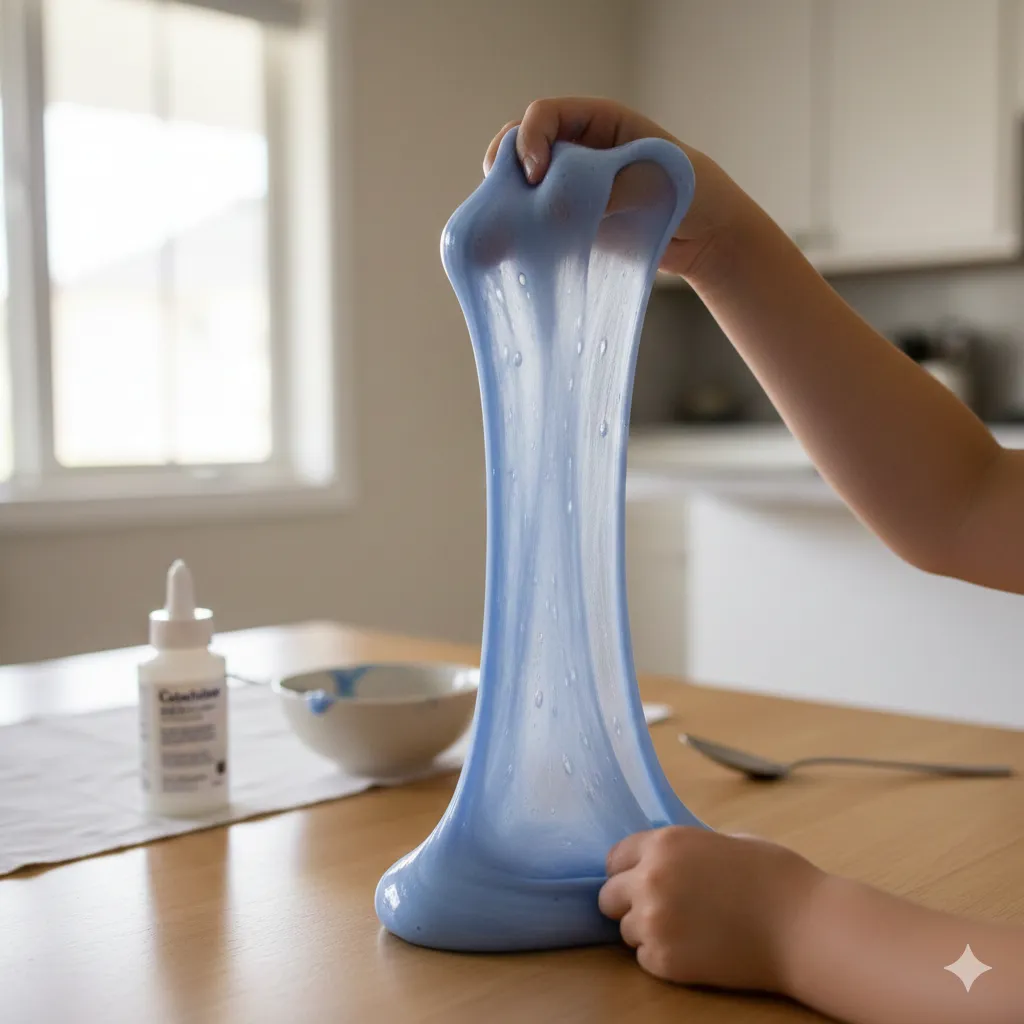
You spent forty minutes perfectly measuring glue and glitter, only to end up with a gloopy mess that’s currently fused to your palms and trailing across the kitchen table. We’ve all been there. Before you panic and reach for the scissors or toss the whole batch in the trash, take a breath. Your slime isn’t ruined; it’s just “under-bound.”
The good news? You can fix sticky slime in minutes using things already sitting in your pantry or bathroom cabinet. Let’s turn that puddle of goo back into the satisfying, stretchy masterpiece it was meant to be—no tears required.
Watch this easy tutorial to learn how to make slime less sticky:
Know Your Slime (So You Don’t Accidentally Ruin It)
Understanding how do you make slime less sticky starts with a bit of “slime science.” Slime is a polymer; it needs the right balance of liquid and cross-linkers (activator) to hold its shape. When it’s sticky, that balance is off.
Why Slime Gets Sticky
- Under-activation: Not enough borax, contact lens solution, or starch to “knit” the glue together.
- Heat: Warm hands or a hot room melt the bonds, making it “melted” and tacky.
- Too Much Moisture: Over-adding water or scents can dilute the structure.
Quick Vibe Check:
- Texture now: If it strings between your fingers like spiderwebs, it’s under-activated.
- What went wrong: You likely stopped kneading too soon or the ratio was slightly off.
- What NOT to do: Do not dump a half-cup of activator in at once. You’ll turn your slime into a rubber rock.
Anti-Sticky Slime Fixes That Save the Batch
Most slime is salvageable. The trick is to go slow. You want to reach the “sweet spot” where it clicks against the container but doesn’t cling to your skin.
The Slow Add Method (Plus One Upgrade)
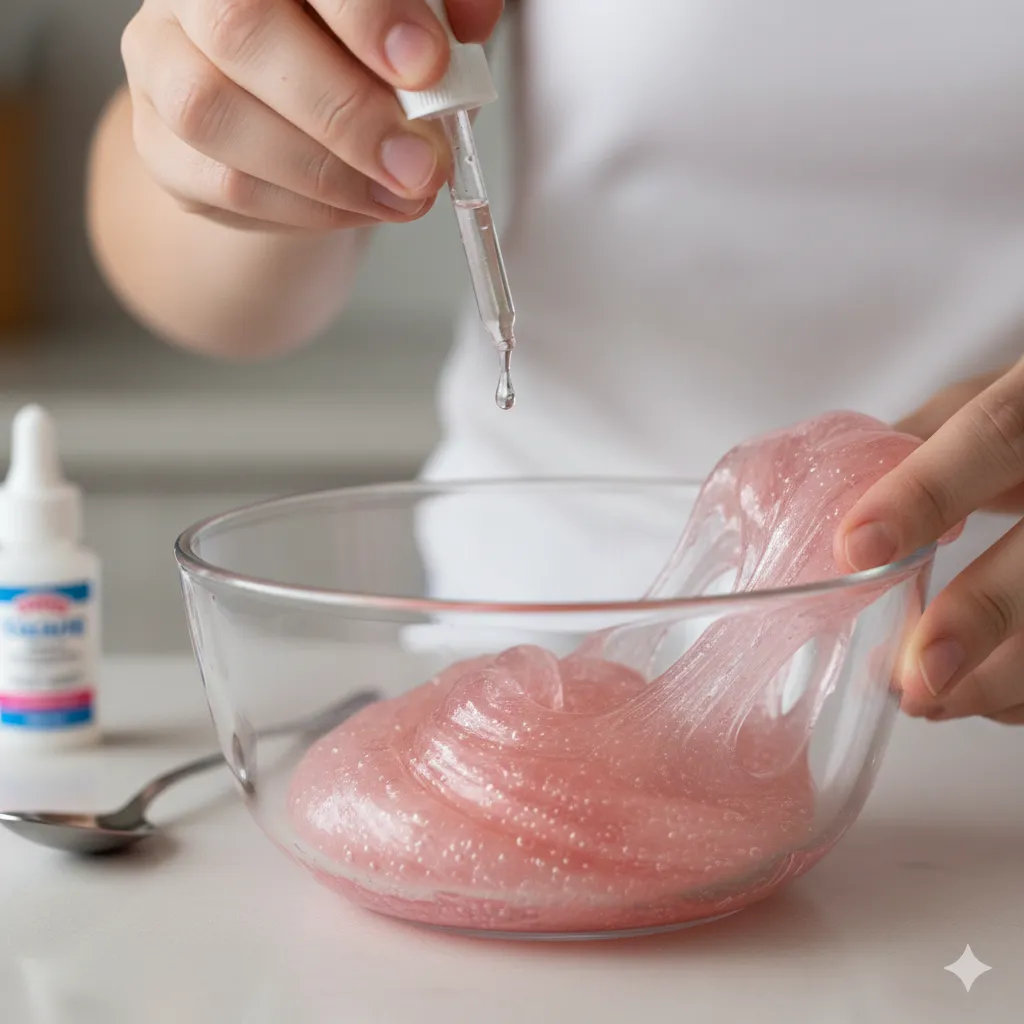
If you’re using a liquid activator (like Borax water or Saline solution), add it one drop at a time. Seriously. Stir for a full minute after every single drop.
- The Upgrade: Before adding more chemicals, let the slime rest for 10 minutes in a sealed container. Sometimes the polymers just need time to settle and firm up on their own.
Kneading Like You Mean It
Your hands are the best tools you have. Kneading generates friction and heat, which helps the activator circulate and bond with the glue.
- Pro Tip: If the slime is too sticky to touch, coat your hands in a little bit of activator or baby oil first. This allows you to work the slime without becoming part of it. Stop the moment the slime pulls cleanly away from your skin.
The Air Time Trick
Sometimes slime is sticky simply because it’s too “wet.”
- The Fix: Leave the slime on a clean, non-porous surface (like a silicone mat) uncovered for about 15–30 minutes. The slight evaporation of surface moisture can take the “tack” right off.
- Warning: Don’t do this with fluffy slime, or it will turn into a crusty marshmallow!
How to Make Slime Less Sticky Without Activator
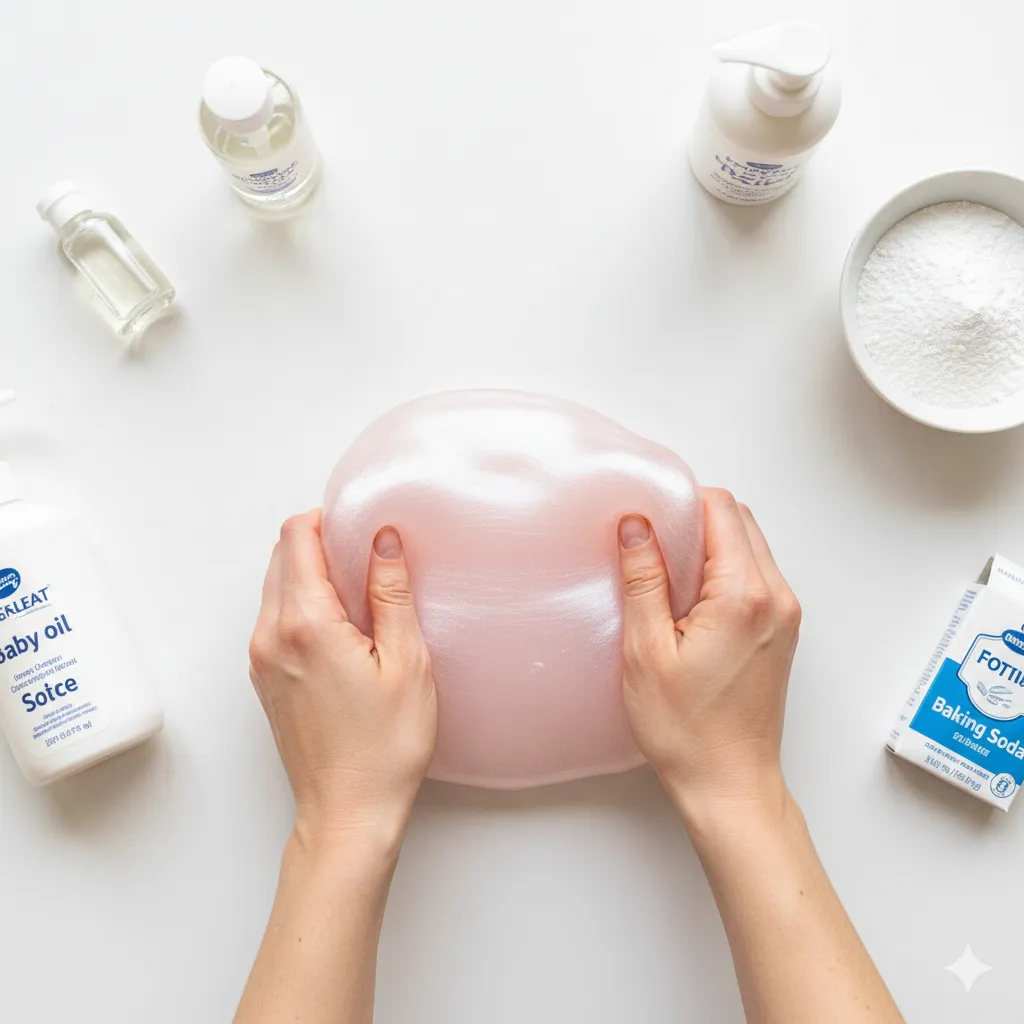
If you’ve run out of Borax or contact solution, don’t worry. You can still save the day with household staples. This is the secret to how do you make slime less sticky without activator.
- Lotion: Paradoxically, a pump of hand lotion can help. It doesn’t “de-stick” so much as it makes the slime more supple and less likely to grab onto dry skin.
- Baby Oil: This is the gold standard for “glossy” slimes. A few drops make the surface slick so it won’t stick to your hands, but it keeps the stretch.
- Cornstarch: If your slime is “melting,” a teaspoon of cornstarch can act as a thickening agent. It will make the slime slightly more opaque and “matte.”
- Baking Soda: A tiny pinch (not a spoonful!) can help firm up the structure, especially if you used contact lens solution as your primary activator.
What to Avoid (Seriously): Never add more glue to sticky slime (it only makes it stickier) and avoid using vinegar unless you want to melt the slime into a liquid puddle!
How to Make Fluffy Slime Less Sticky
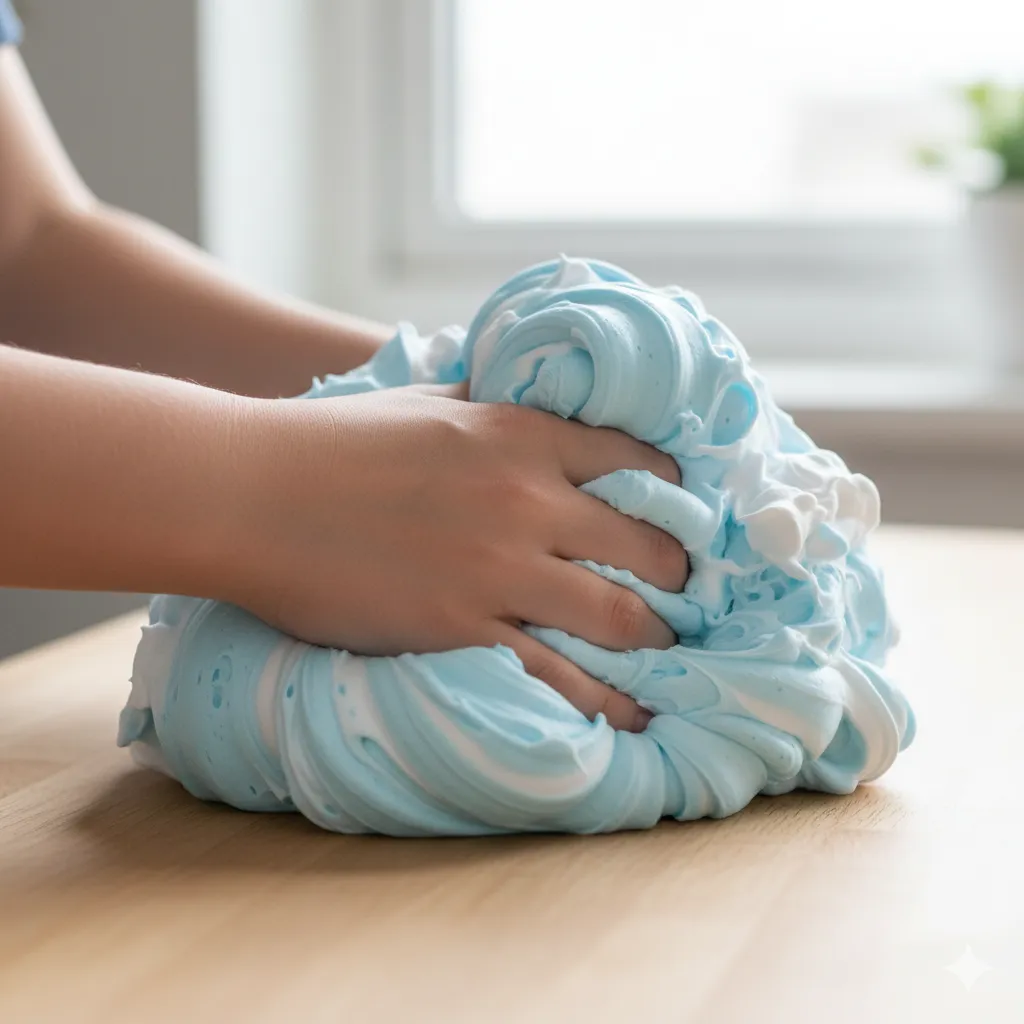
Fluffy slime is a different beast because it relies on air bubbles from shaving cream. As those bubbles pop, the slime loses its “fluff” and becomes a sticky, deflated mess.
- Shaving Cream Breakdown: If your fluffy slime is getting tacky, it’s usually because the shaving cream is dissolving.
- The Fix: Add a fresh palmful of shaving cream and knead it in. It acts as a mild buffer and restores the “body” of the slime.
- Cornstarch Method: For fluffy slime that’s persistently wet, a dusting of cornstarch works wonders to soak up the excess moisture without ruining the airy texture.
Common Slime Problems and Fast Fixes
| Problem | The Fast Fix |
| Sticks to everything | Add 2 drops of baby oil or activator. |
| Rips instead of stretches | You over-activated! Add a splash of warm water or lotion. |
| Melts after storage | This is normal. Add a “re-activator” (tiny bit of Borax water). |
| Rubbery/Hard | Soak it in a bowl of very warm water for 30 seconds. |
Bonus Habits That Make Slime Better Every Time
- Wash hands first: Dirt and natural skin oils make slime break down faster.
- Store airtight: Air is the enemy of longevity.
- Avoid heat: Don’t leave your slime in a hot car or near a window.
- Rest between plays: If it feels “tired” or extra sticky, give it 24 hours in its jar.
FAQs
Why is my slime still sticky after activator?
You might have used too much water in your initial recipe, or your activator isn’t strong enough. Try the “rest” method before adding more.
Can you fix slime that’s too sticky?
Yes! Almost every “fail” can be saved with patience and the right additive (oil or cornstarch).
Does slime get less sticky over time?
Actually, most slimes get more sticky as they age because the chemical bonds break down. Regular “maintenance” with a drop of activator is key.
What’s the safest fix for kids?
Baby oil or cornstarch. They are non-toxic and provide an immediate tactile change that’s easy for kids to handle.
Closing Thoughts
Sticky slime isn’t a sign of failure—it’s just a work in progress! Usually, the difference between a disaster and a perfect “thwack” sound is just a few drops of oil and five minutes of kneading. Remember: small fixes are always better than starting over. Use the right method for your texture, keep your hands clean, and enjoy the stretch!
Enjoyed this project? Get even more DIY ideas that save (and make) you money.
Join our free newsletter for profitable DIY projects, clever cleaning hacks, home ideas, and creative crafts delivered straight to your inbox.
✓ Free forever • No spam • Unsubscribe anytime