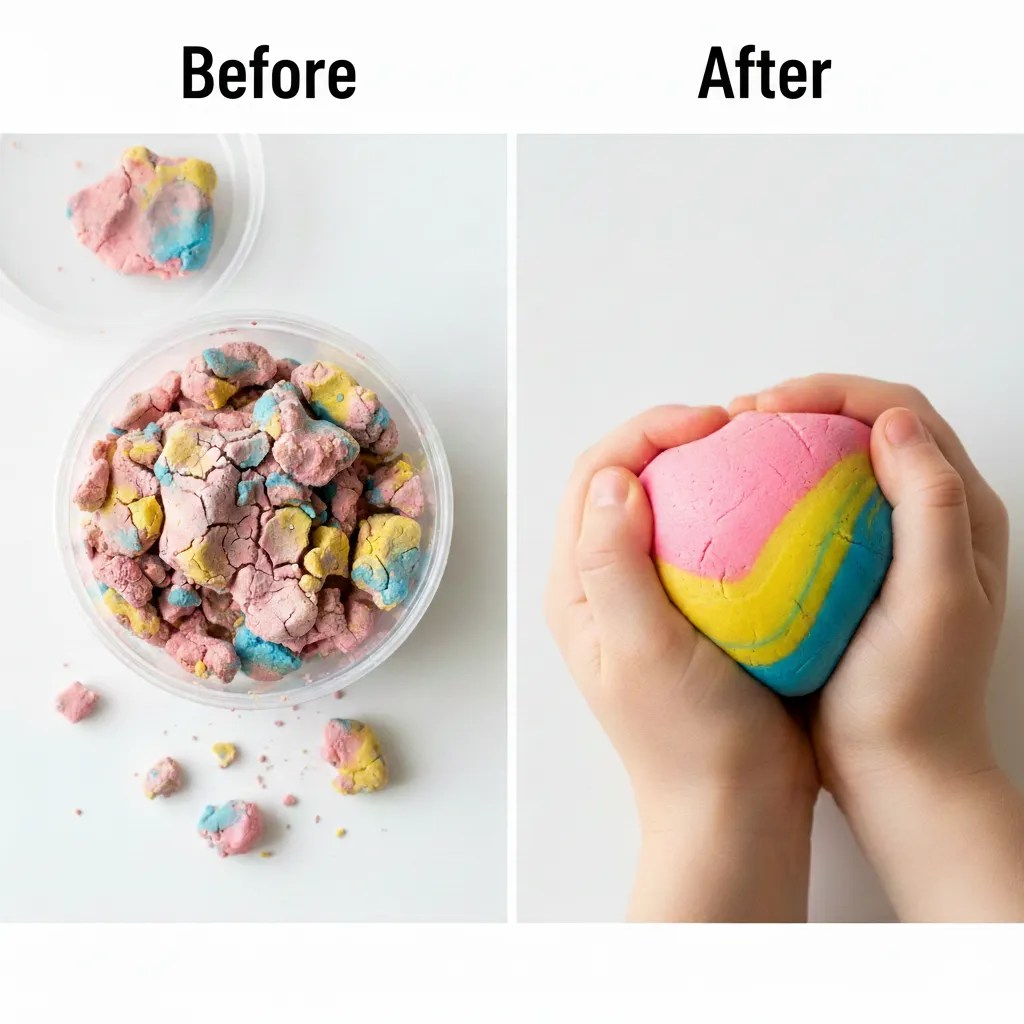
Hard, crumbly play dough? Don’t throw it out just yet! We’ve all been there: you open the container only to find a salty, rock-hard lump instead of the squishy, colorful dough your kids love. Whether it was left out overnight after an epic “dinosaur dig” or has simply lost its luster from weeks of use, air exposure is the ultimate enemy of play dough.
The good news? You don’t need to run to the store for a fresh pack. With a few practical solutions using easy, kid-safe ingredients, you can save money, reduce waste, and get your dough stretchy again in minutes.
Watch this easy tutorial to learn how to make play dough soft again:
Step-by-Step Guide to Softening Play Dough
Method 1: The Water Knead Fix
This is the classic “first-aid” for dough.
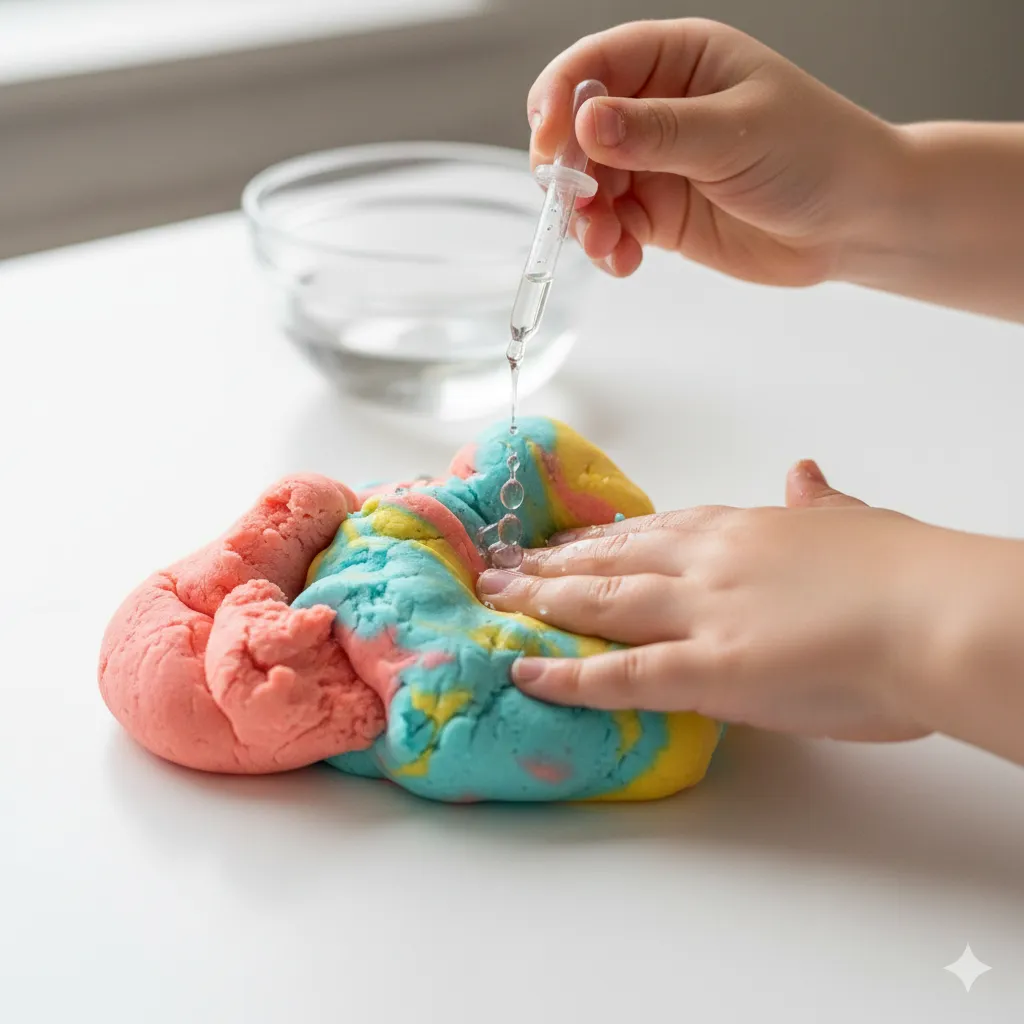
- Place the dough in your palm and add just a few drops of warm water.
- Knead the water in slowly and thoroughly.
- Pro Tip: Go gradually! Adding too much water at once creates a sticky mess. If it’s still tough, add two more drops and repeat.
- Result: This restores basic elasticity and makes the dough pliable for everyday play.
Method 2: Oil Revival
If your dough feels “short” or breaks apart when you pull it, it needs fat, not just moisture.
- Ingredients: A tiny drop of vegetable oil, baby oil, or melted coconut oil.
- Instructions: Flatten the dough, add the oil to the center, and fold it over. Knead until the oily sheen disappears.
- Notes: This is the best fix for crumbly dough that has lost its “gloss.”
Method 3: Microwave Moisture Boost
For stubborn, very hard dough, a little heat can help the salt crystals dissolve and the flour rehydrate.
- Place the dough in a microwave-safe bowl.
- Cover it with a damp paper towel.
- Heat in 5–10 second bursts.
- Caution: Play dough can get surprisingly hot! Let it sit for a moment before kneading. Do not overheat, or you’ll accidentally “cook” the dough into a permanent brick.
Method 4: Steam Softening (No Microwave)
If you’re wary of the microwave, try a gentle steam bath.
- Place your dough in a small bowl.
- Set that bowl inside a larger bowl filled with very hot water (don’t let the water touch the dough!).
- Cover the large bowl to trap the steam.
- After 5 minutes, the dough should be sweaty and soft—knead it immediately.
Method 5: Yogurt or Conditioner Rescue
For homemade salt-free doughs or toddler-safe batches, try adding a small spoonful of plain yogurt or hair conditioner.
- Knead it in thoroughly. The fats and emollients in these ingredients act as a deep conditioner for the flour fibers, making the texture incredibly silky.
Tips to Prevent Dry Play Dough
- Airtight is Right: Always store dough in airtight containers or heavy-duty Ziploc bags with the air squeezed out.
- Cool & Dark: Keep containers away from sunny windowsills or heaters.
- The Pre-emptive Drop: If you notice a batch getting slightly stiff, add a drop of oil before putting it away for the night.
Common Play Dough Problems and Quick Fixes
| Problem | Easy Solution |
| Too stiff to knead | Add warm water a few drops at a time. |
| Crumbly and breaking | Mix in a little oil or hair conditioner. |
| Sticky after softening | Dust your hands and the dough with a pinch of flour. |
| Dough loses color | Store away from sunlight; add a drop of food coloring during rehydration. |
| Microwave dough too warm | Let it cool for 30 seconds, then knead gently. |
Extra Tricks to Keep Dough Soft and Fun
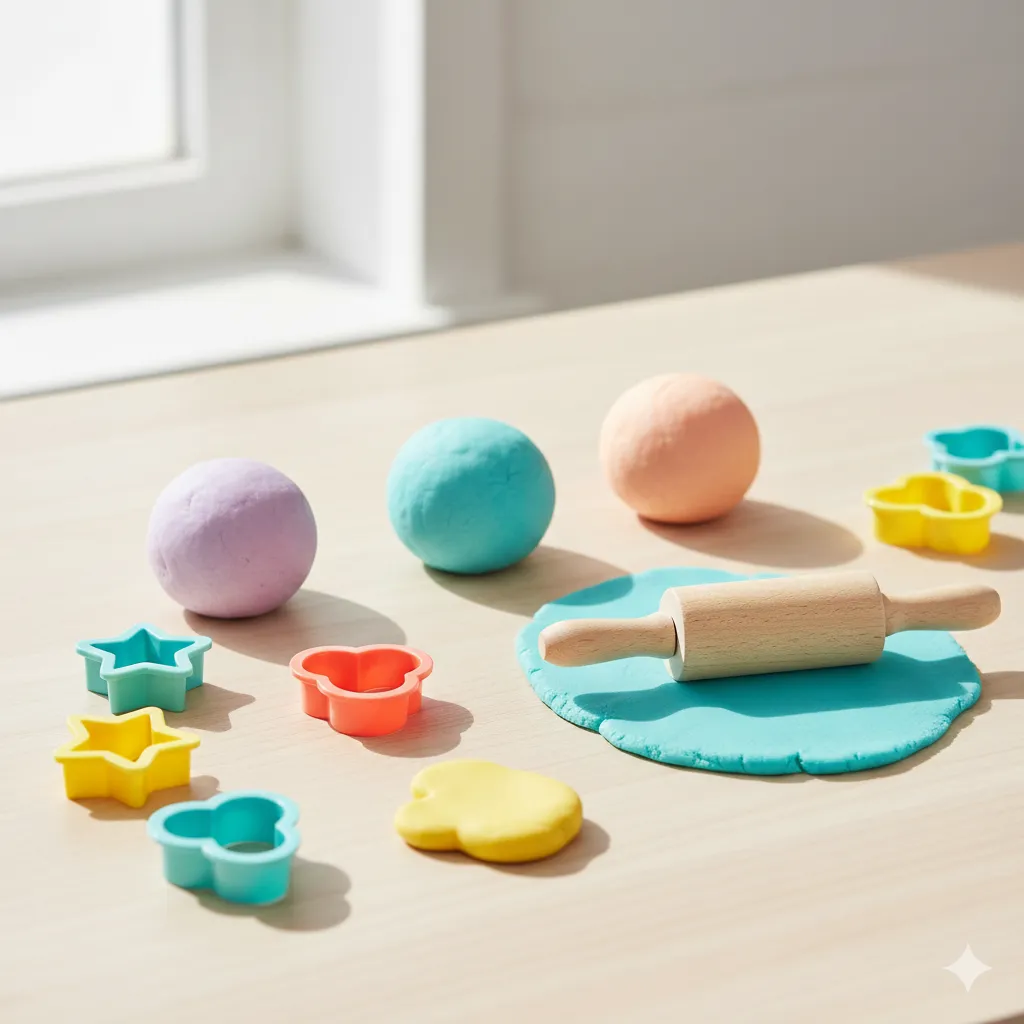
Once your dough is revived, why not level up the play?
- Scent & Shine: Add a drop of essential oil (like lavender) or edible glitter during the rehydration process.
- Themed Kits: Use your fresh dough to create a “Bakery” kit with cupcake liners or a “Construction Zone” with small stones.
- STEM Moment: Turn the softening process into a science experiment! Ask your kids to observe how the texture changes when “Ingredient X” is added.
FAQs About Softening Play Dough
Can old play dough really be saved?
Yes! Unless there is visible mold or it has turned into a literal stone that shatters, most dough can be saved using the water or steam methods.
Is it safe to use conditioner or yogurt?
As long as your child is old enough to understand that the dough is for play and not for eating, these are perfectly safe. For “mouthers,” stick to water and vegetable oil.
How long does rehydrated dough last?
Typically 1–2 weeks. Because you’ve added “un-cooked” moisture, keep an eye out for any changes in smell, which might indicate it’s time for a totally new batch.
Enjoyed this project? Get even more DIY ideas that save (and make) you money.
Join our free newsletter for profitable DIY projects, clever cleaning hacks, home ideas, and creative crafts delivered straight to your inbox.
✓ Free forever • No spam • Unsubscribe anytime