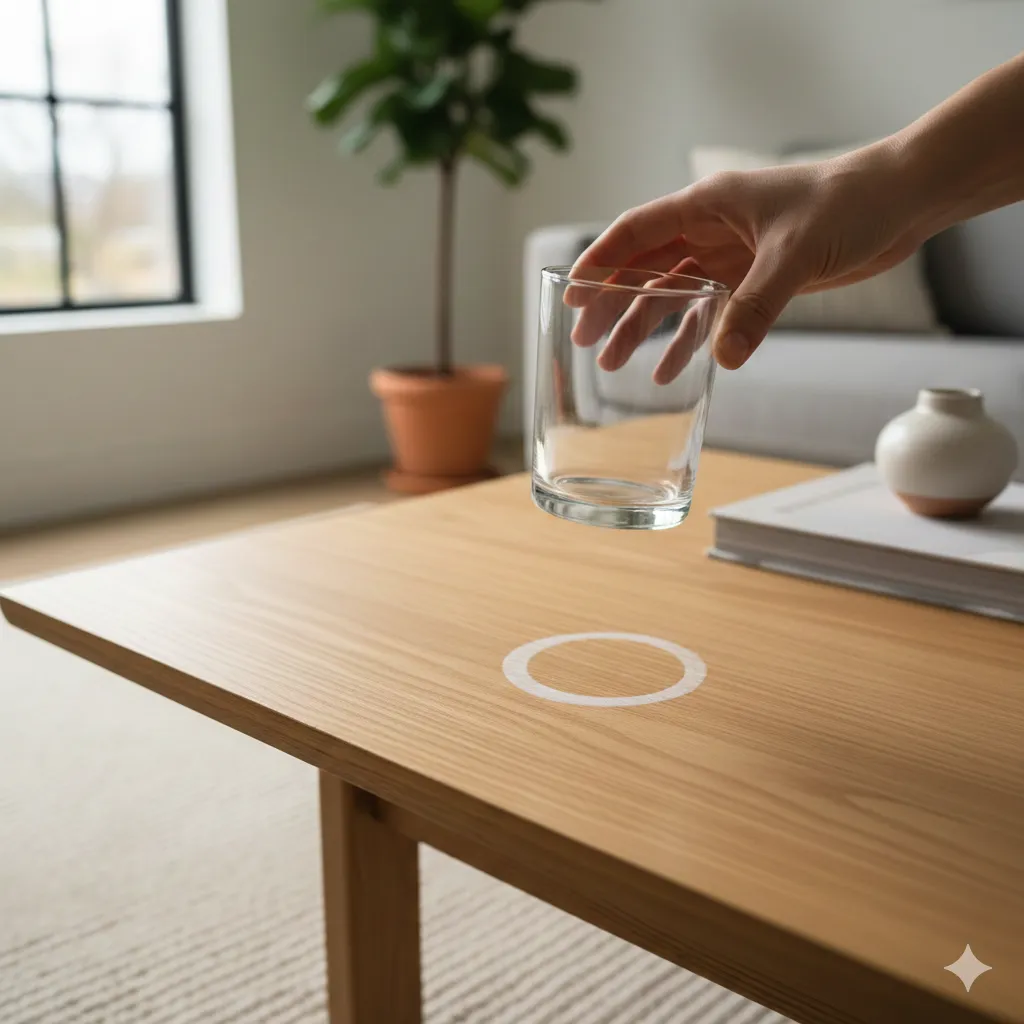
We’ve all been there: you lift a glass after a long evening, only to find a cloudy, white halo mocking you from the surface of your favorite mahogany coffee table. It feels like a permanent scar, but here is the good news—it rarely is.
Water rings are incredibly common because most wood finishes are porous to some degree. When moisture gets trapped between the finish and the wood, it creates that dreaded foggy look. Before you reach for the sandpaper or consider “distressing” the rest of the table to match, take a breath. Most rings are fixable with a little patience and things you already have in your pantry.
Watch This Easy Video Tutorial on Removing Water Rings
If you’re a visual learner, I highly recommend watching a quick walkthrough before you start scrubbing. Seeing the “buffing” motion in real-time is especially helpful if you’re dealing with an antique or a dark stain, where the margin for error is a bit slimmer.
What You’ll Need
Gather these supplies before you begin:
- Soft microfiber or cotton cloths (old T-shirts work great)
- Hair dryer or a clothes iron (no steam!)
- Baking soda and non-gel white toothpaste
- Olive oil or mayonnaise (yes, really)
- Furniture polish or wax
- 0000 steel wool (optional, for “last resort” dark stains)
White vs. Dark Rings: Know Your Enemy
- White Rings: These are “surface” stains. The moisture is trapped in the finish (wax or lacquer). These are almost always fixable at home.
- Dark Rings: These are a bit more serious. A dark or black stain means the water has reached the actual wood fibers, often causing mildew or oxidation. These require a more delicate, escalated approach.
How to Remove Water Rings from Any Wood Furniture
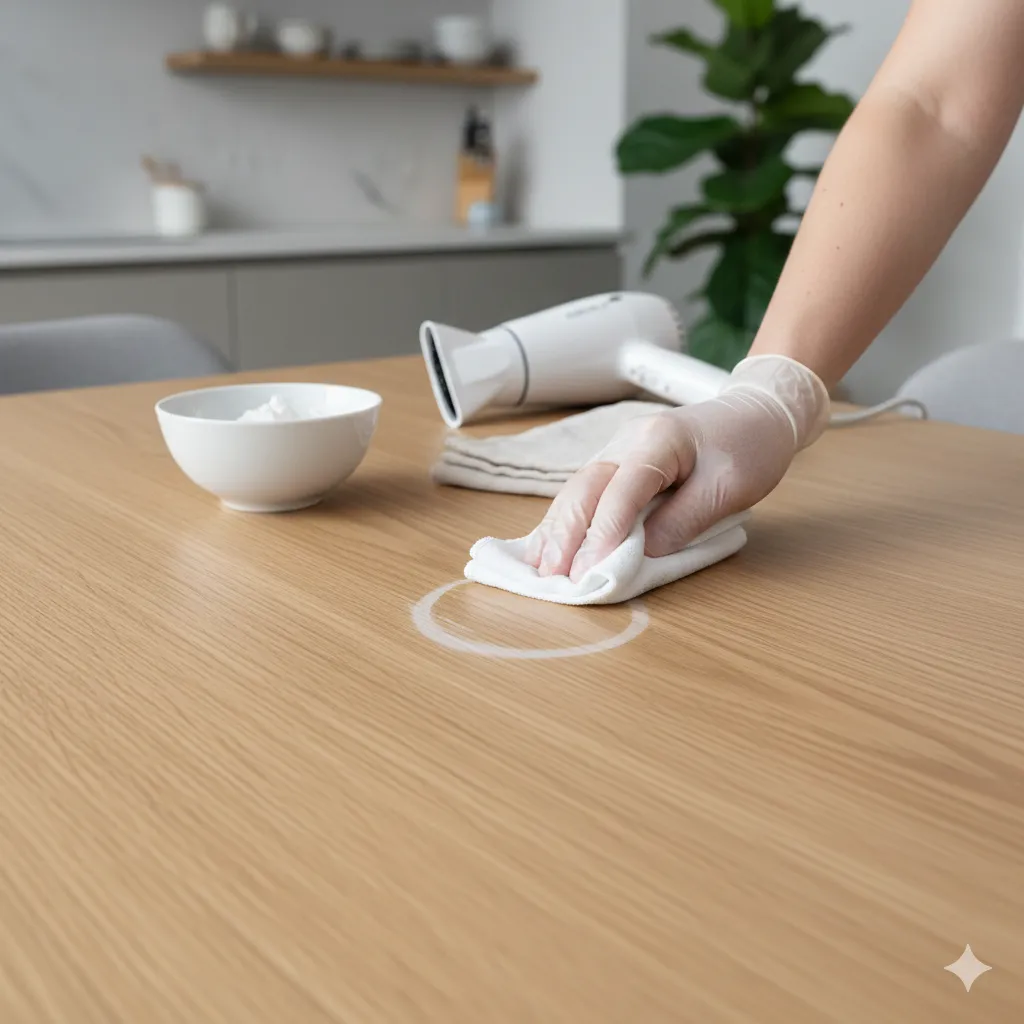
The Golden Rule: Always test your chosen method on an inconspicuous area—like the underside of a table leg—to ensure it doesn’t discolor the finish.
1. The Heat Method
This is the “magic” trick of furniture repair. Since white rings are just trapped moisture, heat can evaporate it right through the finish.
- The Hair Dryer: Set it to low or medium. Move it back and forth over the ring (never hold it in one spot!). After a few minutes, the fogginess should start to vanish.
- When to stop: If the wood feels hot to the touch, stop. You want to coax the water out, not melt the finish.
2. The Gentle Abrasion Method
If heat doesn’t work, you need a very mild abrasive to “polish” the stain away.
- The Mix: Create a paste of one part baking soda to one part non-gel toothpaste.
- The Technique: Rub the paste gently onto the ring in the direction of the wood grain. Don’t scrub too hard—you’re looking for a light buffing action. Wipe clean with a damp cloth.
3. The Oil Finishing Method
Sometimes the finish just needs to be “re-hydrated” to blend the ring back in.
- The Pantry Fix: Dab a bit of mayonnaise or olive oil onto the ring. Let it sit for 20 minutes (or even overnight for stubborn marks).
- Buffing: Wipe away the excess and buff the area with a dry cloth. This is excellent for restoring the glow to dull spots.
Specialized Removal Tactics
How to remove white water rings from wood
Since these are just moisture trapped in the wax, the Hair Dryer Method followed by a quick Mayo rub usually solves 90% of cases. You rarely ever need to sand a white ring.
How to remove dark water rings from wood
Dark stains mean the wood itself is wet.
- Try the toothpaste method first.
- If that fails, you may need to very lightly use 0000 steel wool dipped in lemon oil to gently remove the top layer of finish to reach the wood.
- If the wood is black, it may require a wood bleach (oxalic acid), at which point you might consider calling a pro.
For Antique or Delicate Furniture
Older furniture often uses shellac or varnish, which react differently than modern polyurethane.
- Avoid: Harsh chemicals or heavy scrubbing.
- Try: The oil/mayonnaise method first, as it’s the least invasive.
- The Pro Call: If it’s a high-value heirloom and the ring won’t budge, don’t risk it. A professional conservator is worth the investment.
When to Use an Iron (and When Not To)
The iron method is a “high-speed” version of the hair dryer.
- Settings: Set the iron to the lowest heat and turn off all steam.
- The Buffer: Place a clean cotton towel over the stain. Briefly press the iron over the towel for 10-second intervals.
- Warning: If you use steam or leave the iron too long, you’ll end up with a much larger white patch than you started with!
Common Problems & Quick Fixes
| Problem | Likely Cause | Quick Fix |
| Ring won’t disappear | Moisture is trapped deep in the finish. | Repeat the Heat Method in 2-minute bursts, allowing the wood to cool slightly between sets. |
| Finish looks dull or “cloudy” | Abrasives (toothpaste/baking soda) removed the wax. | Apply a high-quality furniture wax or lemon oil and buff with a microfiber cloth. |
| Wood feels rough or raised | The water caused the wood grain to “swell.” | Once dry, very lightly sand with 0000 steel wool and re-apply furniture polish. |
| White ring turned into a smudge | Too much oil/mayo was left on too long. | Wipe the area with a 50/50 mix of white vinegar and water, then dry immediately. |
| Fine scratches appear | Scrubbing was too aggressive or against the grain. | Use a furniture touch-up marker or rub a walnut meat into the scratch to hide it. |
| Stain is gone, but a “halo” remains | Uneven cleaning of the tabletop. | Clean the entire surface with a dedicated wood cleaner so the luster matches. |
FAQ
How to remove water rings from a wood table? Start with a hair dryer on low. It’s the safest and most effective “first strike” for dining and coffee tables.
Can water rings be permanent? White rings are rarely permanent. Dark rings can be, as they represent actual damage to the wood fibers.
Should you refinish after removing water rings? Usually, no. A good buffing with furniture wax is enough to make the repair invisible.
Summing Up
The secret to saving your furniture is patience. Don’t try to “scrub” the ring away in thirty seconds; you’ll only damage the wood. Use light pressure, work with the grain, and start with the gentlest method first. Once the ring is gone, protect your hard work with a fresh coat of wax—and maybe buy some thicker coasters!
Enjoyed this project? Get even more DIY ideas that save (and make) you money.
Join our free newsletter for profitable DIY projects, clever cleaning hacks, home ideas, and creative crafts delivered straight to your inbox.
✓ Free forever • No spam • Unsubscribe anytime