Weeds have a way of showing up exactly where you don’t want them — between patio stones, along driveways, or right in the middle of your garden bed. If you’re looking for a more natural alternative to chemical herbicides, you’ve probably heard about using vinegar.
Let’s walk through what actually works, what doesn’t, and how to avoid damaging your soil or nearby plants.
This video explains how to kill weeds with a vinegar mix:
Does Vinegar Really Kill Weeds?
Yes — but it’s important to understand how.
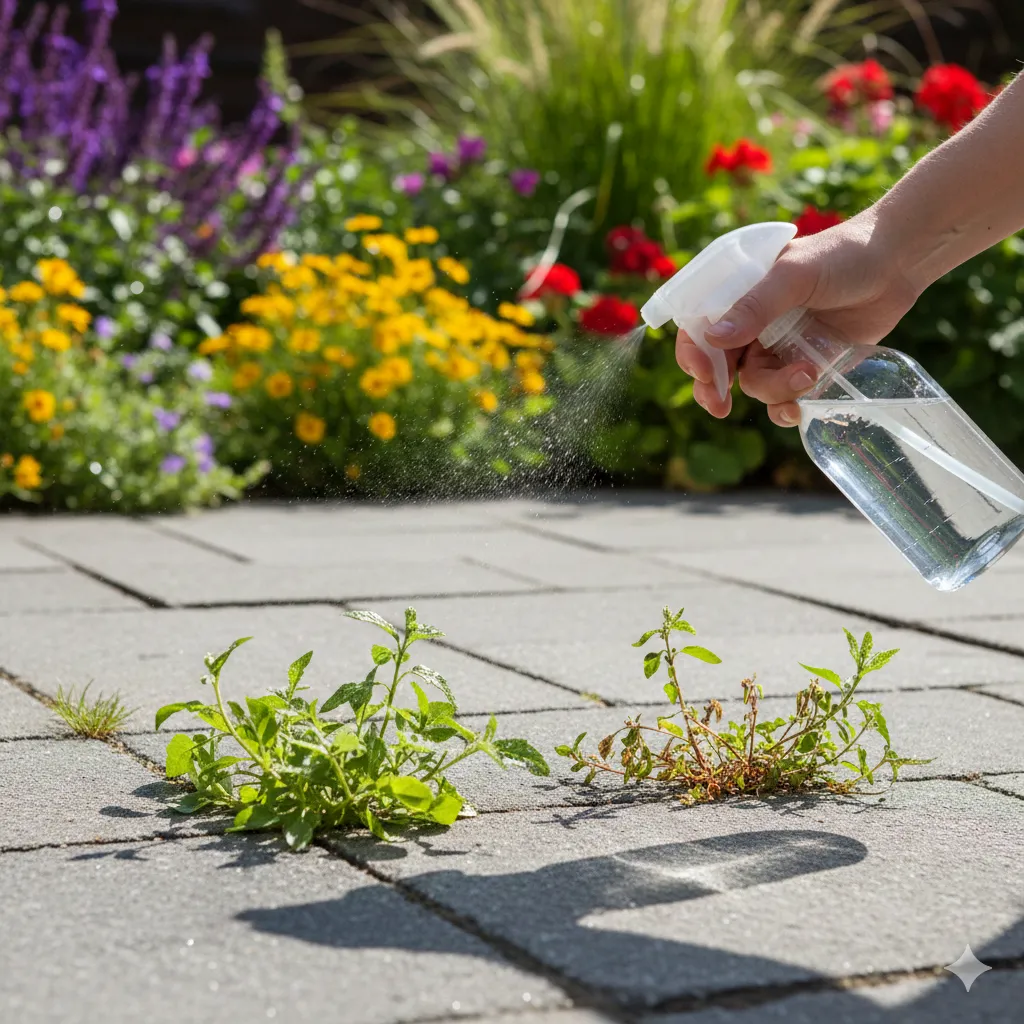
Vinegar contains acetic acid. When sprayed directly onto plant leaves, it pulls moisture out of them. The leaves dry out, turn brown, and die. This makes vinegar a contact herbicide, meaning it only affects what it touches.
Here’s the key:
Vinegar usually kills the top growth, not the roots.
That means small, young weeds die easily. Deep-rooted or mature weeds may grow back and need repeated treatments.
What Type of Vinegar Works Best?
There are different strengths of vinegar:
- Household vinegar (5% acetic acid) – Works on young weeds.
- Horticultural vinegar (10–20%) – Much stronger and more effective.
- Cleaning vinegar (6–10%) – Slightly stronger than kitchen vinegar.
For most home use, regular white vinegar (5%) works well on small weeds. If you’re dealing with tougher weeds, stronger vinegar may be necessary — but handle it carefully, as it can irritate skin and eyes.
What You’ll Need
Before you start, gather:
- White vinegar
- Spray bottle
- Dish soap (optional)
- Gloves
- Protective eyewear
Adding a few drops of dish soap helps the vinegar stick to the leaves instead of rolling off.
Step-by-Step: How to Kill Weeds with Vinegar
1. Choose a Sunny Day
Heat helps vinegar work faster. Apply when the forecast is dry for at least 24 hours.
2. Mix Your Solution
Pour vinegar into a spray bottle. Add a few drops of dish soap and shake gently.
3. Spray Directly on Leaves
Coat the weed leaves thoroughly. Avoid spraying nearby plants.
4. Wait and Observe
Within hours, the leaves should begin to wilt. By the next day, they’ll likely be brown and dried out.
5. Repeat if Necessary
Stubborn weeds may require another application.
How to Kill Grass and Weeds with Vinegar
Sometimes you don’t just want to remove weeds — you want everything gone, including grass, especially in driveways or sidewalk cracks.
To kill grass and weeds with vinegar, use the same method but spray thoroughly. Grass is just as sensitive to vinegar as weeds are.
Important tips:
- Do not spray on windy days.
- Avoid garden beds unless you want everything affected.
- Keep pets away until the area dries.
Vinegar does not discriminate. It will damage any plant it touches.
How to Kill Weeds with Salt and Vinegar
You may have seen recipes combining salt and vinegar for extra strength. This mixture can be effective, but it must be used carefully.
Basic Recipe:
- 1 gallon white vinegar
- 1 cup salt
- 1 tablespoon dish soap
Stir until the salt dissolves completely.
Salt enhances dehydration and makes it harder for plants to regrow. However, there’s a major downside:
Salt stays in the soil.
This can prevent future plant growth in that area for months — sometimes longer. That’s why this method is best for:
- Driveways
- Gravel paths
- Sidewalk cracks
- Areas where you don’t plan to grow anything
Avoid using salt in garden beds or near trees and shrubs.
Does Vinegar Kill Weeds Permanently?
Usually, no.
Vinegar kills the visible portion of the weed. Perennial weeds with deep root systems (like dandelions or bindweed) may grow back.
To improve long-term control:
- Pull weeds after spraying when roots are weakened
- Reapply vinegar as needed
- Use mulch to block new growth
Think of vinegar as a quick, surface-level solution rather than a permanent fix.
When Is the Best Time to Apply Vinegar?
Timing matters.
Best conditions:
- Warm, sunny day
- No rain expected
- Weeds are young and actively growing
Avoid applying before rainfall, which will dilute the solution.
Common Problems and Solutions
| Problem | Why It Happens | What To Do |
|---|---|---|
| Weeds grow back | Roots not killed | Reapply or remove manually |
| Nearby plants damaged | Overspray | Use cardboard shield when spraying |
| No visible results | Weather too cool | Reapply on a sunny day |
| Soil won’t grow plants | Salt buildup | Flush soil heavily with water (may take time) |
Is Vinegar Safe for the Environment?
Compared to synthetic herbicides, vinegar breaks down quickly and does not leave long-term chemical residues.
However:
- Strong vinegar can irritate skin and eyes
- Salt mixtures can damage soil health
- It can harm beneficial insects if sprayed directly
Always use targeted application rather than broad spraying.
Alternatives to Vinegar for Weed Control
If vinegar isn’t enough, consider:
- Boiling water (great for cracks)
- Hand pulling
- Mulching
- Flame weeders (with caution)
- Ground covers to block sunlight
Often, combining methods works best.
Tips to Prevent Weeds from Returning
Killing weeds is only half the battle. Preventing them is easier.
- Apply mulch 2–3 inches thick
- Seal cracks in pavement
- Use landscape fabric in gravel areas
- Pull weeds while small
- Improve lawn density to crowd them out
Prevention reduces the need for repeated treatments.
FAQ
Can vinegar kill large weeds?
It can damage them, but large weeds often regrow from the roots. Multiple applications may be needed.
Will vinegar harm soil?
Regular vinegar breaks down quickly. Salt mixtures can harm soil long-term.
Is stronger vinegar better?
Stronger vinegar works faster but must be handled carefully. It can cause burns and damage surfaces.
Does vinegar kill weed roots?
Typically, it only kills what it touches. Deep roots often survive.
How long does it take to see results?
Most weeds begin wilting within hours on a sunny day.
Conclusion
Learning how to kill weeds with vinegar gives you a simple, affordable way to control unwanted growth without relying on harsh chemicals. It works best on young weeds and in areas like driveways and cracks.
If you need stronger results, you can use salt and vinegar — but only in places where future plant growth isn’t important.
The key is targeted application, patience, and combining it with prevention methods. Used wisely, vinegar can be a powerful tool in keeping your outdoor spaces tidy and weed-free.
Enjoyed this project? Get even more DIY ideas that save (and make) you money.
Join our free newsletter for profitable DIY projects, clever cleaning hacks, home ideas, and creative crafts delivered straight to your inbox.
✓ Free forever • No spam • Unsubscribe anytime