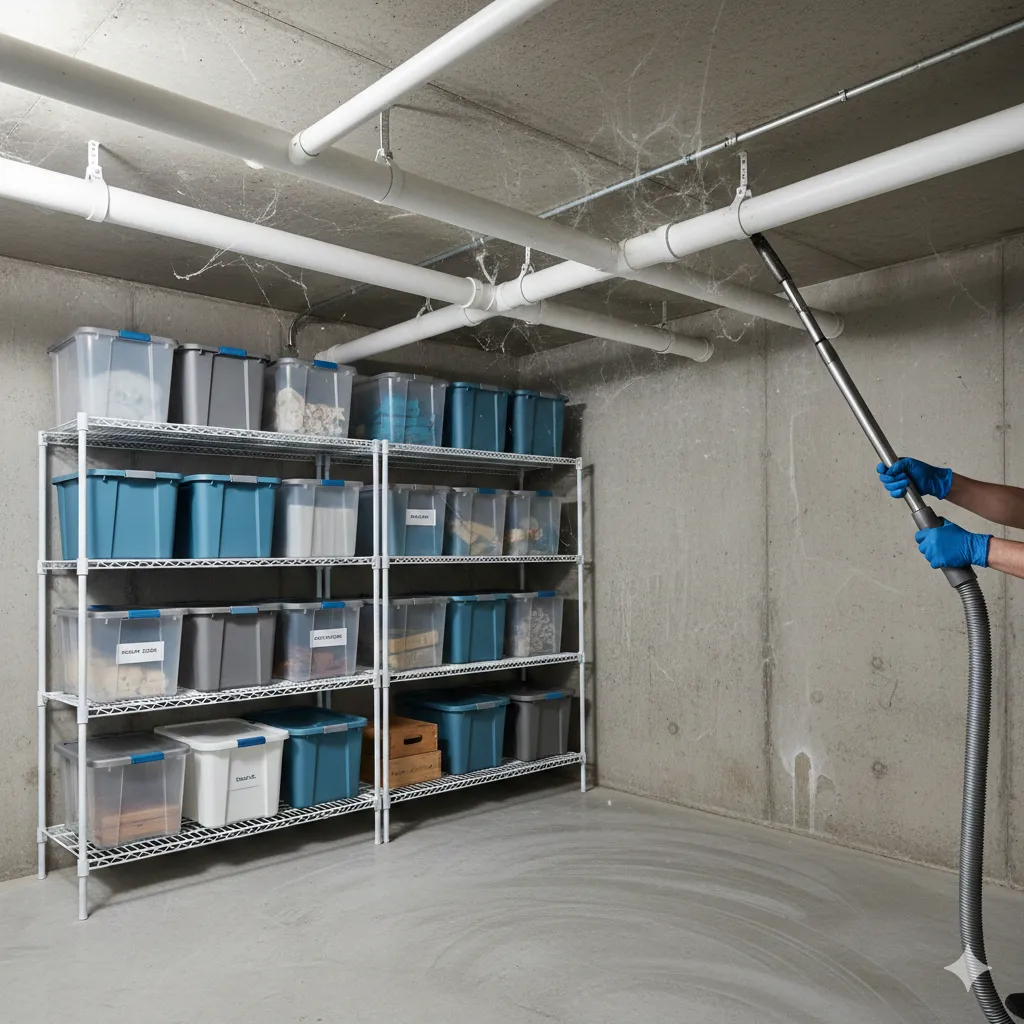
You go downstairs to grab a box… and walk straight into a web. Or maybe you spot a spider stretched across the corner ceiling like it pays rent.
Basements are one of the most common places for spiders to settle. They’re dark, quiet, slightly damp, and full of hiding spots. The good news? Once you understand why they’re there, you can remove them quickly and stop them from coming back.
Why Are There Spiders in My Basement?
Spiders don’t randomly invade your basement. They’re attracted to specific conditions:
- Moisture and humidity
- A steady food source (other insects)
- Dark, undisturbed areas
- Small cracks and gaps for entry
If you only remove the spiders but ignore these factors, they’ll return. The real solution is making your basement uninviting.
What You’ll Need
Before starting, gather your supplies so you can handle everything in one go.
Cleaning Supplies
- Vacuum with hose attachment
- Microfiber cloth or broom
- Trash bags
Control & Prevention Tools
- Sticky spider traps
- Essential oils (peppermint, tea tree, eucalyptus)
- Spray bottle
- Caulk or sealant
Moisture Control
- Dehumidifier (if possible)
- Moisture absorbers
Wear gloves and long sleeves for comfort while cleaning.
Step-by-Step: How to Get Rid of Spiders in Basement
Step 1: Remove All Webs
Use a vacuum with a hose attachment to clean:
- Ceiling corners
- Under stairs
- Behind storage shelves
- Around pipes
- Window frames
Vacuuming removes spiders and egg sacs, preventing new spiders from hatching. Empty the vacuum outside immediately.
Step 2: Eliminate Their Food Source
Spiders stay where insects are present.
Check for:
- Ants
- Silverfish
- Crickets
- Flies
Fix leaks, store items in sealed containers, and use sticky traps along baseboards to monitor insect activity. No insects means fewer spiders.
Step 3: Reduce Basement Humidity
Basements naturally collect moisture, which attracts spiders.
To lower humidity:
- Run a dehumidifier
- Repair leaking pipes
- Improve ventilation
- Keep cardboard off the floor
Aim for humidity below 50%. A dry basement is far less appealing to spiders.
Step 4: Seal Entry Points
Inspect your basement for:
- Foundation cracks
- Gaps around windows
- Spaces under doors
- Openings around pipes
Seal these areas with caulk or foam sealant. Blocking entry points dramatically reduces new spider activity.
How to Get Rid of Basement Spiders Naturally
If you prefer avoiding harsh chemicals, natural methods can help.
Peppermint Oil Spray
Spiders dislike strong scents.
Mix:
- 10–15 drops peppermint oil
- 1 cup water
- 1 teaspoon dish soap
Spray along baseboards, corners, window frames, and entry points weekly.
You can also use tea tree, eucalyptus, or lavender oil. Natural sprays work best when combined with cleaning and sealing.
How to Get Rid of Spiders in Basement Permanently
Permanent results come from consistent prevention.
Declutter Storage Areas
Cardboard boxes provide hiding spots. Switch to plastic bins with tight-fitting lids.
Increase Light Exposure
Spiders prefer dark areas. Even occasional lighting can discourage them from settling.
Clean Regularly
Dust and vacuum at least once a month. Undisturbed spaces allow webs to build up.
Maintain Exterior Barriers
Trim shrubs away from the foundation. Move firewood away from walls. Seal exterior cracks as well.
When you combine dryness, cleanliness, and sealed entry points, spider activity decreases significantly.
Common Basement Spiders
Most basement spiders are harmless.
You may see:
- Cellar spiders (long thin legs)
- Common house spiders
- Wolf spiders
They are usually more of a nuisance than a danger. If you see unusually large numbers or species you don’t recognize, consider professional pest control.
Quick Problem & Solution Guide
Webs Returning Frequently
Likely cause: Egg sacs hatching
Solution: Vacuum more often
Large Spiders Appearing
Likely cause: Insect activity
Solution: Reduce bugs in basement
Musty Smell and Spiders
Likely cause: High humidity
Solution: Use dehumidifier
Spiders Near Windows
Likely cause: Entry gaps
Solution: Seal cracks and weather-strip
FAQ
Why are spiders only in my basement?
Basements are darker, cooler, and less disturbed than upper floors, making them ideal habitats.
Does bleach kill spiders?
It can kill them on contact but won’t prevent future problems.
How often should I use peppermint spray?
Weekly at first, then every two to three weeks for maintenance.
Will spiders go away on their own?
Not if the environment remains favorable. Moisture and insects must be addressed.
When should I call pest control?
If spider numbers keep increasing or you suspect venomous species, professional help may be necessary.
Conclusion
If you’re wondering how to get rid of spiders in basement spaces fast, the solution isn’t just spraying and hoping.
Remove webs. Eliminate insects. Dry the space. Seal entry points. Stay consistent.
Once your basement becomes dry, clean, and sealed, spiders naturally move elsewhere. Follow this step-by-step plan, and you won’t just reduce spider activity — you’ll keep your basement under control long term.
Enjoyed this project? Get even more DIY ideas that save (and make) you money.
Join our free newsletter for profitable DIY projects, clever cleaning hacks, home ideas, and creative crafts delivered straight to your inbox.
✓ Free forever • No spam • Unsubscribe anytime