Vinegar isn’t just for salad dressings—it’s one of the most versatile and affordable tools for laundry. From brightening colors to removing odors and even softening fabrics, this simple kitchen staple can transform your laundry routine. The trick is knowing the right way to use it and which stains or laundry issues it can tackle.
Watch this video to see the different ways you can use vinegar in laundry:
Why Use Vinegar in Laundry
Vinegar is a natural acid (acetic acid) that helps break down residue from detergents, minerals in hard water, and stubborn odors. Unlike harsh chemicals, it’s safe for most fabrics and eco-friendly, making it perfect for those who want cleaner clothes without strong chemical cleaners.
Some benefits of adding vinegar to laundry:
- Odor Removal: Neutralizes sweat and mildew smells.
- Fabric Softening: Acts as a natural fabric softener without leaving residue.
- Stain Assistance: Helps lift certain types of stains, especially deodorant marks or light dye transfers.
- Brightens Colors: Keeps dark and bright fabrics looking fresh longer.
How to Use White Vinegar in Laundry
White vinegar is the go-to type for laundry use. Here’s how to apply it effectively:
1. As a Fabric Softener Replacement
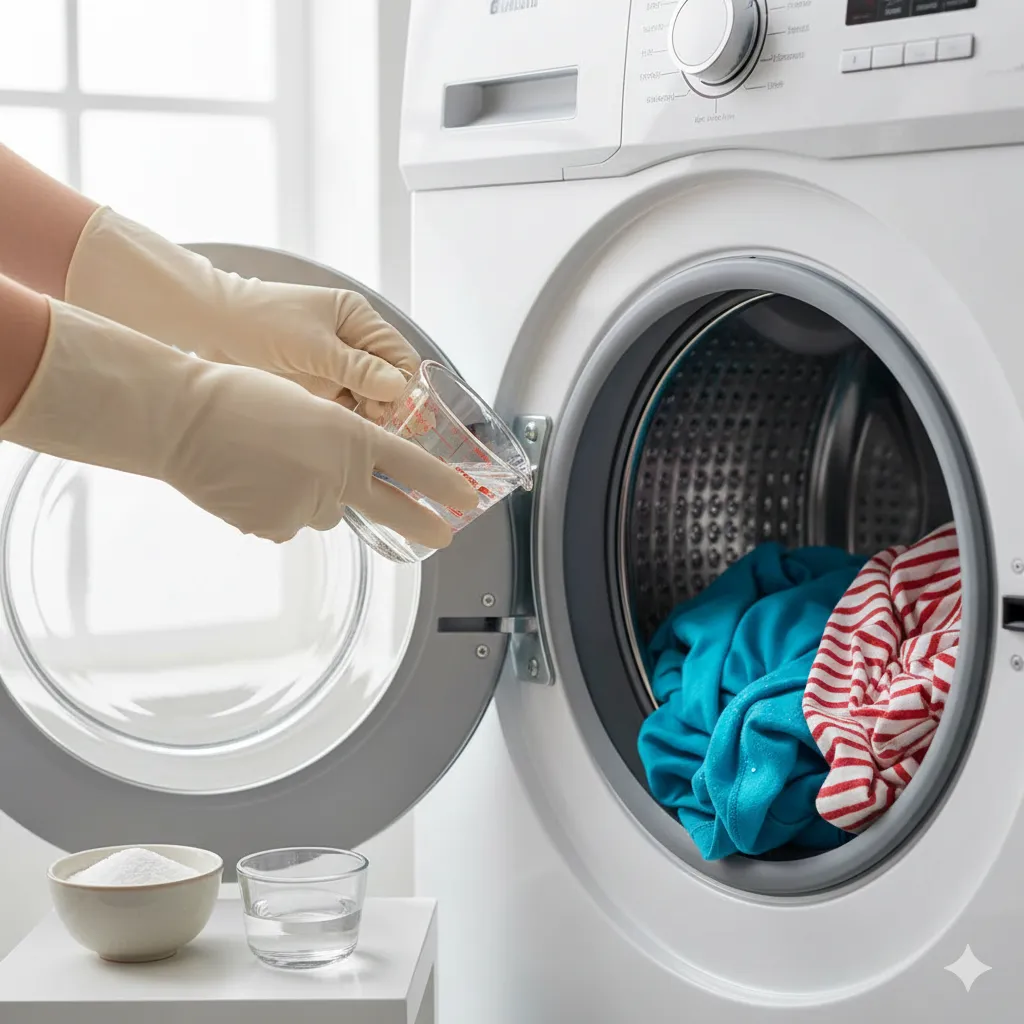
Add ½ to 1 cup of white vinegar to the fabric softener compartment of your washing machine. It softens clothes naturally without leaving a chemical scent.
2. To Remove Odors
If clothes smell musty or sweaty, pour 1 cup of white vinegar directly into the wash along with your usual detergent. Wash as normal with cold or warm water.
3. For Stain Lifting
Mix ½ cup of white vinegar with water and apply it directly to stubborn stains like deodorant marks. Let it sit for 10–15 minutes, then wash as usual.
4. To Brighten Whites and Colors
Add ½ cup of vinegar to the rinse cycle. This helps remove detergent residue, minerals, and dulling agents, leaving fabrics brighter.
How to Use Baking Soda and Vinegar for Laundry
Combining baking soda and vinegar is a powerful duo for laundry, especially for odor removal and deep cleaning. Here’s the step-by-step method:
1. Pre-Soak Clothes
Fill a basin with warm water, ½ cup of baking soda, and ½ cup of white vinegar. Submerge the clothes and let them soak for 30 minutes. This lifts odors, light stains, and refreshes fabrics.
2. Washing Machine Boost
Add ½ cup of baking soda with your detergent at the start of the wash. During the rinse cycle, pour ½ cup of vinegar. The combination helps neutralize odors, remove residues, and soften clothes.
3. For Tough Odors or Mildew
For towels, gym clothes, or clothes that smell like sweat, combine 1 cup of vinegar and ½ cup of baking soda directly in a hot water wash. Don’t worry if it fizzes—that’s normal and part of the cleaning action.
Tips for Using Vinegar Safely in Laundry
- Always use white vinegar; other types like apple cider vinegar may stain fabrics.
- Avoid vinegar on delicate fabrics like silk or acetate without testing first.
- Never mix vinegar with bleach—it can create harmful fumes.
- Use cold or warm water to avoid setting stains or odors before treatment.
FAQ
Can vinegar replace detergent completely?
Vinegar helps clean, soften, and deodorize, but it doesn’t replace detergent for heavily soiled clothes. Use it as a supplement for best results.
Does vinegar work on all fabrics?
It’s safe for cotton, polyester, and most common fabrics. Test delicate fabrics like silk, wool, or rayon in a hidden area first.
Can I use vinegar and baking soda together in the washing machine?
Yes, but it’s best to add baking soda with detergent at the start and vinegar during the rinse cycle. Adding both at the same time can neutralize their cleaning power.
Conclusion
Vinegar is an inexpensive, eco-friendly, and effective addition to your laundry routine. Whether you want to soften fabrics, remove odors, brighten colors, or lift stains, it works wonders with simple step-by-step methods. Combine it with baking soda for extra cleaning power, and always remember to test delicate fabrics first. With these techniques, you can keep your clothes fresh, clean, and vibrant without relying on harsh chemicals.
Enjoyed this project? Get even more DIY ideas that save (and make) you money.
Join our free newsletter for profitable DIY projects, clever cleaning hacks, home ideas, and creative crafts delivered straight to your inbox.
✓ Free forever • No spam • Unsubscribe anytime