You walk into the room and something smells… off.
Maybe it’s faint. Maybe it hits you immediately. Either way, once urine soaks into a couch, the odor can linger far longer than you expect. Even after wiping the surface, the smell often comes back—especially on humid days.
That’s because urine doesn’t just sit on top of upholstery. It seeps into:
- Fabric fibers
- Cushion foam
- The wooden frame underneath
If you don’t break down what’s inside the cushion, the odor can reactivate again and again.
The good news? You can remove urine smell from a couch permanently. You just need the right method—and you need to treat both the surface and what’s underneath.
Here’s the Real Reason Urine Smell Keeps Coming Back
Urine contains:
- Urea
- Uric acid crystals
- Ammonia
- Bacteria
When urine dries, uric acid crystals remain embedded in fabric and foam. On humid days, those crystals absorb moisture from the air and release odor again.
That’s why simple fabric sprays don’t solve the problem. You must neutralize and break down the crystals—not just mask the smell.
Before starting, check your couch’s cleaning code tag (usually under the cushions):
- W – Water-based cleaners are safe
- S – Solvent-only cleaners
- WS – Either type is safe
- X – Vacuum only (professional cleaning recommended)
Always spot test any solution in a hidden area first.
What You’ll Need
Basic Supplies
- Paper towels or white cloths
- White vinegar
- Baking soda
- Mild dish soap
- Warm water (not hot)
- Spray bottle
- Vacuum with upholstery attachment
Optional but Highly Effective
- Enzyme cleaner (especially for pet urine)
- Wet/dry vacuum
- Hydrogen peroxide (light fabrics only, spot test first)
- Fan or open windows for airflow
Step-by-Step: How to Remove Urine Smell from Couch
Step 1: Blot Immediately (If Fresh)
If the accident just happened:
- Press paper towels firmly into the area.
- Stand on them to absorb deeper moisture.
- Replace towels until mostly dry.
Do not rub. Rubbing pushes urine further into the cushion.
The more liquid you remove now, the better your results will be.
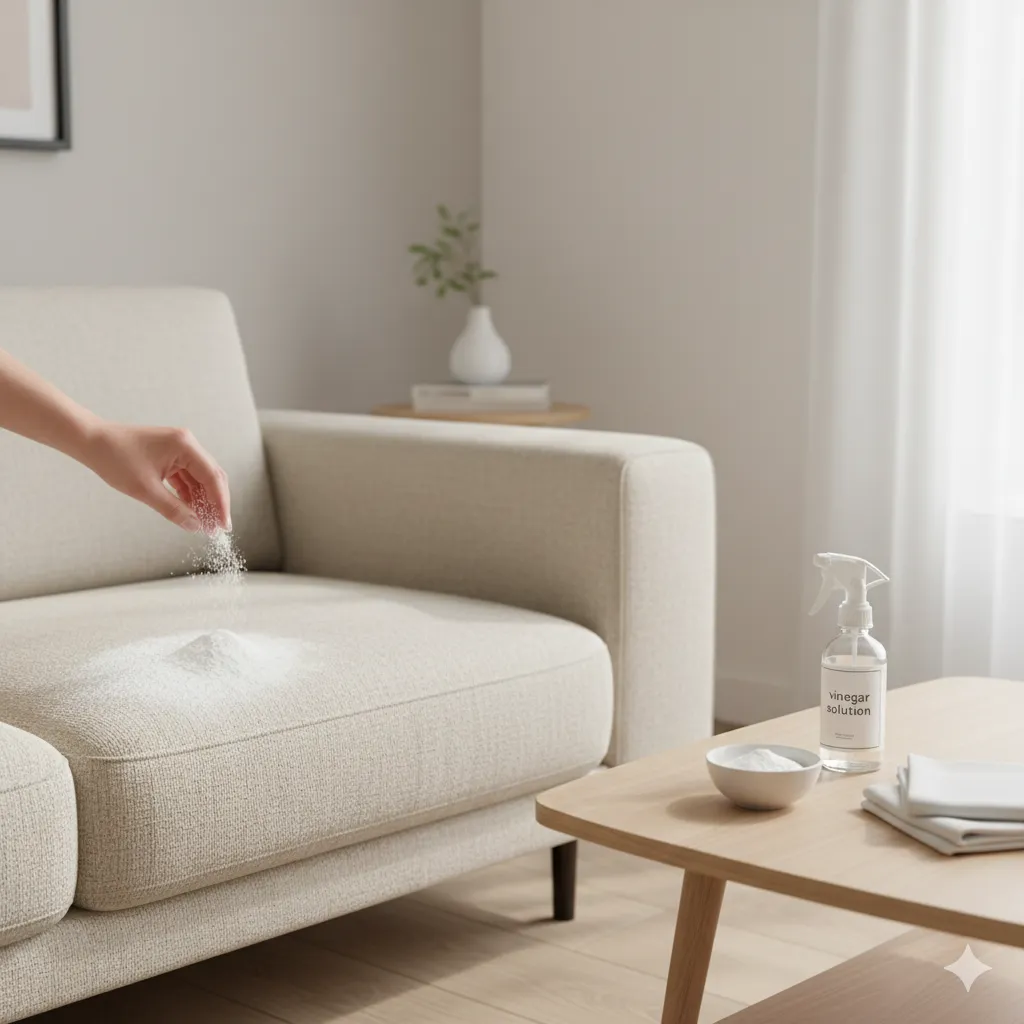
Step 2: Neutralize with Vinegar
Mix:
- 1 part white vinegar
- 1 part warm water
Lightly spray or blot onto the affected area. Do not soak the cushion—apply enough to reach the depth of the urine without drenching it.
Let it sit for 10–15 minutes.
Blot again with clean towels.
Vinegar helps neutralize ammonia and reduce bacteria.
Step 3: Apply Baking Soda Generously
While the area is slightly damp, sprinkle a thick layer of baking soda over the entire spot.
Baking soda absorbs odor molecules trapped in fabric and foam.
Let it sit:
- Minimum: 6 hours
- Best results: Overnight
Step 4: Vacuum Thoroughly
Once completely dry, vacuum slowly using an upholstery attachment.
Move in multiple directions to lift powder from deep fibers.
At this stage, most odors should be significantly reduced or eliminated.
If the smell remains faint, repeat the baking soda step.
How to Remove Cat Urine Smell from Couch
Cat urine is notoriously strong because it contains high levels of uric acid and concentrated ammonia compounds.
Standard cleaning methods may reduce the smell—but enzyme cleaners are often necessary for complete removal.
After blotting:
- Apply an enzyme-based cleaner designed specifically for cat urine.
- Follow the product’s instructions carefully.
- Allow it to air dry completely (do not rush drying with heat).
Enzymes break down uric acid crystals at a molecular level, which prevents the odor from returning during humidity.
If the smell reappears days later, it likely means urine soaked into the foam. In that case, remove cushion covers (if washable) and treat the foam directly.
How to Remove Dog Urine Smell from Couch
Dog urine is typically less concentrated than cat urine but can still penetrate deeply into cushions.
For fresh accidents:
- Blot immediately.
- Use vinegar solution.
- Follow with baking soda overnight.
For older or repeated accidents:
- Use an enzyme cleaner designed for pet stains.
- Treat both the surface fabric and cushion interior.
- Allow extended drying time.
If your dog repeatedly marks the same spot, odor must be fully eliminated or it may continue triggering repeat behavior.
How to Remove Urine Smell from Leather Couch
Leather requires a completely different approach.
Do not soak leather. Excess moisture can cause cracking, discoloration, or warping.
Step 1: Blot Immediately
Use a dry cloth to absorb as much urine as possible.
Step 2: Clean with Mild Soap Solution
Mix a few drops of mild dish soap with warm water.
Dampen (not soak) a soft cloth and gently wipe the area.
Wipe again with a clean damp cloth to remove soap residue.
Step 3: Deodorize Carefully
Lightly sprinkle baking soda on the area and let it sit for several hours before wiping off.
Avoid vinegar directly on leather unless heavily diluted and spot tested.
Step 4: Condition the Leather
After cleaning, apply a leather conditioner to restore moisture and prevent drying or cracking.
If urine soaked into leather seams or padding underneath, professional cleaning may be necessary.
How to Remove Dried Urine Smell from Couch
If you discovered the odor days later:
- Lightly mist the area with warm water to rehydrate dried residue.
- Blot gently.
- Apply vinegar solution.
- Use baking soda overnight.
- Repeat if necessary.
Dried urine often requires two full treatments for complete odor elimination.
Stop Doing This…
Using Steam Immediately
Heat can set proteins and make odors harder to remove. Always neutralize first.
Over-Saturating the Cushion
Too much liquid can cause mold growth inside foam.
Masking with Fabric Sprays
Fragrance mixed with ammonia often smells worse.
Skipping the Drying Step
If moisture remains trapped inside, odor will return.
Don’t Ignore…
If you notice:
- Stronger odor on humid days
- A musty smell developing
- Discoloration spreading
These may indicate moisture trapped in foam or the couch frame.
In severe cases, cushion foam replacement or professional extraction may be required.
Quick Fixes for Common Problems
| Problem | Potential Solution | Alternative Suggestion |
|---|---|---|
| Smell returns after drying | Repeat baking soda overnight | Use enzyme cleaner for deeper breakdown |
| Couch smells worse in humidity | Apply enzyme treatment again | Use a dehumidifier in the room |
| Stain remains visible | Treat lightly with hydrogen peroxide (spot test first) | Use upholstery-safe oxygen cleaner |
| Cushion feels damp inside | Increase airflow and drying time | Use wet/dry vacuum for deeper extraction |
| Odor persists after multiple treatments | Treat cushion foam directly | Consider professional upholstery cleaning |
Preventing Future Accidents
- Use washable couch covers in homes with pets or toddlers.
- Address accidents immediately—time matters.
- Keep enzyme cleaner available for quick treatment.
- Fully eliminate odor to prevent repeat pet marking.
The faster you act, the less likely the smell will settle deep into your furniture.
FAQ
Can urine smell go away on its own?
It may fade temporarily, but uric acid crystals often remain and reactivate with humidity.
How long should baking soda sit?
At least 6 hours. Overnight is best for deeper odor absorption.
Is vinegar safe for upholstery?
Generally yes for “W” or “WS” coded couches. Always spot test first.
What if the smell is inside the couch frame?
If urine penetrated deeply, professional extraction or foam replacement may be necessary.
Should I use bleach?
No. Bleach can damage upholstery and react poorly with urine compounds.
Conclusion
Learning how to remove urine smell from couch permanently isn’t about covering it up—it’s about neutralizing ammonia, breaking down uric acid crystals, and drying the cushion thoroughly.
Blot quickly. Neutralize with vinegar. Absorb with baking soda overnight. Use enzyme cleaners for pet urine. Treat leather carefully and condition afterward.
With the right method and a little patience, even stubborn urine odors can be eliminated—and your couch can feel fresh and comfortable again.
Enjoyed this project? Get even more DIY ideas that save (and make) you money.
Join our free newsletter for profitable DIY projects, clever cleaning hacks, home ideas, and creative crafts delivered straight to your inbox.
✓ Free forever • No spam • Unsubscribe anytime