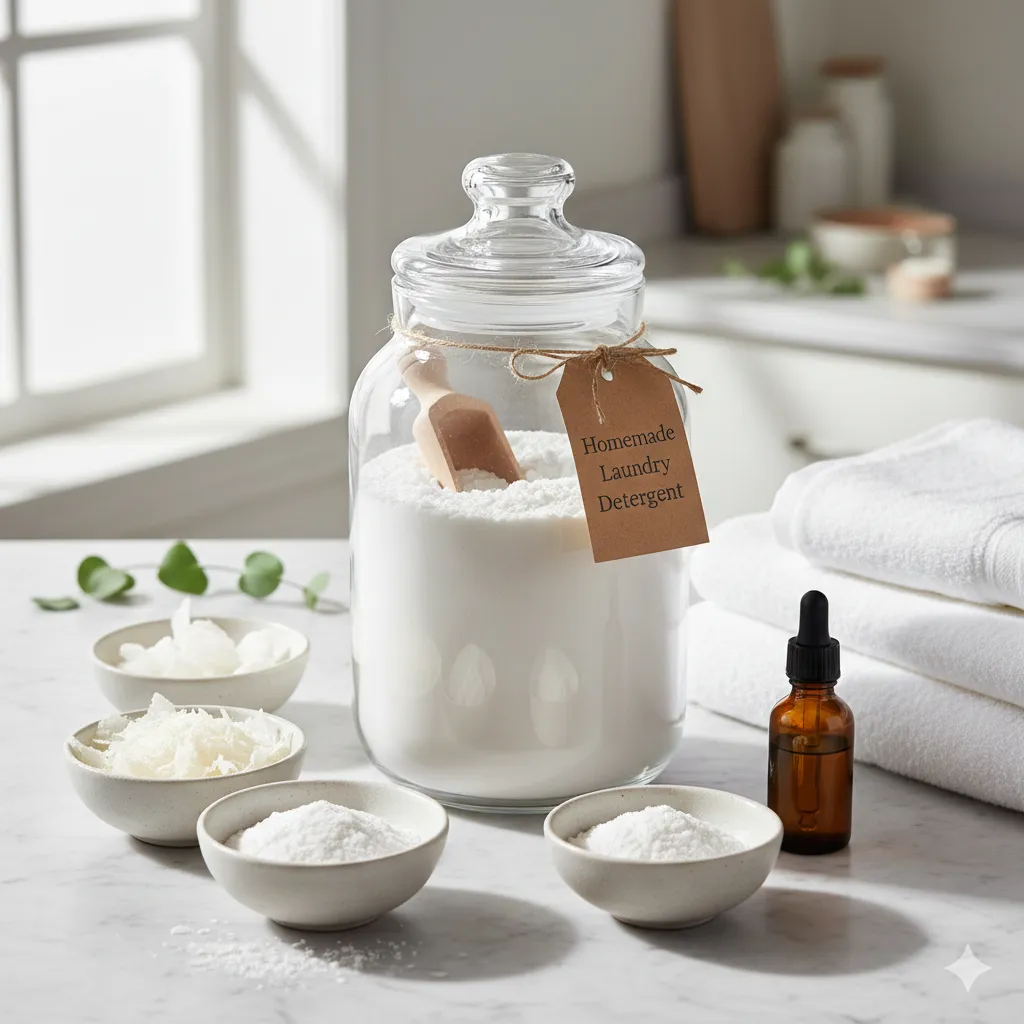
Homemade laundry detergent can save money, reduce packaging waste, and give you control over ingredients. But here’s the truth: not all DIY recipes actually clean well.
Some leave residue. Some don’t remove odors. Some just soften water without properly washing clothes. The good news? When made correctly, homemade laundry detergent can clean effectively — even heavily soiled clothes.
Watch this short video to see how to make laundry detergent at home:
Here’s exactly how to make it step by step.
Does Homemade Laundry Detergent Really Work?
Yes — if it contains the right cleaning components.
A good detergent must:
- Break down oils and grease
- Lift dirt from fabric
- Neutralize odors
- Rinse out cleanly
Many weak recipes skip important ingredients. The key is balancing soap, washing boosters, and proper measurement.
When made properly and used correctly, it can clean everyday laundry very well.
When Is Homemade Detergent a Good Idea?
It works best if:
- You want to reduce household expenses
- You prefer fewer synthetic fragrances
- You want basic, effective cleaning
- You don’t mind measuring instead of pouring from a bottle
However, if you have high-efficiency (HE) machines, very hard water, or heavily soiled industrial clothing, adjustments may be necessary.
Ingredients You’ll Need
This recipe creates a powdered detergent that stores well and dissolves easily.
Basic ingredients:
- 1 bar laundry soap (such as pure castile or traditional laundry soap bar)
- 1 cup washing soda (sodium carbonate)
- 1 cup baking soda
- 1 cup borax
Optional additions:
- 10–20 drops essential oil (for scent)
- ½ cup oxygen bleach (for whitening)
Make sure you are using washing soda — not baking soda alone. Washing soda boosts cleaning power.
What Each Ingredient Does
Understanding the role of each ingredient helps you avoid weak results.
Laundry soap:
- Breaks down grease and stains
- Provides the primary cleaning action
Washing soda:
- Softens water
- Boosts stain removal
- Helps remove odors
Baking soda:
- Neutralizes smells
- Adds mild cleaning power
Borax:
- Improves stain removal
- Enhances whitening
- Boosts overall effectiveness
Each ingredient plays a role in making sure your detergent actually works.
Step-by-Step: How to Make Laundry Detergent Powder
Follow these detailed instructions for best results.
Step 1: Grate the Soap
This step ensures your detergent dissolves properly.
- Use a cheese grater to shred the entire bar of laundry soap into fine flakes.
- The finer the shreds, the better it dissolves.
- You can also pulse the grated soap in a food processor for a powder-like texture.
- Make sure the soap is completely dry before mixing.
Large chunks will not dissolve well in cold water.
Step 2: Combine Dry Ingredients
Now build the cleaning base.
- In a large mixing bowl, add:
- 1 cup washing soda
- 1 cup baking soda
- 1 cup borax
- Stir thoroughly until evenly combined.
- Add the grated soap.
- Mix again until fully blended.
Even distribution ensures consistent cleaning in every scoop.
Step 3: Add Optional Ingredients
If you want fragrance or extra whitening:
- Add 10–20 drops of essential oil.
- Stir very well to distribute scent evenly.
- Add ½ cup oxygen bleach if desired for whites.
- Mix again until uniform.
Do not add liquid ingredients beyond small amounts of oil. Moisture can cause clumping.
Step 4: Store Properly
Storage affects performance.
- Transfer mixture to an airtight container.
- Keep in a cool, dry place.
- Label clearly.
- Avoid exposure to humidity.
Moisture can cause hard clumps and reduce effectiveness.
Step 5: Measure Correctly
Using too much can cause residue.
- Use 1–2 tablespoons per regular load.
- Use 2 tablespoons for large or heavily soiled loads.
- For HE machines, use 1 tablespoon.
More detergent does not equal cleaner clothes.
How to Make Laundry Detergent Liquid
Liquid detergent can feel more convenient because it dissolves instantly. However, it requires heating and careful storage to avoid separation or thickening.
Here’s how to make a strong liquid version.
Ingredients
- 1 bar laundry soap (grated)
- 1 cup washing soda
- 1 cup borax
- 4 cups hot water (to dissolve soap)
- 1 gallon hot water (for dilution)
- Optional: 10–20 drops essential oil
Step-by-Step Instructions
Step 1: Dissolve the Soap
- Add grated soap to 4 cups hot (not boiling) water.
- Stir continuously over low heat until fully melted.
- Do not let it boil.
- Remove from heat once smooth.
Fully dissolving soap prevents thick clumps later.
Step 2: Combine Dry Boosters
- In a large bucket, add:
- 1 cup washing soda
- 1 cup borax
- Pour in the melted soap mixture.
- Stir thoroughly.
Step 3: Add Hot Water
- Slowly add 1 gallon of hot water.
- Stir continuously while pouring.
- Mix until fully combined.
Step 4: Let It Set
- Cover and let sit for 24 hours.
- The mixture will thicken to a gel-like consistency.
- Stir well before transferring to containers.
If it thickens too much, add a little hot water and mix again.
Step 5: Store and Use
- Pour into sealed containers.
- Shake or stir before each use.
- Store at room temperature.
How Much to Use
- Standard washer: ¼–½ cup per load
- HE washer: 2–3 tablespoons per load
Liquid versions can sometimes leave buildup if too much is used. Always measure carefully.
Best Fabrics for Homemade Detergent
Works well for:
- Cotton
- Polyester
- Blends
- Towels
- Everyday clothing
Use caution with:
- Delicate silks
- Wool
- Specialty athletic fabrics
Always test on delicate materials first.
How Long Does It Last?
One batch typically washes:
- 50–75 loads (depending on scoop size)
Shelf life:
- 6–12 months if stored properly
Keep dry for maximum longevity.
Quick Fixes for Common Problems
| Problem | Step-by-Step Solution | Why This Works |
|---|---|---|
| Clothes feel stiff | 1. Reduce detergent to 1 tablespoon per load. 2. Add ½ cup white vinegar to the rinse cycle. 3. Avoid overloading the washer. | Too much soap leaves residue. Vinegar helps break down leftover minerals and softens fabric naturally. |
| White residue on clothes | 1. Make sure soap is grated into a very fine texture. 2. Use warm or hot water to help dissolve powder. 3. Cut detergent amount in half for next load. | Large soap flakes and excess detergent don’t dissolve fully, especially in cold water. |
| Laundry doesn’t smell clean | 1. Add ½ cup washing soda directly to the drum. 2. Increase wash temperature (if fabric allows). 3. Don’t overload the machine. | Odors are often caused by trapped bacteria and poor agitation due to overcrowding. |
| Powder clumping in container | 1. Store detergent in an airtight container. 2. Keep away from humidity. 3. Break up clumps with a spoon before use. | Moisture causes baking soda and washing soda to harden. Dry storage keeps mixture loose. |
| Colors fading | 1. Wash dark clothes in cold water. 2. Use only 1 tablespoon detergent. 3. Turn garments inside out before washing. | Hot water and excess detergent strip dye from fabrics. |
| Skin irritation | 1. Remove essential oils from recipe. 2. Use fragrance-free laundry soap bar. 3. Run an extra rinse cycle. | Fragrance and residue are common irritation triggers. Extra rinsing removes buildup. |
| Washer buildup over time | 1. Run an empty hot cycle monthly. 2. Add 1 cup white vinegar to drum. 3. Wipe rubber seals and detergent drawer. | Prevents soap residue and mineral accumulation inside the machine. |
Common Mistakes to Avoid
- Using regular bath soap instead of laundry soap
- Skipping washing soda
- Using too much per load
- Not grating soap finely
- Storing in humid areas
- Expecting it to behave exactly like commercial detergent
Homemade detergent works differently — but effectively when used correctly.
Is Homemade Detergent Safe for HE Machines?
Yes — if used sparingly.
HE machines require low-sudsing detergent.
Use:
- 1 tablespoon per load
- Avoid adding extra soap
- Make sure powder is finely processed
Too much soap can cause buildup.
Can It Remove Tough Stains?
For heavy stains:
- Pre-treat with a paste of detergent and water.
- Rub gently into stain.
- Let sit 15–30 minutes.
- Wash normally.
For grease stains, dish soap can be used as a spot treatment before washing.
Is It Really Cheaper?
Yes.
Depending on local prices, homemade detergent often costs significantly less per load than store brands.
Savings increase when making larger batches.
Frequently Asked Questions
Does homemade detergent sanitize clothes?
It cleans well, but sanitation depends on water temperature. Use hot water or oxygen bleach for deeper cleaning when needed.
Will it whiten clothes?
Yes, especially if you include oxygen bleach and wash in warm water.
Can I make it without borax?
Yes, but cleaning strength may decrease slightly. Washing soda is the primary booster.
Does it leave buildup in washing machines?
It can if too much soap is used. Proper measurement prevents most buildup issues.
Is it safe for sensitive skin?
Often yes, especially if fragrance-free ingredients are used. Always test first if skin is very sensitive.
Final Thoughts
Making homemade laundry detergent that actually cleans isn’t complicated — but balance matters.
Use real laundry soap. Include washing soda for cleaning power. Measure correctly. Store properly.
When done right, homemade detergent can be affordable, effective, and reliable for everyday laundry.
Simple ingredients. Proper proportions. Clean clothes.
That’s what makes it work.
Enjoyed this project? Get even more DIY ideas that save (and make) you money.
Join our free newsletter for profitable DIY projects, clever cleaning hacks, home ideas, and creative crafts delivered straight to your inbox.
✓ Free forever • No spam • Unsubscribe anytime