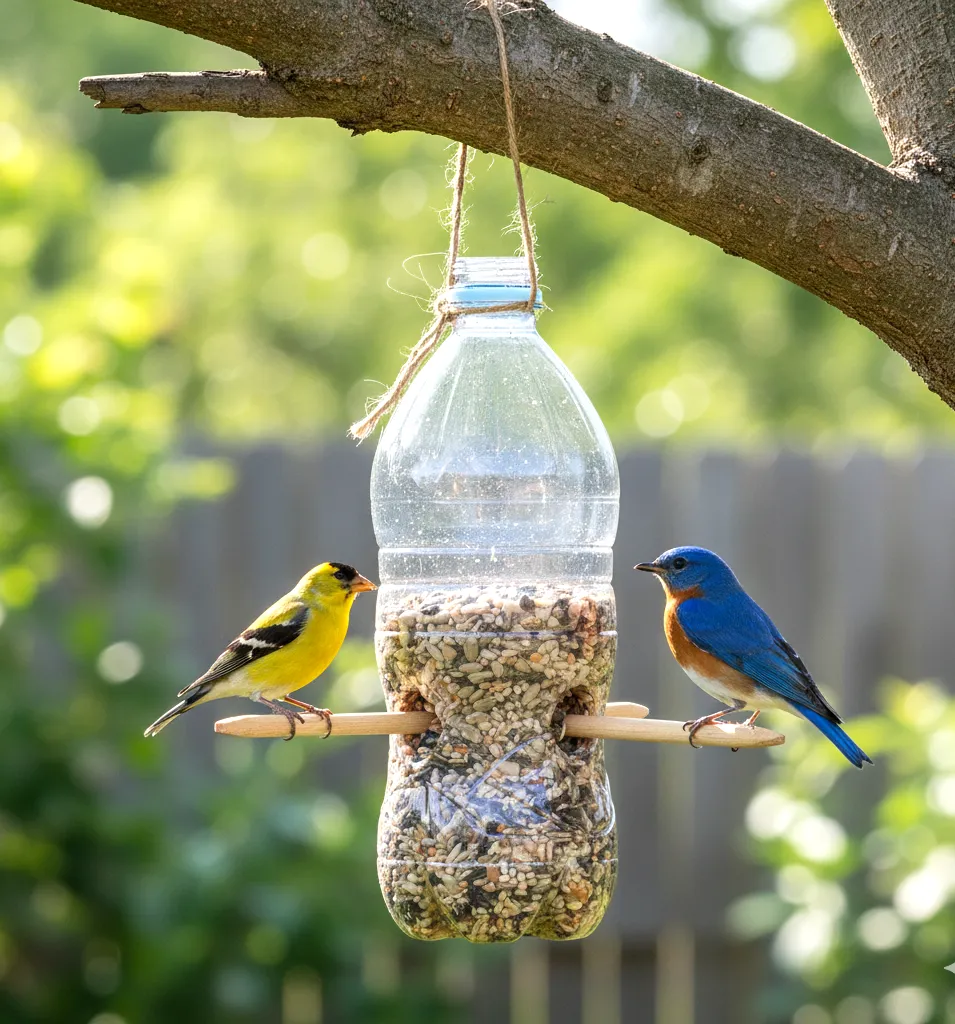
There’s something peaceful about watching birds gather outside your window. The fluttering wings. The tiny hops. The cheerful chirping. The best part? You don’t need a store-bought feeder to make it happen.
If you have an empty plastic bottle and a few simple supplies, you can create a functional, weather-resistant bird feeder in under an hour. This project is affordable, eco-friendly, and perfect for beginners.
In this guide, you’ll learn how to make a bird feeder from a plastic bottle step by step, how to hang it securely, how to keep it safe for birds, and how to avoid the common mistakes that cause feeders to fail.
Let’s get started.
Before You Begin: A Few Important Things to Know
A plastic bottle bird feeder works because it slowly dispenses seed through small openings while giving birds a place to perch. The design matters more than you think.
Here’s what many beginners get wrong:
- They make feeding holes too large.
- They forget drainage holes.
- They don’t secure the hanging string properly.
- They place it in the wrong location.
Small details make a big difference in whether birds actually use your feeder.
What You’ll Need
Gather your materials first so you can work smoothly:
- One clean, empty plastic bottle (500ml to 2-liter works well)
- Craft knife or sharp scissors (adult supervision required for kids)
- Wooden spoons, chopsticks, or sturdy sticks for perches
- Strong string, twine, or wire for hanging
- Birdseed
- Marker (for marking cut lines)
- Small nail or skewer (for drainage holes)
- Tape (optional, for smoothing sharp edges)
Most of these items are already in your home, making this project truly on a budget.
Step by Step: How to Make a Bird Feeder from a Plastic Bottle
Follow these instructions carefully to create a safe and sturdy feeder.
- Wash and dry the plastic bottle thoroughly to remove any residue.
- Remove the label so you can clearly see the seed level later.
- Use a marker to draw two small feeding holes opposite each other, about two inches above the base.
- Carefully cut the holes large enough for birds to access seed but small enough to prevent seed from pouring out.
- Push a wooden spoon handle or stick through the bottle just below the feeding holes to create a perch.
- Add a second set of feeding holes higher up if you want multiple feeding levels.
- Poke two tiny drainage holes in the bottom to prevent rainwater buildup.
- Fill the bottle with birdseed through the top opening.
- Screw the cap back on tightly.
- Tie strong string or wire securely around the neck of the bottle for hanging.
Make sure all edges around the holes are smooth. If they feel sharp, cover them lightly with tape.
You’re Probably Doing This Wrong: Hole Size Matters
If the holes are too large, seed will spill out quickly and create waste. If they are too small, birds won’t be able to access the food.
The ideal hole should allow seed to flow slowly while being partially blocked by the perch. When a bird lands, its weight gently shifts the seed downward.
This controlled flow keeps food fresh longer.
Choosing the Right Birdseed
Different birds prefer different seeds. Here’s a quick guide:
- Sunflower seeds attract finches, cardinals, and chickadees.
- Millet is loved by sparrows and doves.
- Mixed seed works well if you want variety.
- Nyjer seed attracts goldfinches.
Avoid bread or processed foods. They are not healthy for birds.
Best Placement for Your DIY Feeder
Location is just as important as construction.
- Hang the feeder at least five feet above the ground.
- Place it near shrubs or trees so birds have quick cover from predators.
- Avoid placing it too close to windows to prevent collisions.
- Choose a shaded area to keep seed from spoiling quickly.
If you see squirrels visiting more than birds, you may need to move it further from trees or add a baffle.
How to Make a Plastic Bottle Bird Feeder More Durable
Plastic bottles are lightweight, so wind can be a problem.
To increase stability:
- Add small stones in the bottom before adding seed for weight.
- Use thicker string or wire for hanging.
- Secure the feeder from two points instead of one.
- Choose a sturdier bottle like a soda bottle rather than thin water bottles.
Durability ensures your feeder lasts through wind and light rain.
Here’s the Real Reason Drainage Holes Are Essential
Rainwater can collect inside the bottle if you skip drainage holes. Wet seed molds quickly, and moldy seed can make birds sick.
Two or three tiny holes in the base prevent water buildup without losing seed.
It’s a small step that makes a big difference.
Making It Look Attractive
You can leave the feeder simple, or decorate it.
- Paint the outside with non-toxic paint (avoid painting near feeding holes).
- Wrap twine around the bottle for a rustic look.
- Add natural elements like small branches or raffia.
Avoid heavy decorations that block access or add too much weight.
How to Clean Your Plastic Bottle Bird Feeder
Cleaning is often overlooked.
- Empty leftover seed weekly.
- Wash the bottle with warm soapy water.
- Rinse thoroughly.
- Let it dry completely before refilling.
Regular cleaning prevents bacteria and keeps birds healthy.
Quick Fixes for Common Problems
| Problem | Potential Solution | Alternative Suggestion |
|---|---|---|
| Seed pours out too quickly | Make feeding holes smaller using tape to reduce opening size. | Insert a slightly larger perch to block excess flow. |
| Birds are not visiting | Move feeder closer to trees or shrubs. | Switch to sunflower seeds to attract more species. |
| Water collecting inside | Add small drainage holes at the bottom. | Move feeder to a more sheltered location. |
| Squirrels stealing seed | Hang feeder higher and away from tree trunks. | Use metal wire instead of string to prevent chewing. |
| Feeder swings too much in wind | Add weight inside the base. | Secure from two hanging points instead of one. |
FAQ
How long does a plastic bottle bird feeder last?
With proper care, it can last several months. Thicker soda bottles last longer than thin water bottles.
Is it safe for birds?
Yes, as long as edges are smooth, seed is fresh, and the feeder is cleaned regularly.
Can kids make this?
Yes, but adults should handle cutting tools.
What if mold forms inside?
Discard the seed immediately, wash thoroughly, and allow the bottle to dry completely before refilling.
Final Thoughts
Learning how to make a bird feeder from a plastic bottle is more than just a craft. It’s a simple way to support local wildlife while reusing materials you already have.
You don’t need fancy tools. You don’t need expensive supplies. You just need a bottle, some seed, and a little care.
If you see birds starting to visit daily, don’t ignore the joy that comes with it. That small recycled bottle becomes something meaningful — a tiny gathering place filled with movement and life.
And the best part? You made it yourself.
Enjoyed this project? Get even more DIY ideas that save (and make) you money.
Join our free newsletter for profitable DIY projects, clever cleaning hacks, home ideas, and creative crafts delivered straight to your inbox.
✓ Free forever • No spam • Unsubscribe anytime