A dishwasher is a lifesaver in the kitchen—but it can get dirty, smelly, and clogged over time. Even if your dishes look clean, grease, limescale, and food residue can build up inside.
The best part? You don’t need harsh chemicals. Using vinegar and baking soda is a natural, safe, and effective way to clean your dishwasher, remove odors, and maintain optimal performance. This beginner-friendly guide walks you through the process step by step.
Watch this short video to learn how to clean your dishwasher with vinegar and baking soda:
Why Vinegar and Baking Soda Work So Well
Vinegar and baking soda are a dynamic duo for cleaning:
- Vinegar is acidic, dissolving mineral deposits, grease, and soap scum.
- Baking soda is mildly abrasive, deodorizing and scrubbing away stuck-on residue without scratching surfaces.
Together, they remove buildup, neutralize odors, and leave your dishwasher sparkling—all without harsh chemicals or scrubbing.
Stop doing this: relying on your dishwasher’s regular detergent alone. Over time, buildup can affect cleaning performance, leave residue on dishes, and cause odors.
What You’ll Need
Gather everything you’ll need before starting:
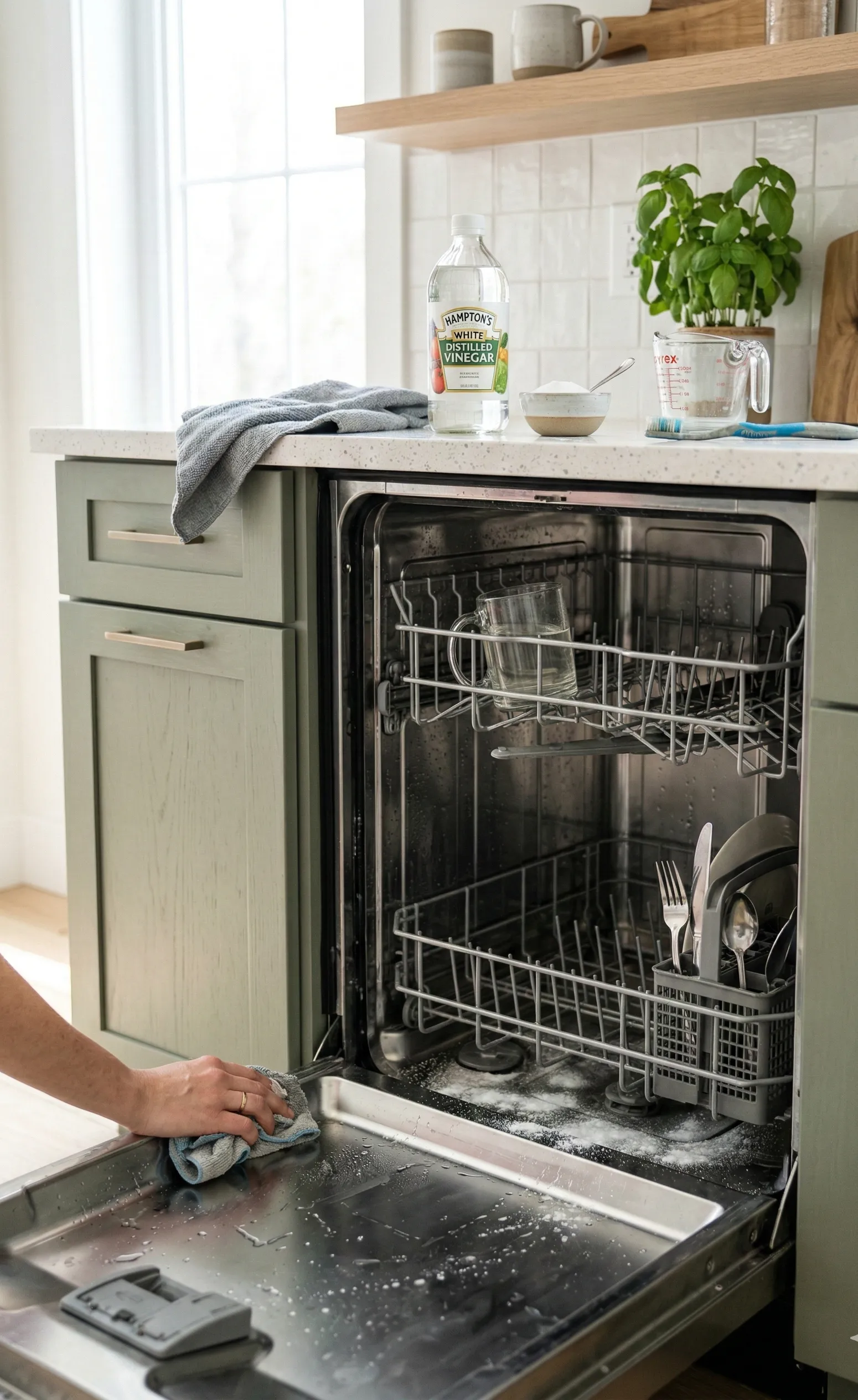
- White distilled vinegar
- Baking soda
- Measuring cup
- Dishwasher-safe bowl or cup
- Soft cloth or sponge
- Toothbrush (optional, for corners and seals)
- Rubber gloves (optional)
Step by Step: How to Clean Your Dishwasher with Vinegar and Baking Soda
Follow these steps for the best results:
- Empty the dishwasher completely: Remove all dishes, utensils, and racks if possible.
- Check and clean the filter: Remove any food debris from the bottom of the dishwasher to prevent clogs and ensure thorough cleaning.
- Place a cup of vinegar: Fill a dishwasher-safe bowl or cup with 1–2 cups of white distilled vinegar and place it on the top rack.
- Run a hot water cycle: Start a full cycle using the hottest setting. This allows vinegar to circulate and dissolve mineral buildup and grease.
- Sprinkle baking soda: Once the vinegar cycle is complete, sprinkle 1 cup of baking soda evenly across the bottom of the dishwasher.
- Run a short hot water cycle: This cycle helps lift stains, neutralize odors, and polish the interior.
- Wipe seals and edges: Use a soft cloth or toothbrush dipped in vinegar to clean door seals, corners, and other hard-to-reach areas.
- Rinse and dry: Leave the dishwasher door open to air dry, ensuring no moisture is trapped that could cause odors or mold.
How Much Vinegar and Baking Soda to Use
- Vinegar: 1–2 cups in a dishwasher-safe cup
- Baking soda: 1 cup sprinkled directly on the bottom of the dishwasher
This combination works for standard 12- to 14-place dishwashers. For heavily soiled machines, repeat the process monthly.
How Often Should You Clean Your Dishwasher?
- Heavy usage or hard water areas: Monthly
- Average households: Every 2–3 months
- If dishes start smelling or spotting, clean immediately
Regular cleaning improves performance, prevents odors, and extends the life of your appliance.
Quick Fixes for Common Dishwasher Problems
| Problem | Potential Solution | Alternative Suggestion |
|---|---|---|
| Lingering odors | Run an additional vinegar and baking soda cycle | Place a cup of baking soda overnight in the empty dishwasher |
| Stubborn stains or residue | Scrub edges and seals with toothbrush and vinegar | Sprinkle baking soda on a damp sponge and wipe interior |
| Dishwasher not draining | Check filter and drain | Ensure drain hose is not clogged |
| White flakes or mineral deposits | Repeat vinegar cycle | Use filtered water to prevent hard water buildup |
| Dishwasher smells after cleaning | Leave door open to air out | Run another short hot water cycle with vinegar only |
Tips to Keep Your Dishwasher Cleaner Longer
- Rinse dishes before loading to reduce buildup
- Wipe door edges, seals, and the exterior weekly
- Use filtered water if you have hard water
- Run a vinegar and baking soda maintenance cycle monthly
- Avoid overloading to ensure proper circulation of water and cleaning solution
FAQ
Can vinegar and baking soda damage my dishwasher?
No, this method is safe when used properly. Avoid pouring undiluted vinegar repeatedly in sensitive areas.
Can I skip the vinegar or baking soda?
Vinegar removes mineral deposits effectively, while baking soda tackles odors and stains. Using both ensures maximum cleaning.
Will this remove mold?
Yes, it can help eliminate mild mold in seals and corners, but severe mold may require extra cleaning or professional inspection.
Do I need to remove the racks each time?
Not always, but removing them allows you to clean the filter and corners thoroughly.
Final Thoughts
Cleaning your dishwasher with vinegar and baking soda is a fast, natural, and beginner-friendly way to remove grease, odors, and limescale. With regular monthly maintenance, your dishwasher will run more efficiently, last longer, and keep your dishes sparkling clean.
Don’t ignore your appliance until it smells or slows down. A simple vinegar and baking soda cleaning cycle can permanently improve performance and keep your kitchen hygienic.
Next, learn the deep clean dishwasher method.
Enjoyed this project? Get even more DIY ideas that save (and make) you money.
Join our free newsletter for profitable DIY projects, clever cleaning hacks, home ideas, and creative crafts delivered straight to your inbox.
✓ Free forever • No spam • Unsubscribe anytime