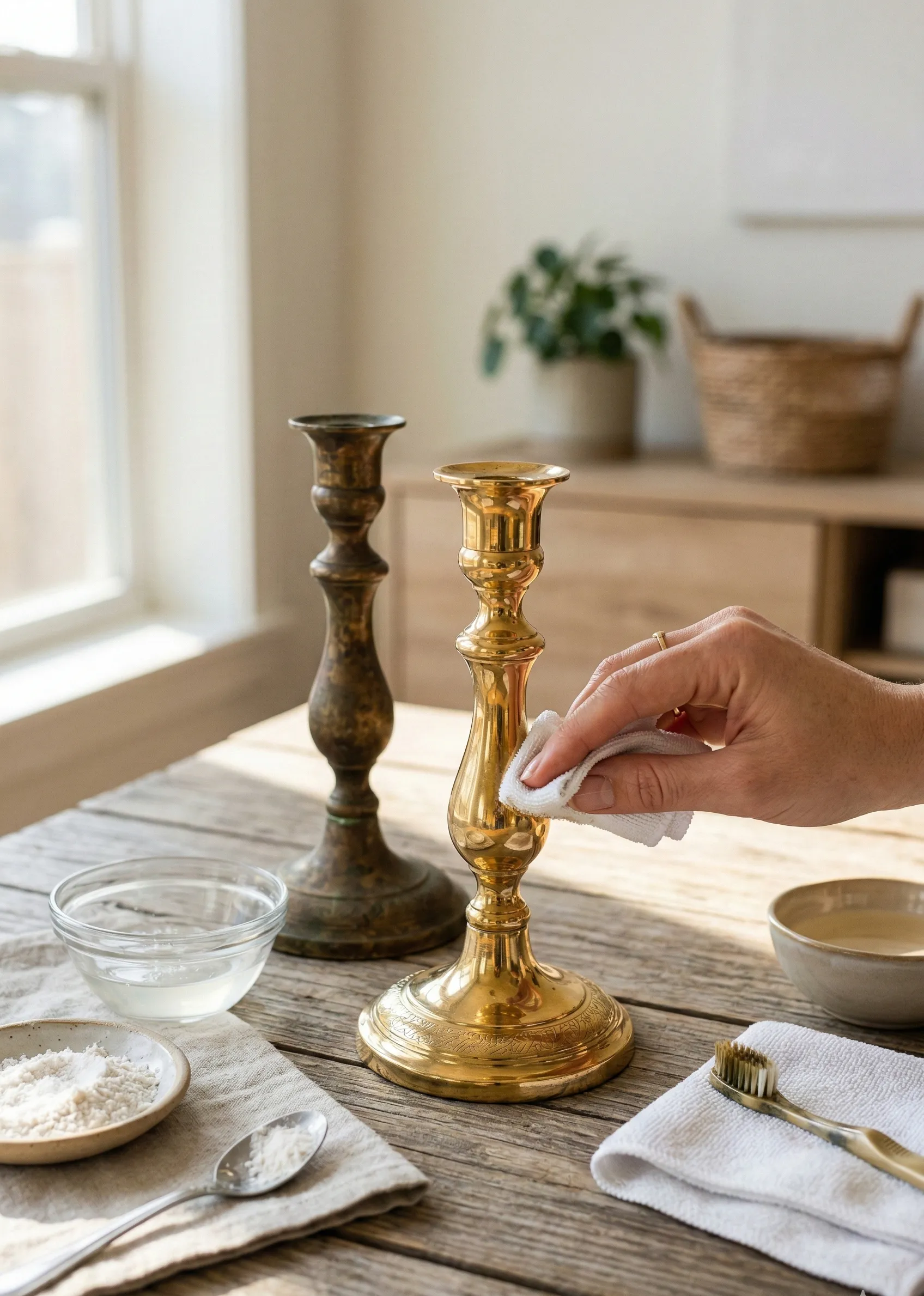
Brass is beautiful when it shines — but once it starts to tarnish, it can look dull, dark, and aged almost overnight. Whether it’s brass hardware, decorative pieces, candlesticks, or fixtures, oxidation happens naturally over time.
The good news? You don’t need expensive metal polishes. If you have white vinegar in your kitchen, you already have a powerful, natural brass cleaner.
Watch this video to see how to clean brass with vinegar and other products.
In this step-by-step guide, you’ll learn exactly how to clean brass with vinegar, how much to use, how to handle heavy tarnish, and how to protect your brass so it stays shiny longer.
Why Vinegar Works on Brass
Brass tarnishes because it reacts with oxygen and moisture in the air. This creates a dark layer called oxidation.
Vinegar works because:
- It contains acetic acid that dissolves oxidation
- It breaks down grime and buildup
- It restores shine without harsh chemicals
- It’s affordable and widely available
Stop doing this: scrubbing brass aggressively with steel wool. That can scratch the surface permanently.
Before You Start: Make Sure It’s Real Brass
Some items only look like brass but are actually brass-plated. Cleaning methods differ slightly.
Here’s a simple test:
- Use a magnet.
- If it sticks, the item is brass-plated.
- If it doesn’t stick, it’s solid brass.
Solid brass can handle stronger cleaning. Brass-plated items need gentler treatment.
What You’ll Need
Gather these supplies before starting:
- White distilled vinegar
- Table salt
- Flour (optional for paste method)
- Small bowl
- Soft cloths or microfiber towels
- Soft toothbrush (for crevices)
- Warm water
- Mild dish soap (for rinsing)
Having everything ready makes the process faster and more effective.
Step by Step: How to Clean Brass with Vinegar
Follow these detailed steps for best results:
- Remove surface dust and dirt: Wipe the brass item with a dry microfiber cloth to remove loose debris.
- Wash lightly if needed: If the piece is greasy or dirty, wash it with warm water and mild dish soap, then dry thoroughly.
- Prepare a vinegar cleaning solution: Mix equal parts white vinegar and warm water in a bowl for light tarnish.
- For deeper tarnish, make a paste: Combine ½ cup vinegar, 1 teaspoon salt, and enough flour to create a thick paste.
- Apply the solution or paste: Use a soft cloth to rub the mixture onto the brass surface, covering tarnished areas evenly.
- Let it sit: Allow the mixture to sit for 10–30 minutes depending on how dark the tarnish is.
- Gently scrub if necessary: Use a soft toothbrush to clean detailed areas or engravings. Avoid aggressive scrubbing.
- Rinse thoroughly: Wash the brass with warm water to remove all residue.
- Dry completely: Use a clean, soft cloth to dry the item immediately. Moisture can cause new tarnish to form.
- Buff for shine: Polish with a dry microfiber cloth using circular motions until the brass shines.
You should see visible brightening almost immediately.
Alternative Method: Soaking Small Brass Items
For small items like knobs, handles, or jewelry:
- Fill a bowl with vinegar.
- Add 1 tablespoon of salt.
- Submerge the brass item for 5–10 minutes.
- Remove, rinse, and dry thoroughly.
Do not soak brass-plated items for long periods, as it may damage the coating.
How to Clean Heavily Tarnished Brass
If the brass is extremely dark or green:
- Use the vinegar, salt, and flour paste method.
- Let it sit for up to 30 minutes.
- Repeat the process if needed.
For very stubborn oxidation, you may need multiple treatments rather than increasing scrubbing pressure.
Quick Fixes for Common Brass Cleaning Problems
| Problem | Potential Solution | Alternative Suggestion |
|---|---|---|
| Tarnish remains after cleaning | Repeat paste treatment | Increase sitting time to 30 minutes |
| Surface looks streaky | Buff with clean microfiber cloth | Rinse again and dry immediately |
| Strong vinegar smell | Rinse thoroughly with warm water | Wipe with diluted lemon water |
| Green oxidation in crevices | Use toothbrush with paste | Apply paste directly into grooves |
| Brass dulls again quickly | Dry completely after cleaning | Apply thin coat of protective wax |
How Often Should You Clean Brass?
- Decorative indoor items: Every 3–6 months
- Frequently handled items (handles, knobs): Every 1–2 months
- Outdoor brass: As needed, depending on exposure
Regular light cleaning prevents heavy oxidation buildup.
How to Keep Brass Shiny Longer
Once you’ve restored the shine, protect it:
- Always dry brass immediately after exposure to water
- Avoid touching frequently with bare hands (natural oils cause tarnish)
- Apply a thin layer of clear wax or mineral oil to slow oxidation
- Store decorative brass in dry environments
Stop doing this: letting brass air-dry after washing. Water spots accelerate tarnish.
FAQ
Can vinegar damage brass?
Vinegar is safe when used properly. Avoid leaving it on for extended periods and always rinse and dry thoroughly.
Is vinegar better than commercial brass polish?
For light to moderate tarnish, vinegar works extremely well. For antique or delicate brass, a specialty polish may be safer.
Can I use vinegar on brass-plated items?
Yes, but avoid soaking. Use a gentle wipe method instead.
Why does brass turn dark again?
Brass reacts naturally with air and moisture. Protective coating or regular maintenance slows this process.
Does vinegar remove green corrosion?
Yes, vinegar helps dissolve green oxidation (verdigris), especially when combined with salt.
Final Thoughts
Cleaning brass with vinegar is a fast, affordable, and chemical-free way to restore shine and remove tarnish. With the right method and gentle handling, you can bring dull brass back to life without expensive products.
The key is simple: apply, wait, rinse, dry, and buff.
Don’t ignore early signs of tarnish. Regular maintenance keeps brass looking polished and prevents heavy oxidation from forming.
Next, learn how to clean rust off metal.
Enjoyed this project? Get even more DIY ideas that save (and make) you money.
Join our free newsletter for profitable DIY projects, clever cleaning hacks, home ideas, and creative crafts delivered straight to your inbox.
✓ Free forever • No spam • Unsubscribe anytime