Removing paint from wooden furniture can feel intimidating. Whether you’re restoring an antique dresser, refinishing a table, or fixing a paint spill, the goal is the same: remove the paint without damaging the wood underneath.
The good news? With the right approach, you can strip paint safely and bring your furniture back to life. This guide walks you through beginner-friendly methods, from natural solutions to stronger paint removers, so you can choose what works best for your project.
Before You Start: Identify the Type of Paint and Finish
Not all paint behaves the same way. Understanding what you’re dealing with helps you choose the safest method.
- Latex (water-based) paint: Usually easier to remove.
- Oil-based paint: More durable and may require stronger stripping products.
- Old or multiple layers of paint: Often need chemical strippers or sanding.
- Varnished or sealed wood underneath: Requires extra care to avoid damage.
If the furniture is antique or valuable, consider testing a small hidden area first.
Stop doing this: attacking painted furniture with aggressive sanding right away. That can permanently damage wood grain and details.
What You’ll Need
Gather your supplies before starting:
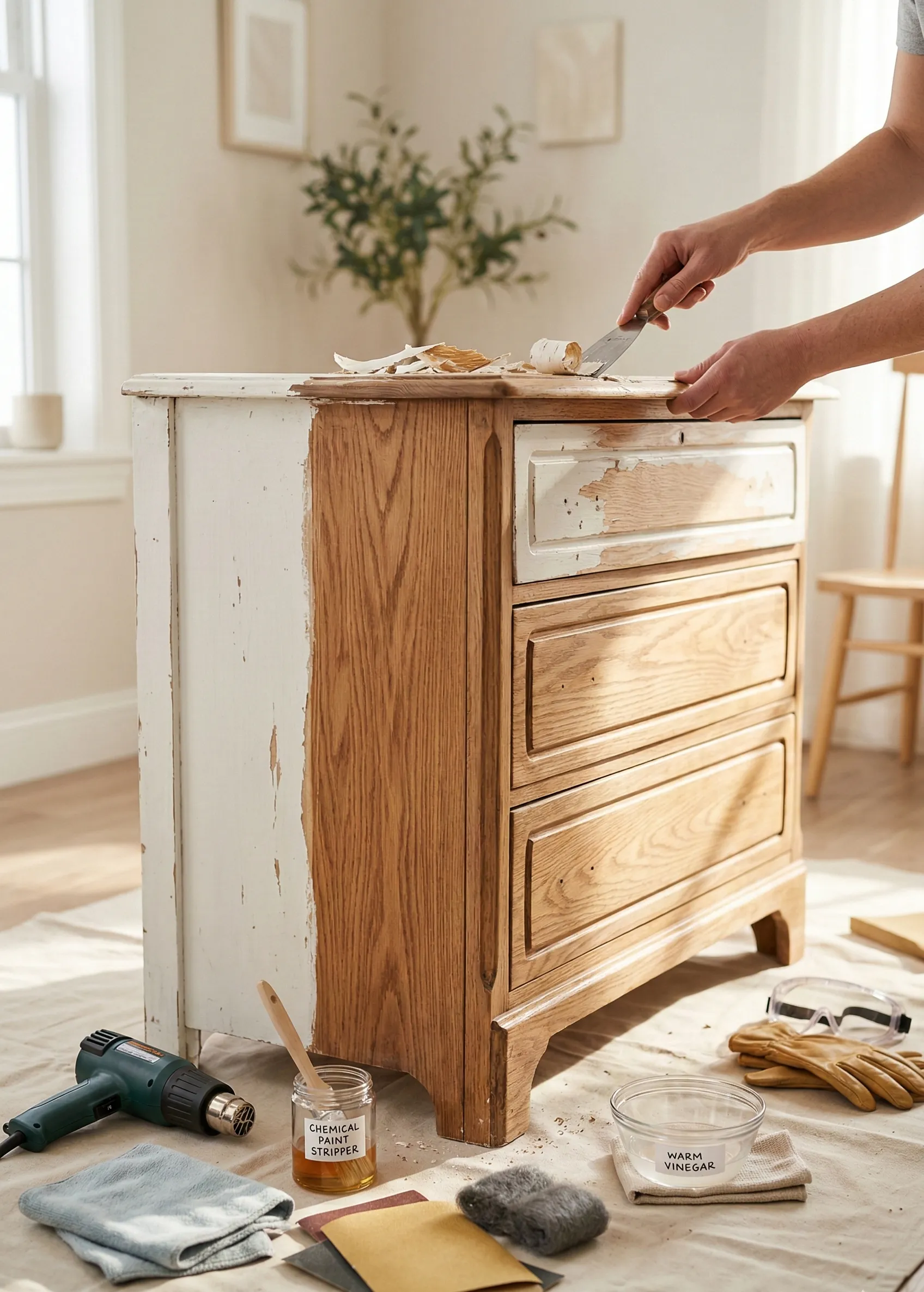
- Paint scraper or putty knife (plastic or metal)
- Sandpaper (medium and fine grit)
- Heat gun (optional)
- Chemical paint stripper (if needed)
- White vinegar (for softening latex paint)
- Soft cloths or rags
- Steel wool (fine grade)
- Drop cloth or plastic sheet
- Gloves
- Safety goggles
- Dust mask
Being prepared makes the process safer and more efficient.
Step by Step: How to Remove Paint from Wooden Furniture
Follow these detailed steps depending on the method you choose:
Method 1: Scraping and Sanding (Best for Thin or Chipped Paint)
- Prepare your workspace: Lay down a drop cloth and ensure proper ventilation.
- Start with scraping: Use a putty knife to gently scrape off loose or peeling paint. Hold the scraper at a slight angle to avoid gouging the wood.
- Sand the surface: Begin with medium-grit sandpaper and sand in the direction of the wood grain. This removes remaining paint and smooths the surface.
- Switch to fine-grit sandpaper: Finish sanding to refine the wood surface and remove scratch marks.
- Wipe clean: Use a damp cloth to remove dust before refinishing.
This method works best when paint is already flaking or thin.
Method 2: Heat Gun (For Thick Paint Layers)
- Set up safely: Work in a ventilated area and wear gloves and goggles.
- Heat small sections: Hold the heat gun a few inches away from the surface and move it slowly back and forth.
- Watch for bubbling: When the paint begins to bubble, remove heat immediately.
- Scrape gently: Use a scraper to lift softened paint.
- Repeat as needed: Work in small sections until the paint is removed.
Be careful not to overheat, which can scorch the wood.
Method 3: Chemical Paint Stripper (For Stubborn Paint)
- Apply the stripper: Use a brush to apply a thick, even layer following product instructions.
- Let it sit: Allow the product to soften the paint (usually 15–30 minutes).
- Scrape off paint: Use a scraper to remove loosened paint.
- Clean residue: Wipe with steel wool or a cloth as directed.
- Neutralize if required: Some strippers require rinsing or neutralizing before refinishing.
This method is ideal for detailed carvings or multiple paint layers.
Method 4: Natural Vinegar Method (For Latex Paint)
- Heat white vinegar until warm (not boiling).
- Apply to painted area using a cloth.
- Let it sit for 10–15 minutes.
- Scrape gently once paint softens.
This works best on water-based paint and small areas.
Quick Fixes for Common Paint Removal Problems
| Problem | Potential Solution | Alternative Suggestion |
|---|---|---|
| Paint won’t budge | Apply a second layer of stripper | Use heat gun carefully |
| Wood getting scratched | Switch to plastic scraper | Sand more gently with fine grit |
| Sticky residue remains | Wipe with mineral spirits | Use fine steel wool lightly |
| Paint in carvings | Use toothbrush or dental pick | Apply stripper thicker in grooves |
| Wood discoloration | Sand lightly with fine grit | Apply wood conditioner before staining |
How to Remove Paint Without Damaging Wood
The key is patience and working gradually.
- Always scrape in the direction of the wood grain.
- Avoid aggressive sanding at the start.
- Don’t soak wood with liquids.
- Work in small sections.
- Test in a hidden spot first.
Stop doing this: rushing the process. Fast stripping often leads to gouges, uneven surfaces, or permanent damage.
After Removing the Paint: What’s Next?
Once the paint is gone:
- Sand lightly to smooth the surface.
- Wipe away dust thoroughly.
- Apply wood conditioner if staining.
- Stain, seal, or repaint as desired.
Removing paint is just the first step in restoring wooden furniture to its full beauty.
FAQ
Can I remove paint without sanding?
Yes, using heat guns or chemical strippers can reduce sanding, but some light sanding is usually necessary for smooth results.
Is vinegar enough to remove all paint?
Vinegar works best on latex paint and small areas. Thick or oil-based paint typically requires stronger methods.
How long does it take to remove paint from furniture?
It depends on the size of the piece and number of layers. Small projects may take a few hours, while larger pieces may require a full day or more.
Will paint remover damage wood?
When used properly and according to instructions, most modern paint strippers are safe for wood. Always follow product guidelines.
Should I wear protective gear?
Yes. Gloves, goggles, and ventilation are important, especially when using heat guns or chemical strippers.
Final Thoughts
Learning how to remove paint from wooden furniture isn’t complicated — it just requires the right method and patience. Whether you choose scraping, sanding, heat, or chemical stripping, always prioritize protecting the wood underneath.
Take your time, work in sections, and don’t rush the process. With proper care, you can restore painted furniture and reveal beautiful wood grain that’s been hidden for years.
Enjoyed this project? Get even more DIY ideas that save (and make) you money.
Join our free newsletter for profitable DIY projects, clever cleaning hacks, home ideas, and creative crafts delivered straight to your inbox.
✓ Free forever • No spam • Unsubscribe anytime