Some activities look impressive in the setup and fall flat the moment kids actually touch them. Ice cube painting is the opposite. It looks almost embarrassingly simple—frozen colored ice, a piece of paper—and yet it consistently delivers some of the longest stretches of focused, independent creative play you’ll get from a craft activity.
The cold melting against warm fingers, the way colors bleed and mix as the ice drags across paper, the unpredictability of where the color goes—it hits every sensory note at once while producing genuinely beautiful artwork. Teachers have used it in classrooms for years for a reason. Once you try it, it goes straight into the regular rotation.
Here’s everything you need to know to set it up well, make the colors pop, and adapt it for different ages and settings.
What Is Ice Cube Painting?
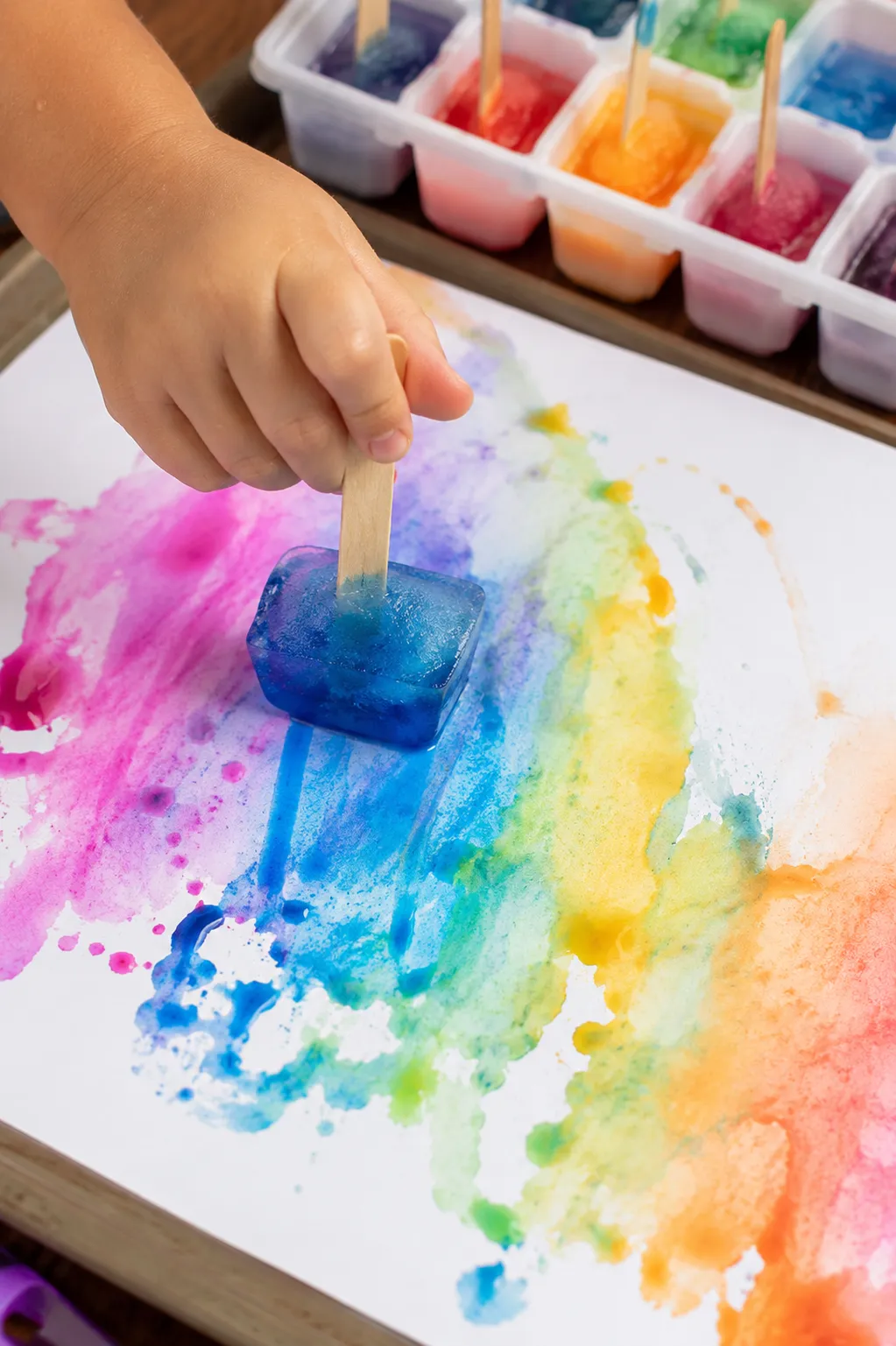
At its basic level, ice cube painting is exactly what it sounds like. You freeze colored water into ice cubes, then use those cubes like paint sticks to drag color across paper or another surface. As the ice melts from the warmth of little hands and the friction of the paper, it releases color that bleeds, blends, and moves in ways a regular paintbrush never quite replicates.
The result has a watercolor-like quality—soft edges, blended transitions, organic shapes—but with zero brush technique required. A two-year-old and a ten-year-old can work side by side and both produce something genuinely beautiful.
It also teaches something real without trying to. Kids naturally start experimenting—pressing harder to release more color, moving faster versus slower, layering one color over another before it dries. That experimentation is early scientific thinking, and it happens completely on its own without any prompting.
What You’ll Need
The setup is minimal and mostly uses things you already have:
- Ice cube trays – standard trays work perfectly; silicone trays in fun shapes add extra excitement
- Food coloring or liquid watercolors – liquid watercolors give significantly more vibrant results than standard food coloring
- Water – fill each section of the tray almost to the top
- Craft sticks or toothpicks – to stir color into each cube section and act as handles once frozen
- Heavy paper or cardstock – regular printer paper works but absorbs too fast and can tear; watercolor paper gives the best results
- A tray or baking sheet – to contain the melt water during painting
- Paper towels – for hands and drips
Optional but genuinely worth it: watercolor paper, salt to sprinkle on wet paint for a texture effect, white crayon for resist art underneath the ice painting.
How to Make the Ice Cubes
Step 1: Fill each section of your ice cube tray about ¾ full with water. Don’t fill to the very top—color and expansion during freezing will cause overflow if you do.
Step 2: Add color to each section. For food coloring, use at least 15–20 drops per cube section—more than feels necessary. The color dilutes significantly once it melts onto paper and a pale, washed-out cube is disappointing. For liquid watercolors, 1–2 teaspoons per section is enough for vivid results.
Step 3: Stir each section with a toothpick or the tip of a craft stick to fully distribute the color through the water.
Step 4: Place craft sticks into each section so they stand upright in the center. These become the handles kids hold while painting, which keeps fingers slightly less frozen and gives much better control. If craft sticks aren’t available, toothpicks work for older kids, or just skip handles entirely—some kids prefer painting with bare ice anyway.
Step 5: Freeze for a minimum of 4 hours, but overnight is strongly preferred. Partially frozen cubes melt almost immediately and the painting session ends before it starts. Solid, fully frozen cubes last much longer and give kids more working time.
Step 6: Remove from the freezer right before use. Don’t let them sit out while you set up the rest of the activity—they’ll start melting and by the time kids are ready, you’ve lost significant painting time.
How to Set Up the Painting Station
Lay a rimmed baking sheet or shallow tray on the table and place the paper directly on it. The tray catches melt water so you’re not wiping down the table constantly and kids can focus on painting rather than managing drips.
Put the ice cubes in a small bowl or on a plate next to the paper so kids can choose colors. Having all colors visible and accessible at once encourages mixing and experimenting rather than just working through one color at a time linearly.
For younger kids, tape the paper to the tray so it doesn’t slide around while they work. The resistance of paper moving under the ice cube is frustrating for toddlers and breaks concentration. A few pieces of tape on the corners takes two seconds and makes a real difference.
If you want to add a white crayon resist underneath—draw shapes or words in white crayon on the paper before painting—do this before kids sit down so the surprise of the crayon marks appearing through the color is part of the experience.
Ice Cube Painting Variations Worth Trying
Standard ice cube painting on watercolor paper The classic version. Vibrant colored cubes, thick paper, and time to experiment. Watercolor paper handles the moisture without buckling or tearing and gives the finished artwork a polished look worth keeping.
Shaped ice painting Use silicone molds in shapes—hearts, stars, dinosaurs, letters—instead of standard cube trays. Kids get excited about the shape of their “paint stick” before they even start, and the irregular edges create more interesting marks on the paper.
Salt ice painting After applying color with the ice cube, sprinkle coarse salt on the wet paint while it’s still wet. The salt crystals absorb the color and create an almost galaxy-like starburst texture as they dissolve. It looks complex and intentional but requires zero extra skill. Always a crowd-pleaser.
Layered color ice painting Freeze cubes in layers of different colors—pour one color, freeze until solid, add a second color and freeze again. As the cube melts during painting, it transitions between colors automatically, creating gradient effects kids didn’t plan but love.
Ice painting on canvas or fabric Stretch a plain white canvas or a piece of cotton fabric over a baking sheet and paint with the ice cubes. Fabric absorbs color differently than paper—the result is more tie-dye-like and very striking. Use liquid watercolors or diluted fabric paint for the best color payoff on fabric.
Outdoor ice painting on pavement Skip paper entirely and let kids paint directly on concrete or a sidewalk with the colored cubes. The color fades as it dries but the painting process is fully immersive and there’s zero cleanup. Works brilliantly on a warm day when the sun speeds up the melt.
Ice cube painting with white paint underneath Paint a layer of white tempera paint onto the paper first and let it dry slightly—still tacky but not wet. Then paint with colored ice cubes over the top. The interaction between the melting water and the slightly wet paint underneath creates unexpected textures and effects.
Ice Cube Painting for Different Ages
Toddlers (18 months – 3 years) Skip the craft stick handles for the very youngest—they tend to come out during play and become a distraction or hazard. Use larger ice shapes from a jumbo ice cube tray so small hands have more to grip. Tape the paper down firmly. Expect this age group to be as interested in the ice itself—touching it, watching it melt, feeling the cold—as they are in the painting. That’s completely fine; the sensory experience is the point at this age.
Preschoolers (3–5 years) This is the sweet spot age for ice cube painting. Old enough to be intentional about color choices and mark-making, young enough to be genuinely amazed by the results. Introduce the salt technique with this age group—they’re capable of the sprinkling motion and the effect absolutely delights them. Give them multiple sheets of paper and let them work through several before picking a favorite.
School-age kids (6–10 years) Add more structure and challenge to keep this age group engaged. Ask them to try to paint a specific subject—a landscape, a face, an animal—using only the ice cubes. The constraint makes it more interesting. Introduce the layered color cube technique and let them plan which colors to layer. Consider the canvas or fabric version for this age since the finished product feels more substantial.
Groups and parties Set up multiple painting stations with identical supplies so there’s no waiting. Provide a variety of paper sizes—some small cards, some large sheets. Put all the ice colors in a shared central bowl so kids can reach across and swap. The social element of watching what someone else’s painting looks like is genuinely part of the fun in a group setting.
Quick Fixes for Common Problems
| Problem | Most Likely Fix | Alternative Approach |
|---|---|---|
| Colors look pale and washed out on paper | Add significantly more food coloring next time—at least 20 drops per cube | Switch to liquid watercolors which give far more vibrant results |
| Ice melts too fast and session ends quickly | Freeze overnight not just a few hours for fully solid cubes | Work in a cooler room or in the shade outside on warm days |
| Paper tears or buckles from the water | Switch to cardstock or watercolor paper which handles moisture far better | Tape paper to a firm backing board before kids start painting |
| Craft sticks fall out of cubes | Insert sticks after 1–2 hours of freezing when ice is slushy not liquid | Use toothpicks instead which sit lower and freeze in more securely |
| Kids lose interest quickly | Add salt sprinkle technique or white crayon resist to create surprise elements | Switch to shaped molds which add novelty and extend engagement |
| Colors bleed into each other unattractively | Use separate paper sections for each color before combining | Embrace it—color mixing is part of the learning and often creates beautiful results |
Tips to Get the Most Out of It
Make extra cubes. This always goes faster than expected. A standard 12-cube tray sounds like plenty but a genuinely engaged child can work through that in 20 minutes. Having a second tray ready in the freezer means the session doesn’t end prematurely.
Use watercolor paper every time you can. The difference in results between printer paper and watercolor paper is significant enough that it’s worth buying a pad. It handles the water without tearing, the color sits on the surface more vibrantly, and the finished artwork actually looks like something worth displaying.
Let the artwork dry completely flat. Wet watercolor paper curls dramatically if left to dry on a surface with air underneath. Leave it flat on the tray until completely dry, then press under a heavy book if needed.
Display the finished pieces. Ice cube paintings genuinely look beautiful—the soft edges and blended colors give them a quality that most kids’ craft activities don’t produce. Putting them on the wall or refrigerator signals to kids that what they made has real value, which makes them more invested next time.
FAQ
How long does ice cube painting last as an activity? With well-frozen, deeply colored cubes and good paper, expect 30–45 minutes of genuine engagement for preschoolers and up to an hour for school-age kids who are exploring intentionally. Toddlers typically get 15–25 minutes before the cold becomes more interesting than the painting.
Can I reuse the melt water? The melt water that collects on the tray is beautifully colored and can absolutely be used with a regular paintbrush to add detail or fill in areas after the ice painting is done. Kids love discovering this mid-session.
What’s the best food coloring to use? Gel food coloring gives the most vivid results because the pigment is far more concentrated than liquid food coloring. Liquid watercolors (sold in craft stores) are even better and worth having on hand if you do a lot of process art activities. Standard liquid food coloring works but needs to be used very generously.
Is this activity safe for babies? The ice itself is safe but the cold can be uncomfortable for very young babies. For babies under 12 months, supervise closely and limit contact time with the ice. Use only food-safe coloring. The main concern is mouthing the craft sticks—skip those for babies and use large silicone molds instead for safer gripping.
Can I add anything to the water before freezing to change the effect? Yes—a small amount of corn syrup added to the water before freezing makes the ice melt more slowly and the color release more thickly onto the paper, similar to a glaze. A few drops of dish soap create a slight shimmer in the melt water. Both are worth experimenting with.
Conclusion
Ice cube painting earns its place as a go-to activity because it delivers every time—easy prep, minimal cleanup, and results that actually look beautiful on a wall. Make the cubes the night before, grab a pad of watercolor paper, and set it up in five minutes the next morning. The cold, the color, and the unpredictability of where it all goes keeps kids genuinely absorbed in a way that a lot of more elaborate crafts simply don’t. Make extra cubes. You’ll always wish you had more.
Enjoyed this project? Get even more DIY ideas that save (and make) you money.
Join our free newsletter for profitable DIY projects, clever cleaning hacks, home ideas, and creative crafts delivered straight to your inbox.
✓ Free forever • No spam • Unsubscribe anytime