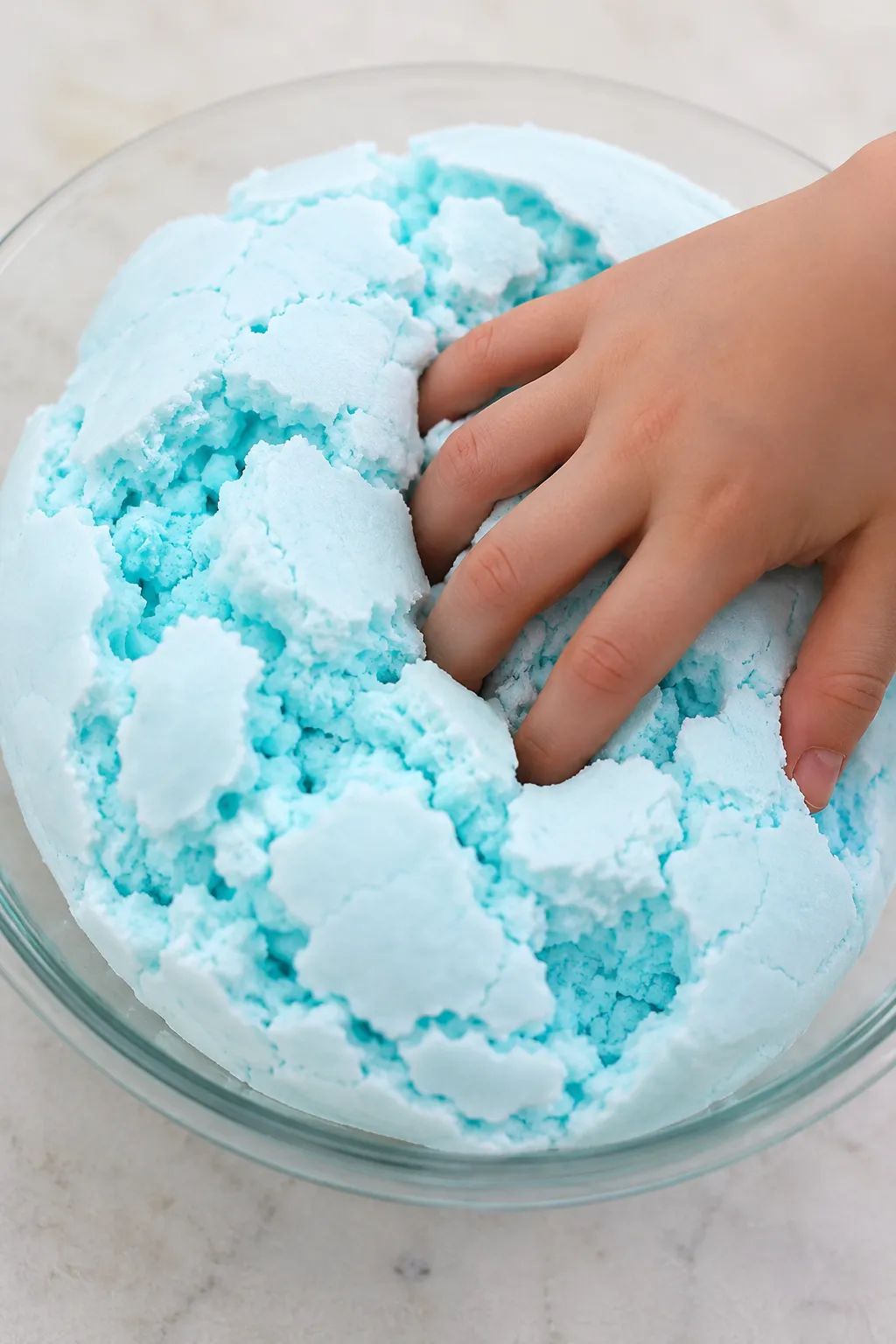
There’s a reason iceberg slime shows up in just about every slime video that gets millions of views. It looks completely different from anything else in the slime world — white, textured, covered in tiny crackly bits that genuinely look like ice — and then the moment you touch it, it stretches and squishes exactly like classic slime underneath all that texture. That contrast between how it looks and how it feels is what makes it so satisfying, and it’s also surprisingly simple to make with stuff most people already have in a craft cabinet.
The “iceberg” effect comes from a layer of crunchy foam beads or instant snow mixed into or layered onto a white slime base, which creates that crackly, frosted look on the outside while the slime underneath stays smooth and stretchy. Once you understand that basic structure, you can adjust the recipe a dozen different ways depending on what you have available and how icy you want the final result to look.
What Makes Iceberg Slime Different From Regular Slime
Before jumping into the recipe, it helps to understand what’s actually happening texturally, since that understanding is what lets you troubleshoot and customize as you go.
Regular slime is just a stretchy, cohesive base, usually made from glue and an activator. Iceberg slime starts with that same base but adds a textured element on top, most commonly foam beads (the kind sold specifically for slime, sometimes called “fishbowl beads”) or instant snow powder, which expands dramatically when mixed with water into a fluffy, crunchy, snow-like substance. That texture sits visually on the surface and partially mixed through the slime, creating the appearance of a chunk of ice or a snowy iceberg while the underlying slime base provides all the stretch and squish.
White slime is the standard base color for this craft, since white most closely mimics the look of ice and snow, though some versions use a very pale blue tint to lean more into a glacier look rather than a pure snowball look.
What You’ll Need
- White school glue (clear glue works too, but white gives a more authentic frosted look)
- Baking soda
- Contact lens solution (this acts as the activator; saline solution works as a substitute)
- Foam beads or instant snow powder (often called “slime foam beads” or “instant snow,” both widely available at craft stores or online)
- White or light blue food coloring (optional)
- A large mixing bowl
- A spoon or spatula for stirring
- Water (only needed if using instant snow powder)
- Glitter (optional, for extra sparkle that mimics ice catching light)
How to Make the Slime Base
Step 1: Pour about a cup of white school glue into a large mixing bowl. White glue gives the slime an opaque, cloudy look right from the start, which is exactly the foundation iceberg slime needs.
Step 2: Add a teaspoon of baking soda to the glue and stir thoroughly. Baking soda is what helps the slime firm up into the right consistency once the activator is added, so don’t skip this step even though it seems like a small amount.
Step 3: If you want a very subtle blue tint to lean more glacier-like, add one or two drops of light blue food coloring at this stage and stir until evenly distributed. Keep it minimal, since too much color will fight with the white, icy look you’re going for.
Step 4: Add contact lens solution a small amount at a time, about a teaspoon at first, stirring continuously. The mixture will start to pull together and become less sticky as you stir.
Step 5: Continue adding contact lens solution gradually, stirring after each addition, until the slime starts pulling away from the sides of the bowl and forming a cohesive mass. This usually takes somewhere between one and three teaspoons total, depending on the glue brand and humidity, so add slowly rather than dumping it all in at once.
Step 6: Once the slime has mostly come together in the bowl, take it out and knead it with your hands for a few minutes. It may feel slightly sticky at first, but kneading helps activate the rest of the mixture and the stickiness fades as you continue working it.
Step 7: If the slime still feels too sticky after a few minutes of kneading, add contact lens solution one drop at a time and continue kneading, checking the texture after each small addition rather than adding more than needed. Overdoing the activator makes the slime tough and rubbery rather than stretchy, so it’s better to add a little at a time.
How to Add the Iceberg Texture (Foam Bead Method)
This is the most popular version of iceberg slime because foam beads give a very pronounced, crunchy, sparkly texture that looks dramatically different from the smooth slime underneath, creating that classic iceberg effect.
Step 1: Once your slime base is fully kneaded and no longer sticky, flatten it out on a clean surface or in the bowl.
Step 2: Sprinkle a generous handful of foam beads directly onto the surface of the slime. Foam beads come in different sizes, and a mix of smaller and slightly larger beads tends to give the most realistic icy, crackly texture.
Step 3: Fold the slime over the beads and knead gently, working them partially into the slime while leaving plenty visible on the outside surface. You’re not trying to fully incorporate them throughout the whole mass, just enough that some show on the surface for that frosted, textured look while the slime itself stays smooth and stretchy underneath.
Step 4: Continue adding more beads in small handfuls, kneading between each addition, until the slime has the crackly, icy appearance you’re going for. This is very much a “to taste” step, and more beads create a heavier, crunchier icy texture while fewer beads give a more subtle frosted look.
Step 5: Once you’re happy with the texture, give the slime a final knead to settle everything together, and it’s ready for stretching, squishing, and general play.
How to Add the Iceberg Texture (Instant Snow Method)
This version creates a softer, fluffier, more genuinely snow-like texture compared to the crunchier foam bead version, and it’s particularly fun because of how dramatically the instant snow powder expands when water is added.
Step 1: Follow the instructions on your specific instant snow product, since ratios vary slightly between brands, but most use roughly one tablespoon of powder to one cup of water.
Step 2: Add the water to the powder in a separate bowl and watch it expand almost immediately into a fluffy, snow-like substance. This part is genuinely fun to watch and kids especially love this step on its own before it’s even combined with the slime.
Step 3: Let the instant snow finish expanding fully, which usually takes less than a minute, before moving on to combining it with the slime base.
Step 4: Flatten your prepared slime base and place small amounts of the instant snow on top, folding the slime over it and kneading gently to distribute it somewhat through the slime while leaving a good amount visible on the surface.
Step 5: Continue adding instant snow gradually until you reach the texture and “snowiness” you want, kneading between additions, similar to the foam bead method above.
Step 6: Knead a final time to bring everything together, and the slime is ready to play with, now with a noticeably softer, snowier texture compared to the crunchier foam bead version.
Combining Both Methods for Maximum Iceberg Effect
For the most dramatic, textured iceberg look, using both foam beads and instant snow together creates layers of different textures that look remarkably like an actual chunk of glacier ice with embedded snow and crackly surface texture.
Step 1: Prepare your slime base as described above, and prepare a small batch of instant snow separately following the package instructions.
Step 2: Knead foam beads into the slime first, following the foam bead method above, until you’re happy with that base layer of crackly texture.
Step 3: Once the foam beads are incorporated, add small amounts of the prepared instant snow on top, folding and kneading gently rather than fully mixing it through, so you get pockets and patches of the softer snow texture alongside the crunchier bead texture.
Step 4: Continue layering small additions of both elements until you’re happy with the overall look, checking the slime regularly since this combination can get visually busy quickly if you add too much of either texture.
Step 5: A final gentle knead brings everything together while still preserving the visible texture variation on the surface, which is exactly what gives this combined version its especially convincing iceberg look.
Tips for Getting the Best Results
Use white glue over clear glue for a true iceberg look. Clear glue produces a more translucent slime that doesn’t quite match the opaque, frosted appearance of ice and snow the way white glue does right from the start.
Don’t overwork the activator. It’s tempting to keep adding contact lens solution if the slime feels even slightly sticky, but overdoing this step is the most common reason slime turns out tough and rubbery rather than smooth and stretchy. Add a little, knead, and reassess before adding more.
Add texture gradually rather than all at once. Whether using foam beads, instant snow, or both, building up the icy texture in small additions gives you much more control over the final look than dumping in a large amount at the start and trying to work backward.
Store iceberg slime in an airtight container between uses. This keeps it from drying out and helps it maintain its texture and stretch for much longer than leaving it exposed to air.
Let kids customize their own iceberg. Setting out separate bowls of foam beads, instant snow, and a bit of glitter and letting kids choose their own combination and ratio makes this a more open-ended creative activity rather than a single fixed recipe everyone follows identically.
Quick Fixes for Common Problems
| Problem | Potential Solution | Alternative Approach |
|---|---|---|
| Slime is too sticky even after kneading | Add contact lens solution one drop at a time, kneading fully between each addition | Let the slime sit for a few minutes, since some stickiness resolves on its own as the activator continues working |
| Slime turned out tough and rubbery | Too much activator was likely added—try kneading in a small amount of lotion to soften it back up | Make a fresh batch and add contact lens solution more gradually next time |
| Foam beads keep falling off rather than staying in the slime | Knead the beads in a bit more rather than leaving them purely on the surface | Press beads in firmly with your fingers right after adding rather than just folding them in loosely |
| Instant snow texture disappeared after a few hours | Instant snow naturally dries out and shrinks over time—store the slime in an airtight container to slow this down | Make a fresh batch of instant snow and knead it in again to refresh the texture |
| Slime looks too colorless and dull | Add a tiny amount of white glitter or shimmer powder for extra sparkle that catches light like real ice | A very small drop of pearl or white pigment can boost opacity without affecting the icy color |
| Slime is leaving residue on hands during play | The activator ratio may be slightly off—knead in a bit more contact lens solution gradually | Make sure hands are completely dry before playing, since damp hands can make slime feel stickier than it actually is |
Ways to Customize Your Iceberg Slime
Color-block icebergs: Make two separate batches, one plain white and one with a very pale blue tint, and swirl them together gently rather than fully blending for a marbled, glacier-like appearance with visible color variation.
Glow-in-the-dark iceberg: Mix in a small amount of glow-in-the-dark pigment powder to the base before adding the texture elements, creating a slime that looks like a regular iceberg in daylight and glows like an arctic night scene once the lights go off.
Mini iceberg collection: Make several smaller batches in slightly different shades of white and pale blue, each with a different combination of foam beads and instant snow, and display them together for a fun comparison of textures.
Add small plastic polar animals: Press tiny plastic penguins, polar bears, or seals partway into the slime for a themed sensory play setup that goes beyond just the slime itself.
FAQ
Why does my slime feel cold even though it’s at room temperature?
This is a sensory illusion created by the foam beads and instant snow texture combined with the cooling properties of the activator ingredients, not actual temperature change. It’s part of what makes iceberg slime feel so convincingly icy even though it’s been sitting at normal room temperature the whole time.
How long does iceberg slime last before it needs to be thrown out?
Stored in an airtight container, iceberg slime typically lasts two to three weeks before it starts to dry out, lose stretch, or develop an off smell. If it starts smelling sour or growing any visible mold, it’s time to discard it rather than try to revive it.
Can I use saline solution instead of contact lens solution?
Yes, as long as the saline solution contains boric acid, which is the active ingredient that works with the baking soda to activate the slime. Check the ingredient label, since some saline solutions are formulated without it and won’t work the same way.
Is iceberg slime safe for young children?
The ingredients themselves are generally non-toxic when used in the small quantities this recipe involves, but as with any slime, it’s not meant to be eaten and should be supervised with very young children who might be tempted to put it in their mouths. The foam beads especially present a choking hazard for toddlers if swallowed.
Why won’t my instant snow expand properly?
This is usually due to using too little water relative to the powder, or a powder that’s old and lost some of its expanding capability. Double-check the ratio recommended on your specific product’s packaging, and try adding slightly more water if the first attempt seems under-expanded.
Conclusion
Iceberg slime earns its popularity because it delivers a genuine surprise every time someone touches it for the first time, looking crackly and frozen on the outside while staying completely smooth and stretchy underneath. Start with a basic white slime base, add foam beads, instant snow, or both depending on the texture you’re going for, and build it up gradually rather than all at once. Once you’ve got the basic method down, it becomes one of those crafts you’ll find yourself making again and again, especially once kids start asking for their own version with their own mix of texture and sparkle.
Enjoyed this project? Get even more DIY ideas that save (and make) you money.
Join our free newsletter for profitable DIY projects, clever cleaning hacks, home ideas, and creative crafts delivered straight to your inbox.
✓ Free forever • No spam • Unsubscribe anytime