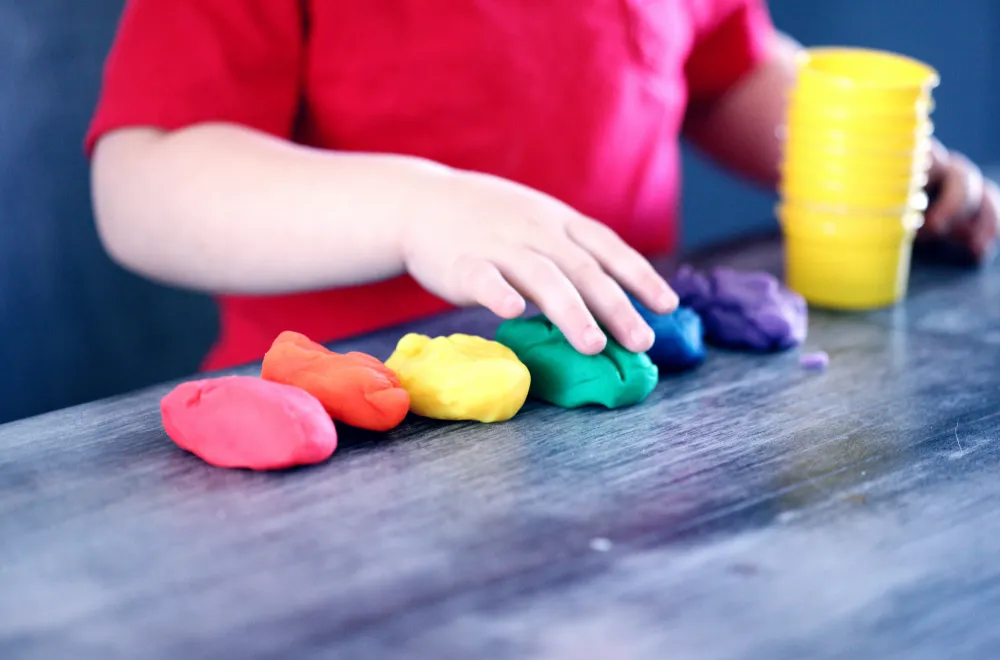
There’s a specific kind of relief that comes with handing a baby or toddler something to play with that doesn’t require constant supervision against mouthing it. Regular playdough, even the homemade kind, isn’t meant to be eaten, and for babies, toddlers, or kids who are still very much in the “everything goes in the mouth” stage, that’s a real limitation on an otherwise great sensory activity. Edible marshmallow playdough solves that completely. It’s soft, moldable, smells like vanilla, and if a curious toddler decides to take a bite, nothing bad happens.
The texture is genuinely impressive for something made from just a couple of pantry ingredients. Melted marshmallows combined with powdered sugar create a dough that’s smooth, pliable, and holds its shape well enough for actual play, not just a sticky mess that falls apart the moment you try to mold it. It’s also one of those activities that comes together in about five minutes, which makes it a great option for a rainy afternoon or a last-minute activity when you need something fast.
Why Marshmallow Playdough Works So Well
Marshmallows are mostly sugar, gelatin, and air, and when you melt them down, that structure breaks apart into a soft, stretchy, slightly sticky base. Adding powdered sugar to the melted marshmallow pulls moisture out and firms the mixture up into something that behaves like dough rather than like syrup, while keeping it soft and pliable enough to squish, roll, and shape.
This is also why the dough stays edible from start to finish. Unlike a lot of “edible” playdough recipes that use food-grade ingredients but combine them in a way that doesn’t actually taste good, marshmallow playdough tastes pretty much like a softer version of a marshmallow itself, which means kids are often just as interested in eating little bits of it as they are in playing with it. That’s not a flaw here, it’s part of the appeal for the age group this recipe is designed for.
What You’ll Need
- 1 bag (about 10 ounces) of marshmallows, mini or regular both work fine
- 1 tablespoon of vegetable oil or coconut oil
- 2 to 3 cups of powdered sugar, plus extra for dusting hands and surfaces
- A microwave-safe bowl
- A spatula or wooden spoon for stirring
- Food coloring (gel food coloring works best for vibrant color without adding too much liquid)
- A flavoring extract such as vanilla, almond, or peppermint (optional, since marshmallows already carry a mild vanilla flavor)
How to Make Edible Marshmallow Playdough
Step 1: Add the marshmallows and oil to a microwave-safe bowl. The oil helps keep the marshmallow mixture from becoming too sticky once it’s melted and also makes the finished dough smoother and easier to knead.
Step 2: Microwave in 20 to 30 second intervals, stirring well between each one. Marshmallows expand and puff up significantly as they heat, so use a bowl larger than you think you’ll need and keep an eye on it rather than walking away during this step.
Step 3: Continue microwaving and stirring until the marshmallows are fully melted and smooth, which usually takes about 60 to 90 seconds total depending on your microwave’s power. The mixture should be uniformly melted with no solid marshmallow chunks remaining.
Step 4: If you’re adding food coloring, stir it in now while the mixture is still warm and fully melted. A few drops go a long way, particularly with gel food coloring, so add gradually and mix thoroughly before deciding if you want more.
Step 5: If using a flavoring extract, add a small amount, about a quarter teaspoon, and stir it through the warm mixture as well. This step is optional since marshmallows already have a mild vanilla flavor on their own, but it adds a nice extra dimension, particularly if you’re making multiple colors and want each one to have a slightly different flavor too.
Step 6: Let the mixture cool for just a minute or two, enough that it’s safe to touch without burning your hands, but still warm and very soft. Working with it too cold makes the next step significantly harder.
Step 7: Dust a clean surface generously with powdered sugar and pour the warm marshmallow mixture onto it. It will be quite sticky at this stage, which is expected.
Step 8: Begin folding powdered sugar into the marshmallow mixture using a spatula at first, since it’s too hot and sticky to handle directly with your hands right away. Add about a cup at a time, folding it through before adding more.
Step 9: Once the mixture has cooled enough to touch and is less sticky, dust your hands generously with powdered sugar and begin kneading the dough directly, continuing to add powdered sugar gradually as you knead. The dough should start pulling together into a cohesive, smooth ball rather than sticking heavily to your hands.
Step 10: Keep kneading and adding powdered sugar until the dough reaches a soft, smooth, playdough-like consistency that doesn’t stick excessively to your hands or the surface. This typically takes a total of 2 to 3 cups of powdered sugar, though this can vary slightly depending on humidity and how warm the mixture still is.
Step 11: Once the dough is at the right consistency, it’s ready to play with immediately. It will be soft and slightly warm at first, and continues to firm up a little more as it fully cools over the next 10 to 15 minutes.
How to Make Multiple Colors
For more than one color, it’s easiest to either work quickly while the base mixture is still warm and divide it before adding color, or make smaller individual batches for each color you want.
Dividing one batch: Once the dough has come together into a cohesive ball at the end of Step 10, divide it into smaller portions while it’s still slightly warm and pliable. Knead a small amount of food coloring into each portion separately, adding a touch more powdered sugar to each piece if it becomes sticky again from the added color.
Making separate small batches: For more vibrant, fully saturated colors without any risk of the colors blending together, melt smaller portions of marshmallows separately, about a third of the bag at a time, and follow the same process for each individual color.
Sensory and Play Ideas for Edible Marshmallow Playdough
Beyond just squishing and molding, a few simple additions extend the play value significantly, particularly for toddlers and preschoolers who benefit from a little more structure or sensory variety.
Add edible glitter or sprinkles by kneading a small amount into the finished dough for extra visual interest and a slightly different texture as kids work it through their hands.
Use cookie cutters to press shapes into rolled-out portions of the dough, which adds a fine motor element and turns simple squishing into a more directed activity.
Make a rainbow by combining small amounts of multiple colors without fully blending them, creating a marbled effect that’s fun to pull apart and watch swirl back together.
Pair it with small kitchen tools like a butter knife (the dull kind, not sharp) for “cutting,” a small rolling pin, or even a garlic press for younger kids who enjoy squeezing dough through small openings.
Use it as cake decorating practice for slightly older kids interested in baking, since the texture and pliability are similar enough to fondant that this doubles as low-stakes practice for shaping and molding decorations.
Quick Fixes for Common Problems
| Problem | Potential Solution | Alternative Approach |
|---|---|---|
| Dough is too sticky to handle | Knead in more powdered sugar a quarter cup at a time until it firms up | Dust your hands more generously with powdered sugar between kneading sessions |
| Dough is too dry and crumbly | Knead in a small amount of warm water, just a few drops at a time | Microwave the dough for a few seconds to soften it slightly, then knead again |
| Marshmallows didn’t melt smoothly and have lumps | Continue microwaving in short 10-second bursts, stirring thoroughly between each | Use a hand mixer briefly on low speed to smooth out any remaining lumps |
| Color looks streaky instead of evenly distributed | Knead longer and more thoroughly, since gel food coloring needs extra working time to fully distribute | Add color while the mixture is still warm and more pliable, before it firms up too much |
| Dough hardened too much after sitting out | Marshmallow dough naturally firms with time and air exposure—knead it briefly to soften it back up | Store in an airtight container between uses to slow down hardening significantly |
| Kids are eating more of it than playing with it | This is completely normal and expected with edible playdough—let them enjoy it as intended | Make a larger batch if you want enough left over for actual play after the snacking |
How to Store Edible Marshmallow Playdough
Store the dough in an airtight container or a sealed zip-top bag at room temperature, where it stays soft and usable for about one to two weeks. It will firm up somewhat over time as it sits, which is normal, and a quick knead before each use typically brings it back to a workable texture.
Avoid refrigerating the dough, since the cold temperature makes it firm up significantly and become difficult to work with, and the texture doesn’t fully recover even after it warms back up to room temperature.
If the dough starts to develop a hard, dry crust on the outside after a week or two, a small amount of warm water kneaded in can often revive it for a few more days of play, though at a certain point making a fresh batch is easier than trying to extend an older one indefinitely.
FAQ
Is this playdough actually safe to eat, or just “technically” non-toxic?
It’s genuinely fine to eat in reasonable amounts, since it’s made entirely from marshmallows, oil, and powdered sugar, the same ingredients found in many candy and dessert recipes. It’s not a health food by any means, but it won’t cause any harm if a toddler eats a piece while playing.
What age is this appropriate for?
This is specifically designed for babies, toddlers, and any child still prone to putting things in their mouth during sensory play, generally from about 10 months old through the preschool years. Older kids enjoy it too, just with less of the safety motivation behind the recipe choice.
Can I make this without a microwave?
Yes, melt the marshmallows and oil together in a saucepan over low heat on the stovetop, stirring constantly to prevent burning or sticking, then follow the same powdered sugar process once the mixture is melted and smooth.
Why does my dough taste overly sweet?
This is somewhat expected given the ingredients, but if it tastes excessively sweet, try reducing the amount of powdered sugar slightly and compensating with slightly more oil to maintain the right texture, or add a small amount of unsweetened flavoring extract to balance it out a bit.
Does the dough lose its softness if kids handle it for a long play session?
Body heat from handling can actually keep it softer for longer during active play, but it will naturally firm up once it’s left to sit afterward. A quick knead before the next play session typically restores the texture without needing to remake the batch.
Conclusion
Edible marshmallow playdough solves a problem a lot of parents run into with sensory play for younger kids, giving them something soft, squishy, and genuinely safe to explore without constant worry about what happens if it ends up in their mouth. It comes together in minutes with ingredients most kitchens already have, and the texture holds up well enough for real play rather than falling apart the moment little hands get involved. Make a batch, store it properly between uses, and you’ll have a reliable go-to activity ready whenever you need something fast, safe, and genuinely fun for the youngest members of the household.
Enjoyed this project? Get even more DIY ideas that save (and make) you money.
Join our free newsletter for profitable DIY projects, clever cleaning hacks, home ideas, and creative crafts delivered straight to your inbox.
✓ Free forever • No spam • Unsubscribe anytime