Some of the best kids’ activities are the ones that don’t feel like activities at all. Nature soup is one of those. You hand a child a bowl of water, a few sticks, some leaves, and a spoon, and what happens next looks a lot less like a structured craft and a lot more like a kid who has completely disappeared into their own world for the next hour, stirring, pouring, collecting, and narrating an increasingly elaborate story about what’s cooking.
It’s also one of those activities that costs essentially nothing to set up, uses materials that are literally on the ground outside, and requires zero cleanup beyond dumping out the water. For parents and caregivers looking for outdoor sensory play that genuinely holds a child’s attention without a screen or a kit from a toy store, nature soup checks every box.
What Nature Soup Sensory Play Actually Is
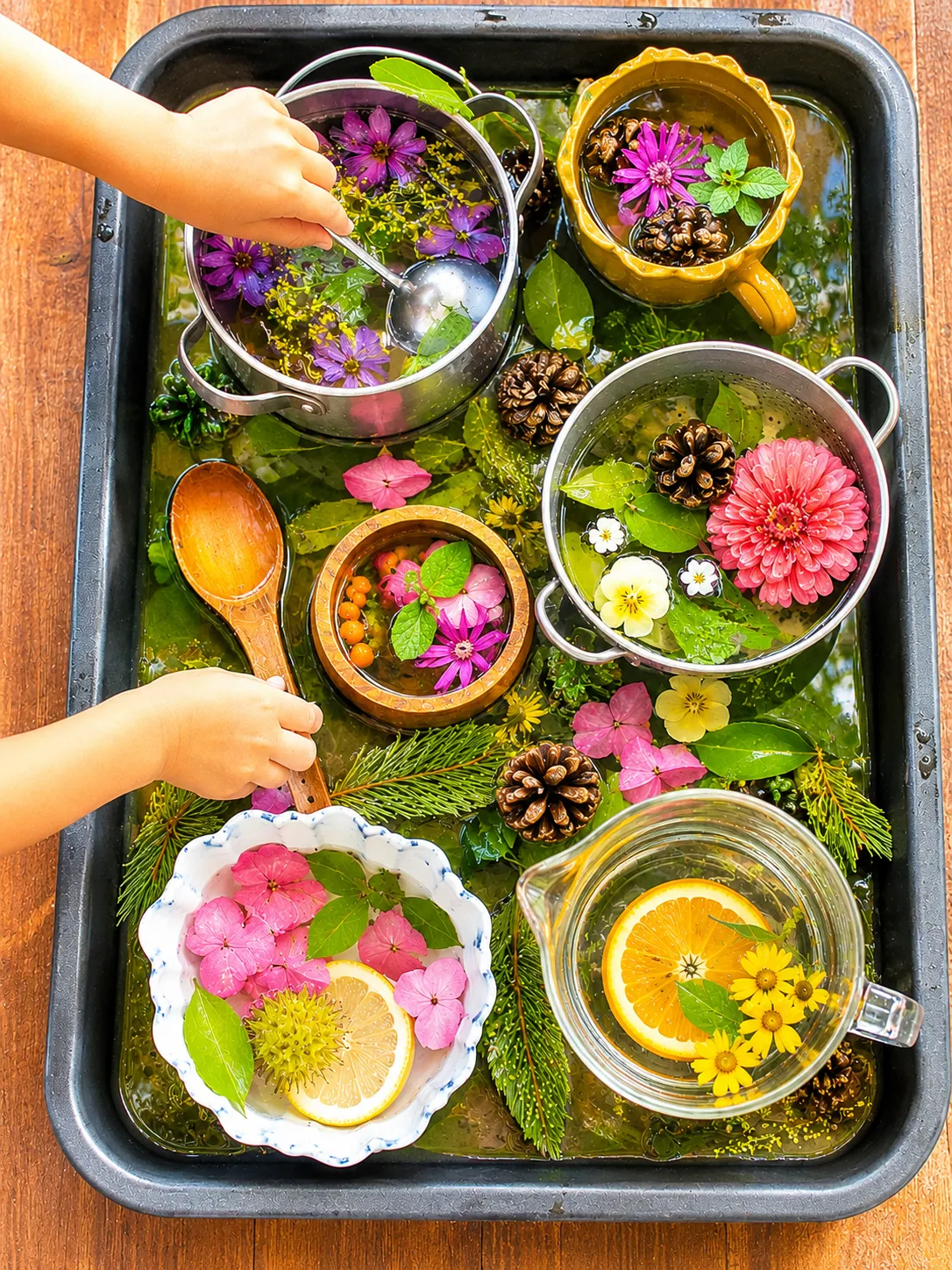
Nature soup is exactly what the name suggests. Kids gather natural materials from outside, add them to water in a bin or bowl, and stir, mix, pour, and play with the resulting “soup.” It’s open-ended sensory play at its most elemental, driven entirely by the child’s imagination rather than a set of instructions or a finished product to work toward.
What makes it genuinely valuable beyond just being fun is the sheer number of developmental benefits happening simultaneously. Kids are making decisions about what goes in and what doesn’t, which develops early classification and sorting skills. They’re pouring and measuring, which builds early math and science concepts around volume and capacity. They’re engaging in pretend play, narrating what they’re cooking and who it’s for, which builds language and narrative skills. And they’re touching, smelling, and observing a huge variety of textures and materials, which provides the kind of rich sensory input that contributes to sensory processing development.
That all sounds like a lot of learning for something that looks like a child stirring mud in a bucket, which is sort of the point.
What You’ll Need
For the bin itself:
- A large plastic bin, tub, or bucket
- Water, enough to fill the bin about halfway
- A ladle, spoon, or stick for stirring
- Small cups, bowls, or containers for scooping and pouring
- A muffin tin for sorting and displaying finds (optional but adds a lot to the play)
- Measuring cups or spoons for an extra pouring and measuring element
For the nature ingredients:
- Leaves in various sizes and shapes
- Sticks and small twigs
- Grass and clippings
- Flower petals or whole flowers
- Pinecones
- Small pebbles or smooth stones
- Bark pieces
- Moss
- Seed pods
- Dirt or sand
Setting It Up
The setup genuinely takes five minutes, and most of that time is filling the bin with water. Here’s the basic process that gets the most out of the activity.
Fill the bin about halfway with water outside, or fill it inside and carry it out if you’re worried about spillage. Room temperature water works fine, though on hot summer days cool water turns this into an especially welcome sensory experience.
Place the bin in a spot where water splashing and spilling isn’t going to be an issue, since it will happen and it’s part of the fun rather than something to stress about. Grass is ideal, since any water that spills just waters the lawn.
Gather a selection of natural materials from whatever is available in your garden, yard, or nearby outdoor space and arrange them near the bin so kids can choose what goes in rather than having everything already added. Letting kids do the collecting themselves is actually part of the activity and extends the engagement time significantly.
Set out a few tools alongside the bin, a ladle, some small cups or bowls, a muffin tin for sorting, and a couple of spoons or sticks, since having multiple tools to choose from keeps the play from getting repetitive and gives kids different ways to interact with the soup.
Hand the child the spoon and step back. Seriously, the less direction given at this point, the better, since the open-ended nature of the activity is what makes it developmentally rich, and kids given a framework to follow tend to follow it rather than inventing their own.
Nature Soup Themes and Variations
The basic setup is endlessly repeatable with small changes that make it feel fresh each time, which is part of why this can become a regular outdoor activity rather than a one-time novelty.
Flower petal soup is one of the prettiest variations and works especially well with younger children who respond strongly to color. Gather as many different colored flower petals as possible from the garden or a local park, and let the swirling colors in the water be a significant part of the sensory appeal alongside the stirring and pouring.
Mud kitchen soup takes this in a more messy, earthy direction by starting with dirt or mud as the base instead of plain water, creating a thick, satisfying consistency that looks more convincingly like actual food than a water-based version. This one requires old clothes and a bath afterward, but kids who love this kind of sensory input tend to love it intensely.
Seasonal soup keeps the activity fresh across the year by using whatever nature provides in each season. Spring means flower buds, fresh grass, and early leaves. Summer means a wide variety of flowers, berries, and full green leaves. Fall means the most dramatic version, with colored leaves, pinecones, acorns, and dried seed pods in a much richer material palette. Winter means twigs, bark, dried leaves, and in snowy areas, actual snow mixed into the water for a completely different sensory experience.
Herb garden soup swaps regular yard materials for kitchen herbs if you have a garden or even a few pots of herbs on a porch, since rosemary, mint, lavender, and basil release their scent into the water and turn this into an aromatherapy sensory experience alongside everything else.
Ocean soup replaces yard materials with sand, shells, small pebbles, and dried seaweed for a beach-themed version that works beautifully if you live near the coast or have access to these materials.
Fairy soup adds a magical narrative layer that particularly appeals to kids in the four to seven range, setting up a story about making potion or soup for fairies or gnomes and adding small fairy figurines or tiny stones as special secret ingredients that give the soup its magical properties.
How to Collect Nature Soup Ingredients
One of the most valuable parts of the nature soup activity is the collecting phase that happens before any stirring starts, since this is where a surprising amount of learning happens even though it looks like a kid wandering around the yard picking things up.
Go on a nature walk before setting up the bin, collecting materials together and talking about what each thing is, where it comes from, and whether it might make a good ingredient. This extends the total activity time significantly and adds a nature education component that the stirring phase on its own doesn’t provide.
Bring a small basket or bucket for collecting, since having a container to fill gives kids a clear purpose for the walk and creates a satisfying sense of progress as the basket fills up. Empty egg cartons work particularly well as sorting containers for collecting, since each individual cup naturally encourages kids to find one of each different type of material rather than grabbing handfuls of the same thing.
Set a challenge of finding a certain number of different materials, such as five different types of leaves, three types of seeds, and something that feels smooth and something that feels rough, turning the collecting phase into a mini scavenger hunt that feeds directly into the soup activity once everything is gathered.
Teach kids to collect without over-picking, taking only what’s fallen naturally or what’s abundant enough that removing a small amount makes no difference to the plant. This small habit builds an early respect for natural spaces that carries beyond just the activity itself.
Age-Specific Tips for Getting the Most From Nature Soup
The basic activity works across a wide age range, but a few small adjustments help it land better at different developmental stages.
For babies and young toddlers, keep the water shallow, just an inch or two, and stick to large, safe materials with no choking hazards. The sensory input from touching water, leaves, and smooth stones is genuinely beneficial at this age even without any of the pouring and stirring that older kids gravitate toward. Sit with them rather than stepping back, since very young children benefit from a nearby adult to name what they’re touching and engage with what they’re discovering.
For preschoolers, this is the age where nature soup is at its absolute peak engagement level. Add measuring cups and spoons for scooping and pouring, a muffin tin for sorting ingredients by type, and prompts like asking what the soup needs more of or what it’s called and who it’s for. Preschoolers at this age are often deeply engaged in pretend play narratives and will give you elaborate descriptions of what they’re making and the magical properties it possesses.
For school-age kids who might feel like they’ve outgrown simple sensory play, frame it as a science experiment or nature art project rather than soup. Can they separate leaves by size or color? Can they figure out which materials float and which sink? Can they make a nature dye by crushing flower petals in the water? These slightly different framings give older kids a sense of purpose that keeps the activity from feeling too young for them while still delivering the same sensory and outdoor engagement benefits.
Setting Up a Permanent Mud Kitchen for Ongoing Play
If nature soup becomes a hit, which it usually does, a simple permanent setup takes it from a one-off activity to a reliable outdoor play space kids return to independently without any adult setup required.
A mud kitchen doesn’t need to be elaborate or expensive. A low table or workbench placed outside, a few mismatched pots and pans from a thrift store, a ladle, some spoons, and a few containers for water is genuinely all it needs to be. Kids who have access to this kind of setup return to it independently and regularly, inventing new soups, potions, and meals from whatever the yard is currently offering without needing any adult involvement to get started.
Old muffin tins, measuring cups, whisks, and kitchen tools that are no longer used indoors make excellent mud kitchen equipment, and second-hand stores are a perfect source for these since nothing in a mud kitchen needs to look nice, only to function for scooping, pouring, and stirring.
A water source nearby, whether that’s an outdoor tap, a watering can kept full, or a simple plastic jug, means kids can add water independently without needing an adult to refill the bin every time it gets low.
Quick Fixes for Common Problems
| Problem | Potential Solution | Alternative Approach |
|---|---|---|
| Kids lose interest after 10 minutes | Add new materials mid-play to refresh the activity, such as flower petals or a handful of sand | Introduce a new tool like a whisk, a funnel, or a baster to change the interaction entirely |
| Water gets too muddy and kids don’t want to touch it | Start with clean water and add dirt gradually so kids can control how dirty it gets | Set up two bins, one clean and one for mud, so kids can choose their comfort level |
| Younger siblings grab materials and put them in their mouths | Use only large, fully safe materials for very young children and supervise closely | Set up a separate small baby-safe bin nearby with only water and large smooth stones |
| Play area gets waterlogged from spills | Set up on grass rather than paving, or place a tray underneath the bin to catch overflow | Accept that some spillage is inevitable and dress kids in clothes that can handle it |
| Kids want to bring nature soup materials inside | Set a clear expectation before starting that the soup stays outside | Let them bring one special found object inside if it’s dried and clean |
| Activity ends as soon as the bin is set up because kids don’t know what to do | Start the collecting phase before adding water so there’s a clear progression into the activity | Give a simple prompt like asking what kind of soup they want to make today |
Extensions That Turn This Into a Learning Activity
For parents and educators who want to add a more intentional learning layer on top of the sensory play, a few simple additions turn nature soup into a richer educational experience without making it feel like school.
Keep a nature journal nearby and encourage kids to draw or describe what they put in their soup before or after play, building observation and documentation skills alongside the sensory experience.
Introduce simple scientific vocabulary during the activity: liquid, solid, stir, dissolve, float, sink, texture, smooth, rough, fragrant. Using precise vocabulary in context is one of the most effective ways to build it, and nature soup provides a natural opportunity for almost all of these words.
Photograph the finished soup or the collecting process and look at the pictures together afterward, since children often engage differently with their own experience when they see it reflected back in a photograph and tend to describe what they did in much more detail.
FAQ
What age is nature soup best suited for?
It works beautifully from around 18 months through age 8, with the activity looking quite different at each end of that range. Babies and young toddlers get pure sensory input, while older kids build elaborate pretend play narratives or turn it into a more structured nature investigation.
Does it need to be done outside?
Not necessarily, though outside is significantly easier for containing mess and accessing natural materials. If you need to do it indoors, a large waterproof mat under the bin and pre-collected materials from outside makes it manageable.
Do I need a special bin, or will any container work?
Any container that holds water works, from a large plastic storage bin to a washing up bowl to a simple plastic bucket. Wider, shallower containers tend to be easier for young children to reach into than tall, narrow ones.
Is this activity safe for all ages of children?
With appropriate supervision and material selection, yes. The main safety consideration is avoiding small items that could be choking hazards for very young children, and ensuring the water is shallow enough that there’s no submersion risk for babies.
How do I clean up afterward?
The bin itself just needs to be emptied, since the water can go straight onto the grass or garden. Any tools used can be rinsed with a hose. The cleanup is genuinely one of the easiest parts of this whole activity.
Conclusion
Nature soup sensory play earns its reputation as one of the most reliable outdoor activities for kids because it genuinely requires almost nothing to set up and delivers an amount of engagement that’s completely disproportionate to the effort involved. Gather some leaves and sticks, fill a bin with water, hand over a spoon, and get out of the way. The stirring, pouring, sorting, narrating, and investigating that follow happen entirely on their own, driven by curiosity and imagination rather than instructions or a finished product to work toward. Set it up once and you’ll find yourself returning to it all summer long.
Enjoyed this project? Get even more DIY ideas that save (and make) you money.
Join our free newsletter for profitable DIY projects, clever cleaning hacks, home ideas, and creative crafts delivered straight to your inbox.
✓ Free forever • No spam • Unsubscribe anytime