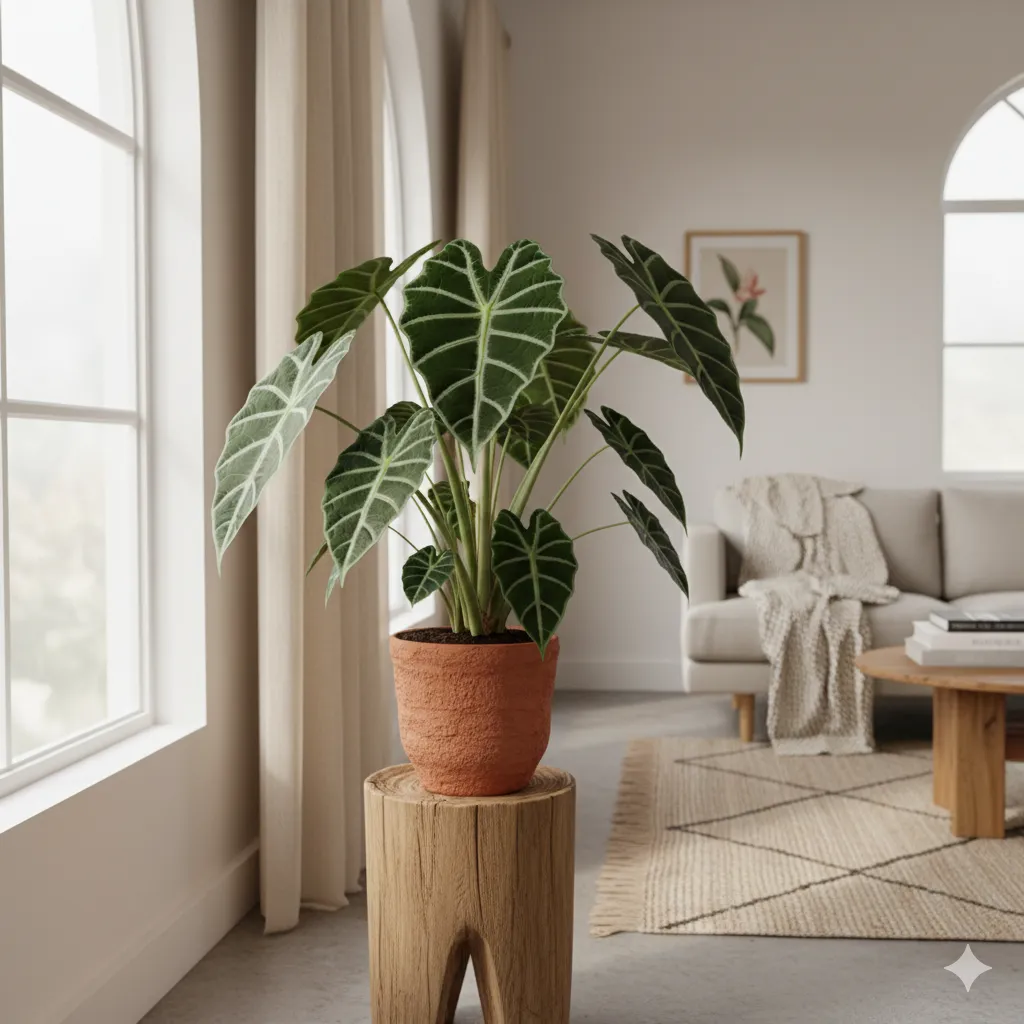
Alocasias look dramatic, grow fast, and will throw tantrums if you ignore them. The good news? You don’t need a jungle degree to keep them happy.
A few smart tweaks will transform your moody diva into the glossy showstopper it wants to be. Ready to nail Alocasia care without losing your mind?
Know Your Alocasia: Drama Queen With Rules
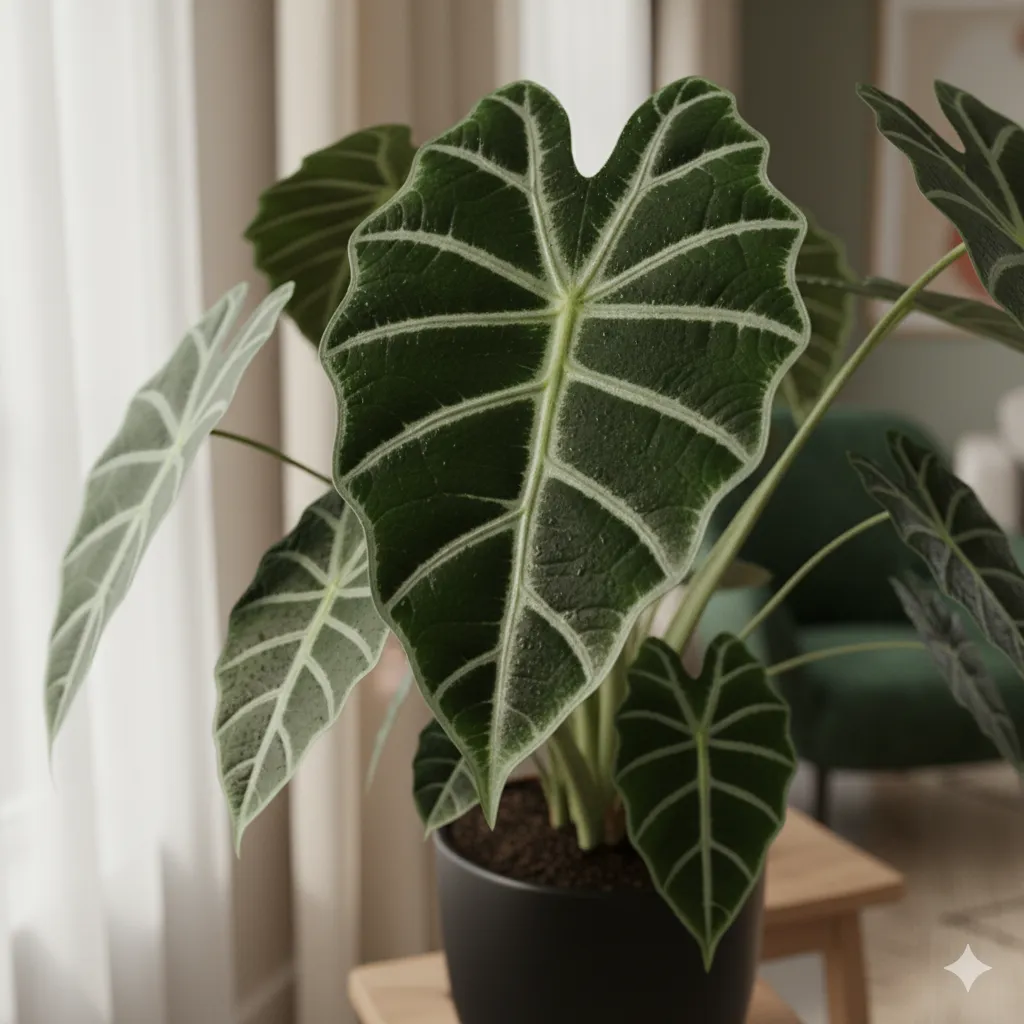
Alocasias hail from tropical forests, which means they love warmth, humidity, and filtered light. Think “spa day,” not “desert hike.” They grow from corms (like little bulbs), so even if the leaves crash, the plant can rebound when conditions improve.
Nice safety net, right? Different varieties behave similarly, whether you’ve got Alocasia Polly, Frydek, Zebrina, or the giant elephant ear types. The core needs stay the same—you just scale the pot and expectations.
Light: Bright, Indirect, and Consistent
Alocasias crave strong light but hate sunburn.
Aim for a bright room with indirect rays. East windows work beautifully; bright north windows come in second place; a few feet back from a sunny south or west window can also do the trick. What to avoid:
- Harsh midday sun that scorches leaves
- Dim corners that stunt growth and stretch stems
- Constantly moving the plant—Alocasias like a stable “address”
Grow Lights: Your Secret Weapon
If your space feels gloomy, use a full-spectrum LED. Keep it 12–18 inches above the plant and run it 10–12 hours daily.
It’s not cheating—it’s smart gardening.
Watering: Moist, Not Swampy
Here’s the rule: let the top 1–2 inches of soil dry, then water thoroughly until excess drains out. That’s it. Consistency beats “watering day” schedules every time. Pro tips:
- Use a pot with drainage.
No drainage? No peace.
- Empty saucers after watering—wet feet lead to root rot.
- Water less in winter when growth slows and the plant rests.
Signs You’re Over or Underdoing It
- Overwatering: Yellowing leaves, mushy stems, funky smell in soil
- Underwatering: Crispy edges, droopy leaves that perk up after watering
Soil & Potting: Airy Mix = Happy Roots
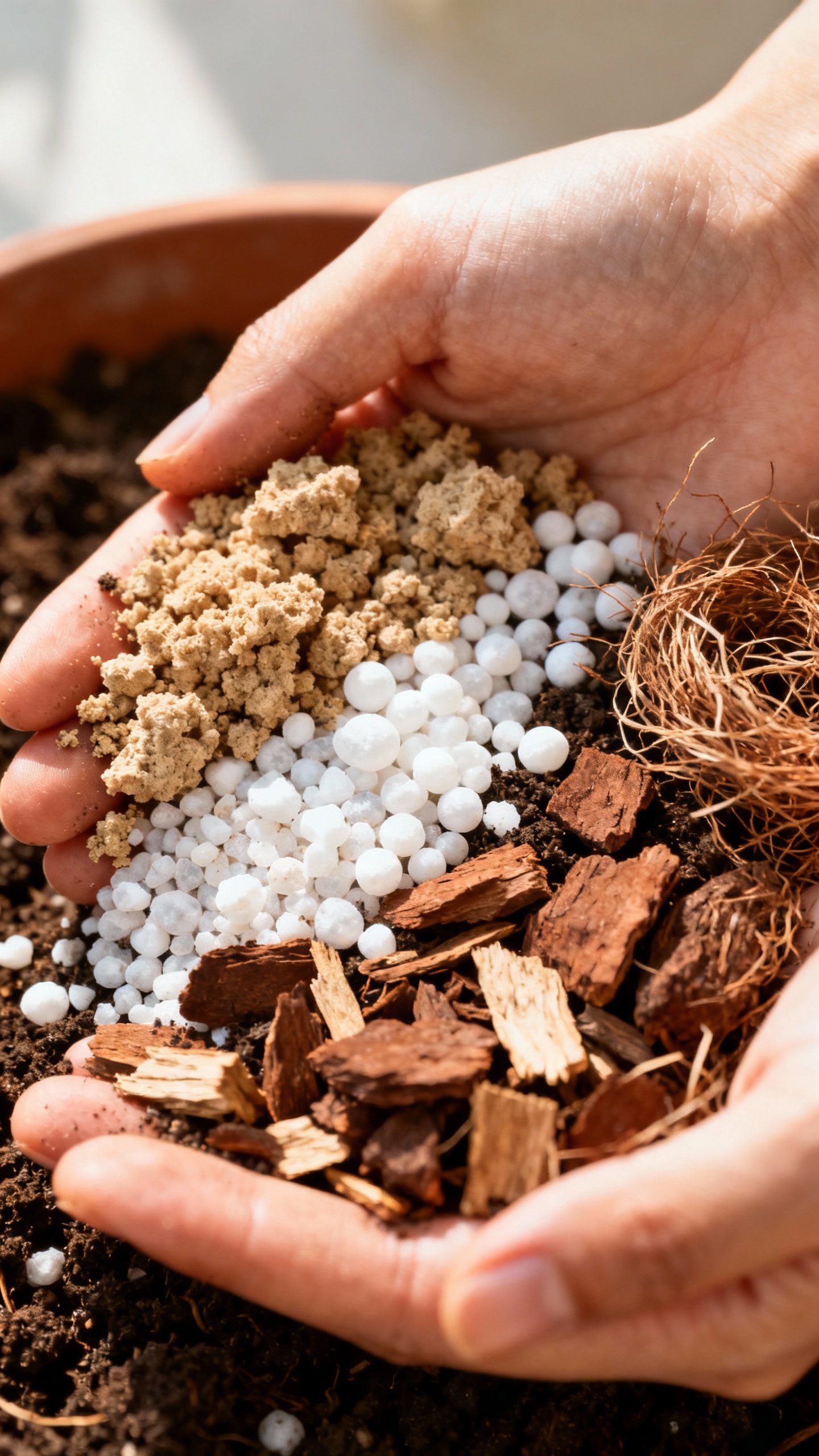
You want a light, chunky blend that drains fast but still holds some moisture. Think “moist brownie,” not “wet pudding.” Easy soil recipe (IMO the sweet spot):
- 40% high-quality potting mix
- 30% perlite or pumice
- 20% orchid bark
- 10% coco coir or peat moss
Repot every 12–18 months or when roots circle the pot.
Move up one size only. Oversized pots trap water, and your Alocasia will spiral into drama mode.
Pot Material Matters
- Terracotta: Dries faster, great if you overwater
- Plastic/Ceramic: Holds moisture longer, great for dry homes
Humidity & Temperature: Give It Tropics, Not Sauna
Alocasias thrive with humidity around 50–60%. They can survive at 40%, but they’ll look better with more moisture in the air. Boost humidity without going overboard:
- Use a humidifier near the plant (best option)
- Group plants together
- Place on a pebble tray with water (don’t submerge the pot)
Temperature sweet spot sits at 65–80°F (18–27°C).
Keep them away from cold drafts, AC blasts, and heaters. FYI, they sulk below 60°F and may drop leaves in protest.
Feeding & Growth: Fuel the Foliage
Alocasias grow fast when fed right. During spring and summer, feed monthly with a balanced liquid fertilizer at half strength.
Skip winter or feed very lightly—your plant naps then. Want bigger leaves?
- Prioritize bright light
- Stay steady with watering
- Keep humidity up
- Feed during active growth
Leaf Loss Isn’t Always a Crisis
Alocasias often shed an older leaf when pushing a new one. If the overall plant stays healthy and new growth appears, you’re fine. If several leaves yellow at once, reassess watering and light pronto.
Pests & Problems: Catch Them Early
Spider mites love Alocasias like it’s their personal buffet.
Mealybugs and aphids show up too. Check leaf undersides weekly and wipe dust off—clean leaves discourage pests and help photosynthesis. Battle plan:
- Shower the plant gently to knock pests off
- Spray with insecticidal soap or neem oil every 7–10 days until clear
- Isolate infected plants so the bugs don’t party-hop
Common Issues Decoded
- Brown crispy edges: Underwatering or low humidity
- Yellow leaves: Overwatering or poor drainage
- Droop after repotting: Normal stress—keep conditions steady
- Leaf spots: Fungal/bacterial—improve airflow, water soil not leaves
Propagation: Easy Wins With Corms
Alocasias form little corms around the mother plant. During repotting, gently separate them and pot into a small container with a moist, airy mix.
Keep them warm and humid—think mini greenhouse with a clear bag or propagation box. Quick pointers:
- Don’t bury corms too deep—just under the surface works
- Lightly moist, not soaked
- Be patient—sprouts can take weeks
Styling & Placement: Show Off Those Leaves
These plants turn any room into a statement. Place them where you’ll actually see the new growth—near a reading chair, by a bright window, or flanking an entryway. Rotate the pot every couple of weeks so it grows evenly.
Want a lush, jungle vibe? Pair with ferns, calatheas, or trailing pothos. Texture party.
FAQs
Why is my Alocasia losing leaves?
Alocasias regularly drop old leaves, especially when pushing new ones.
If it’s losing several at once, check light and watering. Low light and soggy soil cause the biggest meltdowns. Improve brightness, adjust watering, and confirm the pot drains well.
Do Alocasias go dormant in winter?
Many do, especially in cooler, darker homes.
Growth slows or pauses, and sometimes leaves die back. Keep the soil barely moist, reduce feeding, and wait it out. When spring light returns, so does your plant’s energy.
How do I know if it needs a bigger pot?
Roots circling the bottom, water running straight through, or the plant toppling over all signal a repot.
Move up just 1–2 inches in diameter and refresh the soil. Oversized pots invite overwatering issues, IMO the #1 mistake.
Is tap water okay?
Usually, yes. If you notice crispy tips or mysterious leaf marks, try filtered or distilled water and see if things improve.
Letting tap water sit overnight can dissipate chlorine, which helps in some areas.
Can I cut off damaged leaves?
Absolutely. Snip them near the base with clean scissors. Removing damaged leaves refocuses energy on healthy growth and keeps the plant looking sharp.
Just don’t hack off everything at once—photosynthesis still matters.
What’s the best fertilizer?
A balanced liquid fertilizer (like 10-10-10 or 20-20-20) at half strength works great. Feed monthly in spring and summer. If you prefer organic, fish emulsion or seaweed blends also do well—just watch the smell factor indoors, FYI.
Conclusion
Give your Alocasia bright indirect light, an airy mix, steady watering, and decent humidity, and it will reward you with bold, velvety leaves that look borderline fake.
Keep an eye out for pests, feed during growth, and don’t panic over the occasional leaf drop. Nail those basics and you’ll graduate from “plant worrier” to “Alocasia whisperer” in no time.