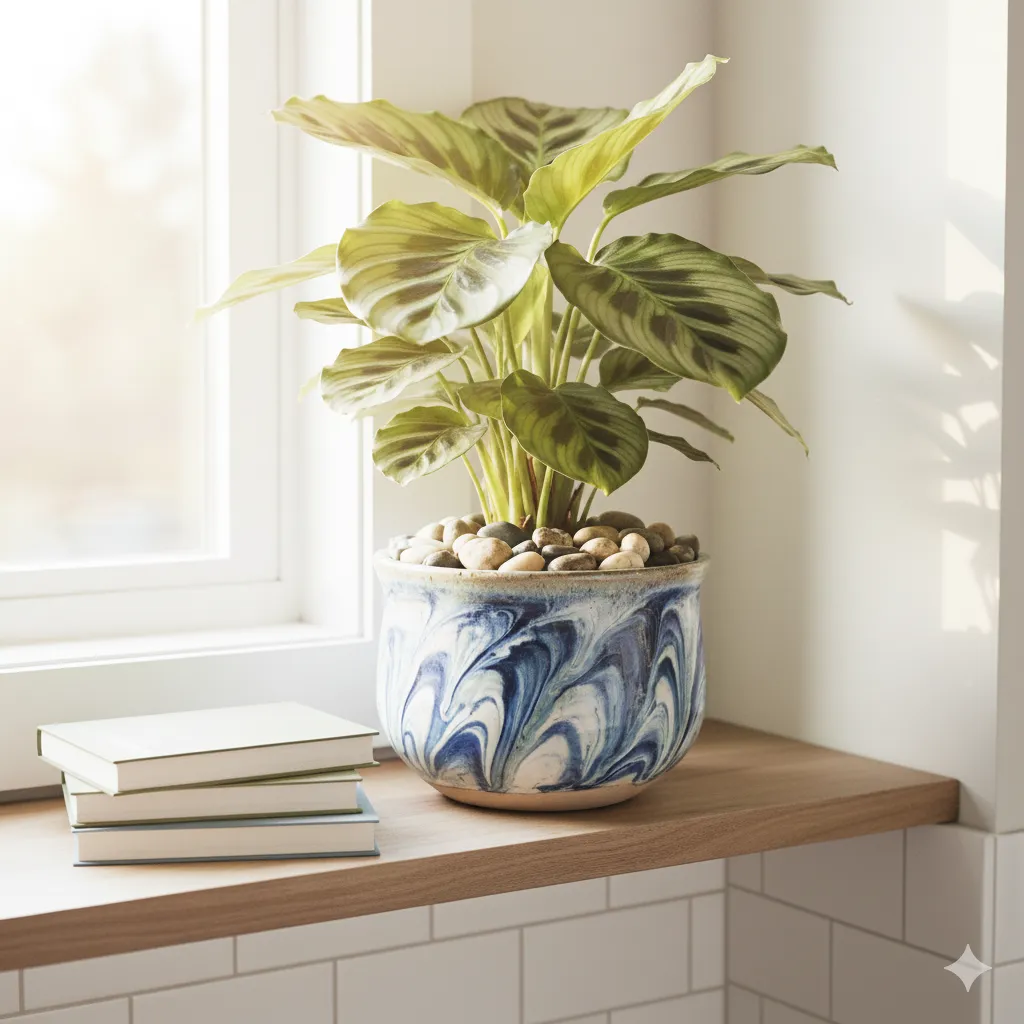
Calatheas don’t whisper, they perform. Those leaves unfurl like silk flags, flash stunning patterns, and then—just when you’ve earned their trust—they crisp at the edges and sulk. You want bold, healthy foliage without the drama?
You can absolutely get it. Let’s break down Calathea care so your plant struts instead of pouts.
Meet the Drama Queen: What Your Calathea Wants
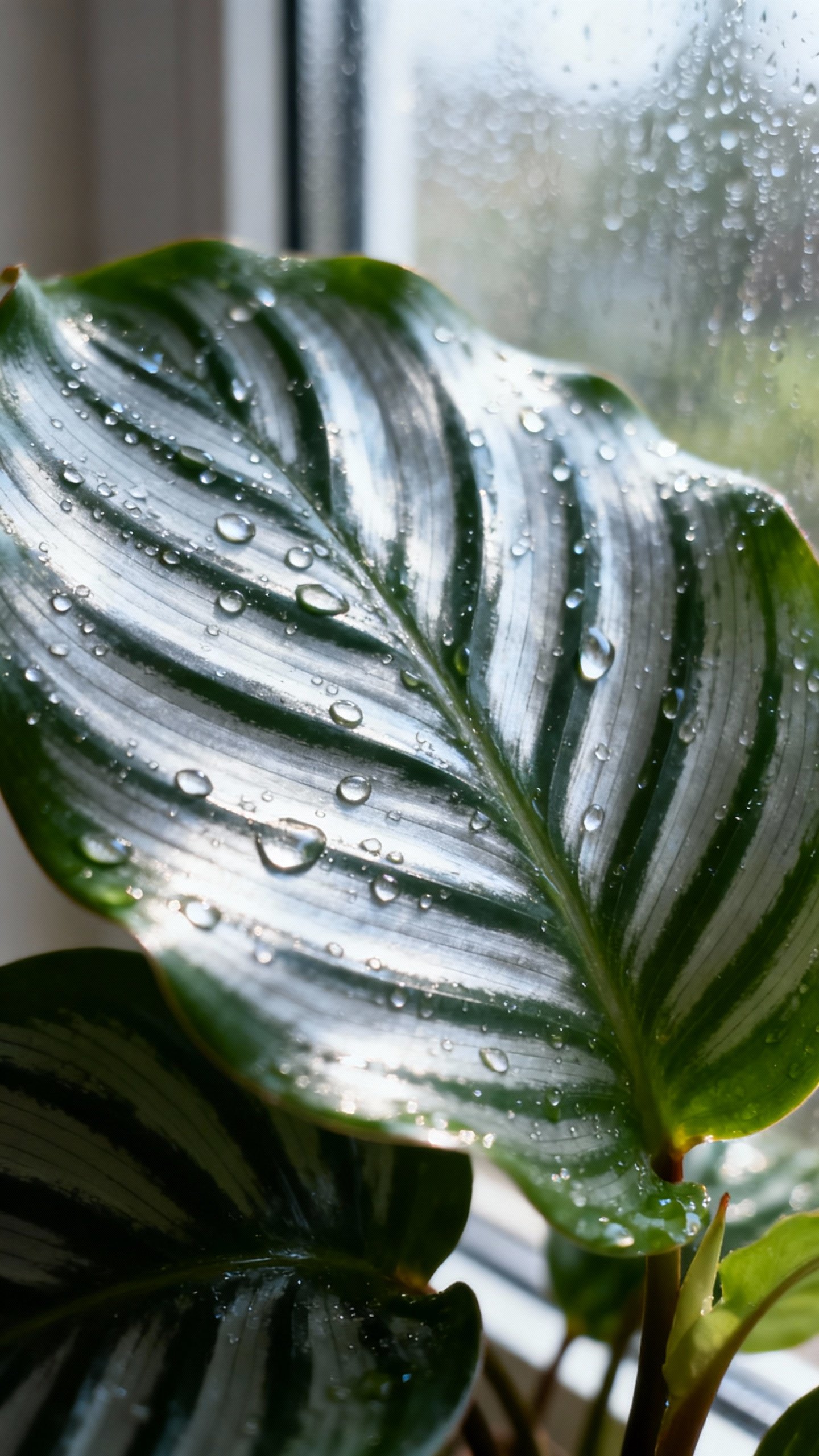
Calatheas come from tropical forest floors, so they expect comfort. Think filtered light, warm temps, and air so humid it almost feels like a spa.
Give them that, and they reward you with vibrant leaves and those adorable nightly “prayer” movements. Key takeaway: Calatheas love consistency. If you can keep conditions steady, you’ll see fewer crispy edges and more lush growth.
Light: Bright, But Make It Gentle
Your Calathea wants bright, indirect light—no sunbathing. Direct rays scorch patterns and bleach those gorgeous leaves.
- Ideal spot: A few feet from an east or north window, or behind a sheer curtain in a brighter room.
- Too dark? You’ll get slow growth and dull colors.
Move it closer to light or add a grow light.
- Too bright? Crispy tips and washed-out patterns. Back it up from the window.
Grow Lights: The Friendly Backup
Use a full-spectrum LED positioned 12–18 inches above the plant for 8–10 hours daily. Set a timer so you don’t overdo it—Calatheas love routine, not interrogation lights.
Watering: The Crisp-Edge Prevention Plan
Overwatering creates mushy roots.
Underwatering creates crunchy drama. We want the Goldilocks zone—moist but never soggy.
- Check first: Stick your finger into the soil. Water when the top 1–2 inches feel dry.
- Water type matters: Calatheas hate hard water and fluoride.
Use filtered, distilled, or rainwater, FYI.
- Method: Water thoroughly until it drains out, then empty the saucer. Don’t let it sit in water.
Spotting Water Stress
- Brown, crispy edges: Often low humidity or mineral-heavy water.
- Yellowing, droopy leaves: Likely overwatering or poor drainage.
- Curled leaves: Usually underwatering or low humidity.
Humidity: The Non-Negotiable
Calatheas adore humidity. Like, 60–70% if you can swing it.
Your dry living room air won’t cut it unless you help.
- Humidifier: The single best investment—place it nearby and run daily.
- Pebble tray: Marginal help, but it’s cute and easy.
- Grouping plants: Slightly boosts local humidity and makes a jungle vibe—win-win.
Misting: The Hot Take
Misting does very little for humidity long-term and can encourage fungal spots if leaves stay wet. IMO, skip it and use a humidifier instead. Your plant will thank you with fewer crispy edges.
Soil & Pot: Drainage Is Your Best Friend
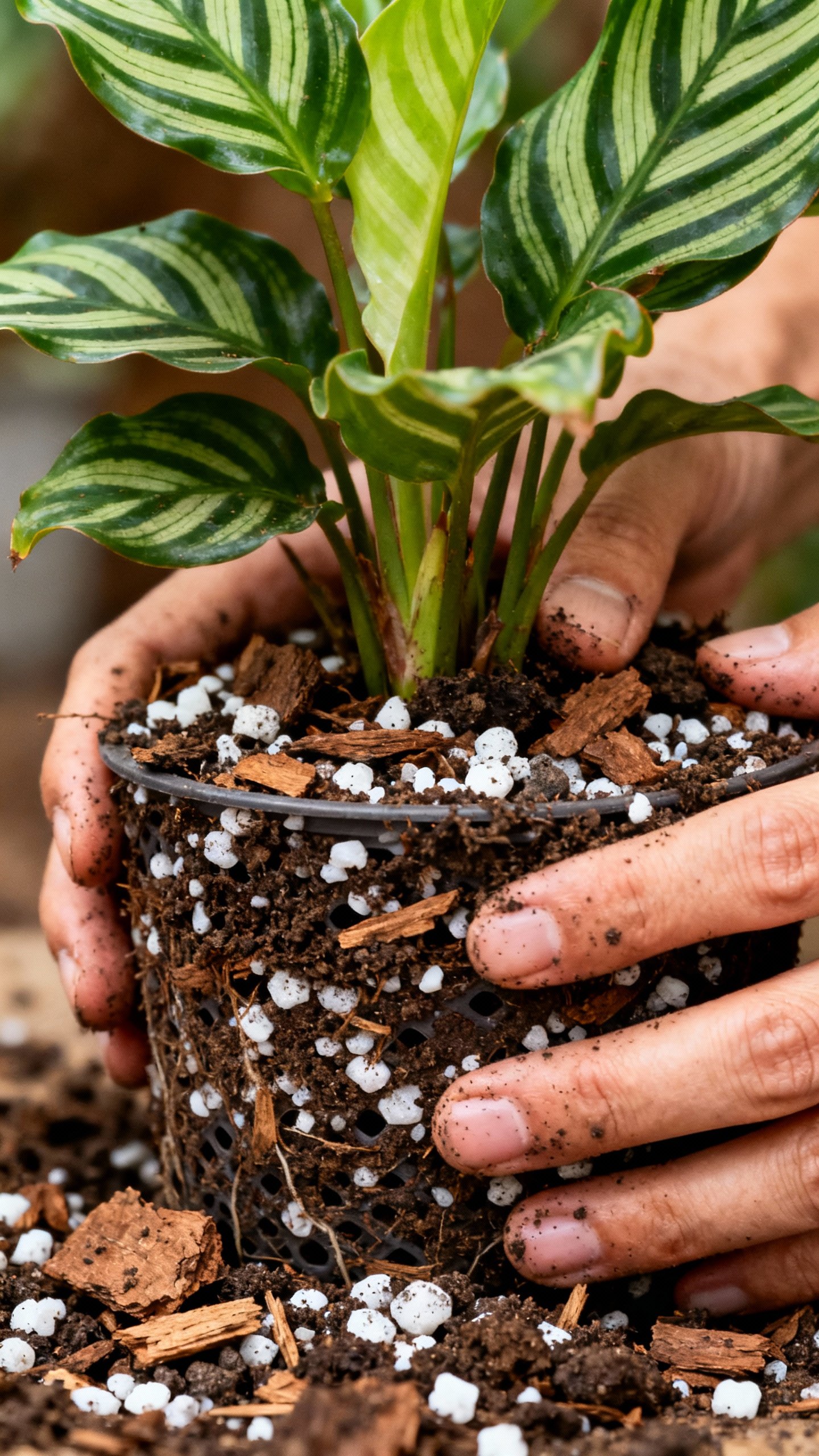
Calatheas need airy, moisture-retentive soil—not heavy, compact potting mix.
- Mix recipe: 50% high-quality potting soil, 25% perlite or pumice, 25% coco coir or fine orchid bark.
- Pot choice: Always choose a pot with drainage holes.
Plastic or glazed ceramic holds moisture; terracotta dries quicker.
- Repotting: Every 12–18 months, or when roots circle the pot and water runs straight through.
Drainage Layer Myth
No rocks at the bottom. Use good soil and proper holes. A “drainage layer” just raises the water table and leads to soggy roots.
Science says no, and so do your Calathea’s roots.
Feeding & Growth: Fuel the Foliage
Calatheas aren’t heavy feeders, but they do appreciate a regular snack in spring and summer.
- Fertilizer: Use a balanced liquid fertilizer at half strength every 4–6 weeks during active growth.
- Pause in winter: Growth slows, so let it rest.
- Flush salts: Every few months, run water through the soil for a minute to clear buildup.
Pruning and Grooming
Snip off yellow or crispy leaves at the base with clean scissors. Wipe dust from leaves with a damp cloth to keep those patterns popping and photosynthesis humming.
Temperature & Drafts: Keep It Cozy
Calatheas like 65–80°F (18–27°C). They throw a fit with cold drafts or sudden changes.
- Avoid: AC blasts, heaters, exterior doors, and fans.
- Night drops: A small drop is fine; big swings cause leaf curl and sadness.
Pests & Problems: Don’t Let the Drama Escalate
Healthy Calatheas resist pests, but dryness and stress open the door to bug drama.
- Spider mites: Tiny webs and stippling.
Increase humidity and treat with insecticidal soap or neem weekly until gone.
- Fungus gnats: Let the top inch dry, use yellow sticky traps, and try a BTi drench if needed.
- Thrips/mealybugs: Isolate, wipe leaves, and treat consistently.
Common Leaf Issues
- Brown tips: Low humidity, hard water, or too much fertilizer.
- Faded patterns: Too much light or nutrient deficiency. Adjust placement and feed lightly.
- Leaf curl: Underwatering or cold air. Warm it up and water properly.
Propagation & Repotting: Multiply the Magic
You can’t easily propagate Calathea from cuttings, but division works during repotting.
- Water a day before to reduce stress.
- Gently remove the plant and tease apart natural clumps with roots and leaves.
- Pot each division in fresh mix, water lightly, and boost humidity for a couple weeks.
Post-Repot Care
Keep it out of direct sun, hold fertilizer for 4–6 weeks, and maintain steady moisture.
Plants may pout briefly—don’t panic, they bounce back.
Calathea Varieties Worth Your Time
You can’t collect them all… or can you? A few favorites for different vibes:
- Calathea orbifolia: Huge, silver-striped discs. Wants extra humidity and space.
- Calathea lancifolia (Rattlesnake): Wavy lance leaves, more forgiving IMO.
- Calathea roseopicta: Pink patterns that look hand-painted.
- Calathea makoyana (Peacock): Translucent leaves with feathered designs—gorgeous under backlight.
FAQ
Why do my Calathea’s leaves move up and down?
Calatheas belong to a group nicknamed “prayer plants.” They shift leaves in response to light, lifting them at night and lowering them by day.
It’s normal, adorable, and a great sign your plant feels fine.
Can I bottom-water my Calathea?
Yes, occasionally. Let the pot sit in a shallow tray of water for 15–20 minutes, then drain thoroughly. Rotate with top watering so you flush salts and avoid dry pockets in the soil.
Are Calatheas pet-safe?
Good news: Calatheas are non-toxic to cats and dogs.
Your pets might still swat the leaves because… pets, but at least you won’t need a vet visit for a nibble.
How do I fix crispy leaf edges?
Switch to filtered/distilled water, run a humidifier, and check fertilizer levels. Trim brown bits with clean scissors, following the leaf’s natural shape. The damage won’t reverse, but new growth should come in clean once you fix the cause.
Do Calatheas go dormant in winter?
They slow down in cooler months with lower light.
Expect fewer new leaves and slightly slower water use. Reduce feeding, keep humidity up, and don’t repot until spring unless absolutely necessary.
What’s the best pot size?
Choose a pot 1–2 inches wider than the current one. Oversized pots hold excess moisture and invite root rot.
Calatheas prefer snug shoes over clown boots, FYI.
Conclusion
Calatheas earn their diva reputation, but they don’t ask for the moon—just stable light, warm temps, soft water, and lush humidity. Nail those basics and your plant will reward you with bold, healthy foliage that genuinely looks unreal. Keep it consistent, watch for signals, and enjoy the show—because when a Calathea thrives, it’s basically living art.
IMO, that’s worth a little extra pampering.