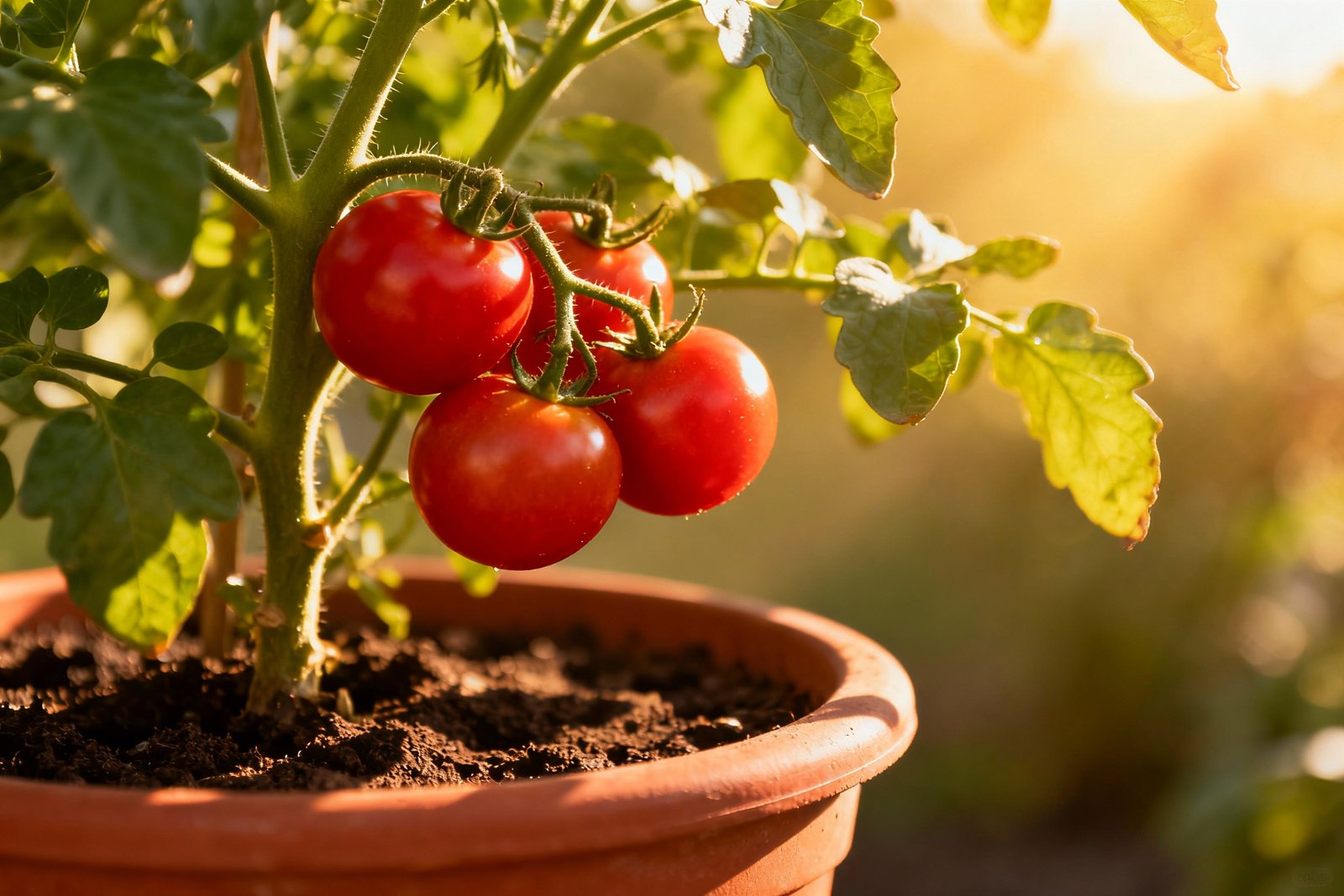
You want tomatoes that taste like sunshine and July? Good. Let’s skip the fluff and get your plants from “meh” to “mouthwatering.” With a few smart tweaks, you’ll go from buying bland grocery tomatoes to winning bragging rights at every BBQ.
Ready to grow a tomato jungle that feeds you for months? Let’s do it.
Pick the Right Tomato for Your Situation
Not all tomatoes act the same. Some climb like wild vines, others stay compact and chill.
You’ll get better results when you match the plant to your space and goals.
- Indeterminate: Tall, vining, fruit all season. Great for big harvests, needs staking. Think Sungold, Cherokee Purple, Brandywine.
- Determinate: Bushy, sets most fruit at once.
Perfect for containers and sauce marathons. Think Roma, Celebrity, Bush Early Girl.
- Cherry vs. Slicer vs.
Paste
: Cherry tomatoes = reliable and sweet. Slicers = sandwiches and caprese. Paste = thick, meaty sauce.Grow a mix IMO.
Pro tip on taste
For flavor that actually knocks your socks off, try heirlooms like Black Krim or Green Zebra. They’re funky-looking, but the taste? Chef’s kiss.
Planting Like a Pro: Soil, Spacing, and Sun
Tomatoes love warmth, sun, and deep, rich soil.
Give them that, and they’ll reward you like royalty.
- Sun: 6-8 hours minimum. More sun = sweeter fruit. If you can only do morning sun, still go for it.
- Soil: Loose, fertile, well-draining.
Aim for pH 6.2–6.8. Mix in compost and a slow-release organic fertilizer at planting.
- Spacing: 18–24 inches for determinates; 24–36 inches for indeterminates. Airflow prevents disease, FYI.
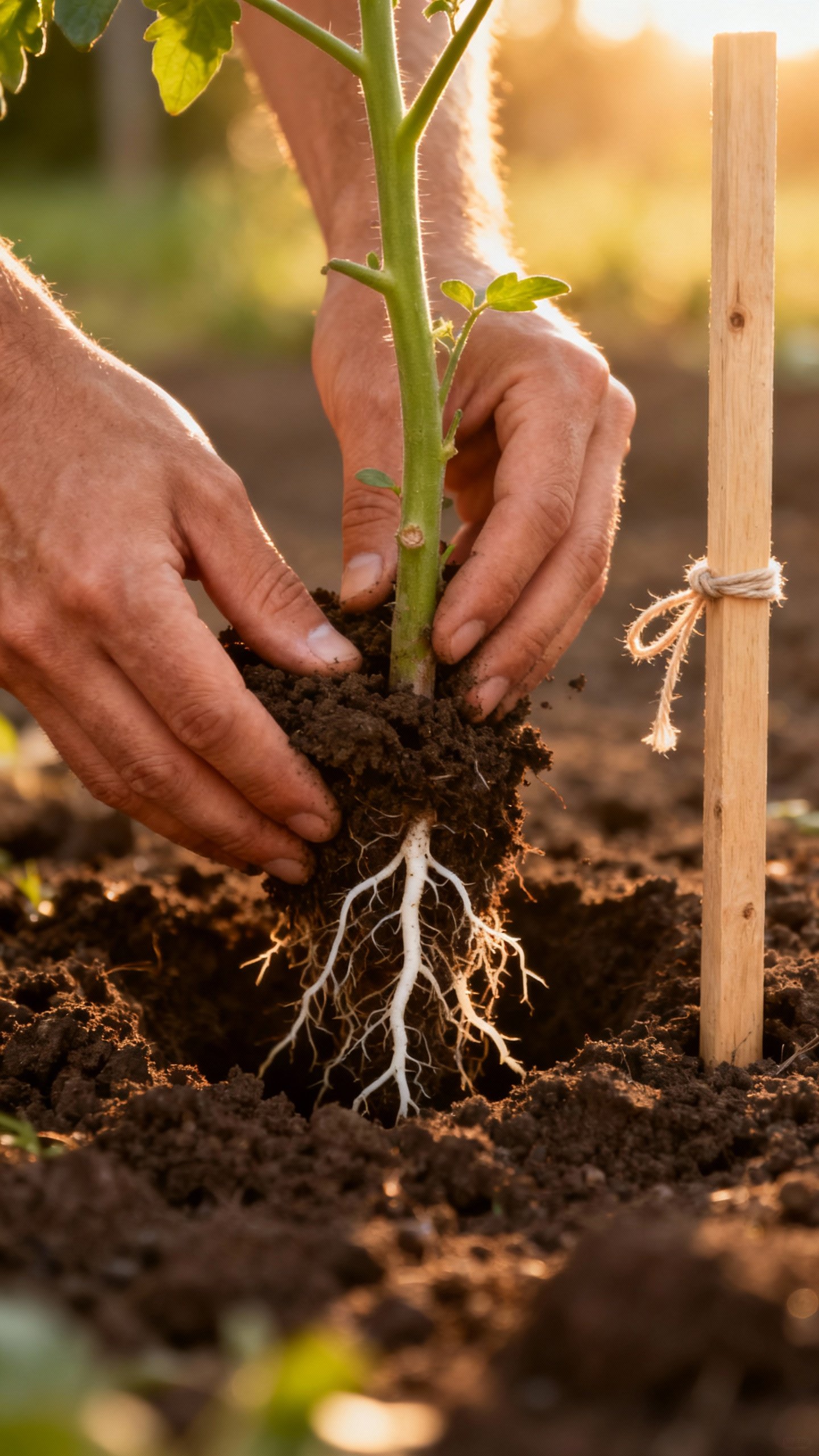
- Plant Deep: Bury 2/3 of the stem.
Tomatoes grow roots along buried stems = stronger plant, more water access.
Container growing done right
Use a 10–20 gallon pot for indeterminates, at least 7 gallons for determinates. Add quality potting mix, not garden soil. Add a stake or cage at planting so you don’t spear roots later.
Stake, Cage, or Trellis: Keep Them Upright and Happy
You can’t grow monster plants and then hope a tiny wire cage saves the day.
Support early, harvest more.
- Stakes: One sturdy 6–8 ft stake per plant. Tie with soft ties every 8–10 inches as it grows.
- Cages: Use heavy-duty, tall cages for indeterminates. Cheap, short cages fold like origami by July.
- Trellis/Florida weave: For rows.
Run twine between stakes to sandwich plants. Efficient and tidy.
Pruning basics (no drama)
– For indeterminates: Remove suckers below the first flower cluster for airflow and bigger fruit clusters. – For determinates: Minimal pruning. Just remove leaves touching soil. – Bottom leaves: Trim the lower 8–12 inches once plants grow tall.
You’ll reduce splash-up disease.
Watering and Feeding: The Secret to Juicy, Not Mushy
Want crack-free, flavorful fruit? Nail your watering routine and feed consistently.
- Water deeply: 1–2 inches per week, more in heat waves. Water slowly at the base, not overhead.
- Consistency matters: Fluctuations cause blossom end rot and cracks.
Mulch helps lock in moisture.
- Mulch: 2–3 inches of straw, shredded leaves, or pine needles. Keeps roots cool and soil moist.
- Fertilizer schedule: Start with a balanced slow-release at planting. Switch to a phosphorus/potassium-leaning feed when flowers appear.
Calcium and blossom end rot
Blossom end rot looks like a nasty black spot on the bottom.
It usually comes from inconsistent watering, not a pure calcium deficiency. Keep moisture steady, and add a cal-mag supplement only if your soil test suggests it.
Flower Power: Boost Pollination and Fruit Set
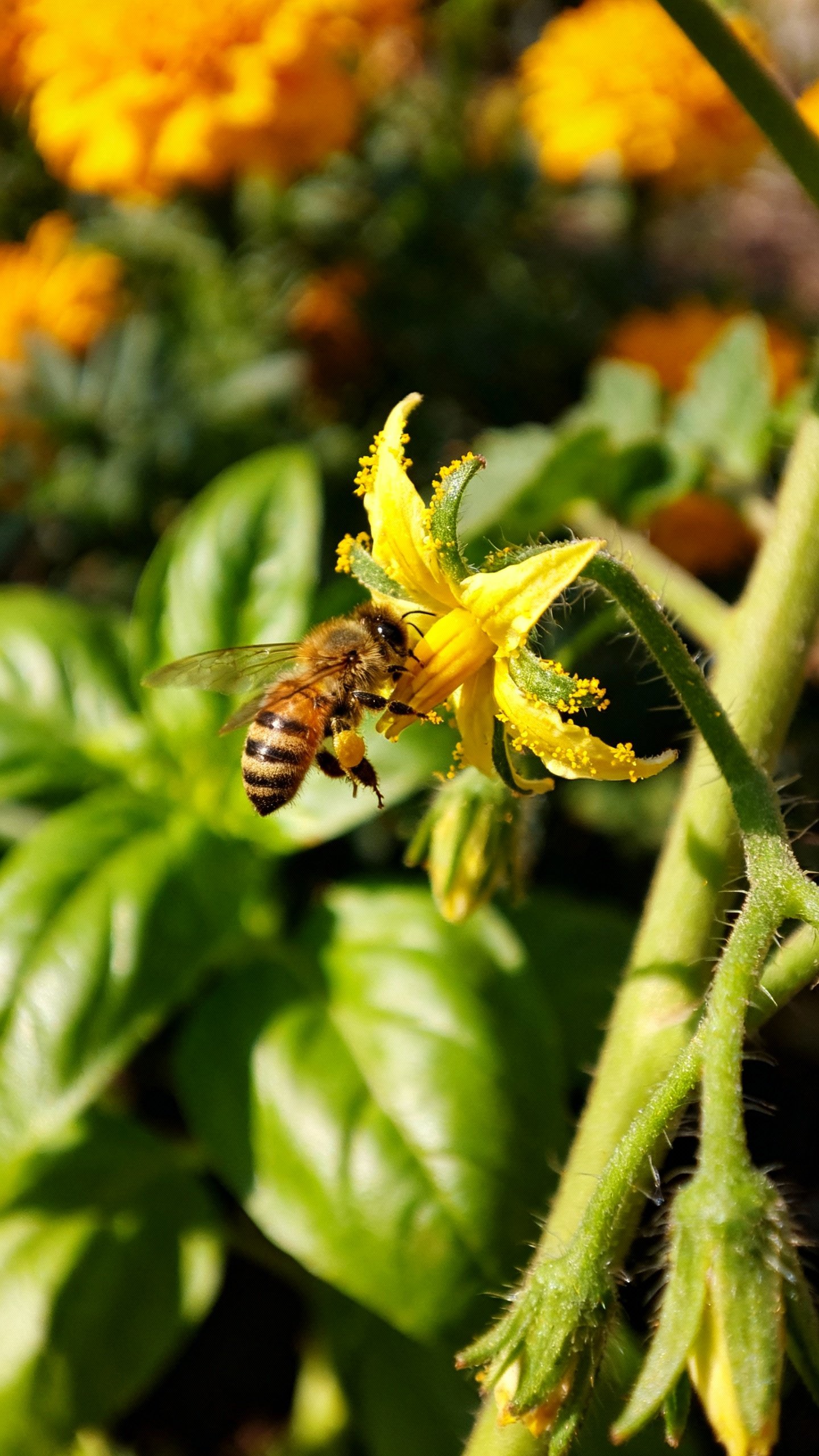
Tomatoes are self-pollinating, but a little nudge helps, especially in still air or very hot weather.
- Shake it: Tap the cage or gently shake the plant mid-morning to move pollen.
- Invite pollinators: Plant basil, marigold, or alyssum nearby. Bonus: the garden smells amazing.
- Heat stress: Above ~90°F, flowers may drop.
Provide afternoon shade cloth and water early in the day.
Blossom drop troubleshooting
– Too hot or too cold? Offer shade or row cover. – Over-fertilized with nitrogen? Leaves explode, flowers ghost you.
Ease up and switch formulas. – Watering swings? Mulch and a drip system will save your sanity.
Disease and Pest Defense Without Losing Your Mind
You’ll meet a few villains. You don’t need a hazmat suit; you need good habits.
- Airflow: Space plants and prune lower leaves.
Water at the base only.
- Rotate: Don’t plant tomatoes in the same spot as last year if possible. Solanaceae fatigue is real.
- Early blight/septoria: Brown spots on leaves? Remove affected leaves, mulch, and use a copper or bio-fungicide if it spreads.
- Tomato hornworms: Big green munchers.
Hand-pick or invite parasitic wasps by not squishing ones with white cocoons (nature is metal).
- Aphids/whiteflies: Blast with water, then use insecticidal soap or neem oil. Don’t spray in full sun.
Soil health = plant health
Add compost every season, and consider a mycorrhizal inoculant at planting. Healthy soil builds resilient plants, IMO.
Harvest Timing and Storage for Peak Flavor
Tomatoes taste best when they ripen in warmth on the vine.
But you still have options.
- Vine ripe: Pick when fully colored and slightly soft to the touch. Lift and twist gently.
- Breaker stage: When the first blush of color appears, you can bring them indoors to finish safely away from pests and cracking.
- Never refrigerate: Cold kills flavor. Store at room temp, stem side down, and eat within a few days.
Flavor hacks
– Water less (but don’t stress the plant) the week before harvest for more concentrated flavor. – Harvest in the morning when fruit is cool and firm. – For sauces, roast paste tomatoes to deepen sweetness and umami.
Next-Level Tricks Most People Skip
Want brag-worthy harvests with low extra effort?
Try these.
- Graft or clone your best plant: Save suckers in water to root a late-season plant. It’s free and fun.
- Epsom salts?: Only if a soil test shows magnesium deficiency. Otherwise, skip the internet folklore.
- Companion plants: Basil, marigold, chives, and nasturtiums help with pests and pollinators.
Also look cute. Priorities.
- Drip irrigation + timer: Consistency without daily effort. Your future self will thank you.
- Shade cloth: In hot climates, 30–40% shade during heat waves keeps flowers from dropping and fruit from sunscald.
FAQ
How often should I water my tomatoes?
Water deeply 2–3 times per week, depending on heat and soil.
Aim for consistent moisture, not soggy soil. Use mulch and, if possible, a drip line so the root zone stays steady. Your plants hate yo-yo watering as much as you do.
Why are my tomato leaves turning yellow?
Yellowing can mean several things: overwatering, nutrient imbalance, or early blight.
Check drainage first. Then feed with a balanced fertilizer if growth looks pale overall. If you see spotted leaves starting from the bottom, prune affected leaves and improve airflow.
What’s the best fertilizer for tomatoes?
Start with a balanced organic fertilizer at planting (something like 4-4-4).
When flower clusters appear, switch to a lower-nitrogen, higher phosphorus and potassium formula. Feed every 2–4 weeks lightly, and don’t overdo nitrogen or you’ll grow a jungle with zero tomatoes, FYI.
Can I grow tomatoes in partial shade?
You can, but manage expectations. With 4–5 hours of sun, you’ll get fewer, smaller fruits.
Choose cherry varieties, which handle shade better. Reflective surfaces (light-colored walls) and pruning for airflow help.
How do I prevent blossom end rot?
Keep soil moisture consistent, mulch generously, and avoid damaging roots. Most cases come from watering swings, not a lack of calcium in the soil.
If soil tests show low calcium, add lime or a cal-mag supplement before the season.
Do I need to prune cherry tomatoes?
You don’t have to, but a little pruning helps. Remove lower leaves and a few suckers to keep airflow and make harvesting easier. If the plant tries to become a hedge maze, thin it.
Your tomatoes will thank you (and so will your ankles).
Conclusion
Growing epic tomatoes isn’t complicated—you just need the right variety, solid soil, steady water, and some strategic snips. Support them early, mulch like a pro, and keep an eye on flowers during heat waves. Do that, and you’ll harvest bowls of sweet, juicy tomatoes that make store-bought taste like cardboard.
IMO, once you nail one season, you’ll never look back. Happy growing!