We’ve all been there: you fill your kettle, turn it on, and notice white flakes floating in the water, or a stubborn chalky ring clinging to the sides. Limescale makes your kettle look dirty, slows down boiling, and can even affect the taste of your tea or coffee.
The trick is understanding that limescale isn’t just dirt — it’s mineral buildup from hard water. With the right method and a little patience, almost any scale can be removed with vinegar.
This short video shows How to clean a kettle with vinegar fast:
Know Your Kettle First: Electric vs. Stovetop
Before you start, it’s important to know what type of kettle you’re dealing with, because the cleaning approach differs slightly:
Electric Kettles: Usually have internal heating elements and plastic or stainless steel interiors. Never submerge them in water, and avoid getting the base or cord wet.
Stovetop Kettles: Made of stainless steel or sometimes copper. They can handle boiling water and vinegar directly, but avoid abrasive scrubbers that can scratch the surface.
Pro Tip: Always check the manufacturer’s instructions if your kettle has a special coating. If it’s stainless steel or ceramic, vinegar is safe. If it has a plastic lining, make sure the vinegar-water solution is diluted.
What You’ll Need
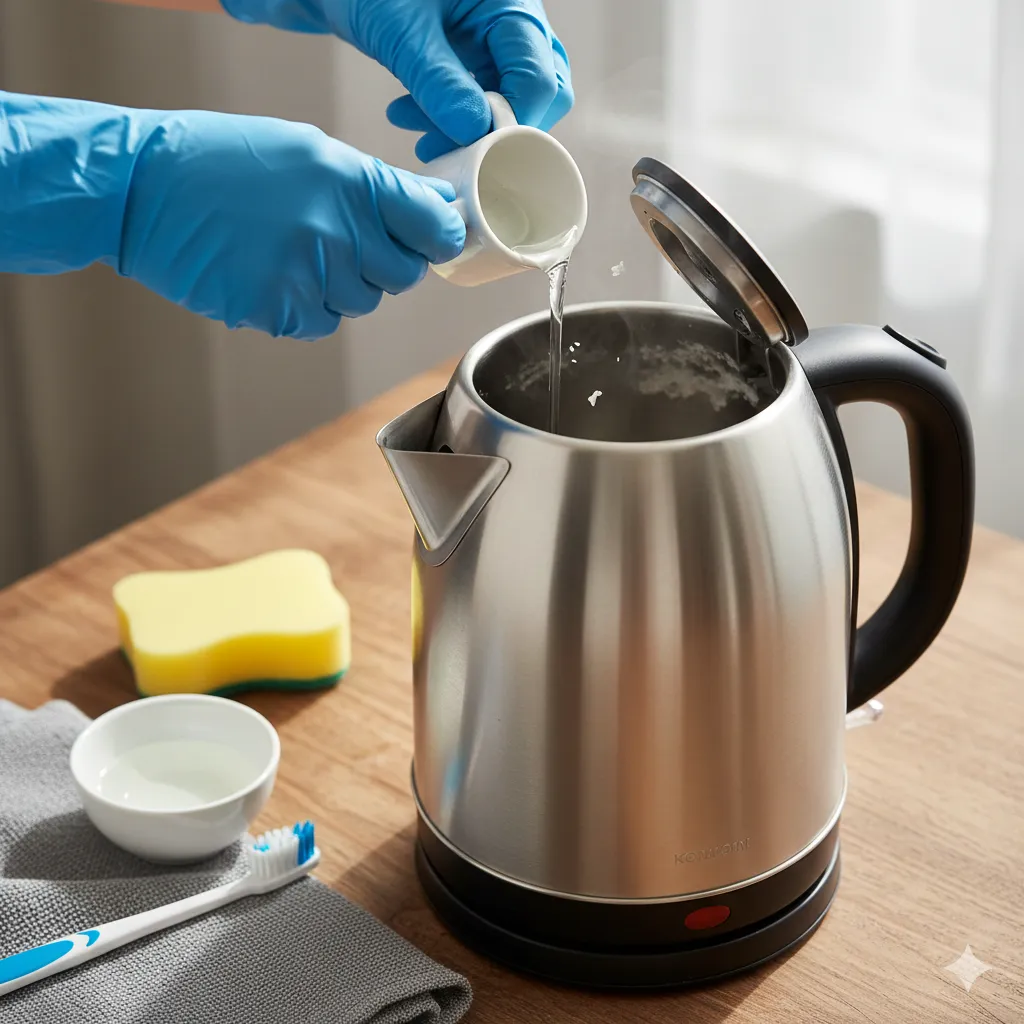
Gather these supplies before you start so you don’t have to hunt for them while the limescale sets:
- White distilled vinegar: This dissolves limescale safely and effectively.
- Water: To dilute the vinegar for boiling and rinsing.
- Soft sponge or cloth: For wiping the interior without scratching.
- Old toothbrush: Useful for cleaning the spout or small crevices.
- Clean towel: For drying the kettle after cleaning.
- Optional baking soda: Can help neutralize odors and remove stubborn residue.
Avoid using metal scrubbers or harsh chemicals — they can damage the kettle.
Step-by-Step: How to Clean a Kettle with Vinegar
Act Fast: If you see limescale starting to form, don’t wait. Early cleaning makes removal much easier.
Boil the Vinegar Solution: Mix equal parts white vinegar and water, pour into the kettle, and bring to a boil. Once boiled, let it sit for 20–30 minutes, or up to an hour for heavy buildup.
Empty and Rinse: Carefully pour out the solution. Rinse thoroughly with clean water two or three times to remove vinegar residue.
Wipe the Interior: Use a soft sponge or cloth to gently wipe away remaining scale. Most of it should come off easily without scrubbing. Repeat the boiling process if needed.
Specialized Methods for Different Kettles
How to Clean Electric Kettle with Vinegar
Because electric kettles have heating elements, you must unplug them first. Boil the vinegar-water solution inside, then rinse thoroughly. For removable filters, soak them separately in vinegar for 15–20 minutes and rinse.
How to Remove Stubborn Limescale
For kettles that haven’t been cleaned in months, soak in a vinegar-water solution for up to an hour. Use a soft sponge to wipe away remaining spots. For extremely thick scale, sprinkle a little baking soda over the area after the vinegar soak to lift stubborn deposits.
How to Clean Stovetop Kettles
Simply fill with a vinegar-water solution, bring to a boil, and let it sit. After soaking, pour out the solution and wipe with a sponge. Avoid abrasive scrubbing to prevent scratches.
Quick Fixes for Common Problems
| Problem | Potential Solution | Alternative Suggestion |
|---|---|---|
| White flakes in water | Boil vinegar-water solution and rinse thoroughly | Repeat soak for heavy buildup |
| Kettle smells after cleaning | Rinse thoroughly and boil fresh water | Add a small amount of baking soda for odor removal |
| Boiling takes longer | Scale buildup on heating element | Clean monthly with vinegar |
| Chalky ring inside | Stubborn limescale | Repeat vinegar soak for longer period |
Tips to Prevent Limescale and Stains
Empty After Each Use: Don’t leave water sitting in the kettle overnight.
Use Filtered Water: Soft or filtered water reduces mineral deposits.
Clean Regularly: A monthly vinegar soak prevents heavy buildup.
Dry the Kettle: Wipe the interior and spout dry after cleaning to prevent water spots.
Wipe Exterior Often: Cleaning the outside and spout regularly keeps the kettle looking fresh.
FAQ
Does vinegar damage a kettle?
No, vinegar is safe for stainless steel and most electric kettles when diluted with water.
Can I clean without boiling?
Boiling speeds up descaling, but vinegar will still work at room temperature; it just takes longer.
Is it safe to drink water after cleaning?
Yes, as long as you rinse thoroughly and boil fresh water once before use.
What if limescale keeps returning?
Hard water causes ongoing buildup. Monthly cleaning prevents thick deposits from forming.
Conclusion
The secret to keeping your kettle spotless isn’t fancy chemicals or scrubbing. It’s simple: boil, soak, rinse, and wipe. Use vinegar regularly, follow these steps, and your kettle will stay clean, odor-free, and ready for perfect tea or coffee every time.