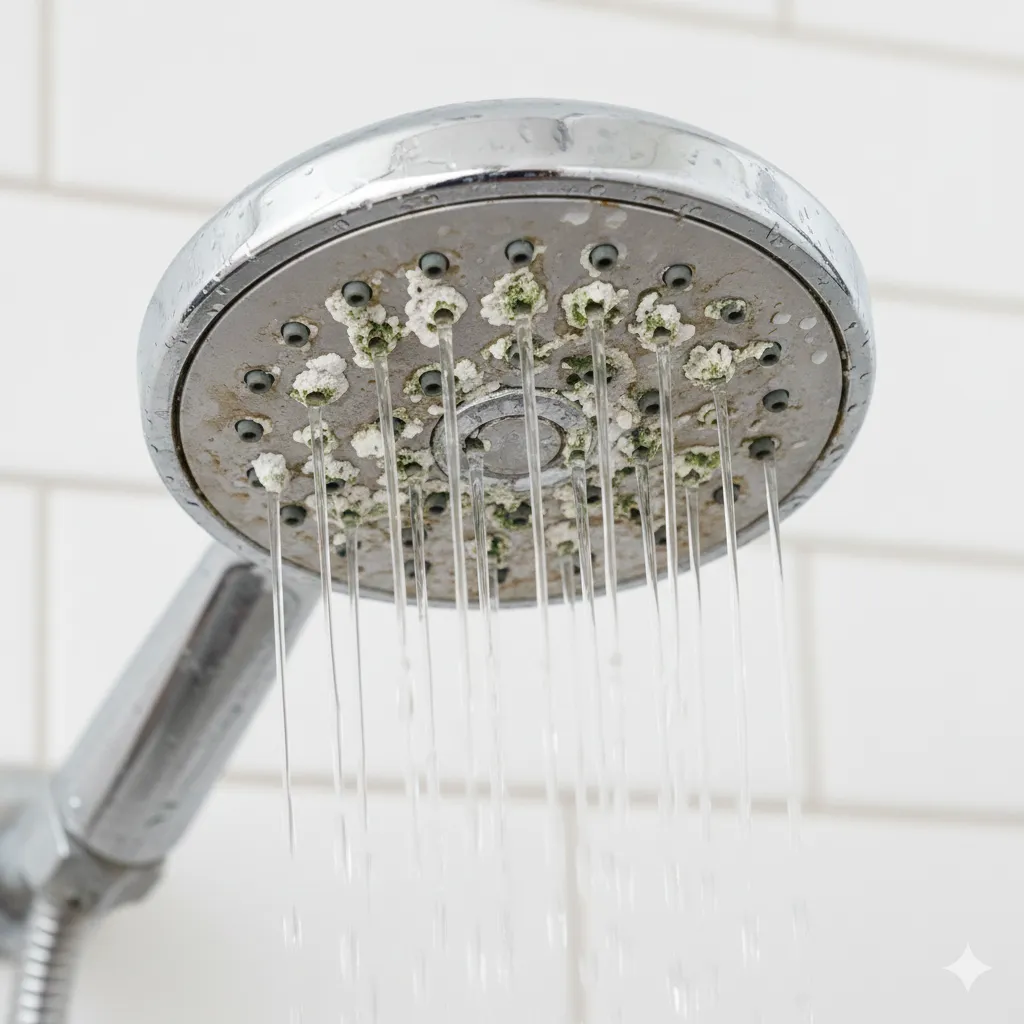
Your shower used to feel like a spa. Now it’s more like a light drizzle that’s barely trying. Don’t blame your water pressure yet—blame your shower head.
Mineral buildup and gunk choke those tiny nozzles until your shower wheezes. The fix? Clean it the right way and bring that glorious spray back.
Watch this video to see how to clean a shower head with vinegar:
Why Your Shower Head Loses Pressure
Minerals like calcium and lime from hard water clog the small holes in your shower head.
It doesn’t happen overnight—it builds up slowly until you suddenly notice the pressure feels meh. If you also see water spraying sideways or your spray pattern looks patchy, that’s another clue. The good news: you can clean it without buying anything fancy, and you’ll see a difference fast.
What You’ll Need For Cleaning
You probably own everything already:
- White vinegar (the hero)
- Baking soda (optional, for extra oomph)
- Plastic bag and rubber band or twist tie
- Old toothbrush or soft brush
- Needle or toothpick (for stubborn nozzles)
- Adjustable wrench and plumber’s tape (if removing the head)
- Microfiber cloth for polishing
FYI: Don’t use harsh chemicals like drain cleaners.
They can damage metal finishes and internal parts.
The Quick Clean: No Removal Required
Short on time? Do this first. It solves most problems and doesn’t require tools.
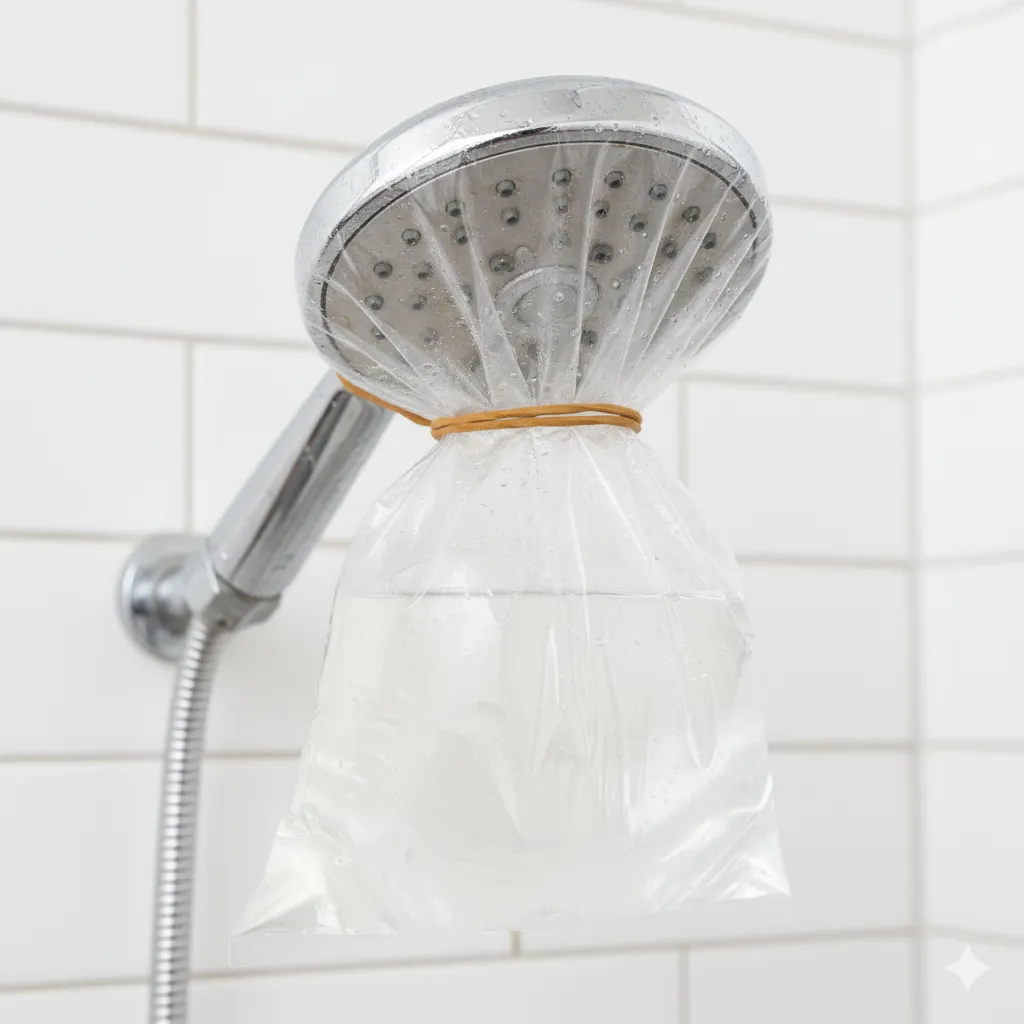
- Fill a plastic bag halfway with white vinegar. Add a spoonful of baking soda if you want fizz to help loosen gunk.
It’ll foam—that’s normal.
- Fit the bag over the shower head so the nozzles sit fully submerged.
- Secure with a rubber band. Make sure it won’t slip.
- Soak for 1–2 hours. If your water is very hard, leave it overnight. But don’t exceed 12 hours or you risk dulling some finishes.
- Remove the bag and run hot water for a minute to flush out loosened debris.
- Scrub the nozzles with a toothbrush. Many modern shower heads have rubber nozzles—rub them with your thumb to break up deposits.
Boom—often that’s enough.
If water still sprays weird or pressure still stinks, go deeper.
The Deep Clean: Remove and Descale
If you want a “like new” reset, take the shower head off. It’s easier than it looks.
- Turn off the water at the tap (no need to shut the main).
- Cover the shower arm with a cloth and use an adjustable wrench to loosen the nut. Go slow.
Don’t scratch the finish—your future self will thank you.
- Check the screen filter where the head connects. Remove it gently with tweezers. Rinse the screen under running water to clear sand or rust particles.
- Soak the shower head in a bowl of vinegar for 1–3 hours.
For heavy buildup, soak overnight. You can add a tablespoon of baking soda for extra bite.
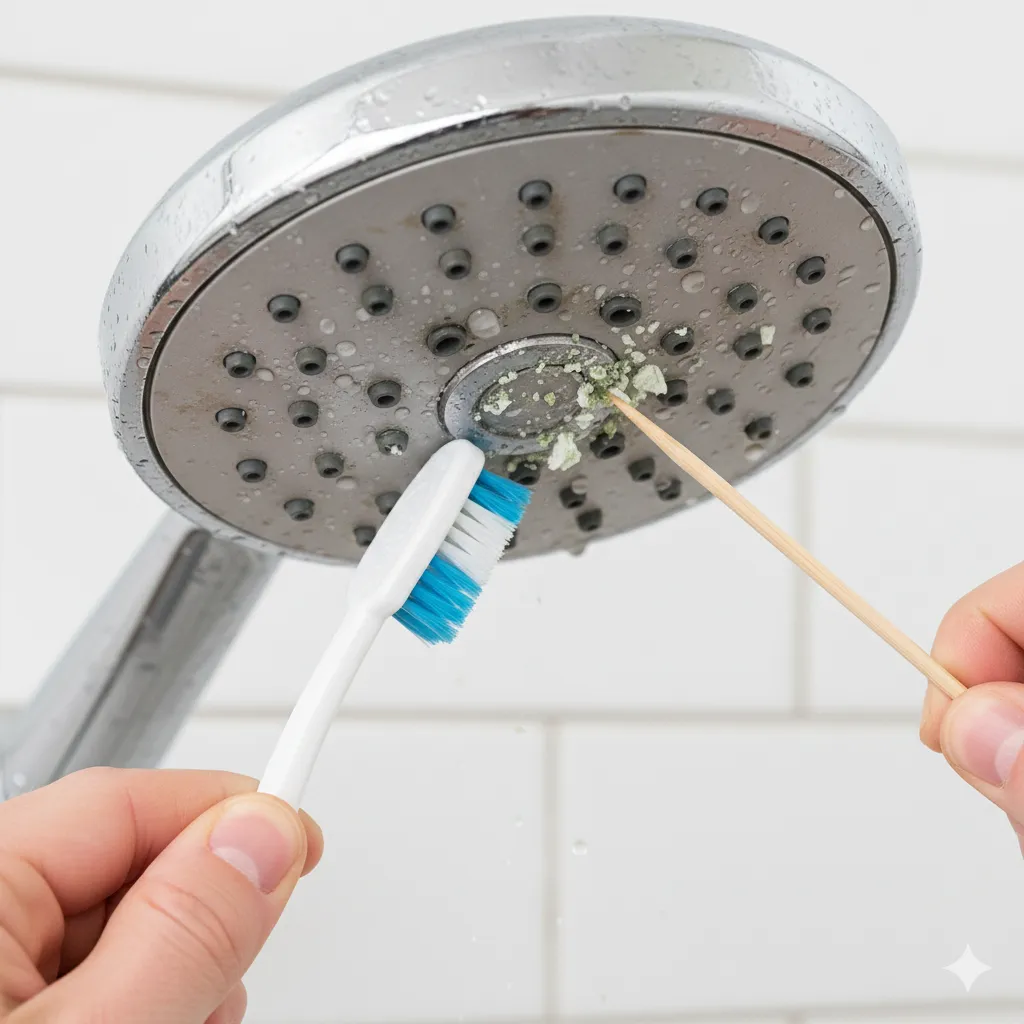
- Scrub the faceplate and nozzles with a toothbrush. Use a needle or toothpick to poke out stubborn holes—but be gentle.
Don’t enlarge them.
- Rinse everything thoroughly with warm water.
- Re-wrap the shower arm threads with plumber’s tape (2–3 wraps, clockwise), then reattach the head and hand-tighten. Finish with a quarter turn using the wrench.
- Run hot water for a minute to flush any leftover residue.
What About Handheld Shower Heads?
Same process. Just detach the hose from both ends, rinse it, and soak the head separately.
If pressure still lags, check the hose for kinks or internal collapse. Hoses wear out—cheap fix, big difference.
Find and Remove Hidden Flow Restrictors
Yes, many shower heads include a flow restrictor to save water. Eco-friendly?
Sure. But if your home pressure is low already, it can feel like a misting station.
- Look for a small plastic disk inside the connection end of the shower head (often green or blue).
- Use a small screwdriver or needle-nose pliers to gently pry it out.
Legal note: Some places require restrictors for water-saving standards. Removing it might violate local rules or void warranties.
IMO, prioritize a clean head first—many folks get great pressure back without touching the restrictor.
When Vinegar Isn’t Enough
Vinegar handles most mineral scale, but sometimes you need reinforcements.
- Citrus acid: Mix 1 tablespoon citric acid powder into 1 cup warm water. Soak 1–2 hours. Works great and smells better.
- Descaling solutions: Look for products labeled for limescale.
Follow directions and avoid soaking too long to protect finishes.
- Mechanical polish: For metal faceplates, a non-scratch pad can lift stubborn crust—light pressure only.
- If vinegar still isn’t cutting it, a commercial limescale remover like CLR can help with heavy mineral buildup. Use a product labeled safe for chrome and shower fixtures, follow the directions closely, and don’t over-soak. Rinse thoroughly afterward to protect finishes and rubber seals.
Avoid These Mistakes
- No bleach. It can corrode and wreck rubber seals.
- No boiling water on plastic parts—they warp.
- Don’t overtighten the connection when reinstalling. Tight is right; gorilla-tight is leaks later.
Keep That Pressure Perfect
Don’t wait until you’re back to drizzle mode.
A tiny bit of maintenance keeps things glorious.
- Monthly mini-clean: Rub rubber nozzles with your thumb while the water runs to break up film.
- Quarterly bag soak: 30–60 minutes in vinegar if you have hard water.
- Install a sediment or whole-home filter if your water brings sand or rust. That screen filter can only do so much.
- Check water heater temperature (120–125°F). Too high can encourage mineral precipitation.
FYI: If your pressure still stinks after cleaning, the problem might be beyond the shower head—think plumbing, shutoff valves, or your pressure regulator.
What If Pressure Still Feels Weak?
You cleaned like a pro and the spray still disappoints?
Time to troubleshoot.
- Check other fixtures: If sinks and other showers also feel weak, you might have low supply pressure or a failing pressure regulator.
- Inspect the shutoff valves: Make sure the valve on the shower line (if present) is fully open.
- Replace the hose on handheld units. Internal collapse is common and sneaky.
- Upgrade the shower head: Some models perform better at low pressure by optimizing spray design. Performance varies wildly—reviews help.
IMO, start with cleaning and the screen filter.
That fixes 80% of “bad pressure” issues.
FAQs
How often should I clean my shower head?
If you have hard water, do a quick clean monthly and a deeper soak every 3–4 months. Softer water? Twice a year usually does it.
If the spray pattern changes or looks uneven, clean sooner.
Can vinegar damage my shower head?
Not if you use it smartly. Limit soaks to a few hours for plated finishes and rinse thoroughly. Avoid soaking brass or gold finishes overnight.
When in doubt, test a small area first.
What’s the fastest way to fix bad pressure before guests arrive?
Do the bag soak with vinegar for an hour, scrub the nozzles, and run hot water. It’s the best balance of speed and results. If you’ve got 5 minutes only, rub the rubber nozzles and poke clogged holes with a toothpick—temporary, but it helps.
Should I remove the flow restrictor?
Try cleaning first.
If your home has low pressure and the shower still feels weak, removing it can help—but check local regulations and your warranty. Some newer “low-flow” heads still offer great pressure, so upgrading might be a better move.
Why does my shower spray sideways?
Clogged or partially blocked nozzles redirect water. After soaking, use a toothpick to clear each hole and scrub the faceplate.
Also check the screen filter—sediment buildup messes with flow paths.
Is a water softener worth it?
If you battle scale on fixtures and appliances, yes. A softener reduces mineral buildup everywhere—shower heads, kettles, even your water heater. It’s an investment, but IMO it pays off in less cleaning and longer appliance life.
Conclusion
You don’t need a new shower or a plumbing overhaul—just a little vinegar, a bag, and ten minutes of effort.
Clean the head, clear the filter, and flush it hot. If needed, go deeper with a removal and soak, then keep up with quick maintenance. Do that, and your shower goes from “meh” to “wow” every time you turn the knob.