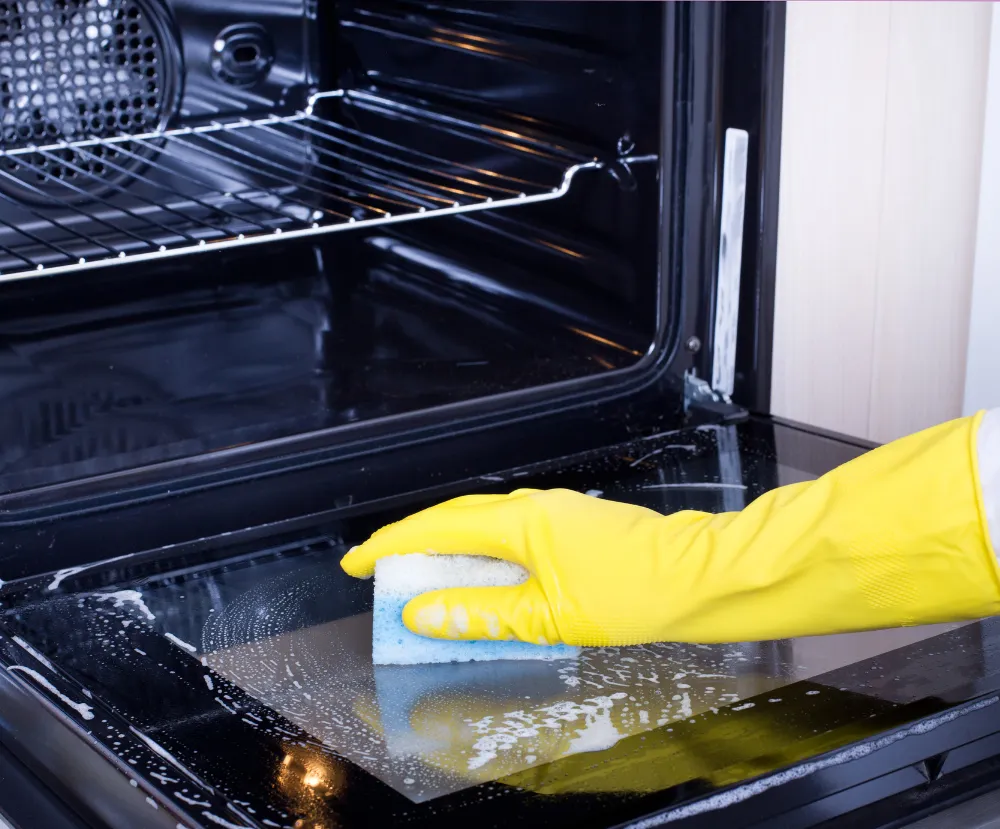
There is a particular kind of dread that comes with opening an oven door and seeing the blackened, grease-caked interior staring back at you. Most people’s response is to reach for a can of commercial oven cleaner — and then immediately recoil from the fumes, the warnings on the label, and the vague anxiety about spraying something that corrosive near surfaces where food is prepared.
The good news is that you don’t need any of it. The same kitchen pantry ingredients that make your baking rise and your salad dressing tangy are genuinely effective at dissolving baked-on grease, lifting carbon deposits, and leaving your oven clean enough to pass any inspection — without a single harsh chemical, without dangerous fumes, and without destroying your lungs or your weekend in the process.
The catch — and there is one — is that natural cleaning methods require time to work. Where commercial cleaners use caustic chemistry to dissolve grease in minutes, baking soda and vinegar use gentler chemistry that needs hours to penetrate and loosen baked-on residue. The good news is that most of that time is completely hands-off. You apply the paste before bed, go to sleep, and wake up to an oven that wipes clean in minutes. That is not an exaggeration — it is genuinely how the method works when done correctly.
Here’s the Real Reason Your Oven Gets So Dirty So Fast
Oven grime isn’t just spilled food. The brown and black residue that builds up on oven surfaces is a combination of carbonized food particles, polymerized cooking oils, and steam-baked grease splatter — all of which have been repeatedly heated to high temperatures until they bond chemically with the oven surface. This is why a simple wipe with a damp cloth does nothing. The residue isn’t just sitting on the surface. It has essentially baked itself onto it.
Understanding this changes how you approach cleaning. The goal of any effective oven cleaning method — chemical or natural — is to break those bonds through either a chemical reaction or prolonged moisture exposure. Baking soda works through mild alkalinity, which saponifies (breaks down) grease. Vinegar works through acidity, which reacts with and loosens alkaline mineral deposits and helps lift the baking soda residue. Together, they create a cleaning system that is surprisingly effective given how gentle and inexpensive they are.
Don’t Ignore These Signs That Your Oven Needs Cleaning Now
Most people wait far too long between oven cleanings, usually until the situation has become noticeably worse. These are the signs that your oven needs attention sooner rather than later.
Smoke during preheating is one of the clearest signs. If your oven smokes before you’ve put anything in it, there is built-up grease or food residue being burned off every time you use it. Beyond being unpleasant, this can impart a burnt, acrid flavor to whatever you’re cooking.
Uneven cooking or hot spots can sometimes be caused by heavy carbon buildup on the oven floor or around the heating elements, which affects heat distribution.
A persistent burnt smell even after the oven has been empty and running for a while means carbonized residue is present and actively burning every time you cook.
Visible dark pooling on the oven floor indicates spilled food or grease that has carbonized over multiple uses and is now baked onto the surface in layers.
What You’ll Need
Every ingredient and tool on this list is either already in your kitchen or available at any supermarket for very little money.
Cleaning Agents:
- Baking soda (you’ll need about half a cup for a standard oven — buy a large box)
- White vinegar in a spray bottle
- Dish soap (a few drops added to the baking soda paste improves its cleaning power)
- Lemon juice or two whole lemons (for the steam-cleaning method or as a finishing rinse)
- Table salt (useful as a mild abrasive for stubborn spots)
- Cream of tartar (optional — makes an effective paste for stainless steel and chrome oven racks)
Tools:
- Rubber gloves
- A medium mixing bowl
- A spatula or old butter knife for applying and scraping paste
- Several microfiber cloths or old rags
- A plastic scraper or an old credit card for lifting loosened residue
- A sponge with a non-scratch scrubbing surface
- A small brush or old toothbrush for corners and tight areas around heating elements
- A spray bottle filled with white vinegar
- A large bin bag or old towels for soaking oven racks
You’re Probably Doing This Wrong: The Timing Mistake That Makes Natural Cleaning Ineffective
The most common reason people try natural oven cleaning methods and conclude they don’t work is impatience. They apply the baking soda paste, wait 30 minutes, and then find it only partially works — which leads them to scrub harder than necessary and conclude the whole approach is inferior to chemicals.
The chemistry of baking soda cleaning requires a minimum of eight hours to work properly on heavily soiled ovens. Twelve hours is better. Applying the paste before bed and cleaning in the morning is not just a convenience tip — it is the actual mechanism that makes the method effective. The extended contact time allows the alkaline paste to fully penetrate and break down the polymerized grease layers that have built up over months of cooking.
If your oven is only lightly soiled, a two to four hour contact time may be sufficient. But for ovens that haven’t been cleaned in six months or more, overnight is the right approach and patience is a genuine ingredient in the process.
Step by Step: How to Clean an Oven Without Chemicals
Work through these steps in order. The overnight method produces the best results with the least physical effort.
- Step 1 — Remove everything from the oven and start with the racks. Take out the oven racks, the thermometer if you have one, and any other removable parts including the oven door if your model allows for easy removal. Set the racks aside — they will be cleaned separately. Removing everything before you start gives you unobstructed access to every surface and prevents the paste from getting into areas that are difficult to reach later.
- Step 2 — Make your baking soda paste. In a medium bowl, combine half a cup of baking soda with two to three tablespoons of water and a few drops of dish soap. Stir until you get a spreadable paste with the consistency of thick peanut butter. It should be thick enough to cling to vertical surfaces without immediately sliding down. If it’s too runny, add more baking soda. If it’s too thick and crumbly, add water a teaspoon at a time. Some people add a tablespoon of dish soap to improve the paste’s ability to cut through grease — this is worth doing for heavily soiled ovens.
- Step 3 — Apply the paste to every interior surface. Put on your rubber gloves and use your hands or a spatula to spread the paste generously across the entire interior of the oven — the back wall, side walls, the door interior, and the oven floor. Pay particular attention to the areas with the heaviest buildup, applying a thicker layer there. Avoid coating the heating elements directly, but do get as close to them as you can on the surrounding surfaces. The paste will turn brown as it sits overnight — this is the grease and residue being drawn into it, which is exactly what you want to see.
- Step 4 — Soak the oven racks separately. Fill your bathtub or a large utility sink with hot water and add half a cup of dish soap and half a cup of baking soda. Submerge the racks completely and leave them to soak overnight alongside the oven paste application. For particularly grimy racks, lay them on old towels, spray generously with undiluted white vinegar, sprinkle with baking soda, and wrap the towels around them to keep the reaction active overnight.
- Step 5 — Leave everything overnight (minimum 8–12 hours). This is the step where the chemistry does the work for you. Go to sleep. The baking soda paste is actively breaking down grease bonds while you rest. Resist the urge to check on it or wipe prematurely.
- Step 6 — Wipe out the paste and loosened residue in the morning. Using a damp microfiber cloth, begin wiping the paste away from the oven interior. Work from the top of the oven downward so that dislodged residue falls to the floor of the oven rather than onto areas you’ve already cleaned. Use your plastic scraper or an old credit card to lift any thick deposits that haven’t fully loosened. For stubborn spots in corners, use an old toothbrush with a small amount of fresh baking soda paste and scrub in small circular motions.
- Step 7 — Spray with white vinegar to lift residue and activate a final cleaning reaction. Once you’ve removed most of the baking soda paste, fill a spray bottle with undiluted white vinegar and spray the entire interior of the oven. The vinegar will react with any remaining baking soda residue, producing a gentle fizzing action that lifts the last traces of grease and dissolved grime. Wipe away with a clean damp cloth. Repeat the spray-and-wipe cycle until no white baking soda residue remains and the surfaces look clean.
- Step 8 — Clean the oven door glass. The glass door often accumulates a hazy film of baked-on grease that is separate from the rest of the oven interior. Apply a fresh small amount of baking soda paste directly to the glass, let it sit for 20–30 minutes, and then wipe away with a damp cloth. For the brown streaks that develop between the layers of double-pane oven doors, check your oven manual — many modern ovens allow the door to be partially disassembled for cleaning between the glass panels.
- Step 9 — Clean and replace the oven racks. Return to your soaked oven racks. Most of the grease should wipe away easily after the overnight soak. Use a non-scratch scrubbing sponge for any remaining spots and rinse thoroughly under running water. Dry completely before returning them to the oven — wet racks placed in a warm oven can cause surface rust on the rack coating over time.
- Step 10 — Run the oven briefly before cooking. Once everything is reassembled and clean, run the empty oven at 200°C (400°F) for 15–20 minutes before your next cooking session. This burns off any remaining traces of cleaning residue and ensures nothing transfers to your food. The oven may produce a faint smell during this run — that is normal and will clear within minutes.
The Lemon Steam Method: A Faster Alternative for Lightly Soiled Ovens
If your oven isn’t heavily soiled and you need a quicker clean, the lemon steam method is an excellent option that takes about an hour from start to finish.
Fill an oven-safe bowl or baking dish with water and squeeze the juice of two lemons into it, dropping the squeezed lemon halves into the water as well. Place the dish in the oven and heat to 120°C (250°F) for 30–40 minutes. The steam fills the oven cavity and the lemon’s natural acidity helps loosen grease deposits from the walls, floor, and door.
After 30–40 minutes, turn the oven off and allow it to cool until it’s warm but safe to touch. Open the door and wipe down every surface with a damp cloth — the loosened grime will come away far more easily than it would on a cold, untreated surface. Finish with a vinegar spray and a final wipe for a streak-free result.
This method works beautifully as a monthly maintenance clean to prevent heavy buildup from forming in the first place.
How to Clean Specific Oven Parts Naturally
Oven knobs and exterior: Remove knobs if they pull off easily and soak in warm soapy water for 10 minutes. Wipe the exterior panels with a cloth dampened with undiluted white vinegar. For stainless steel exteriors, wipe in the direction of the grain to avoid scratching.
Oven door seal/gasket: The rubber seal around the oven door collects grease and crumbs but is sensitive to harsh scrubbing. Wipe it gently with a damp cloth dipped in a mild baking soda solution. Never scrub the gasket aggressively or use anything abrasive — a damaged seal affects the oven’s heat retention and efficiency.
Heating elements: Never apply paste or liquid directly to electric heating elements. If they have residue on them, simply run the oven at high heat for 10–15 minutes — the elements self-clean through the heat. Any remaining deposits will burn off and can be swept away once cool.
Oven floor with a removable panel: Many modern ovens have a removable floor panel that lifts out for cleaning. If yours does, remove it and clean it in the sink with hot soapy water and a baking soda scrub. This makes reaching the oven floor underneath it far easier.
Quick Fixes for Common Oven Cleaning Problems
| Problem | Potential Solution | Alternative Suggestion |
|---|---|---|
| Baked-on grease won’t budge after overnight paste | Apply a second layer of paste and leave for another 4–6 hours before wiping | Make a paste using baking soda, dish soap, and a teaspoon of salt for added mild abrasion |
| White baking soda residue remains after wiping | Spray generously with undiluted white vinegar and wipe — the fizzing reaction lifts residue effectively | Wipe with a cloth dampened in warm water with a few drops of dish soap |
| Oven racks still greasy after overnight soak | Scrub with a paste of cream of tartar and water, which is particularly effective on metal surfaces | Place racks on old towels outdoors, spray with oven cleaner as a last resort if natural methods are insufficient |
| Brown streaks between oven door glass panels | Check the oven manual — many models allow partial door disassembly for between-glass cleaning | Slide a thin flexible cleaning tool or cloth wrapped around a ruler through the door vents |
| Burnt smell persists after cleaning | Run the empty oven at high heat for 20–30 minutes to burn off any remaining residue | Check that all baking soda paste has been fully removed — residue left behind can cause smell |
| Oven glass looks hazy or streaky after cleaning | Polish with a paste of baking soda and lemon juice, then wipe with a clean damp cloth | Buff with a dry microfiber cloth after cleaning for a streak-free finish |
| Grease has dripped onto the oven floor and carbonized | Apply a thick layer of paste, cover with a damp cloth to keep it moist, and leave for 12+ hours | Use a plastic scraper to lift the bulk of the carbonized layer before applying paste |
Stop Doing This: Habits That Make Oven Cleaning Harder Than It Needs to Be
Using the self-cleaning cycle as your primary cleaning method. The self-cleaning function heats the oven to extreme temperatures (around 500°C / 900°F) to incinerate residue. While it sounds convenient, it produces significant smoke and fumes, can damage oven door seals and control panels over time, and uses enormous amounts of energy. It is not a substitute for regular cleaning and should be used sparingly if at all.
Wiping spills with a wet cloth immediately after they happen in a hot oven. Putting a wet cloth into a hot oven is dangerous. Instead, allow the oven to cool completely, then address fresh spills before they have a chance to carbonize. A fresh spill cleaned from a cool oven takes 30 seconds. The same spill cleaned after it has been baked on through three more uses takes an hour.
Skipping the drying step after cleaning the racks. Returning damp racks to the oven and heating it immediately can cause moisture-related surface rust on the rack coating. Always dry racks thoroughly with a clean towel before reinserting them.
Applying baking soda paste to a warm or hot oven. The paste needs to sit in contact with cool surfaces for hours to work effectively. Applied to a warm surface, it dries out quickly and loses contact with the residue. Always start with a completely cool oven.
Cleaning only when the situation becomes obvious. The most time-efficient approach to oven cleaning is frequent, light maintenance rather than infrequent, heavy restoration. A quick wipe-down after every few uses — before residue has a chance to carbonize — keeps the oven in a state where a full deep clean is rarely necessary.
FAQ
How often should I clean my oven? A light wipe-down after every few uses prevents buildup from accumulating. A thorough deep clean using the overnight baking soda method should be done every three to six months depending on how frequently you cook and what you cook. High-fat cooking like roasting meats produces significantly more splatter and requires more frequent attention.
Does baking soda damage oven surfaces? No — baking soda is a mild alkali that is safe for all standard oven interior surfaces including enamel, glass, and stainless steel. It will not scratch or etch surfaces when used as directed. The only surfaces to avoid applying it to directly are rubber seals and heating elements.
Can I use apple cider vinegar instead of white vinegar? White vinegar is preferable because it is colorless and odorless once dry. Apple cider vinegar will work chemically but its color can leave a faint tint on light surfaces and its stronger smell takes longer to dissipate in an enclosed oven space.
Is it safe to cook immediately after cleaning with baking soda and vinegar? Yes, once you have wiped away all the paste residue and done a final rinse with a clean damp cloth. Running the oven empty for 15–20 minutes at cooking temperature before your first meal provides additional assurance that any trace residue has been cleared.
Conclusion
Cleaning an oven without chemicals is genuinely one of those cases where the natural method is not just a reasonable alternative to the conventional approach — in many ways it is actually better. It costs almost nothing, produces no fumes, requires no protective equipment beyond rubber gloves, and leaves behind no chemical residue near your food preparation surfaces. The only thing it requires that a spray can doesn’t is time — and most of that time, you’re asleep. Apply the paste tonight, wake up tomorrow, spend 20 minutes wiping, and discover that the most intimidating cleaning job in the kitchen is also one of the most satisfying when it’s done.
Enjoyed this project? Get even more DIY ideas that save (and make) you money.
Join our free newsletter for profitable DIY projects, clever cleaning hacks, home ideas, and creative crafts delivered straight to your inbox.
✓ Free forever • No spam • Unsubscribe anytime