Hardwood floors give a home warmth and elegance, but keeping them clean can feel like a never-ending chore. Traditional cleaners can leave residue or damage the wood over time. The good news? Vinegar offers a natural, safe, and effective way to clean your hardwood floors without harsh chemicals.
In this guide, we’ll show you how to clean hardwood floors with vinegar, how to use it safely for different types of finishes, and quick tips to maintain a shiny, spotless surface.
Why Vinegar Works on Hardwood Floors
Vinegar is a natural acid that gently dissolves dirt, grime, and even mild stains without stripping your floor’s finish.
- Removes grease and grime: Cuts through oily residue left by shoes and spills.
- Eliminates odors: Neutralizes smells from pets, food, or mildew.
- Chemical-free cleaning: Safe for kids, pets, and anyone sensitive to harsh chemicals.
Stop doing this: using undiluted vinegar or soaking floors with water, which can damage hardwood. Proper dilution is the key.
What You’ll Need
Before you start, gather all supplies so the process is fast and stress-free:
- White distilled vinegar
- Warm water
- Bucket
- Mop (microfiber or sponge)
- Soft cloths or microfiber towels
- Spray bottle (optional for spot cleaning)
- Rubber gloves (optional)
- Baking soda (optional for stubborn spots)
Step by Step: How to Clean Hardwood Floors with Vinegar
Follow these steps to clean your floors effectively:
- Remove debris first: Sweep or dust your floors with a broom or microfiber duster to get rid of dust and pet hair.
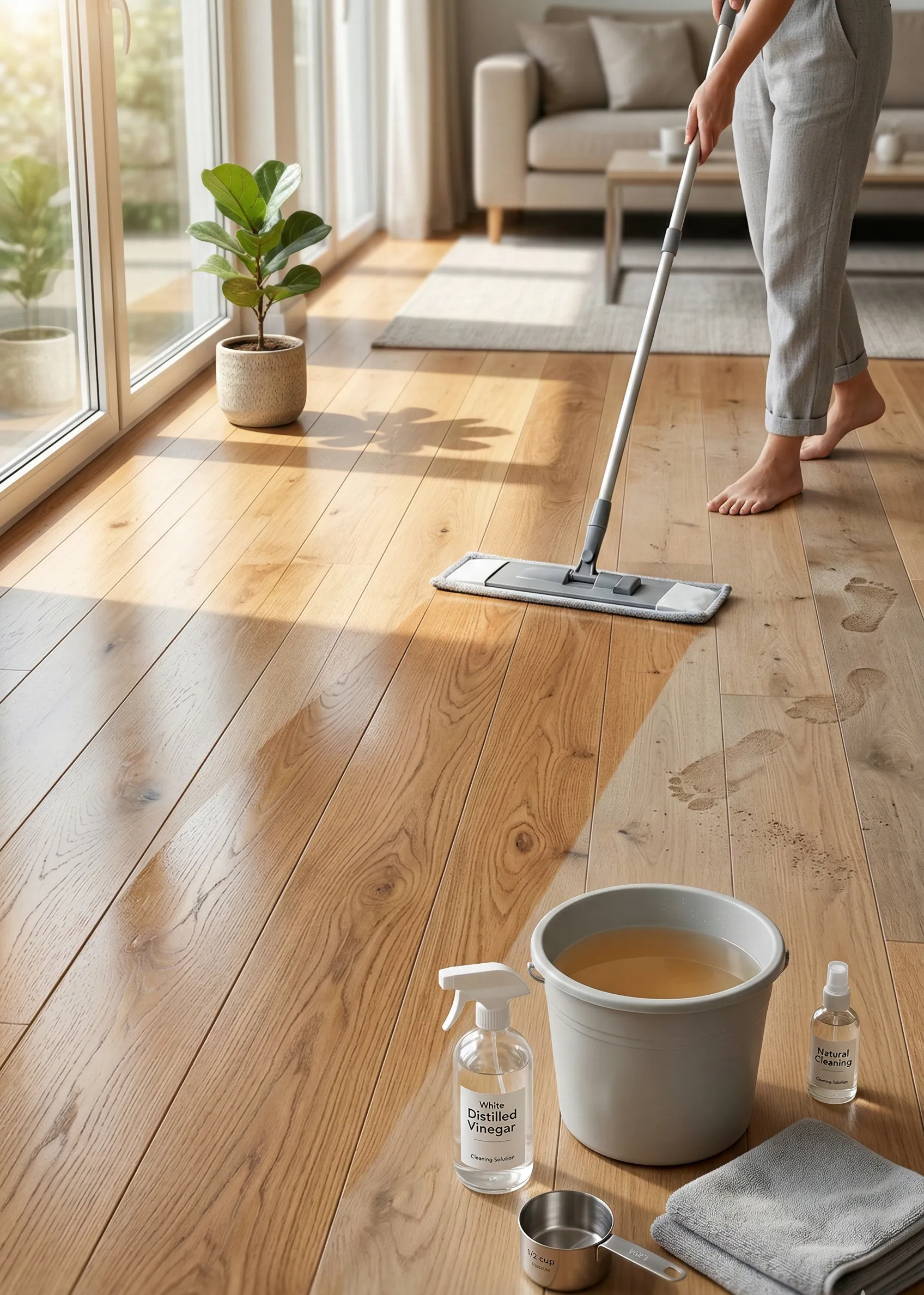
- Mix your cleaning solution: Combine ½ cup of white vinegar with 1 gallon of warm water. For stronger cleaning, you can increase vinegar to ¾ cup, but never use it undiluted.
- Dampen the mop: Dip a microfiber mop into the solution, then wring it out well. The mop should be damp, not soaking wet. Too much water can warp wood.
- Mop the floor in sections: Work in small areas, moving with the grain of the wood. This ensures even cleaning and prevents streaks.
- Spot clean stubborn areas: For sticky spills or stains, spray a small amount of the vinegar solution directly on the spot and wipe with a soft cloth. Baking soda can be sprinkled lightly and wiped for extra scrubbing power.
- Rinse with clean water (optional): For extra safety, you can mop lightly with clean water afterward to remove any vinegar residue.
- Dry immediately: Use microfiber towels or cloths to dry the floor completely. Never let water sit on hardwood.
How to Clean Different Types of Hardwood Floors
- Sealed hardwood: Safe for vinegar cleaning as long as it’s diluted and the mop is only damp.
- Unsealed or waxed floors: Vinegar may dull the finish. Use a mild dish soap solution or a specialized wood cleaner instead.
- Engineered wood: Works with vinegar, but avoid soaking or excessive scrubbing.
Always test in a small, hidden area first if you’re unsure of your floor’s finish.
Quick Fixes for Common Problems
| Problem | Potential Solution | Alternative Suggestion |
|---|---|---|
| Floors streak after mopping | Mop with microfiber cloth dampened in plain water | Buff dry with a soft cloth |
| Stubborn stains remain | Apply vinegar solution directly, let sit a few minutes, wipe | Sprinkle baking soda and scrub lightly with damp cloth |
| Floor feels sticky | Rinse lightly with clean water and dry | Use diluted dish soap in water as alternative |
| Vinegar smell lingers | Ventilate the room and allow floor to air dry | Add a few drops of essential oil to cleaning solution |
| Pet urine or odors | Mix vinegar and water, mop thoroughly | Sprinkle baking soda, wait 15 min, then sweep and wipe |
Tips to Keep Hardwood Floors Clean Naturally
- Sweep or dust daily to prevent buildup.
- Place mats at entrances to reduce tracked-in dirt.
- Clean spills immediately to prevent staining.
- Use felt pads under furniture legs to avoid scratches.
- Avoid using steam mops or soaking the floor with water.
FAQ
Can vinegar damage hardwood floors?
If used undiluted or left sitting, vinegar can dull or damage the finish. Always dilute and use a damp mop, not a wet one.
How often should I clean hardwood floors with vinegar?
Weekly or as needed for high-traffic areas. Dust or sweep in between for daily maintenance.
Can I add essential oils to the vinegar solution?
Yes! A few drops of lemon, lavender, or tea tree oil can help deodorize and leave a pleasant scent.
Will this remove deep stains?
For light to medium surface stains, yes. For deep-set stains or water damage, consider sanding and refinishing.
Final Thoughts
Cleaning hardwood floors with vinegar is a safe, natural, and beginner-friendly way to keep your home fresh and sparkling.
The secret is proper dilution, using a damp mop, and drying the floor immediately. With consistent maintenance and careful spot cleaning, you can enjoy shiny, odor-free floors without harsh chemicals or expensive cleaners.
Stop doing this: ignoring regular cleaning. A few minutes of natural care weekly can extend the life of your hardwood floors and make them look beautiful for years.
Next, learn How To Clean Hardwood Floors Without Damaging The Finish.