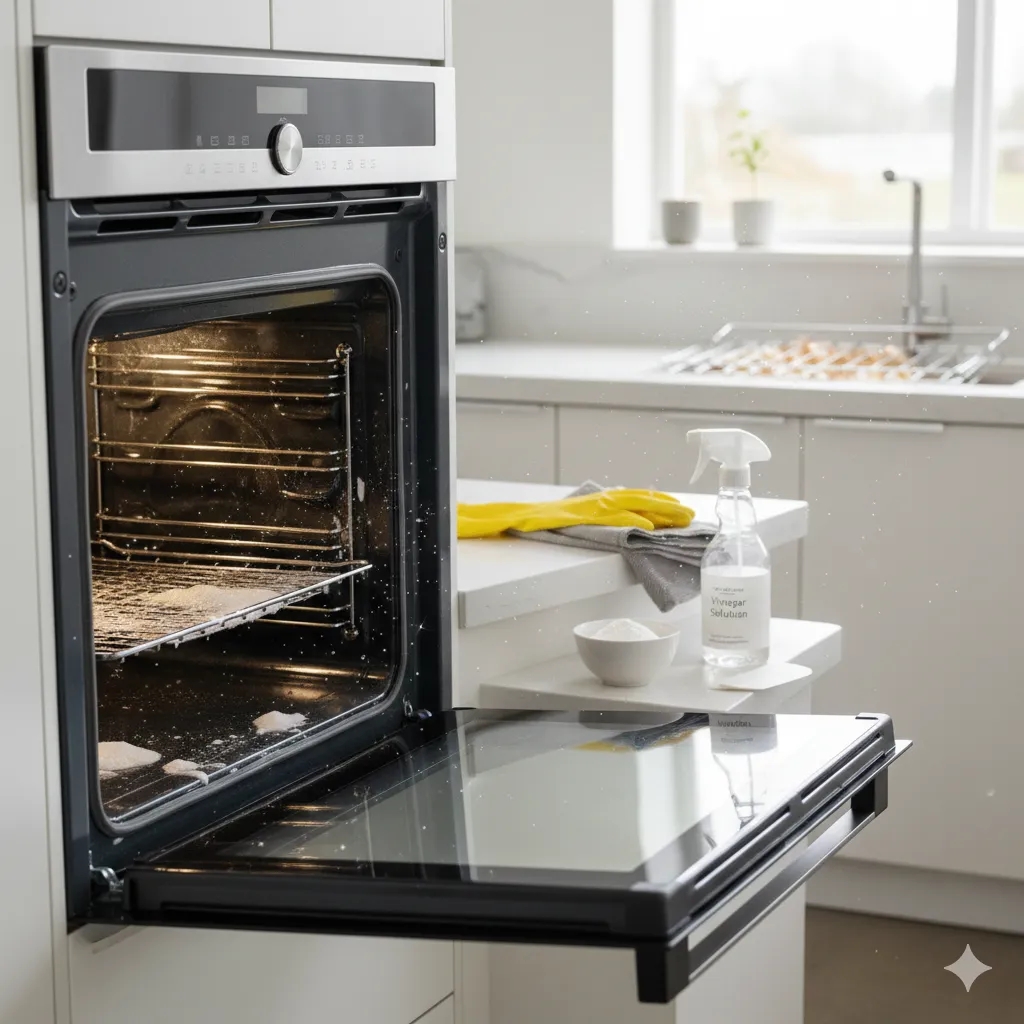
A dirty oven can make cooking unpleasant and even affect the taste of your meals. Grease, food spills, and baked-on residue build up over time, and scrubbing with harsh chemicals isn’t your only option. With baking soda and vinegar, you can clean your oven naturally, safely, and effectively — without toxic fumes or expensive cleaners.
This video shows how to clean an oven with baking soda and vinegar:
This guide covers step-by-step instructions, tips for tough stains, and ways to maintain your oven so it stays fresh longer.
Why Baking Soda and Vinegar Work
- Baking soda is mildly abrasive and alkalizing, which helps lift grease and grime without scratching surfaces.
- Vinegar is acidic and reacts with baking soda to loosen stubborn residues and deodorize your oven.
- This combination allows for a chemical-free, eco-friendly cleaning method that is safe for families and pets.
Stop doing this: using harsh chemical cleaners that can release fumes or damage your oven lining. Natural solutions are just as effective for everyday cleaning.
What You’ll Need
Before starting, gather all necessary supplies:
- Baking soda
- White vinegar
- Spray bottle
- Soft cloths or microfiber towels
- Rubber gloves
- Small bowl
- Plastic or silicone spatula
- Warm water
Having everything ready will make the process smoother and faster.
Step by Step: How to Clean Your Oven with Baking Soda and Vinegar
Follow these steps to clean your oven thoroughly:
- Remove oven racks: Take out racks and soak them in warm, soapy water while you clean the oven interior.
- Make a baking soda paste: Mix ½ cup of baking soda with a few tablespoons of water to create a spreadable paste.
- Apply paste to oven interior: Spread the paste evenly over greasy and stained areas, avoiding heating elements. Pay extra attention to baked-on spills.
- Let it sit overnight: For best results, allow the paste to sit for 8–12 hours. This softens stubborn residue and loosens grime.
- Spray vinegar: Fill a spray bottle with white vinegar and spray over the baking soda-covered surfaces. You’ll see a foaming reaction — this helps lift the dirt.
- Scrub gently: Use a cloth or non-abrasive scrubber to wipe the interior. For tough spots, a plastic spatula can help scrape residue without scratching the oven.
- Wipe clean: Use a damp cloth to remove all baking soda and vinegar residues. Repeat if necessary for heavily soiled areas.
- Clean oven racks: Scrub soaked racks with a brush, rinse, and dry. Replace them in the oven once everything is clean.
This method ensures a sparkling, chemical-free oven without harsh scrubbing.
How to Remove Stubborn Oven Stains
Some baked-on grease and food spills require extra attention:
- Extra baking soda paste: Apply a thicker layer to tough stains and let sit 30–60 minutes before scrubbing.
- Spray vinegar again: Reactivate the foaming action to break down stubborn grime.
- Use warm water for final rinse: Dampen your cloth with warm water to remove any lingering residue completely.
Patience is key — natural cleaning methods may take a little longer but are safer and effective.
Quick Fixes for Common Problems
| Problem | Potential Solution | Alternative Suggestion |
|---|---|---|
| Baked-on grease | Apply extra baking soda paste and let sit longer | Use a plastic spatula to gently scrape after foaming reaction |
| Oven smells after cleaning | Wipe all surfaces with damp cloth to remove residue | Place a small bowl of water with lemon slices inside and run oven on low for 15 min |
| Vinegar residue remains | Wipe thoroughly with warm water | Repeat vinegar spray with cloth wipe until neutral smell disappears |
| Oven racks still sticky | Scrub again in warm, soapy water | Sprinkle baking soda on racks and scrub gently |
| Foaming doesn’t occur | Ensure vinegar spray covers all baking soda | Add a bit more vinegar to react with remaining paste |
Tips to Keep Your Oven Clean Longer
- Wipe up spills immediately after the oven cools.
- Use aluminum foil or oven liners for drips (check your oven manual first).
- Schedule deep cleaning every 2–3 months for heavy use.
- Use a damp cloth for quick wipe-downs after each cooking session.
Regular maintenance reduces buildup and makes natural cleaning faster.
FAQ
Can I clean my oven while it’s still warm?
No. Always wait until the oven is completely cool to avoid burns and ensure baking soda paste adheres properly.
Is it safe to use baking soda and vinegar on all ovens?
Yes, it’s safe for most standard ovens, including self-cleaning models (but do not use on heating elements).
Do I need to scrub hard with this method?
Not usually. The chemical reaction and overnight paste work effectively, so gentle scrubbing is enough.
Can I skip the overnight step?
For light cleaning, you can let the paste sit 1–2 hours, but overnight gives the best results for tough grease.
Final Thoughts
Cleaning your oven with baking soda and vinegar is a simple, natural, and effective way to remove grease and baked-on food. With a little preparation, patience, and the right technique, your oven can look and smell fresh again — without harsh chemicals.
Don’t ignore small spills. Regular maintenance using natural methods makes cleaning faster and keeps your oven safe, eco-friendly, and ready for your next meal.
A sparkling oven is achievable with everyday household ingredients — safe for your family, your kitchen, and the planet.
This guide also explains how to clean an oven without harsh chemicals.