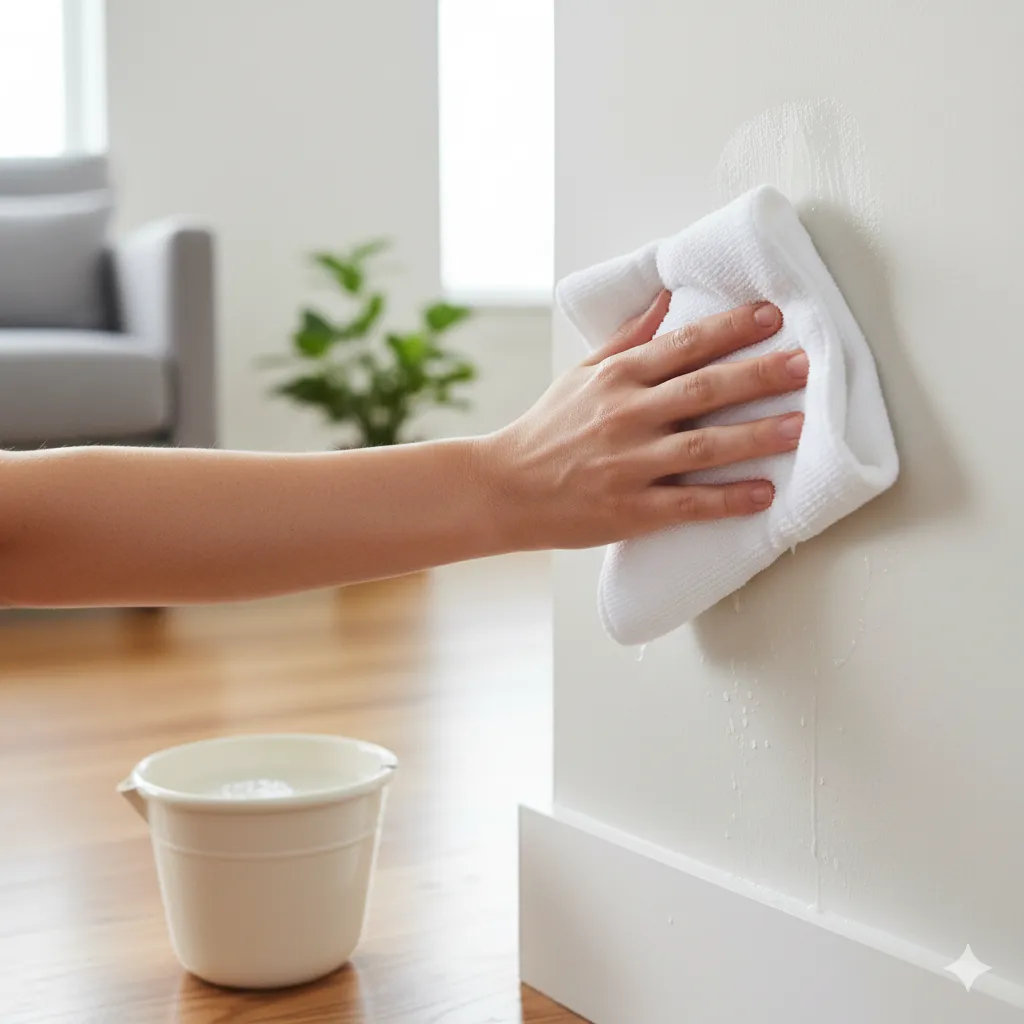
You stare at your walls, see mysterious smudges, and think, “If I scrub, will the color disappear and ruin my day?” You’re not wrong to worry. Painted walls look tough until you attack them with the wrong cleaner and suddenly you’ve got streaks, dull spots, or worse—paint on your sponge. Let’s keep the color where it belongs while getting the grime off.
Here’s the easy, no-drama way to clean painted walls without stripping the finish.
Know Your Paint Finish (It Matters More Than You Think)
Not all paint finishes handle cleaning the same. Some love water. Some hate it.
You need to know what you’re dealing with before you scrub.
- Flat/Matte: Looks gorgeous, scuffs easily. Clean very gently. Avoid abrasive scrubbing.
- Eggshell/Satin: A bit sturdier.
Good for living areas. Still go easy, but you have wiggle room.
- Semi-gloss/Gloss: The tough guys. Great for kitchens and bathrooms.
You can use slightly stronger cleaners.
Quick test: spot-clean first
Pick a low-visibility area, like behind a plant or a frame. Dab your cleaner onto a soft cloth and gently wipe. If color transfers or the finish looks dull when dry, dial back the cleaner and pressure.
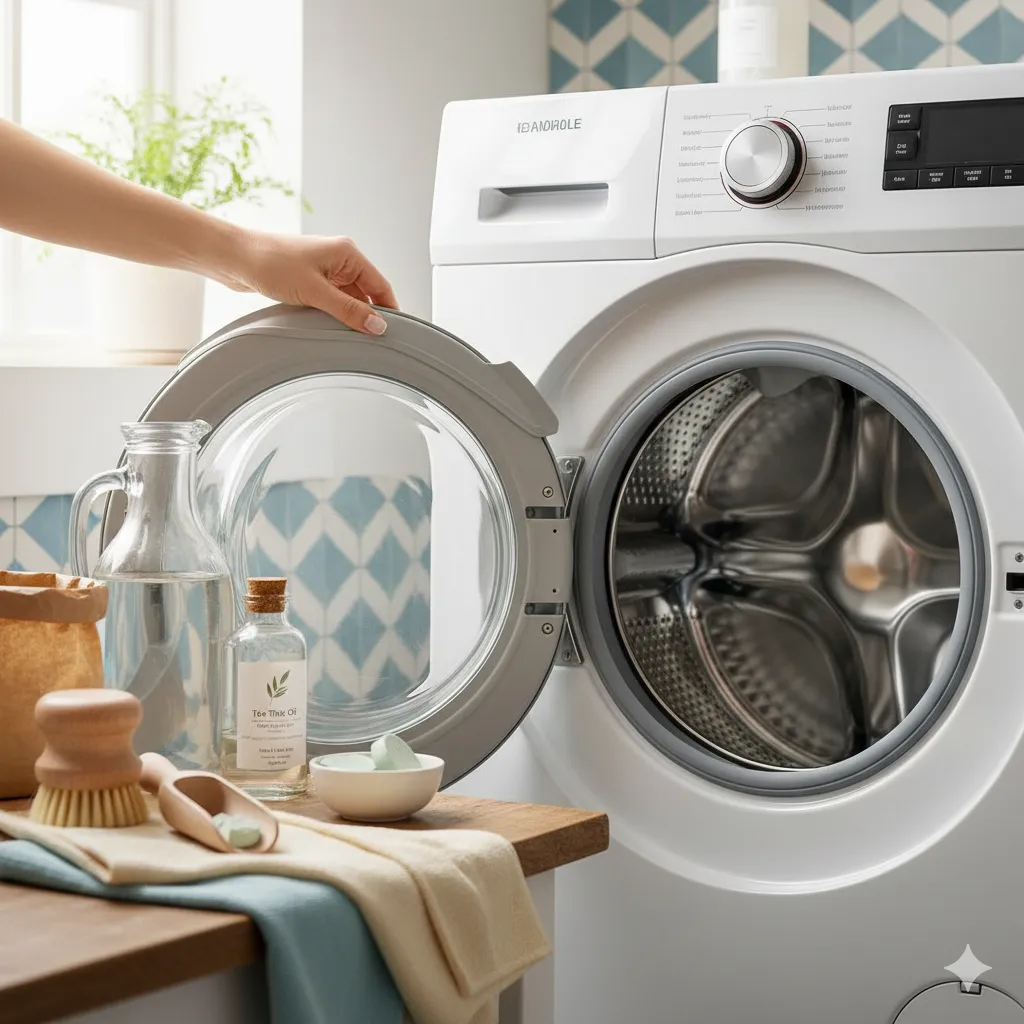
Gather Your Gentle Cleaning Arsenal
You don’t need fancy stuff.
You need the right stuff. And no, that mystery bottle under the sink labeled “Cleaner?” doesn’t count.
- Soft microfiber cloths or a non-abrasive sponge
- Two buckets: one for clean solution, one for rinse water
- Mild dish soap (like a drop or two per quart of water)
- Warm water (not hot—hot can soften paint)
- Magic eraser-style sponge (only for spot use, and carefully)
- White vinegar (for grease or light mildew—mix lightly)
- Baking soda paste (super gentle for small marks)
Skip these: harsh degreasers, bleach (unless heavily diluted and used sparingly on gloss), abrasive powders, and scouring pads. Your walls are not your pots and pans.
The Basic Method: Clean Without Lifting Color
We keep this simple.
Gentle cleaner, light pressure, and a rinse. That’s the whole vibe.
- Dust first. Use a dry microfiber cloth or a vacuum with a brush attachment. You’ll prevent muddy streaks.
- Mix a mild solution. 1–2 drops of dish soap per quart of warm water.
Stir gently—no foam party needed.
- Work top to bottom. Gravity exists. Start near the ceiling and move down to avoid drips streaking over clean spots.
- Use light pressure. Dampen (don’t soak) your cloth. Wipe in small sections with gentle, circular motions.
- Rinse immediately. Follow each section with a cloth dampened in clean water to remove soap residue.
- Dry as you go. Pat with a dry microfiber towel to prevent water spots or tide marks.
Pro tip: Swap your rinse water often.
Dirty rinse water = dirt smear city.
Tough Stains Without Tough Love
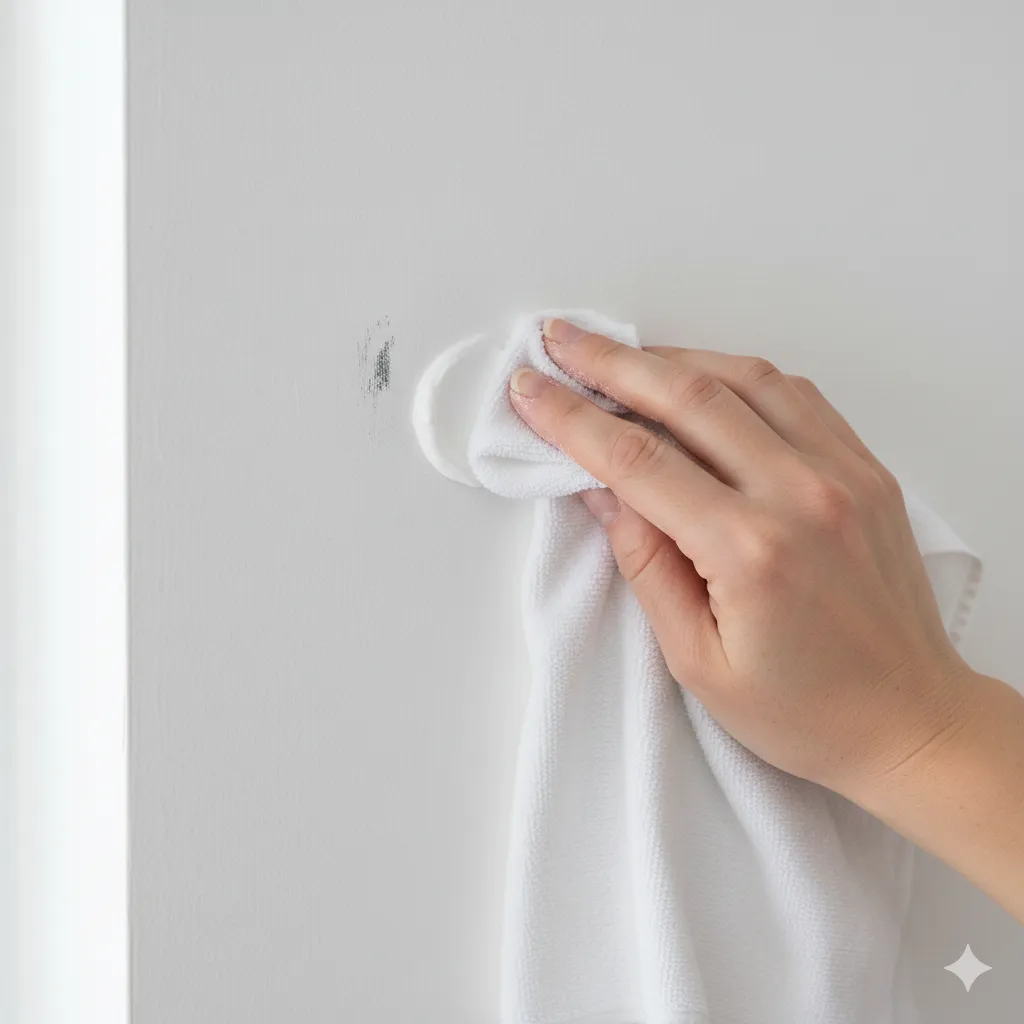
Some marks need a little persuasion, not brute force. IMO, patience beats repainting.
Fingerprints and scuffs
– Try a baking soda paste (1 tsp with a few drops of water). Dab gently, then rinse and dry. – A magic eraser works well on gloss/satin.
On matte, test first and use barely any pressure. Those things can be sneaky paint lifters.
Grease splatters (kitchen walls, we see you)
– Mix 1 part white vinegar to 10 parts water for satin or semi-gloss. Wipe, then rinse with clean water. – For eggshell, dilute more (1:15 or 1:20).
Avoid vinegar on flat if you can—stick to mild soap.
Crayon, marker, and mystery art
– Try rubbing alcohol on a cotton swab for semi-gloss. Dab—don’t rub—then rinse. – For matte/eggshell, a tiny bit of dish soap or baking soda paste usually does the job without burnishing the finish.
Mildew spots
– On bathrooms with semi-gloss, mix 1 part bleach to 20 parts water. Ventilate, wear gloves, spot clean, rinse thoroughly. – For matte/eggshell, skip bleach.
Use vinegar solution first and keep the area dry with better ventilation after. Remember: Always test first. If the paint looks lighter or shinier after cleaning, you’re overdoing it.
When Water Meets Paint: Avoid These Rookie Mistakes
Yes, walls can handle water. No, they can’t handle a flood.
- Don’t soak the wall. Damp cloth, not dripping.
Water can soften paint and leave waves or streaks.
- No circular scrubbing marathons. If it doesn’t lift after a few gentle passes, change tactics, not pressure.
- Skip colored rags. Dye transfer happens. Use white microfiber cloths.
- Mind the edges and seams. Water can sneak into drywall seams and baseboards. Wring your cloth well.
- Watch the sheen. If the area looks shinier after drying on matte paint, you “polished” it.
Use softer cloth and lighter touch.
Special Cases: High-Touch Zones and Tricky Rooms
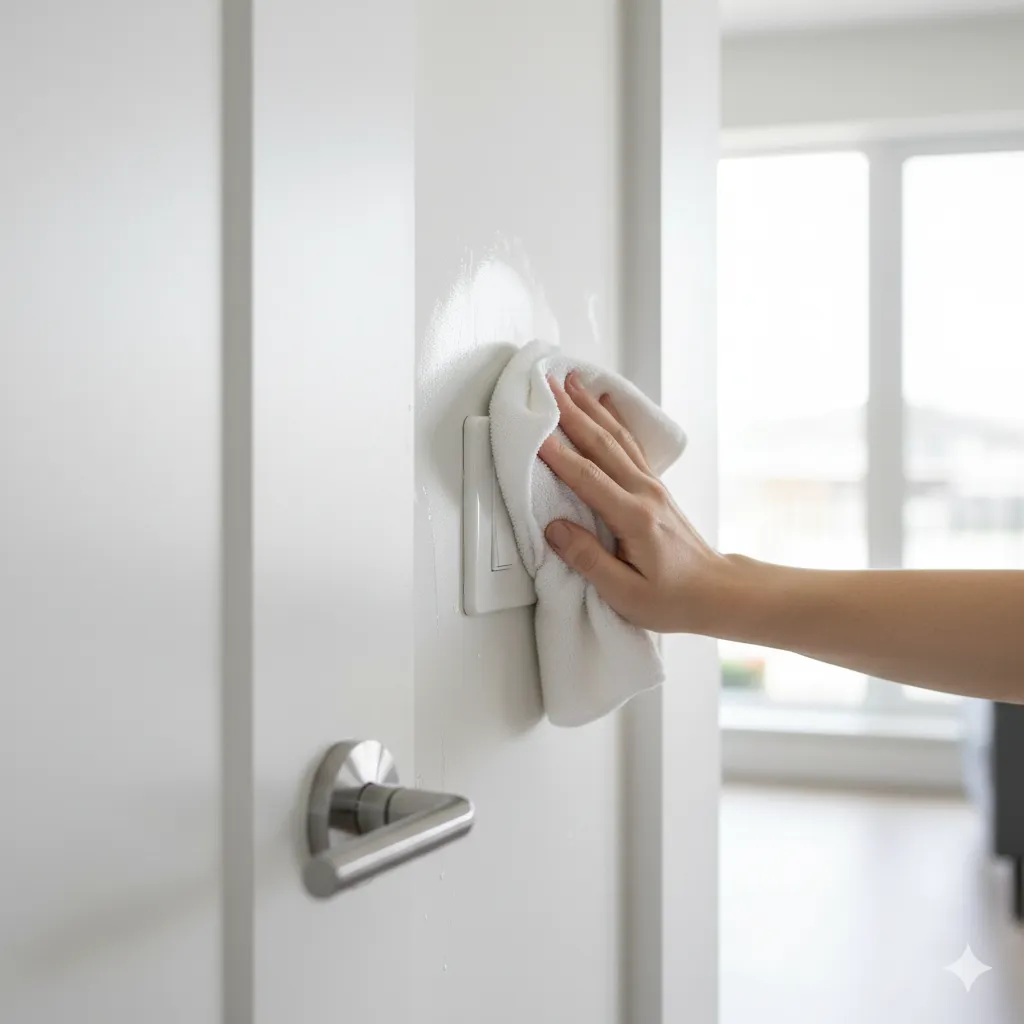
Some spots collect grime like it’s their job.
Hallways and kids’ rooms
– Do a monthly quick wipe of high-touch areas: switch plates, around door handles, stair walls. – Consider washable paint next repaint. You’ll thank yourself later, FYI.
Kitchen walls
– Wipe splatters quickly—fresh grease comes off easier than fossilized oil. – Use vinegar solution for semi-gloss surfaces. Rinse well to avoid lingering smell.
Bathrooms
– Steam can leave drip marks.
After showers, run a fan and occasionally wipe down to prevent mildew. – For semi-gloss paint, a mild soap solution keeps it fresh without dulling the sheen.
Touch-Ups: When Cleaning Reveals Battle Scars
Sometimes you clean and find paint chips, hairline scratches, or uneven sheen. It happens.
- Feather the edges. If you notice a dull patch on matte, lightly wipe the surrounding area with clean water to blend.
- Keep leftover paint. A tiny touch-up with a small artist brush beats a big repaint. Stir well to match color.
- Mind batch differences. Even the same color can vary by can.
Test touch-ups before committing to a visible area.
Maintenance Routine That Saves Your Sanity
Because cleaning once a year is a choice, but not the best one.
- Quarterly dust-down: Quick pass with a dry microfiber cloth or vacuum brush attachment.
- Monthly spot-wipe: Focus on high-traffic areas and scuffs before they set.
- Spill/mark same-day: Most stains lift easily when fresh. Procrastination costs paint.
My take: A few five-minute sessions beat a wall-cleaning marathon every time, IMO.
FAQ
Can I use a magic eraser on matte paint?
You can, but treat it like a last resort. Magic erasers are micro-abrasive and can burnish matte paint, leaving shiny spots.
Test in a hidden area, use very light pressure, and stop as soon as the mark lifts.
Will vinegar damage painted walls?
Not if you dilute it properly and use it on the right finish. Stick to 1:10 or weaker on semi-gloss/satin, and avoid it on flat unless you’ve tested first. Always rinse with clean water afterward to prevent residue.
What’s the safest everyday cleaner for painted walls?
Mild dish soap in warm water wins.
One to two drops per quart keeps it gentle. Pair with a soft microfiber cloth, rinse, and dry—done.
How do I handle stubborn grease in the kitchen?
Try a vinegar-water solution on semi-gloss or satin, then rinse. If it still clings, use a tiny amount of mild dish soap directly on a damp cloth, wipe gently, and rinse.
Avoid strong degreasers—they can dull the finish.
Why is my paint coming off on the cloth?
Either the paint didn’t cure fully, the previous painter used low-quality paint, or your cleaner’s too strong. Stop, switch to a milder solution, and reduce pressure. For larger areas, consider a touch-up or repaint with a more durable finish.
How long should I wait before cleaning newly painted walls?
Give them time to cure—usually 2–4 weeks depending on paint type and humidity.
Light dusting is fine, but hold off on damp cleaning until the paint fully hardens.
Conclusion
You don’t need harsh chemicals or elbow-destroying scrubbing to get clean, colorful walls. Pick the right approach for your paint finish, use gentle cleaners, and rinse and dry as you go. Tackle stains with finesse, not force.
Do that, and your walls will look fresh without sacrificing their color—no repaint needed, and zero regrets.