Quartz looks fancy, wears hard, and shrugs off a lot of abuse—but it still needs the right kind of TLC to keep that glossy “just installed” glow. The good news? You don’t need a chemistry degree or a hazmat suit.
With a few smart routines and a couple of product tweaks, you’ll clean quartz countertops without dulling the shine. Let’s get into it before that coffee ring becomes a permanent roommate.
Know Your Quartz: What It Loves (And Hates)
Quartz countertops use engineered stone: ground quartz + resins + pigments. Translation?
They’re tough and non-porous, but the resins can react to harsh chemicals and high heat. What quartz loves:
- Mild dish soap and warm water
- Soft microfiber cloths or non-scratch sponges
- pH-neutral sprays designed for stone
What quartz hates:
- Bleach, vinegar, lemon juice, ammonia, and high-pH degreasers
- Abrasive powders, steel wool, and rough scrub pads
- Hot pans straight off the stove (use trivets, always)
FYI: Acids and alkalis don’t “etch” quartz the same way they do marble, but they can haze or degrade the resin binder. That’s exactly how you lose that shine.
The Everyday Clean: Fast, Safe, Shine-Friendly
This is your “I cook here daily and spill things like a human” routine. Do it once a day or after meals.
It takes two minutes.
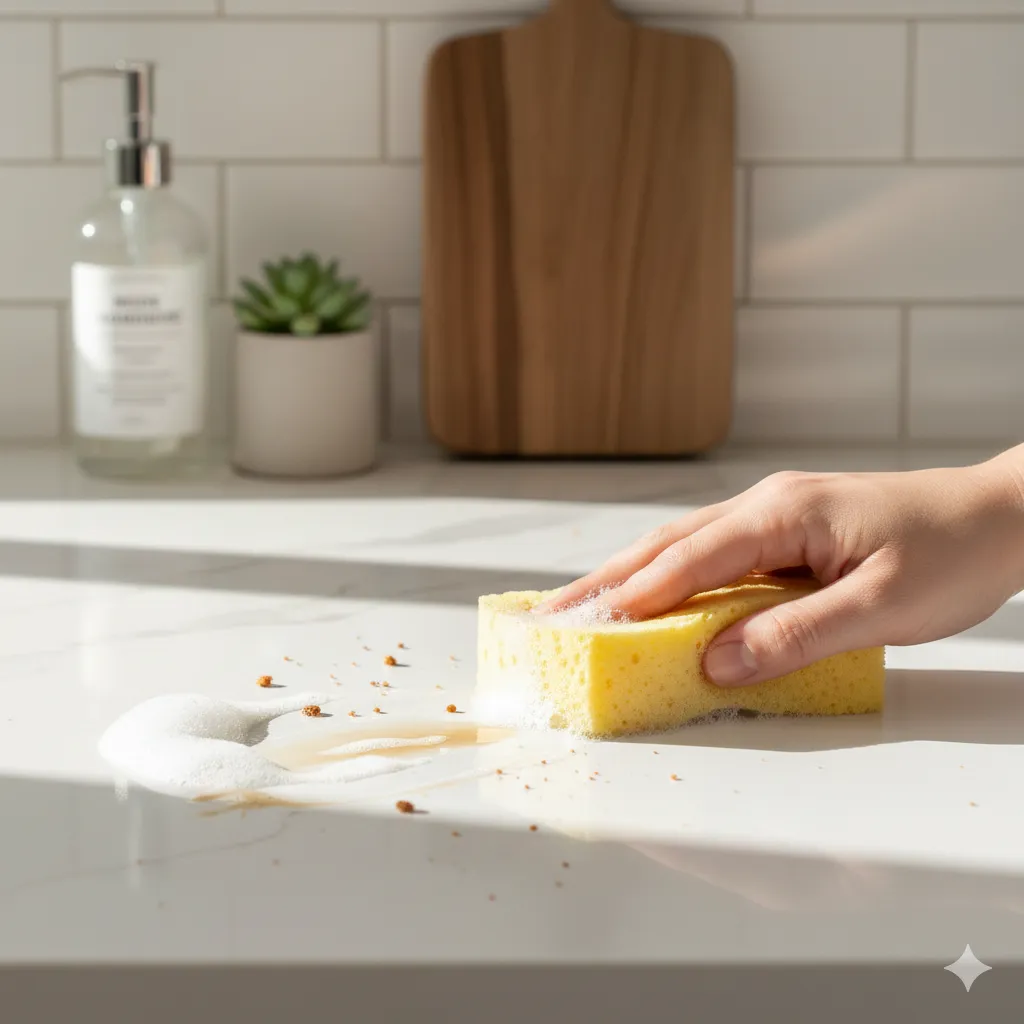
- Wipe crumbs and gunk with a dry microfiber cloth.
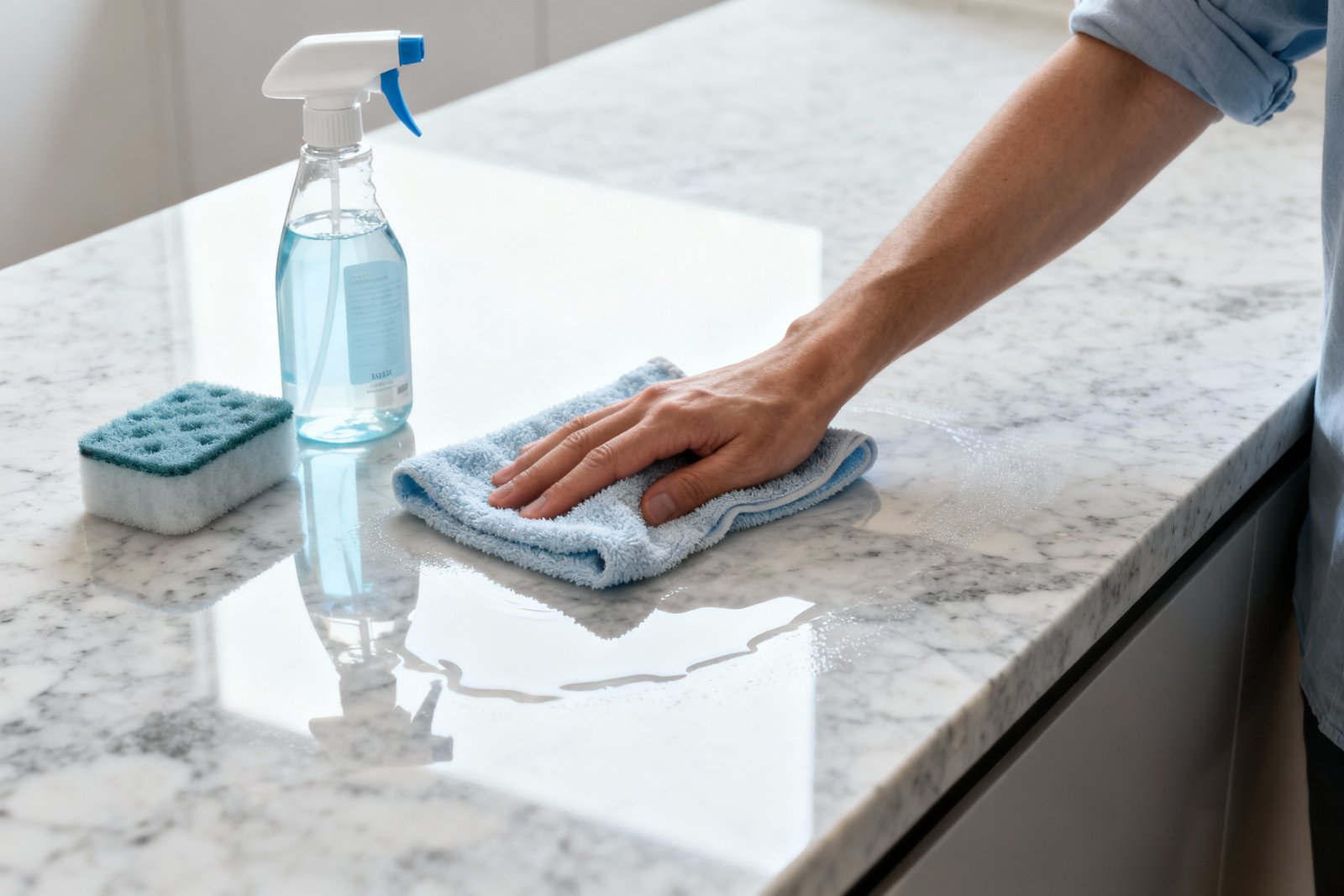
- Mix a squirt of mild dish soap with warm water in a spray bottle or bowl.
- Spritz or wipe the surface with the soapy water using a soft cloth or non-scratch sponge.
- Rinse with clean water (a quick wipe with a damp cloth).
- Dry immediately with a fresh microfiber cloth for streak-free shine.
Pro tip: Drying matters. Water spots and soap residue kill the gleam faster than you can say “stainless steel.”
Deep Clean Without the Dull
Sometimes the usual wipe-down won’t cut it. Grease film, fingerprints, and mystery stickiness call for a slightly stronger—but still gentle—approach.
- Use a pH-neutral stone cleaner labeled safe for quartz.
Spray, let it sit for 30–60 seconds, then wipe and dry.
- For built-up grease, mix a few drops of dish soap with warm water and a splash of isopropyl alcohol (70%). Wipe, rinse, and dry.
- For matte haze from residue, try a dedicated quartz-safe polish/cleaner combo. Use sparingly.
What About Magic Erasers?
You can use a Magic Eraser lightly for scuffs or crayon marks, but go gentle.
It acts like a superfine abrasive. Test a small, hidden spot first. If you scrub hard, you can dull the finish.
IMO, use it only when you must.
Stain Situations: Coffee, Wine, Turmeric, Oh My
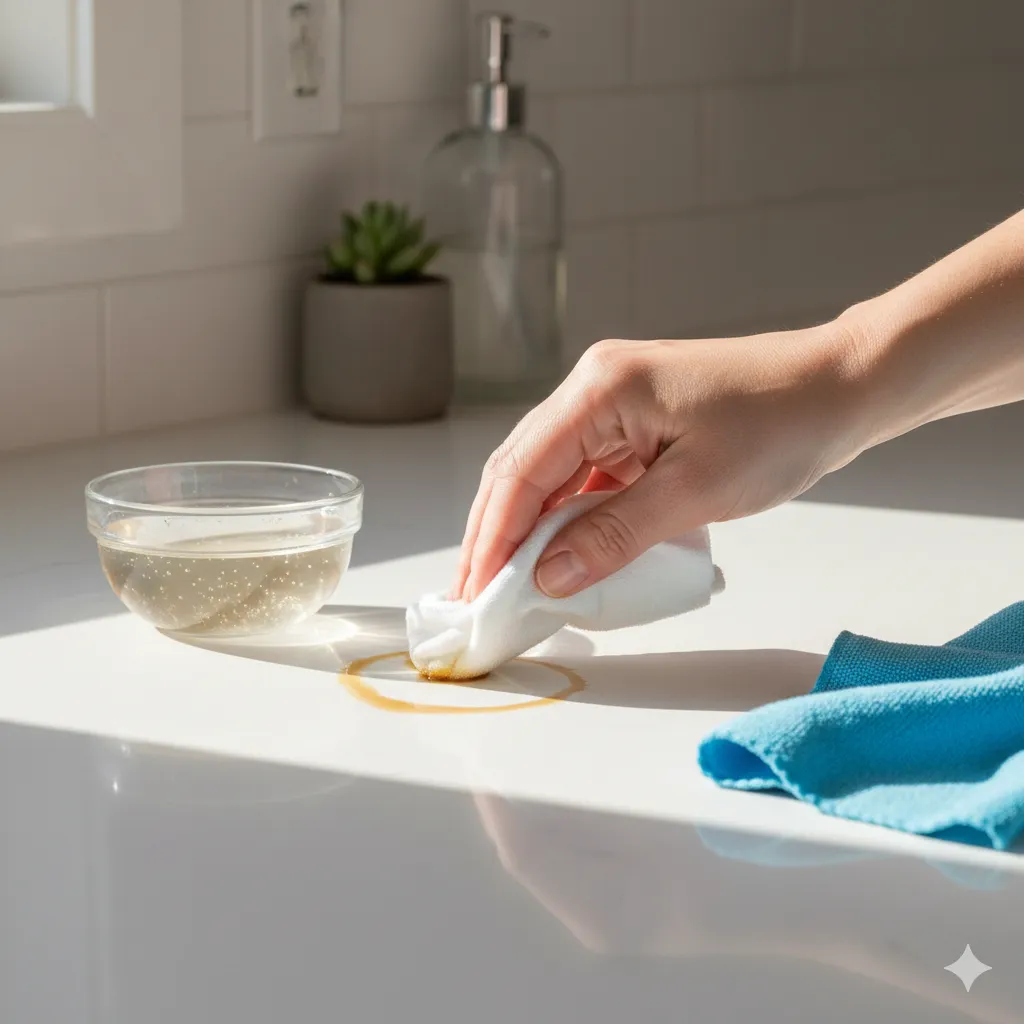
Quartz resists staining, but spills can leave a temporary tint if they sit. Attack fast for best results.
- Coffee/tea/wine: Clean with soapy water. If color lingers, dab with 70% isopropyl alcohol on a cloth.
Rinse and dry.
- Turmeric/curry: Dish soap + warm water first. Follow with a paste of baking soda and water on a cloth (not scouring the surface), rub gently, rinse, and dry. Avoid abrasive pressure.
- Grease splatter: A drop of mild degreasing dish soap (like blue Dawn) with warm water.
Wipe, rinse, dry.
- Hard water spots: Wipe with a damp cloth and a bit of isopropyl alcohol, then dry. Stop the spots before they form by always drying after cleaning.
Important: Skip vinegar. Yes, it’s a natural cleaner.
Also yes, it can haze quartz resin over time. Stick to alcohol for mineral spots.
Sticky, Dried-On Gunk
Use a plastic scraper held flat and gentle. No razor blades.
Follow with warm soapy water, rinse, and dry. If it’s gum or waxy, place an ice pack on top for a few minutes to harden it, then scrape.
Products That Protect Your Shine
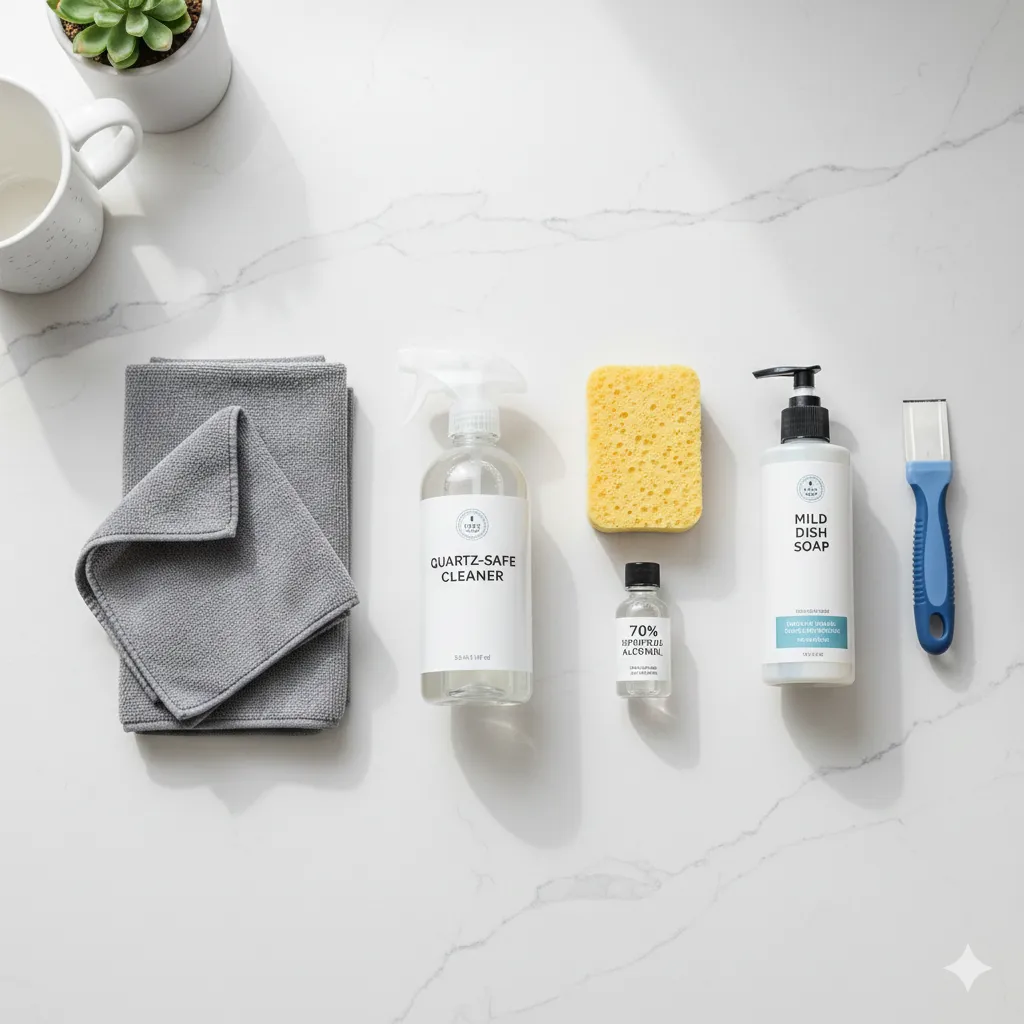
You don’t need a bathroom’s worth of bottles. A tiny toolkit keeps quartz happy.
- Mild dish soap (pH-neutral or close)
- Microfiber cloths (keep several so you always have a dry one)
- Non-scratch sponge
- Isopropyl alcohol (70%) for spot treatment
- Quartz-safe cleaner for weekly deepish cleans
- Plastic scraper for dried bits
Do You Need a Sealer?
Nope.
Quartz doesn’t need sealing because it’s non-porous. Sealers just sit on top and can make the finish look streaky or gummy. If a product says “sealer + polish for stone,” make sure it specifically names quartz.
Habits That Keep Quartz Glossy
A little prevention beats a lot of elbow grease.
And less elbow grease means more time for snacks. Win-win.
- Use cutting boards. Knives dull faster on quartz, and while quartz won’t scratch easily, why risk micro-scratches?
- Grab trivets and hot pads.
Heat can discolor resin and cause micro-cracks. Hot = bad.
- Wipe spills ASAP, especially oils, wine, tomato sauce, and anything with dye.
- Skip harsh chemicals: bleach, oven cleaner, grout haze remover, nail polish remover with acetone. If they touch down, wipe and rinse immediately.
- Rotate your cloths.
Old, rough towels can dull shine over time.
Weekly Quick Glow-Up
Once a week, use your quartz-safe cleaner after the usual soap-and-water routine. Wipe thoroughly and dry with a fresh microfiber cloth. That’s it.
No waxes, no oily “shine boosters,” no weird internet concoctions.
Shine Recovery: If It Already Looks Dull
If your quartz looks cloudy, don’t panic. You can usually fix residue-related dullness at home.
- Do a residue reset: Wipe with warm soapy water, rinse, then wipe with a 50/50 mix of water and isopropyl alcohol. Rinse again and dry.
- Try a quartz-safe polish: Use very sparingly on a microfiber cloth.
Buff in small circles. Less is more.
- Address hard water: If the cloudiness sits near the sink, it’s probably mineral deposit. Alcohol wipe, then dry every time moving forward.
- Suspect chemical damage? If the surface feels rough or looks permanently hazy, call the manufacturer or a pro fabricator.
They can assess whether a light refinish is possible. FYI, heavy polishing can void warranties.
Reality check: Quartz has a factory finish. You can maintain shine, but you shouldn’t need to “restore” it often.
If you do, something in your routine needs a tweak.
FAQ
Can I use Windex on quartz?
Occasionally, yes—only if it’s ammonia-free. Many glass cleaners contain ammonia, which can dull resin over time. If you love the streak-free look, pick a quartz-safe cleaner instead.
Safer bet, same shine.
Is vinegar safe for quartz?
No. It’s great for glass and kettles, but vinegar’s acidity can haze quartz resin with repeated use. Reach for isopropyl alcohol for mineral spots and a pH-neutral cleaner for daily use.
Do quartz countertops stain?
They resist stains well because they’re non-porous, but strong pigments and oils can leave temporary marks if you let them sit.
Clean spills quickly and you’ll be fine. Worst case, use alcohol or a quartz-safe cleaner to finish the job.
How do I remove permanent marker or ink?
Dab the mark with 70% isopropyl alcohol on a microfiber cloth. Wipe gently, then rinse and dry.
If it’s stubborn, repeat. Skip acetone and aggressive solvents—those can damage the finish.
Will a magic eraser scratch quartz?
It can dull the surface if you go hard. It’s a micro-abrasive sponge, not a miracle.
Use light pressure and test first, or try alcohol and a soft cloth before reaching for it.
Do I need to polish quartz regularly?
Not really. The shine comes from the factory finish. You maintain it by cleaning properly and drying.
Use a quartz-safe polish sparingly if you want an occasional extra gleam, but it’s not essential.
Conclusion
Quartz wants simple, consistent care: mild soap, soft cloths, fast spill cleanups, and zero harsh chemicals. Dry after you wipe so residue doesn’t crash the sparkle party. Use trivets, skip abrasives, and keep alcohol on hand for the stubborn stuff.
Do that, and your counters stay glossy, happy, and ready for whatever you cook up next—spaghetti sauce included, IMO.