You don’t need a science lab or a hazmat suit to get wood floors gleaming again. You just need the right gentle cleaners, a bit of technique, and the discipline to not flood the floor like you’re mopping a gym. Let’s ditch the harsh stuff, avoid residue, and bring back that warm, natural shine—without wrecking your finish or your air quality.
Watch this short video to see how to clean wood floors fast:
Know Your Floor: Finish First, Cleaner Second
Before you grab a spray bottle, figure out what you’re actually cleaning.
The product and technique depend on the finish, not the wood species.
- Sealed/Polyurethane finish: Most modern floors. They’re water-resistant on the surface. You’ll use a damp (not wet) mop and mild, pH-balanced cleaners.
- Waxed or oiled floors: They hate water.
You’ll spot-clean, then condition. No heavy liquid mopping here.
- Engineered wood: Treat like sealed floors, but avoid soaking—edges can swell.
FYI: If you’re unsure, rub a tiny drop of water in a corner. If it beads, you likely have a sealed finish.
If it darkens the wood quickly, you’ve got a penetrative finish (wax/oil).
Daily Dust Strategy (aka Less Grit, Less Scratches)
Grit acts like sandpaper. You remove it, your finish lasts longer. Revolutionary, I know.
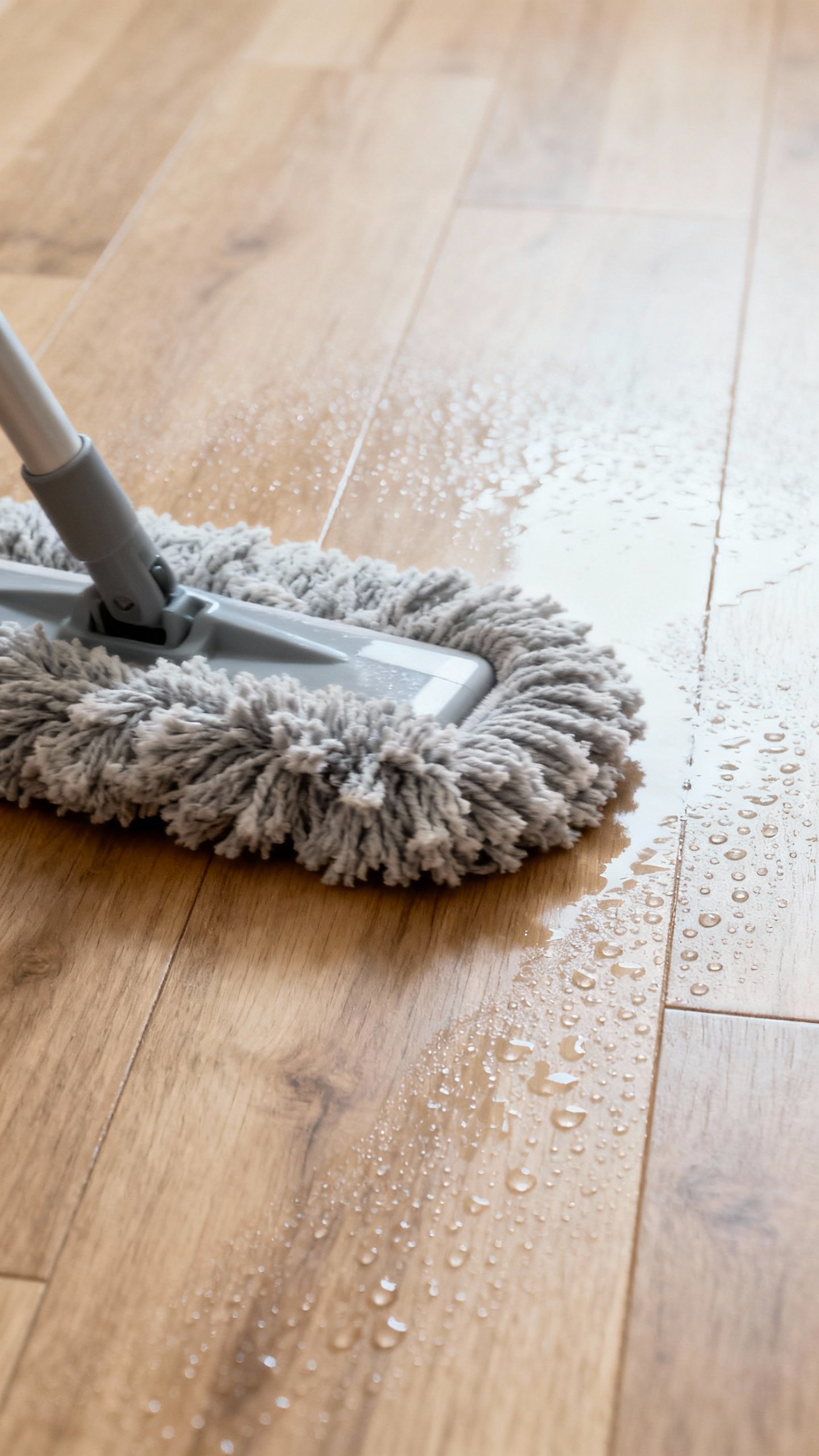
- Dry mop or vacuum daily with a soft-bristle or hardwood setting.
No beater bars chewing your floor, please.
- Use a microfiber mop for quick sweeps. It grabs pet hair and dust without pushing it around like a broom.
- Entry mats at doors = fewer rocks, less drama.
The Best Natural Cleaners (That Actually Work)
You don’t need to stew witchy potions. Keep it simple and pH-friendly.
For Polyurethane/Sealed Floors
- Distilled water + a drop of mild dish soap (unscented if possible).
Ratio: 1 gallon water to 1 teaspoon soap. This lifts grime without leaving residue.
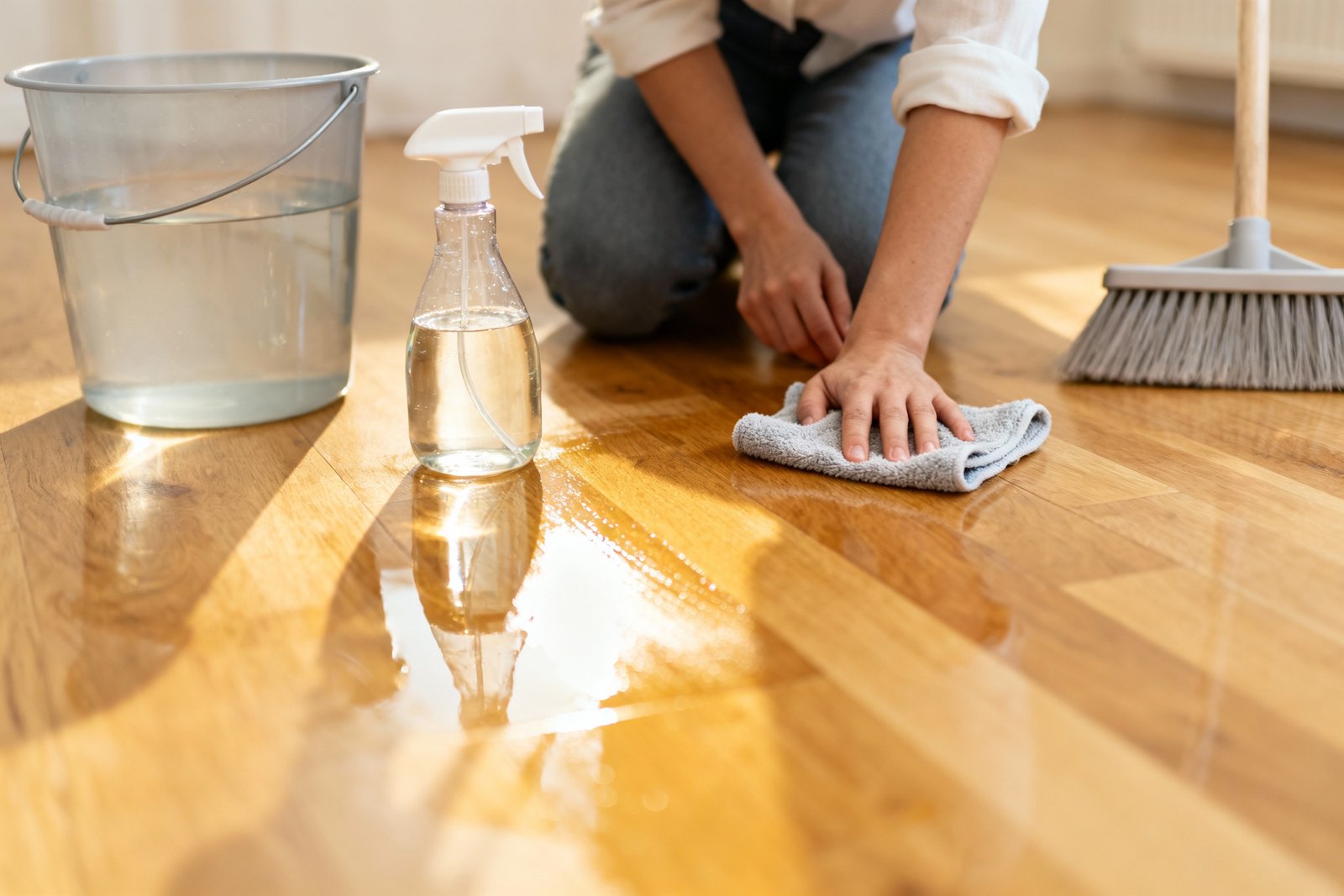
- Alcohol-based spray for quick clean: 1 cup water + 1 cup isopropyl alcohol (70%) + 2-3 drops dish soap in a spray bottle. It evaporates fast—great for high-traffic areas.
Avoid vinegar as your everyday cleaner on sealed floors.
It’s acidic and can dull the finish over time. Yes, your aunt swears by it. Your floor disagrees.
For Waxed or Oiled Floors
- Very lightly dampened cloth with water and a tiny bit of mild soap.
Dry immediately after.
- Recondition with a compatible floor wax or oil when it looks thirsty. Natural cleaners remove dirt; conditioners restore luster.
Step-by-Step: Clean Wood Floors Naturally
- Clear the floor. Pick up chairs, plants, pet bowls—anything that blocks a smooth pass.
- Dry clean first. Vacuum or dry mop to remove grit. Don’t skip this.
Wetting grit creates mud and micro-scratches.
- Mix your cleaner. For sealed floors, use the water + tiny-soap solution. For speed, use the alcohol spray.
- Lightly mist the floor or dampen your microfiber pad. Never pour directly onto wood.
No puddles. No soggy mop heads.
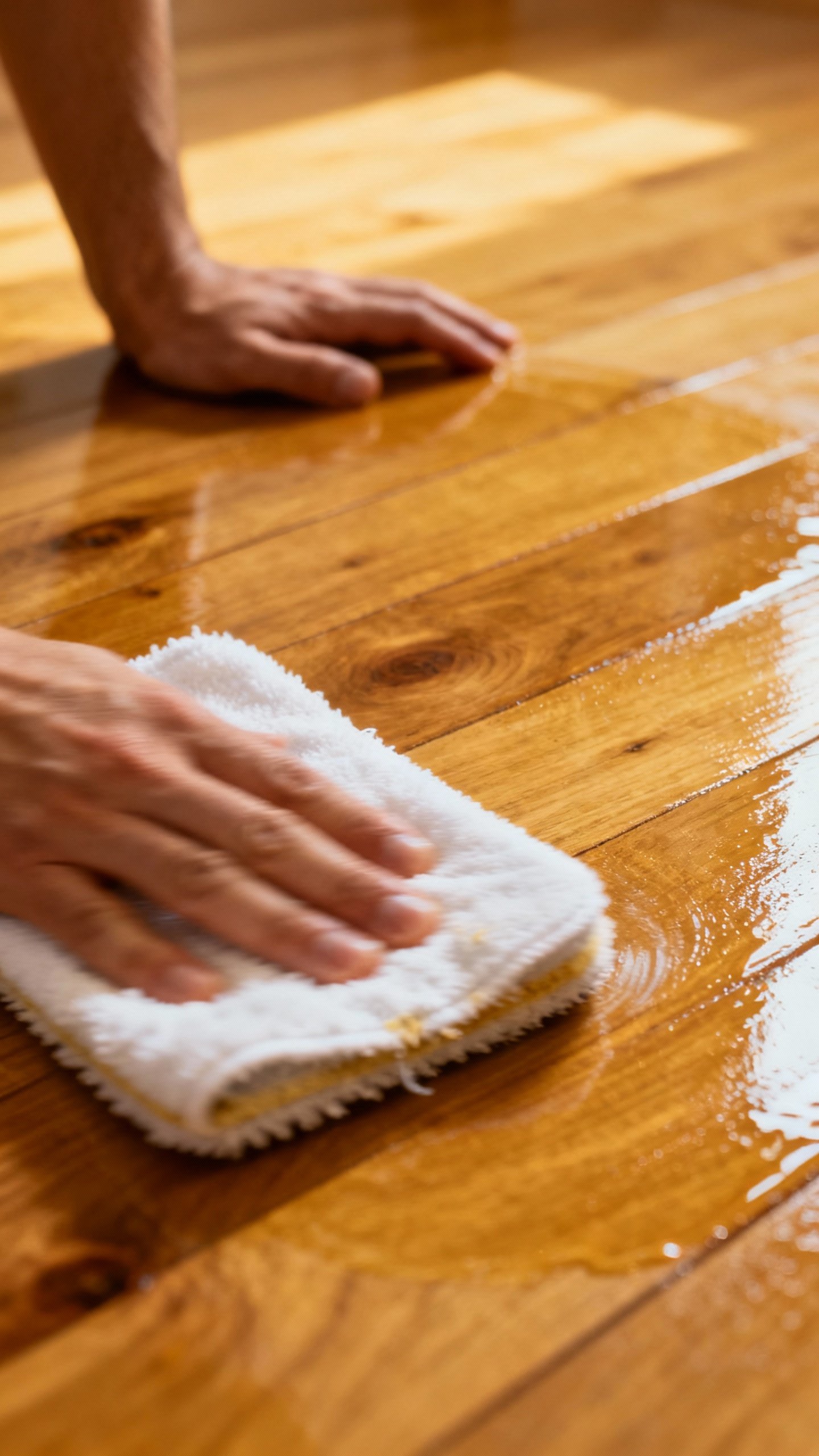
- Mop with the grain. Work in sections, rinse or swap pads often. Dirty pad = streak city.
- Dry as you go. Use a second clean, dry microfiber to wipe any moisture left behind.
Rule of thumb: If you see standing water, you’re using too much liquid.
Wood + water drama = cupping, warping, and regret.
Dealing With Sticky Spots
– Dab the area with a bit of the alcohol spray, then wipe clean. – For food or gunk, hold a warm, damp cloth over the spot for 30 seconds, then gently rub. – Never scrape with metal. Use a plastic scraper or old credit card if needed.
Make It Shine (Naturally and Safely)
Want that glossy, “wow, did you refinish?” look without toxic fumes? You’ll need a two-part strategy: clean thoroughly, then enhance the finish.
For Sealed Floors
- Buff with a dry microfiber pad after cleaning.
It removes haze and boosts shine instantly.
- DIY shine booster (occasional): After cleaning, lightly mist distilled water and a few drops of alcohol, then buff. It flashes off and reduces streaks.
- Use a commercial, water-based polish designed for polyurethane floors every few months if needed. Not exactly “from your pantry,” but safe and effective.
Test first.
For Waxed/Oiled Floors
- Re-wax or re-oil according to the product directions when dullness sets in.
- Buff thoroughly with a soft white pad or microfiber. The shine comes from compression and even distribution, not from drowning it in product.
Skip: Olive oil, vinegar, and “miracle” concoctions. Oil can attract dust and turn floors cloudy.
Vinegar can etch finishes. IMO, keep food in the kitchen.
Nix Streaks, Haze, and Cloudiness
If your floor looks cloudy after cleaning, don’t panic. Fix the routine.
- Use less product. Too much soap leaves residue that dulls the finish.
- Switch water. Hard water leaves minerals.
Use distilled for the final pass if you see spots.
- Rinse pads often and replace them when they stop grabbing dirt.
- Remove old acrylic polish build-up with the product recommended by the polish brand. Layering random polishes creates foggy floors.
What If the Finish Itself Looks Tired?
When cleaning won’t restore shine, the finish may be worn. Try a screen-and-recoat (pros lightly abrade and add a new topcoat).
It’s cheaper than a full refinish and brings back the glow.
Natural Deodorizing and Spot Care
Smells or small disasters happen. Here’s the gentle approach.
- Pet accidents: Blot immediately. Clean with the alcohol spray, then follow with distilled water on a cloth.
Dry well. For odor, sprinkle baking soda nearby on rugs, not directly on wood crevices.
- Grease spots: A drop of mild soap on a damp cloth. Rinse with a slightly damp cloth.
Dry.
- Water rings: For waxed/oiled floors, try a white, non-gel toothpaste dab on a soft cloth and rub lightly, then recondition. For sealed floors, use a wood-safe cleaner and buff—if it’s in the finish, you may need a pro touch-up.
Protect the Shine You Just Earned
Keeping floors pretty beats deep-cleaning every week. Do these and thank yourself later.
- Felt pads under furniture.
Replace them when they compress or collect grit.
- Rugs in high-traffic zones and entryways. Choose breathable pads safe for wood.
- Shoes off inside. Heels and pebbles do not care about your feelings.
- Humidity control: Keep 35–55% relative humidity to prevent gaps or cupping.
- Rotate sunlight exposure with curtains or rugs to minimize discoloration.
FAQ
Can I use vinegar on wood floors?
You can, but you probably shouldn’t.
Vinegar is acidic and can dull polyurethane finishes over time. If you insist, keep it super diluted and use it rarely. Better: use mild soap and water or an alcohol-based spray that evaporates quickly.
How often should I mop wood floors?
Dry clean daily or a few times a week, depending on traffic.
Damp mop every 1–2 weeks in most homes. High-traffic kitchens might need weekly cleaning, bedrooms maybe every other week. Over-mopping doesn’t equal cleaner—just wetter.
What’s the safest homemade cleaner for sealed floors?
Distilled water with a tiny splash of mild dish soap.
Think 1 teaspoon per gallon. It’s gentle, effective, and leaves minimal residue. Follow with a dry buff for shine.
How do I know if I have a waxed floor?
Rub a white cloth with a bit of mineral spirits on an inconspicuous spot.
If you see a yellowish or brownish residue, you likely have wax. Also, waxed floors often look warm and soft rather than glossy-glass shiny.
Are steam mops safe for hardwood?
Hard no. Steam forces moisture and heat into seams and can damage finish and wood.
If a manufacturer claims “wood-safe,” read the fine print. Most flooring pros advise against it, IMO.
What if my floor squeaks after cleaning?
That’s usually subfloor or humidity, not your cleaner. Keep humidity stable and avoid soaking the floor.
If it persists, a pro can add screws from below or inject adhesive. Cleaning won’t fix squeaks, sadly.
Closing Thoughts
You don’t need fancy chemicals to get wood floors clean and shiny—you need the right routine. Dust often, damp mop lightly with gentle cleaners, and buff to finish.
Condition waxed or oiled floors when they look thirsty, and protect your hard work with rugs, pads, and sane humidity. Do that, and your floors will gleam like you meant it—no sticky residue, no dull film, just clean, happy wood.