Here’s the real reason DIY obstacle courses are such a hit: kids don’t just want toys — they want challenges. They want to climb, crawl, jump, balance, and race. And the best part? You don’t need a playground or fancy equipment to make it happen.
With a little creativity (and things you already own), you can build a beginner friendly obstacle course at home that feels like a full adventure park.
Watch this video to learn how to make a simple obstacle course for your kids:
Let’s break it down step by step.
Why a DIY Obstacle Course Is Great for Kids
Before you start moving furniture, it helps to know why this is such a powerful activity.
Obstacle courses help children:
- Improve balance and coordination
- Build strength and endurance
- Practice following directions
- Develop problem-solving skills
- Burn off energy in a healthy way
- Boost confidence when they finish
They’re also perfect for rainy days, birthday parties, homeschool P.E., or just breaking up screen time.
And yes — you can absolutely do this on a budget.
What You’ll Need (Using What You Already Have)
You don’t need to buy anything special. Look around your home for:
- Couch cushions
- Dining chairs
- Blankets and bedsheets
- Pool noodles
- Hula hoops
- Painter’s tape or masking tape
- Laundry baskets
- Cardboard boxes
- Stuffed animals
- Plastic cups
- Balloons
The key is thinking in “movements,” not objects. Each item represents a challenge: jump over, crawl under, balance across, toss into, zigzag through.
Now let’s build it.
Step-by-Step: How to Make a DIY Obstacle Course for Kids at Home
Step 1: Choose Your Space
Decide if you’re building:
- An indoor obstacle course (living room, hallway, basement)
- An outdoor obstacle course (backyard, driveway, garden)
For indoor setups, clear fragile items and create a safe open path. For outdoor setups, check for uneven ground or sharp objects.
Step 2: Plan the Flow
A good obstacle course feels like a journey.
Arrange stations in a logical order so kids move smoothly from one challenge to the next. Avoid tight turns or dead ends.
Example simple flow:
- Jump
- Crawl
- Balance
- Toss
- Sprint to finish
Keep it short for younger kids. Older kids can handle longer sequences.
Step 3: Add Movement Variety
Try to include different types of movement:
- Jumping
- Crawling
- Balancing
- Throwing
- Climbing
- Spinning
- Hopping on one foot
This keeps it exciting and physically well-rounded.
Step 4: Demonstrate First
Before letting kids run wild, walk through the course slowly. Show them exactly what to do at each station.
This reduces chaos — and prevents injuries.
Step 5: Make It a Game
Add:
- A timer
- A stopwatch challenge
- A “don’t touch the floor” rule
- Team relays
- Silly challenges (hop like a frog, roar like a lion, walk backward)
Fun is the goal — not perfection.
Indoor Obstacle Course Ideas (Rainy Day Lifesaver)
If you see this… kids bouncing off the walls on a rainy afternoon — it’s time.
Here are easy indoor station ideas:
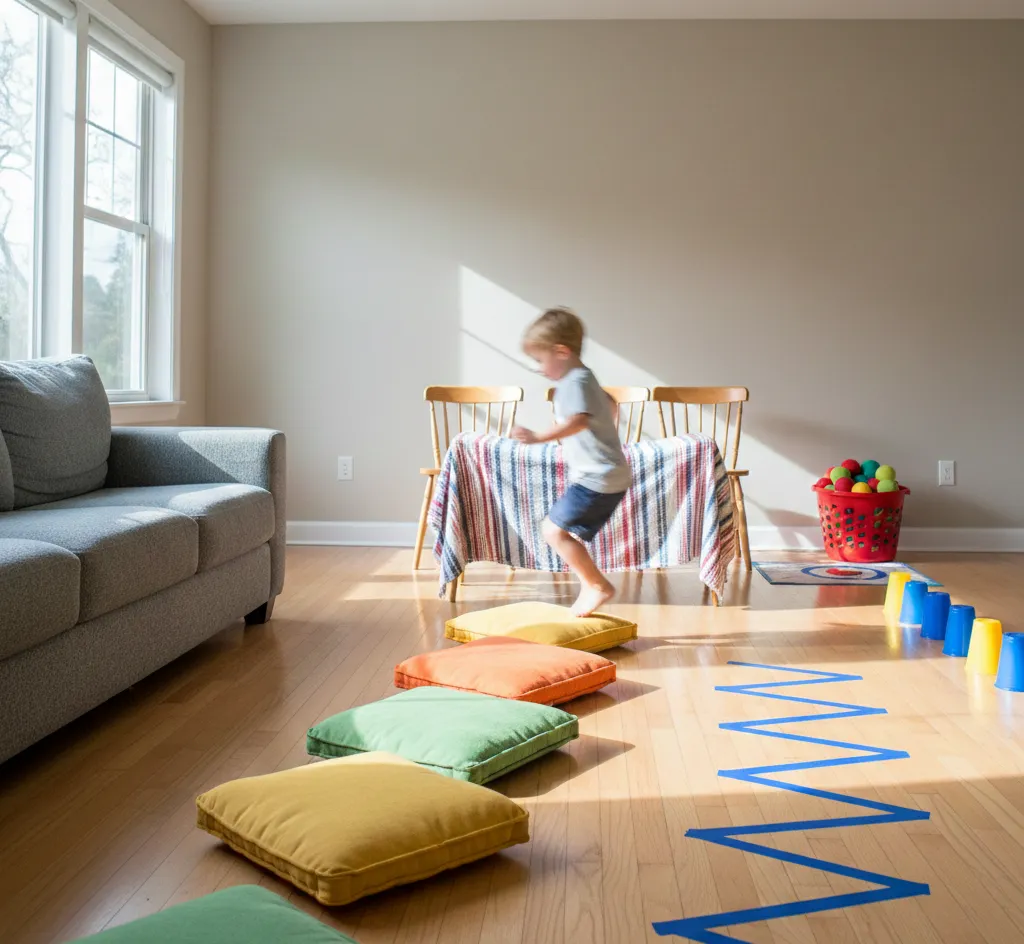
Cushion Jump Zone
Place couch cushions on the floor. Kids must jump from one to the next without touching the ground.
Chair Tunnel
Line up chairs and drape a blanket over them to create a crawl tunnel.
Tape Balance Line
Put painter’s tape on the floor in a straight or zigzag line. Kids must walk heel-to-toe without stepping off.
Laundry Basket Toss
Place baskets at different distances and have kids toss socks or soft balls inside.
Stuffed Animal Rescue
Scatter stuffed animals and have kids crawl to “rescue” them and return to base.
Indoor tip: Keep jumping zones away from glass tables and sharp corners.
Outdoor DIY Obstacle Course Ideas
Outdoor space opens up even more possibilities.
Cone or Cup Weave
Set up plastic cups in a zigzag pattern and have kids run through them without knocking them over.
Water Balloon Carry
Balance a water balloon on a spoon and walk to the finish line.
Backyard Sprint
Mark start and finish lines with chalk.
Pool Noodle Hurdles
Lay pool noodles across buckets to create low jumps.
Tire or Hula Hoop Jumps
Place hoops on the ground and have kids jump in and out quickly.
Outdoor safety tip: Hydration breaks are important — especially on hot days.
DIY Obstacle Course by Age
You’re probably doing this wrong if you build the same course for a 3-year-old and a 10-year-old.
Here’s how to adjust:
Toddlers (2–4 years)
Keep it simple:
- Step over pillow
- Crawl through tunnel
- Toss soft toy into basket
- Walk on tape line
Focus on safety and slow movement.
Preschoolers (4–6 years)
Add:
- Timed runs
- Hopping challenges
- Basic climbing (low cushions)
- Simple direction following
Keep instructions short and clear.
Older Kids (7–12 years)
Increase complexity:
- Longer sequences
- Backward running
- Crab walk sections
- Memory components (“Touch red, then spin, then crawl”)
They love competition — consider relays or time trials.
How to Make It More Challenging
Before it’s too late and they get bored, level it up.
Try:
- Adding a timer
- Requiring completion without touching certain areas
- Adding math questions between stations
- Creating “lava floor” zones
- Blindfold balance (with supervision)
You can even let kids design their own course. This boosts creativity and ownership.
Safety Rules You Shouldn’t Ignore
Don’t ignore safety — even for simple setups.
Here’s what matters most:
- No sharp edges nearby
- No slippery floors
- No unstable stacks of furniture
- Supervise climbing sections
- Use soft objects indoors
- Check that chairs won’t tip
If kids are racing, space them out to avoid collisions.
And remind them: speed is fun — but control wins.
How Long Should an Obstacle Course Be?
Short answer: It depends on age and energy levels.
For younger kids: 5–7 stations
For older kids: 8–12 stations
Each full run should last:
- 1–2 minutes for little ones
- 2–4 minutes for older kids
You can repeat rounds or change rules between runs.
Budget-Friendly Tips (On a Budget, Seriously)
You do not need to buy obstacle course kits.
Here’s how to keep it cheap:
- Use cardboard boxes as tunnels
- Recycle empty plastic bottles as cones
- Use chalk instead of buying markers
- Repurpose old blankets for tunnels
- Turn masking tape into “floor lava” zones
Most homes already have everything needed.
If you want to upgrade later, simple additions like jump ropes or agility cones are affordable — but optional.
Creative Themes to Make It Extra Fun
Themes instantly boost excitement.
Try:
- Ninja warrior training
- Jungle adventure
- Superhero academy
- Pirate treasure hunt
- Space mission
- Animal safari
Add sound effects. Add costumes. Add a storyline.
It transforms exercise into imagination.
Common Mistakes to Avoid
Stop doing this: making it too complicated.
Common issues:
- Overcrowding the space
- Adding too many rules
- Making it too long
- Using unsafe furniture
- Forgetting clear instructions
Keep it simple. You can always adjust later.
How to Reset the Course Fast
Kids love repetition — but not boredom.
To refresh quickly:
- Reverse the order
- Change jump rules (two feet only, one foot only)
- Add a timer challenge
- Turn it into a relay race
- Introduce “penalty tasks” (5 jumping jacks if they miss a step)
Small tweaks make it feel brand new.
Frequently Asked Questions
How long does it take to set up a DIY obstacle course?
Usually 10–20 minutes, depending on complexity. The first time may take longer, but once you know your layout, setup becomes fast.
Can I make an obstacle course in a small apartment?
Yes. Use hallways, clear a living room area, and focus on low-movement activities like balance, crawling, and tossing.
Is it safe to use furniture?
It can be — if stable. Avoid tall or narrow items that tip easily. Always supervise.
How often should kids do obstacle courses?
A few times per week is great for physical development. It’s excellent for rainy days or high-energy afternoons.
Can obstacle courses help with coordination issues?
Yes. They improve motor planning, balance, and body awareness — especially when varied movements are included.
Final Thoughts
You don’t need a backyard playground or expensive gear to create unforgettable fun.
With a few cushions, some tape, and a little imagination, you can build a DIY obstacle course at home that challenges kids physically and mentally.
Keep it simple. Keep it safe. Keep it fun.
And remember — the goal isn’t perfection. It’s laughter, movement, and that proud smile when they cross the finish line.