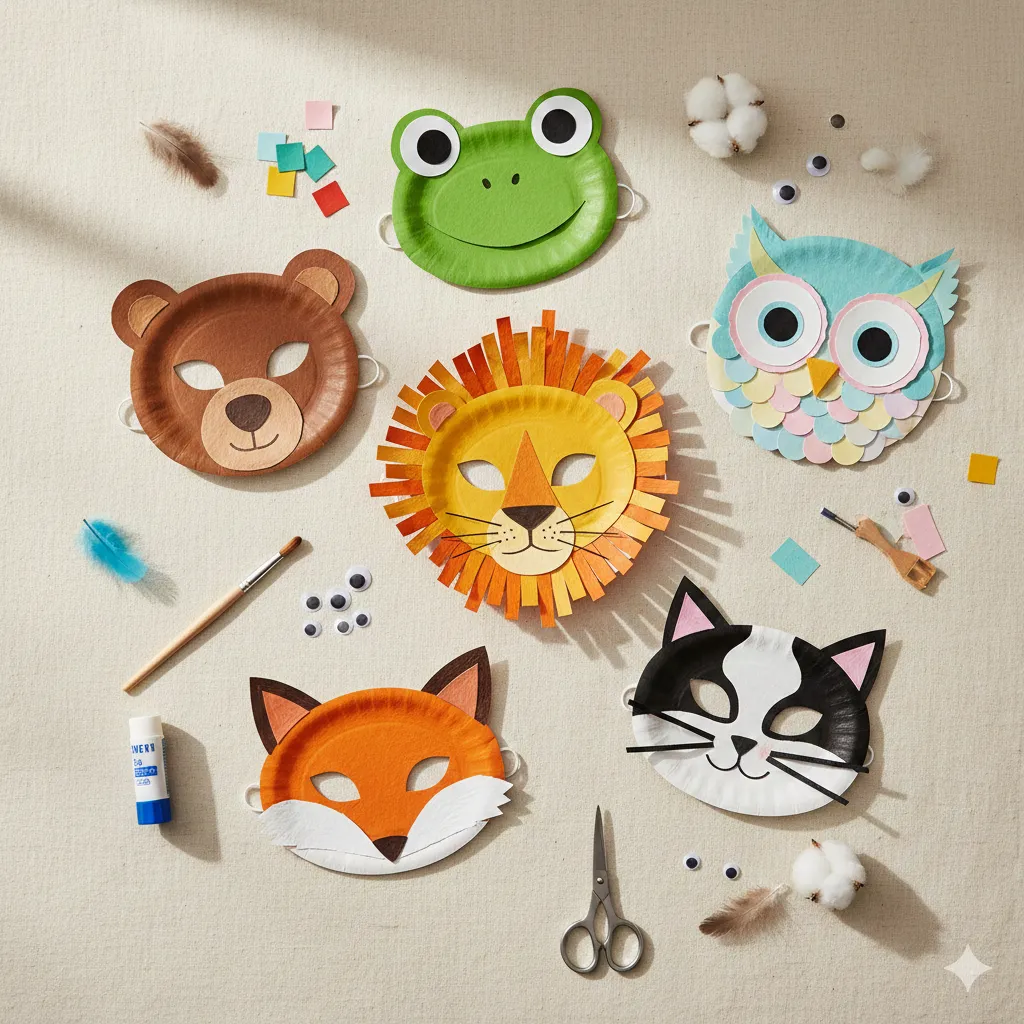
If you’re looking for a fun, affordable, and creative activity for kids, making an animal mask with a paper plate is a perfect choice.
Paper plate animal masks are easy to customize, inexpensive, and ideal for birthday parties, school projects, pretend play, or rainy afternoons at home. Best of all, you probably already have most of the supplies in your kitchen or craft drawer.
Here’s exactly how to make one — step by step — plus ideas for different animals and tips to make your mask extra special.
Can You Really Make a Good Mask with a Paper Plate?
Absolutely.
Paper plates are sturdy, lightweight, and easy to cut. Their round shape makes them perfect for animal faces like lions, bears, cats, frogs, and more.
The secret isn’t fancy supplies — it’s creativity and simple layering techniques.
With proper cutting, coloring, and attaching, your paper plate animal mask can look surprisingly impressive.
Why Paper Plate Animal Masks Are Great for Kids
Making animal masks isn’t just fun — it’s educational too.
Benefits include:
- Encourages creativity and imagination
- Improves fine motor skills (cutting, gluing, painting)
- Supports storytelling and pretend play
- Builds confidence when kids create something wearable
- Budget-friendly and easy to organize for groups
Whether you’re a parent, teacher, or caregiver, this is a low-prep activity with high engagement.
Supplies You’ll Need
Basic supplies:
- Paper plate (sturdy type works best)
- Scissors
- Glue (school glue or glue stick)
- Markers, crayons, or paint
- Construction paper or colored paper
- Elastic string or yarn (to wear the mask)
- Tape or stapler
- Pencil
Optional supplies:
- Googly eyes
- Cotton balls
- Craft foam
- Feathers
- Pipe cleaners
- Glitter
- Hole punch
You can keep it simple or go all out — both versions work beautifully.
Step-by-Step: How to Make an Animal Mask with a Paper Plate
Follow these detailed steps to create your mask from start to finish.
Step 1: Choose Your Animal
Before cutting anything, decide which animal you want to make.
Ask yourself:
- Does it have big ears?
- Does it have a snout or beak?
- What colors will you need?
- Does it have whiskers, feathers, or horns?
Draw a simple sketch if needed. Planning first helps avoid mistakes later.
Step 2: Prepare the Base
The paper plate will be the face.
- Place the plate upside down (rounded side facing out for a more 3D effect).
- Use a pencil to lightly mark where the eyes should go.
- Make sure the eye holes line up with the child’s eyes.
- Carefully cut out the eye holes using scissors.
If children are young, an adult should handle the cutting for safety.
Step 3: Color the Base
Now bring the animal to life.
- Paint or color the entire plate in your animal’s base color.
- Use even strokes to avoid streaks.
- If using paint, allow it to dry completely before moving on.
- Add shading or texture (for example, brown strokes for fur or green spots for a frog).
Thin layers of paint work better than thick globs.
Step 4: Create and Attach Facial Features
This is where your animal mask becomes recognizable.
Cut out features from construction paper:
- Ears
- Nose or snout
- Beak
- Mane (for lion)
- Antlers
- Whiskers
Attach them using glue or tape.
For example:
- Glue triangle ears to the top back of the plate for a cat.
- Add a large paper mane around the edge for a lion.
- Glue a folded triangle in the center for a fox nose.
Press firmly and allow time to dry.
Step 5: Add Details
Details make the mask special.
- Draw whiskers with a marker.
- Add spots or stripes.
- Glue cotton balls for fluffy fur.
- Stick on googly eyes for a fun look.
- Add feathers for birds.
- Use pipe cleaners for whiskers or antennae.
Encourage creativity — there’s no wrong way to decorate.
Step 6: Attach the Strap
To make it wearable:
- Use a hole punch to make one hole on each side of the plate.
- Cut a piece of elastic string or yarn.
- Tie one end securely to each hole.
- Test the fit to ensure it’s snug but comfortable.
Alternatively, tape or glue a craft stick to the bottom so the child can hold the mask instead of wearing it.
Popular Animal Mask Ideas
Here are some easy animal ideas you can try.
Lion Mask
- Yellow or orange plate
- Paper mane cut into strips
- Brown nose
- Draw whiskers
- Optional: curly paper strips for mane texture
Cat Mask
- White, black, or orange plate
- Triangle ears
- Pink nose
- Whiskers drawn with marker
- Add glitter for a fancy cat
Frog Mask
- Green plate
- Large circular eyes attached at the top
- Wide red smile
- Add darker green spots
Owl Mask
- Brown plate
- Big round eyes layered with paper circles
- Small triangle beak
- Add feather shapes around edges
Bear Mask
- Brown plate
- Round ears
- Oval snout
- Black nose
You can even create jungle, farm, ocean, or safari-themed mask sets.
Tips for a Stronger, Longer-Lasting Mask
If you want the mask to hold up during playtime:
- Use sturdy paper plates (not flimsy ones).
- Reinforce ears with tape at the back.
- Let glue dry completely before wearing.
- Apply a thin layer of clear glue over paint for protection.
- Avoid heavy decorations that may pull features off.
Durability matters especially for classroom activities or parties.
Other Surfaces You Can Use Instead of Paper Plates
If you run out of plates, you can also use:
- Cardstock
- Cardboard from cereal boxes
- Craft foam sheets
- Thick construction paper
Paper plates are easiest because of their pre-shaped round form.
How Long Does It Take to Make One?
- Basic mask: 20–30 minutes
- Painted mask (including drying time): 45–60 minutes
- Detailed mask with extras: 1–2 hours
For group settings, consider pre-cutting eye holes and major shapes to save time.
Quick Fixes for Common Problems
| Problem | Step-by-Step Solution | Why This Works |
|---|---|---|
| Mask doesn’t fit properly | 1. Measure the child’s head before attaching elastic. 2. Cut elastic slightly shorter than head circumference. 3. Tie loosely first, then adjust before double-knotting. | Proper measuring prevents masks from slipping off or feeling too tight. |
| Eye holes misaligned | 1. Hold the plate up to the child’s face before cutting. 2. Lightly mark eye placement with pencil. 3. Cut small holes first, then enlarge gradually. | Starting small allows adjustments without ruining the mask. |
| Ears falling off | 1. Use thicker construction paper for ears. 2. Apply glue generously at attachment point. 3. Reinforce back with tape once dry. | Extra reinforcement prevents bending and tearing during play. |
| Paint cracking or peeling | 1. Apply thin layers of paint. 2. Let each layer dry fully before adding another. 3. Avoid bending plate while paint is wet. | Thick paint layers crack as they dry and flex. Thin coats dry evenly. |
| Glue not sticking decorations | 1. Hold pieces in place for 20–30 seconds. 2. Allow full drying time before moving mask. 3. Use stronger craft glue if needed. | Pressure and drying time are essential for proper adhesion. |
| Mask bending or collapsing | 1. Use sturdy (heavy-duty) paper plates. 2. Add a cardboard circle behind plate for support. 3. Avoid heavy decorations at the top. | Extra structure prevents sagging during wear. |
| Elastic pulling through holes | 1. Tie a large knot at elastic end. 2. Reinforce hole area with tape before threading elastic. 3. Use small washers or paper reinforcements if available. | Reinforced holes prevent tearing under tension. |
Common Mistakes to Avoid
- Cutting eye holes too large
- Skipping drying time
- Using too much glue
- Overloading with heavy decorations
- Not measuring elastic before tying
- Forgetting to plan design before painting
Simple planning makes the entire process smoother.
Frequently Asked Questions
What age is this craft best for?
Paper plate animal masks work well for ages 3 and up. Younger children will need help cutting and assembling.
Can I use paint instead of markers?
Yes. Acrylic or washable tempera paint works great. Just allow full drying time before adding decorations.
How do I make the mask more realistic?
Layer paper pieces, add texture (like cotton or tissue paper), and use shading techniques with darker and lighter colors.
Can I make this as a classroom activity?
Absolutely. Pre-cut eye holes and major shapes to make it easier to manage with a group.
How can I turn this into a learning activity?
You can pair mask-making with:
- Animal facts discussion
- Storytelling time
- A mini classroom “zoo” presentation
- Role-play games
It becomes both creative and educational.
Final Thoughts
Making an animal mask with a paper plate is one of the simplest and most rewarding crafts you can do with kids.
You don’t need expensive supplies. You don’t need complicated templates. Just a paper plate, basic craft materials, and imagination.
Choose your animal. Prepare your base. Add color. Build the features. Secure the strap.
In less than an hour, you’ll have a wearable piece of art that inspires storytelling, laughter, and creative play.
Simple materials. Big imagination. Endless animal adventures.