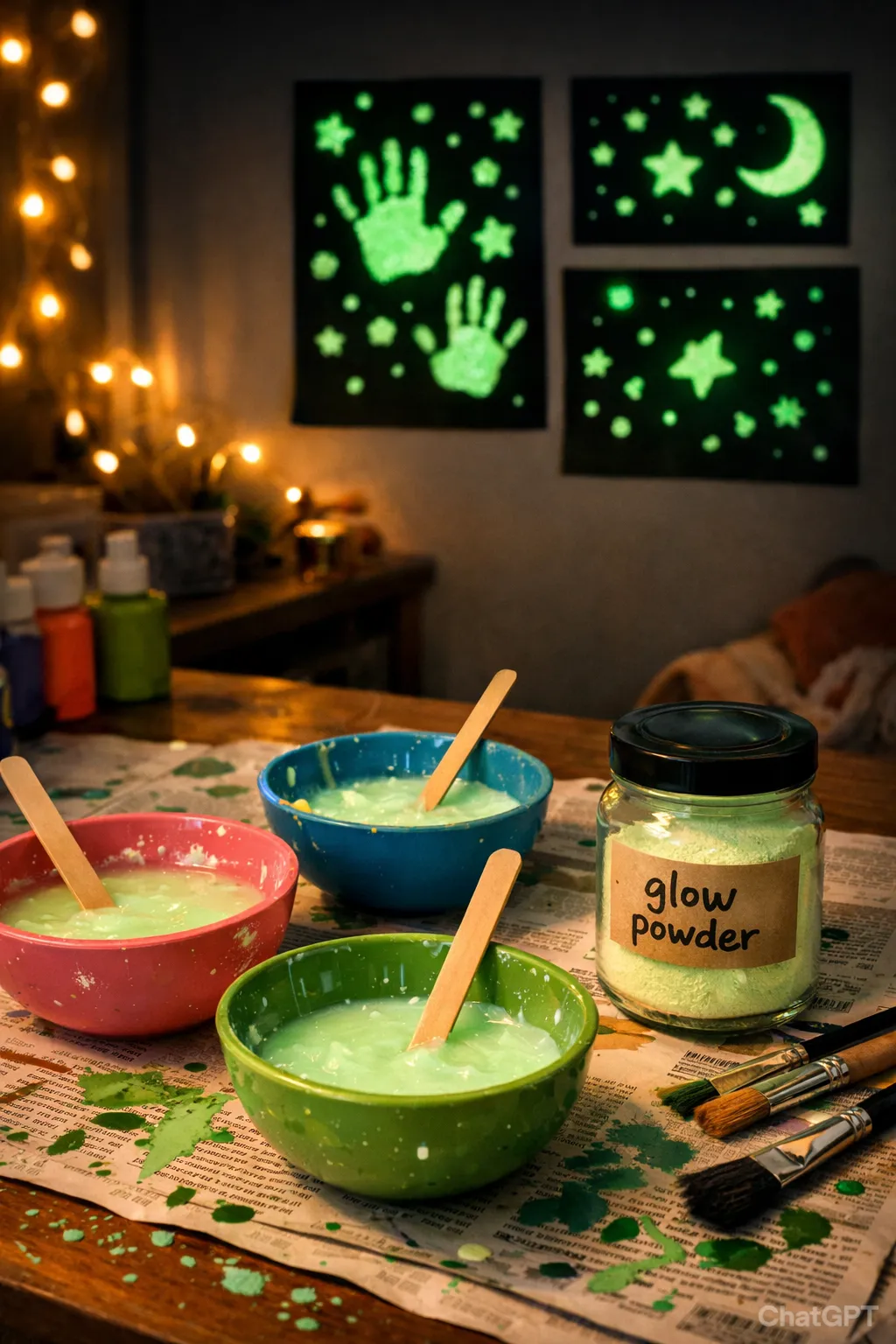
There’s something magical about turning off the lights and watching artwork glow.
Glow in the dark paint feels like science and art combined — and kids absolutely love it. Whether you’re planning a sleepover activity, a rainy-day craft, or a themed birthday party, making your own glow paint at home is easier than you think.
Watch this video to learn how to make glow-in-the-dark paint for your kids:
Now, let’s break it down step by step.
Is Glow in the Dark Paint Safe for Kids?
Safety matters — especially with DIY projects.
Most high-quality phosphorescent powders today are:
- Non-toxic
- Non-radioactive
- Safe when used properly
However:
- Avoid inhaling powder.
- Mix slowly to prevent dust.
- Supervise young children.
- Keep materials away from eyes and mouth.
Always check the label when purchasing glow powder.
Now let’s make it.
What You’ll Need
To make basic glow in the dark paint for kids, gather:
- Phosphorescent glow powder (green glows brightest)
- Clear glue or clear acrylic paint
- Small mixing bowl
- Craft sticks or spoons
- Paintbrushes
- Protective surface covering (newspaper or plastic sheet)
- Airtight container (for storage)
Optional:
- Food coloring (for tinted glow paint)
- Blacklight (for extra brightness testing)
Using clear glue gives a thicker, craft-style paint. Using clear acrylic paint makes it more durable for surfaces like wood or canvas.
Step-by-Step: How to Make Glow in the Dark Paint
Step 1: Prepare Your Workspace
Cover your table with newspaper or plastic. Glow powder is fine and can spread easily.
Have all tools ready before opening the powder.
Step 2: Pour the Base
Add clear glue or clear acrylic paint into a small bowl.
Start with about 2 tablespoons if you’re testing a small batch.
Step 3: Add the Glow Powder
This is the most important step.
The typical ratio:
- 1 part glow powder
- 2 parts clear base
For brighter glow, you can increase the powder slightly. Stir gently and slowly.
If you add too little powder, the paint won’t glow well.
Step 4: Mix Thoroughly
Stir until the powder is evenly distributed.
The mixture should look slightly grainy — that’s normal. Glow powder doesn’t fully dissolve; it stays suspended in the base.
Step 5: Test the Glow
Paint a small sample on paper.
Let it dry for 15–30 minutes.
Place it under bright light for a few minutes, then turn off the lights to test.
If it’s not glowing brightly:
- Add a bit more powder
- Mix again
- Test another sample
Step 6: Store Properly
Keep leftover paint in an airtight container.
Stir before each use, as the powder may settle at the bottom.
How to Make Glow in the Dark Paint Without Glow Powder
If you don’t have phosphorescent powder, you can try a temporary blacklight paint version.
You’ll need:
- Tonic water (contains quinine)
- Clear glue
- A blacklight
Mix tonic water with glue and paint onto paper. It won’t glow in total darkness, but it will glow under UV light.
This is great for science experiments but not long-lasting glow art.
Best Surfaces for Glow Paint
Glow paint works best on:
- White paper
- Canvas
- Wood
- Rocks
- Poster board
- Fabric (if mixed with fabric medium)
Avoid dark surfaces unless you apply a white base coat first. Dark backgrounds absorb light and reduce glow intensity.
How to Make It Glow Brighter
Here’s the real reason some DIY glow paints look dull: not enough charging.
Tips for maximum brightness:
- Use strong light (sunlight works best)
- Charge for at least 10–30 minutes
- Apply thicker coats
- Use multiple layers
- Choose green glow pigment (brightest color)
Blue glows moderately.
Aqua and white glow softly.
Red and purple glow the least.
Fun Glow in the Dark Paint Ideas for Kids
Once your paint is ready, try these creative projects:
Glow Galaxy Art
Paint stars and planets on black paper. Add splatter stars using a toothbrush.
Glow Rocks
Paint smooth garden stones for a glowing pathway.
Bedroom Ceiling Stars
Create custom constellations on paper and tape them to ceilings.
Glow Slime Add-On
Add a small amount of glow paint to slime for a glowing effect.
Halloween Decorations
Make glowing pumpkins, ghosts, or signs.
Glow Handprints
Perfect for keepsake art projects.
Indoor vs Outdoor Glow Projects
Indoor projects:
- Wall art
- Posters
- Crafts
- Party decorations
Outdoor projects:
- Stepping stones
- Garden markers
- Glow-in-the-dark plant labels
If using outdoors, seal with a clear waterproof sealer.
How Long Does Glow in the Dark Paint Last?
The glow typically lasts:
- 30 minutes to several hours (depending on pigment quality)
- Brightest during first 10–20 minutes
High-quality strontium aluminate pigment can glow for up to 8–10 hours after charging.
The paint itself can last years if stored properly.
Common Mistakes to Avoid
You’re probably doing this wrong if:
- You add too little powder
- You don’t charge it under strong light
- You apply it too thin
- You use a dark base surface
Another mistake: shaking instead of stirring. Stir gently to keep powder evenly distributed.
Quick Fixes for Common Problems
| Problem | Quick Solution | Pro Tip |
|---|---|---|
| Paint isn’t glowing | Charge under strong light for 20–30 minutes. If still dim, remix with more glow powder and apply a thicker coat. | Sunlight gives the strongest charge. |
| Glow fades fast | Apply 2–3 thin layers instead of one coat and recharge longer before use. | Higher-quality pigment lasts longer. |
| Paint looks chalky | Add a little more clear glue or acrylic and stir well to smooth it out. | Slight graininess is normal. |
| Powder settles | Stir gently before each use and store airtight. | Small batches reduce settling. |
| Weak glow on dark surfaces | Paint a white base layer first, let dry, then apply glow paint. | White reflects more light for brighter glow. |
| Only glows under blacklight | You’re using fluorescent material. Switch to phosphorescent glow powder for true glow. | Fluorescent ≠ glow-in-the-dark. |
Frequently Asked Questions
Can I make glow in the dark paint with highlighter ink?
Highlighter ink glows under blacklight but will not glow in total darkness. It’s fluorescent, not phosphorescent.
Is glow powder expensive?
A small bag goes a long way. Since you only use small amounts per batch, it’s budget-friendly over time.
Can I use regular acrylic paint instead of clear?
You can, but it may reduce brightness. Clear paint allows more light absorption.
Does glow paint wash off clothes?
If using glue-based paint, it may wash out when wet. Acrylic-based glow paint may stain. Always wear old clothes.
Can toddlers use glow paint?
Yes, with supervision. Avoid powder inhalation and always assist during mixing.
Final Thoughts
Making glow in the dark paint for kids is part science experiment, part art project, and 100% fun.
With just glow powder and a clear base, you can create glowing stars, magical artwork, and unforgettable craft memories.
Charge it well, layer it thick, and don’t forget to turn off the lights when you’re done.
That’s when the magic happens.