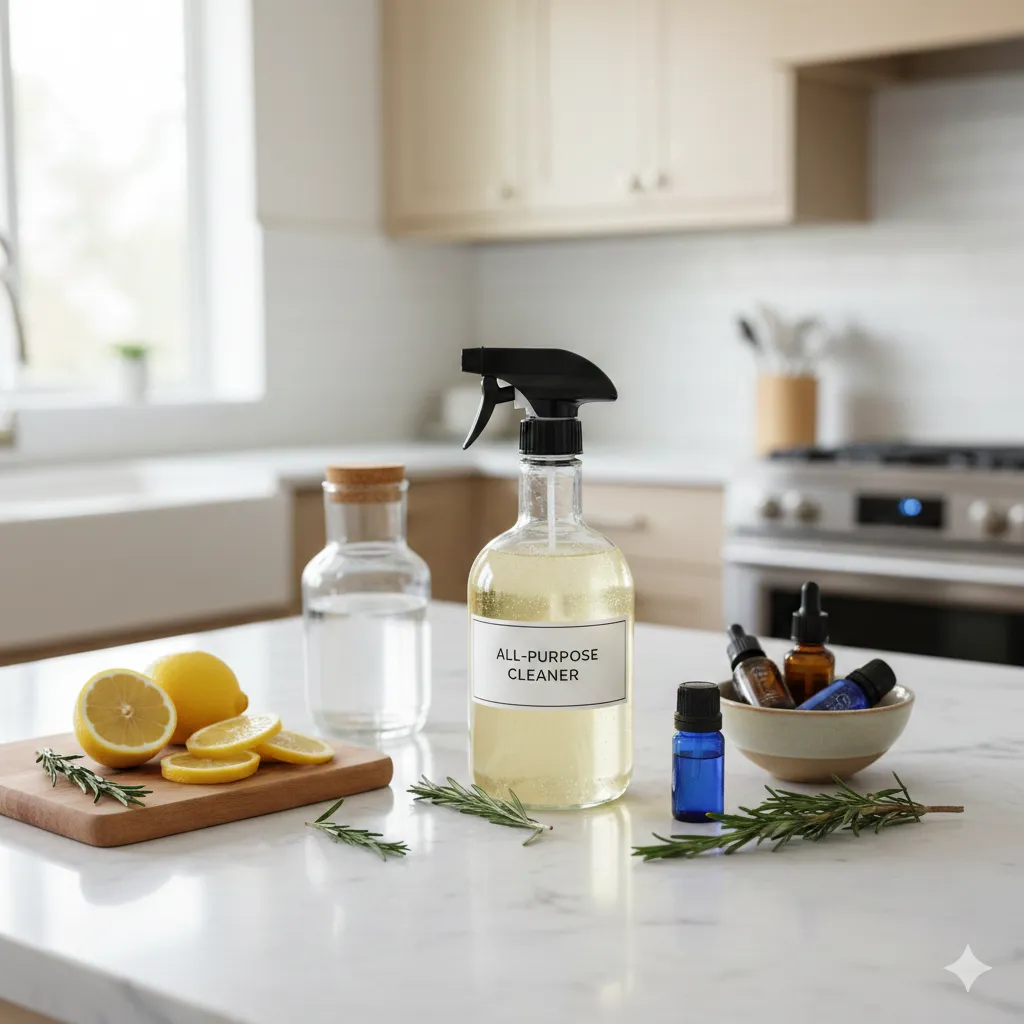
The truth is, you don’t need a cabinet full of specialized chemicals to keep your home pristine. In fact, the most effective cleaning tool in your arsenal might already be sitting in your pantry.
People love this DIY cleaner because it’s a triple threat: it’s cheap, incredibly effective, and completely non-toxic. By making your own spray, you take control of your environment, reduce plastic waste, and ensure your family isn’t breathing in synthetic fragrances or volatile organic compounds (VOCs). This guide will show you exactly how to make homemade all-purpose cleaner using simple ingredients to achieve professional-grade results.
You can also watch this video to learn how to make homemade all-purpose cleaner:
DIY All-Purpose Cleaner Recipe: What You’ll Need
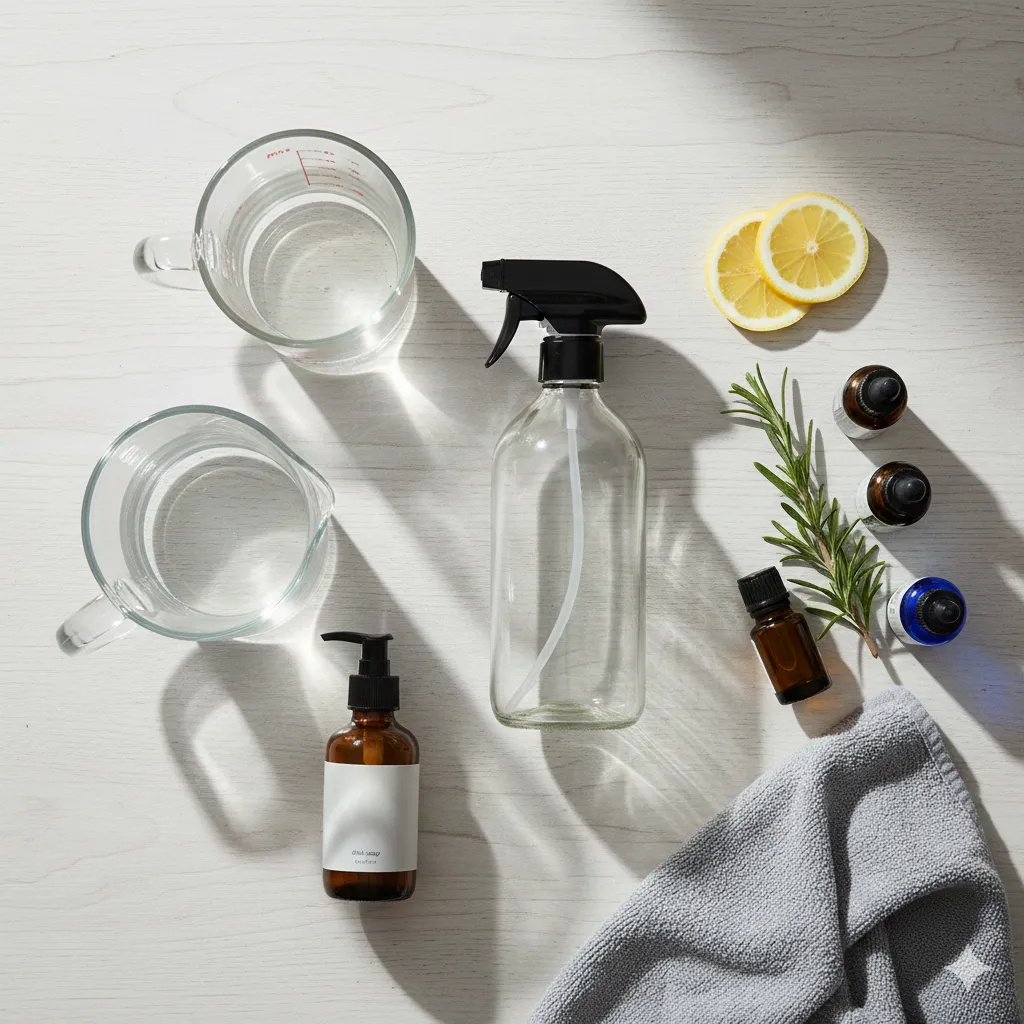
Before you begin, gather these household staples. You likely have most of them under your sink right now.
- White Distilled Vinegar: The powerhouse of DIY cleaning. Its acidity cuts through grease and dissolves mineral deposits.
- Filtered Water: Using filtered or distilled water prevents streaks caused by minerals in tap water.
- Dish Soap: Just a drop of grease-cutting soap (like Dawn or a castile soap) helps break the surface tension of grime.
- Essential Oils (Optional): For a fresh scent and added antimicrobial properties.
- The Bottle: I highly recommend using a 16oz glass spray bottle. Vinegar can degrade certain low-quality plastics over time, and glass is infinitely reusable and easier to clean.
How to Make Homemade All-Purpose Cleaner
Follow these four simple steps to mix your first batch:
- Step 1: Prep the bottle. Ensure your spray bottle is thoroughly cleaned and dried. If you are reusing an old bottle, make sure it didn’t previously contain bleach.
- Step 2: Add active cleaning ingredients. Pour 1 cup of white vinegar into the bottle. If you are using essential oils, add 15–20 drops directly into the vinegar now. The acidity of the vinegar helps disperse the oils so they don’t just float on top of the water.
- Step 3: Dilute properly. Fill the rest of the bottle with 1 cup of filtered water. This 1:1 ratio is the “Golden Ratio” for general cleaning—strong enough to kill most surface bacteria but gentle enough for daily use. Add 2–3 drops of dish soap last to avoid excessive foaming.
- Step 4: Shake and label. Screw on the nozzle, give it a gentle swirl, and always label your bottle. It’s easy to mistake a clear cleaner for plain water later on.
Storage Note: This mixture has an almost indefinite shelf life because vinegar is a natural preservative, but for the best scent and potency of the essential oils, try to use it within 3–6 months.
How to Use This All-Purpose Cleaner
This isn’t just for countertops. Use it on drawer pulls, baseboards, dusty shelves, and even your stovetop after a light meal.
- The Method: Spray the surface lightly from about 6 inches away.
- How much to spray: For everyday dusting, a light mist is enough. For sticky spills, let the spray sit for 30 seconds to “soften” the mess.
- Wipe-down method for streak-free results: Use a microfiber cloth. Paper towels often leave lint behind and don’t “grab” the dirt as well. For mirrors or chrome, buff the surface with a dry section of the cloth immediately after wiping.
Heavy-Duty Version (For Grease & Sticky Messes)
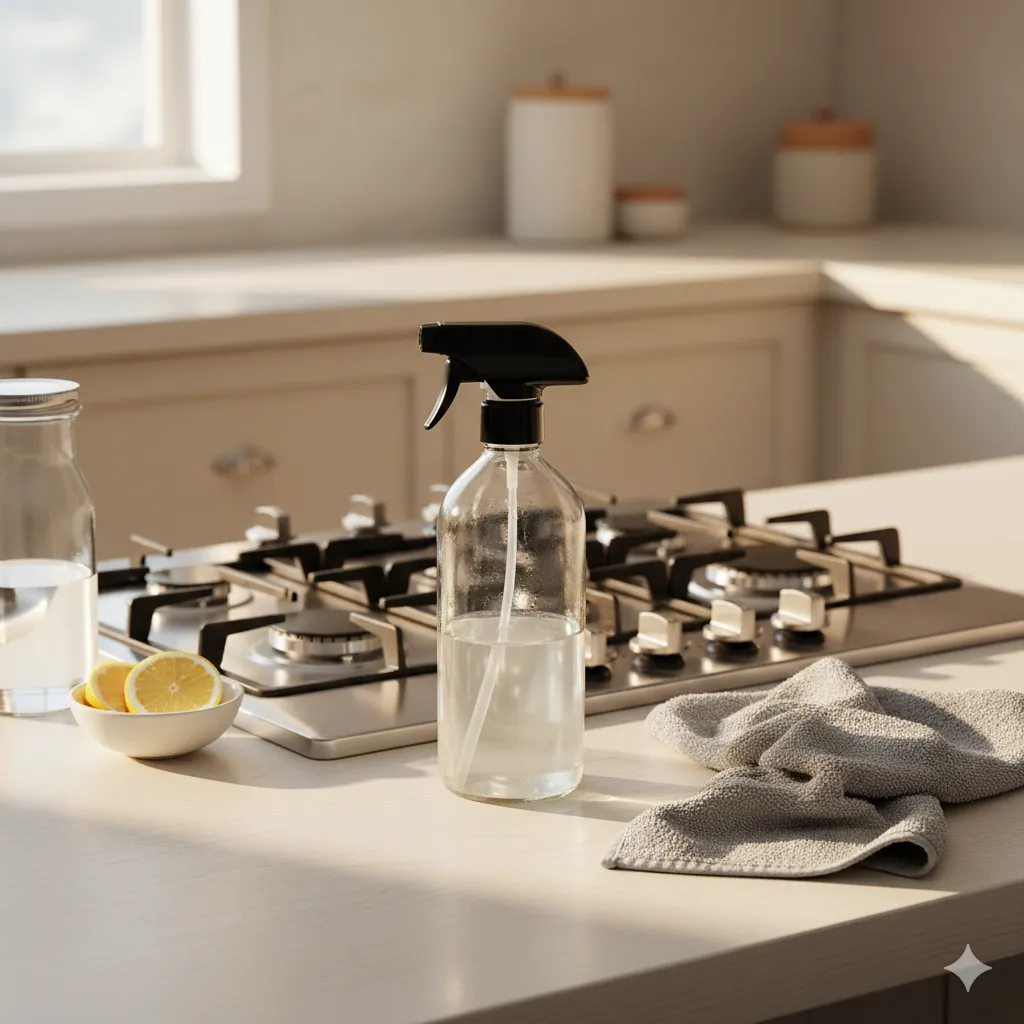
Sometimes, a standard 1:1 vinegar mix isn’t enough for the “splatter zone” near your stove or the grime on a mudroom bench.
- When to use a stronger mix: Use this when you encounter built-up kitchen grease or sticky residue from labels or tape.
- Ingredient adjustments: Increase the vinegar to 1.5 cups and reduce water to 0.5 cups. You can also add 1/2 teaspoon of washing soda (not baking soda) for extra abrasive power, but ensure it is fully dissolved.
- Ideal surfaces: Kitchen range hoods, the top of the refrigerator, and high-traffic floor tiles.
Natural Disinfecting Cleaner Option
It is important to distinguish between cleaning (removing dirt) and disinfecting (killing germs). Vinegar is a great cleaner, but it isn’t a registered disinfectant.
To create a sanitizing spray, you need to pivot the formula toward alcohol:
- DIY Sanitizer Formula: 1 cup 70% Isopropyl Alcohol + 1 cup Water + 10 drops Lemon Essential Oil.
- Proper Contact Time: To kill bacteria and viruses, you must let the spray sit on the surface for at least 3 to 5 minutes before wiping it away.
- Best-use locations: Use this on high-touch points like bathroom faucets, doorknobs, light switches, and toilet handles.
Why This DIY Cleaner Works
It feels like magic, but it’s actually simple chemistry.
- Acetic Acid: The acid in vinegar is strong enough to dissolve the “glue” that holds dirt and grease to surfaces. It also reacts with mineral deposits (like hard water stains) to break them down.
- Surfactants: The tiny bit of dish soap you added lowers the surface tension of the water, allowing the cleaner to spread and penetrate grime rather than beading up.
- Solubility: Most household messes are either water-soluble or acid-soluble. This formula covers both bases.
Essential Oils: Best Choices for Cleaning
Essential oils do more than just make your house smell like a spa; many have functional benefits.
| Oil Type | Benefit | Best For |
| Lemon/Orange | High limonene content cuts grease | Kitchens & Glass |
| Tea Tree | Powerful antifungal/antimicrobial | Bathrooms & Sinks |
| Peppermint | Naturally deters ants and spiders | Entryways & Baseboards |
| Lavender | Calming and gentle | Bedrooms & Linens |
Safety Note: If you have cats or dogs, be cautious with Tea Tree and Peppermint oils, as they can be toxic to pets in high concentrations. Always ensure the room is well-ventilated during use.
Where You Can & Can’t Use Homemade All-Purpose Cleaner
While it’s called “all-purpose,” there are a few places where vinegar is a villain, not a hero.
Safe Surfaces
- Ceramic & Porcelain: Perfect for bathroom wall tiles and sinks.
- Laminate: Safe for most modern laminate flooring and countertops.
- Glass: Vinegar is the king of streak-free windows.
- Stainless Steel: Cuts through fingerprints easily.
Surfaces to Avoid
- Natural Stone: Never use vinegar on granite, marble, or quartz. The acid will “etch” the stone, leaving permanent dull spots.
- Unfinished Wood: The acid can penetrate and damage the fibers.
- Electronic Screens: Vinegar can strip the anti-glare coatings from TVs and laptops.
Safety Tips You Shouldn’t Skip
- Never Mix Chemicals: Specifically, never mix vinegar and bleach. This creates toxic chlorine gas. Also, avoid mixing vinegar and hydrogen peroxide in the same bottle, as it creates peracetic acid, which can irritate the skin and lungs.
- Spot Testing: Before spraying down your entire dining table, test the cleaner on a small, hidden area to ensure it doesn’t discolor the finish.
- Ventilation: Even natural cleaners can be strong. If you are doing a deep clean in a small bathroom, crack a window or turn on the fan.
Common Mistakes to Avoid
- Overusing Vinegar: If the smell is overwhelming, you’ve used too much. Stick to the 1:1 ratio.
- Assuming it’s “Soap-Free”: Without that tiny drop of dish soap, the vinegar and water will often just bead up on greasy surfaces rather than cleaning them.
- Using on Delicate Finishes: Waxed wood can be stripped by vinegar over time.
FAQs
Does this cleaner actually work?
Yes. For 90% of daily household messes, it performs just as well as commercial cleaners without the chemical residue.
Can I use it in the kitchen?
Absolutely. It’s food-safe and excellent for the inside of the microwave or the fridge shelves.
Is it safe around pets?
Generally, yes. It is much safer than ammonia-based cleaners. Just be mindful of which essential oils you add.
How often should I remake it?
To keep the scent fresh, mix a new batch every 3 months.
Conclusion
Learning how to make homemade all-purpose cleaner is one of the easiest ways to embrace a more sustainable, healthy lifestyle. It takes less than two minutes to mix, costs pennies, and gives you the peace of mind that comes with knowing exactly what you’re spraying in your home. By making cleaning simple and consistent, you’ll find it’s much easier to keep a home you’re proud of.