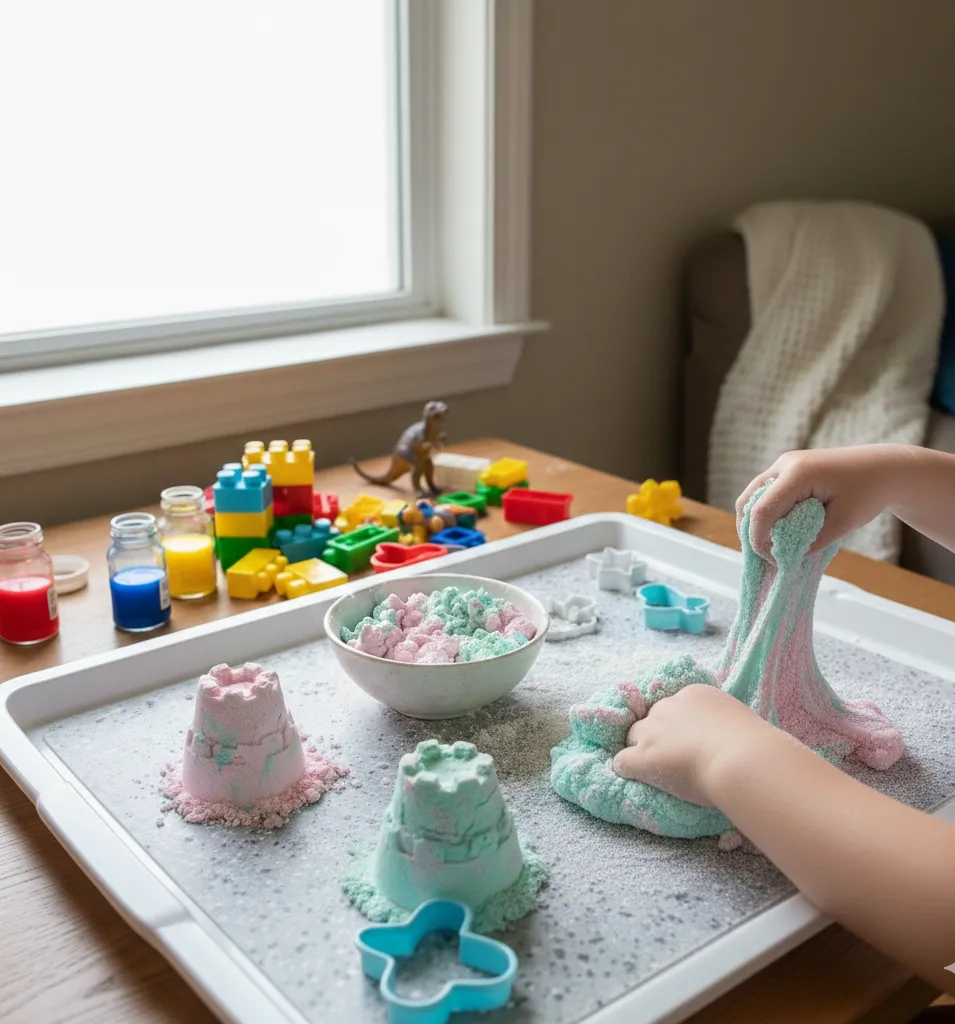
Kinetic sand is one of those magical toys that feels like science and play combined. It’s soft, moldable, and mesmerizing to squish — but what if you don’t have sand at home?
No worries! You can make a sand-like, moldable substance using ingredients you likely already have in your kitchen. This DIY alternative is safe, fun, and perfect for kids of all ages.
Before reading our guide, watch this video to see how to make kinetic sand without sand:
What Is Kinetic Sand?
Traditional kinetic sand is a mix of regular sand and a binding agent that makes it stick together without feeling wet. It flows and molds like wet sand, but it’s easy to clean up.
When making it without sand, we replace sand with materials that mimic its texture while keeping the moldable, stretchy quality intact.
Is It Safe for Kids?
Yes! These DIY alternatives are non-toxic and safe for supervised play.
Safety tips:
- Always supervise younger children.
- Avoid eating the mixture.
- Wash hands after play.
- Store in an airtight container to keep it fresh.
Materials You’ll Need (No Sand Required)
Here are a few common options for the base:
Option 1: Cornstarch Kinetic Sand
- 1 cup cornstarch
- ½ cup hair conditioner (or coconut oil)
- Food coloring (optional)
Option 2: Flour-Based Kinetic Sand
- 1 cup all-purpose flour
- ¼ cup baby oil or coconut oil
- Food coloring (optional)
Option 3: Baking Soda Kinetic Sand
- 1 cup baking soda
- ¼ cup water
- A few drops of food coloring
Other tools:
- Mixing bowl
- Spoon or spatula
- Airtight container for storage
Step-by-Step: How to Make Kinetic Sand Without Sand
Step 1: Choose Your Base
Pick cornstarch, flour, or baking soda depending on what you have. Each has a slightly different texture:
- Cornstarch: soft and smooth
- Flour: slightly gritty, similar to beach sand
- Baking soda: fine and moldable, dries firm
Step 2: Add Moisture
Mix your liquid (conditioner, oil, or water) into the base slowly.
- Stir gently until it clumps together.
- Add more liquid in small amounts if it feels too dry.
Step 3: Add Color (Optional)
For a fun twist, add food coloring or liquid watercolors. Mix until evenly distributed.
Step 4: Test the Texture
Take a small handful and squeeze it. It should hold its shape but break apart easily when pressed.
- Too dry? Add a little more liquid.
- Too sticky? Add a bit more base powder.
Step 5: Play and Store
Once the texture is perfect, your kinetic sand is ready to play with.
- Store in an airtight container to keep it soft.
- Keep away from water or humidity, which can change the texture.
Fun Ways to Play With DIY Kinetic Sand
- Mold shapes with cookie cutters
- Build mini sandcastles
- Hide small toys for a sensory treasure hunt
- Use as a base for figurines or pretend play scenes
Quick Fixes for Common Problems
| Problem | Quick Solution | Pro Tip |
|---|---|---|
| Mixture too dry | Add small amounts of conditioner, oil, or water and knead | Add liquid gradually to avoid making it too sticky |
| Too sticky | Mix in more cornstarch, flour, or baking soda | Work in small amounts until texture improves |
| Mixture crumbles | Add more liquid and knead until soft | Let it sit 5–10 minutes for better cohesion |
| Color uneven | Mix slowly and thoroughly | Use gloves or a spatula to prevent staining hands |
| Loses moldable texture | Store in airtight container | Keep away from heat and moisture |
Tips for Best Results
- Start with small batches until you get the feel for texture.
- Cornstarch or flour bases are best for soft, stretchy play.
- Baking soda mixture can be firmed by adding a tiny bit more water.
- Always knead gently to prevent it from becoming crumbly.
Frequently Asked Questions
Can toddlers play with this DIY kinetic sand?
Yes, but supervision is recommended to prevent ingestion. Small batches work best.
How long does it last?
Stored in an airtight container, it can last 1–2 weeks. Texture may change over time; simply knead to refresh.
Can I use other oils instead of coconut or baby oil?
Yes, vegetable oil or olive oil works too, but coconut oil tends to smell nicer and gives a softer texture.
Does it stain surfaces?
Cornstarch and flour-based mixtures are generally safe on most surfaces, but oil-based mixtures may leave slight residue. Use a tray or mat for play.
Can I make scented kinetic sand?
Yes! Add a few drops of vanilla, peppermint, or essential oils to the mixture for a sensory twist.
Final Thoughts
Making kinetic sand without sand is easy, inexpensive, and surprisingly fun. With cornstarch, flour, or baking soda, a little liquid, and some optional color, you can create hours of hands-on, sensory play.
Experiment with different bases, colors, and molds — and watch kids’ imaginations take shape, squish, and flow in their very own homemade kinetic sand world.