There’s something deeply satisfying about walking into a room that smells exactly the way you want it to. Not the synthetic, headache-inducing blast of a store-bought air freshener, but something clean, natural, and completely your own. The good news? Making your own room spray from essential oils is one of the easiest DIY projects you can tackle — and once you understand the basics, you’ll never go back to the aerosol can.
The key is understanding that a room spray isn’t just “water with a few drops of oil.” Oil and water don’t mix on their own, which is why so many homemade sprays leave a greasy film or separate immediately in the bottle. But with the right ingredients and ratios, you can create a spray that disperses beautifully, lingers in the air, and smells genuinely amazing.
Here’s the Real Reason Your Homemade Room Spray Smells Weak
Most beginners make the same mistake: they add a few drops of essential oil to a spray bottle of water, shake it up, and wonder why the scent disappears in seconds. The problem isn’t the essential oil — it’s the lack of a proper carrier and dispersant. Without something to help the oil bind to and spread through water, the oil molecules simply float to the top, and most of the scent never makes it into the air. Witch hazel, vodka, or a small amount of polysorbate 20 (a natural emulsifier) are the solutions. They act as the bridge between your oil and your water base.
What You’ll Need
Before you start blending, gather your supplies. The good news is everything on this list is inexpensive and easy to find.
Base Ingredients:
- Distilled water (tap water can cause bacterial growth and cloud the spray)
- Witch hazel (alcohol-based, unscented) or unflavored vodka (at least 40% alcohol)
- Essential oils of your choice
Equipment:
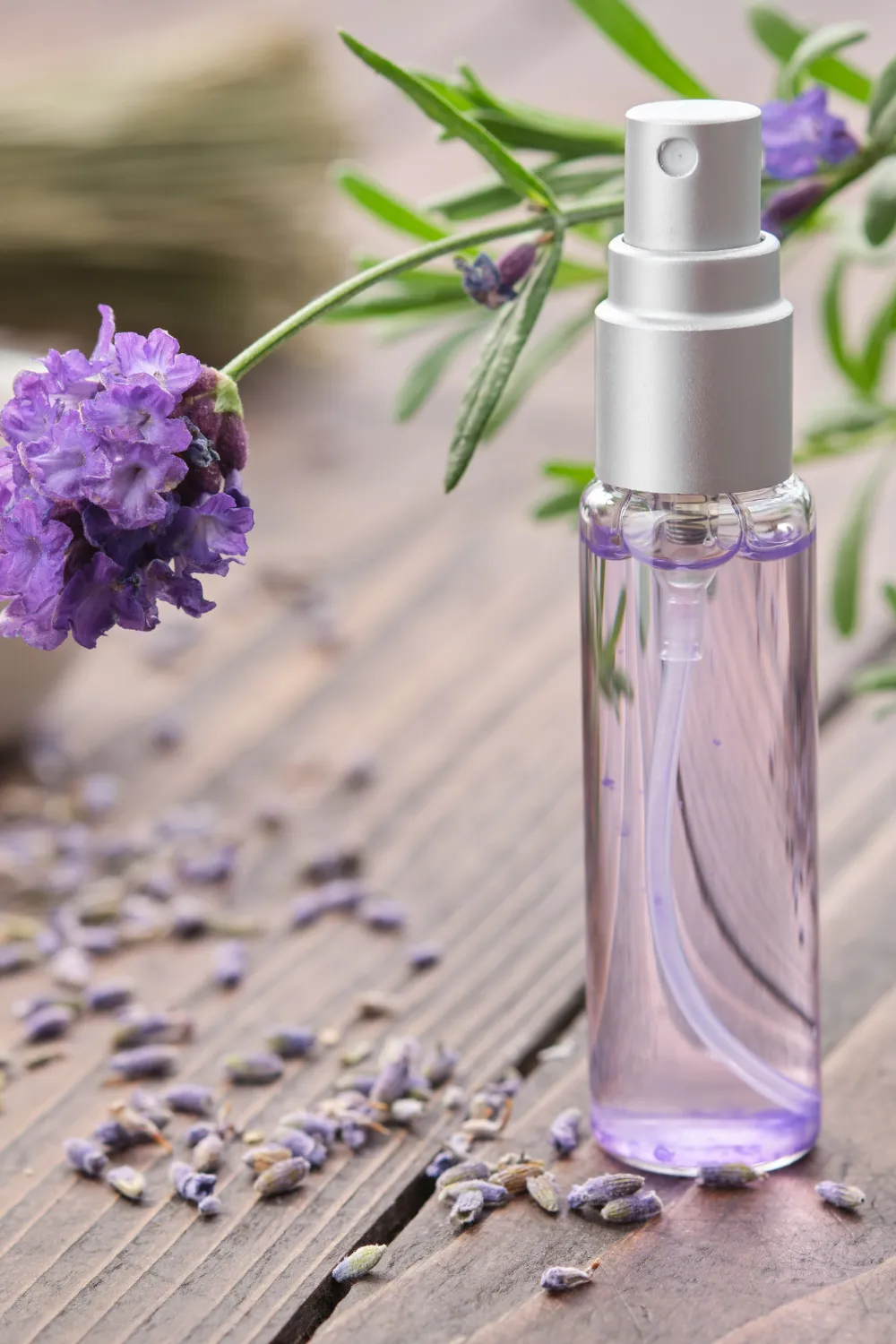
- A 2–4 oz dark glass spray bottle (amber or cobalt blue to protect the oils from UV degradation)
- A small funnel
- A label and marker
Optional Additions:
- Polysorbate 20 (for a fully emulsified, no-shake formula)
- Aloe vera gel (adds a very light misting quality)
- A few dried botanicals inside the bottle for visual appeal
You’re Probably Doing This Wrong: The Ratio That Actually Works
The ratio between your witch hazel and water matters far more than most tutorials admit. A common beginner mistake is using too much water and too little alcohol, which results in a spray that separates instantly and smells faint.
A reliable starting ratio for a 2 oz spray bottle is:
- 1 oz witch hazel or vodka
- 1 oz distilled water
- 30–50 drops of essential oil (adjust based on preferred intensity)
If you want a lighter, more subtle spray — for a bedroom or a baby’s room, for example — drop to 20–25 essential oil drops and increase the water slightly. For a bold statement scent in a living room or bathroom, stay at the higher end.
Step by Step: How to Make Room Spray from Essential Oils
Follow these steps carefully the first time. Once you’ve done it once, the whole process takes about five minutes.
- Step 1 — Choose your essential oil blend first. Before you even open your bottle, decide on your scent profile. Single-note sprays (like straight lavender) are clean and simple. Blended sprays (like lavender, cedarwood, and bergamot together) are more complex and tend to last longer because different oil molecules evaporate at different rates. Keep a small notepad to record what you used — you’ll want to recreate the good ones.
- Step 2 — Add the witch hazel to your bottle first. Using your funnel, pour the witch hazel into the spray bottle. Always add the alcohol base before the water. This matters because the essential oils will partly dissolve in the alcohol first, making the overall blend more uniform.
- Step 3 — Drop in your essential oils. Add your drops directly into the witch hazel in the bottle. If you’re blending multiple oils, add the heaviest (base notes like cedarwood or patchouli) first, followed by middle notes (like lavender or geranium), and then top notes (like lemon or peppermint) last. Give it a gentle swirl.
- Step 4 — Add the distilled water. Pour in your distilled water slowly. The mixture will become slightly cloudy — that’s normal and means it’s combining. If you’re using polysorbate 20, add about 10 drops before the water for a cleaner, fully mixed result.
- Step 5 — Attach the spray top and shake well. Secure your spray nozzle, hold your thumb over the top, and shake the bottle firmly for about 30 seconds. The mixture should look evenly distributed. Label your bottle with the scent name and date.
- Step 6 — Do a test spray. Hold the bottle about 12 inches from a fabric surface or into the center of a room and spritz once or twice. Wait 10 seconds and smell the air, not the bottle opening. Adjust oil quantity in your next batch if the scent feels too faint or overpowering.
The Best Essential Oil Combinations for Every Room
Different spaces call for different moods. Here are tried-and-tested blends to get you started.
Bedroom (Calming & Sleep-Inducing): Lavender, cedarwood, and vetiver. This trio is deeply grounding and is one of the most popular combinations in aromatherapy for promoting relaxation before sleep.
Bathroom (Fresh & Clean): Eucalyptus, peppermint, and lemon. This combination reads as clean without being harsh, and the eucalyptus has natural antibacterial properties.
Living Room (Warm & Welcoming): Sweet orange, clove, and cinnamon bark. Use cinnamon bark sparingly — it’s a potent oil and only needs 3–5 drops per bottle. This blend is especially popular in cooler months.
Kitchen (Odor-Neutralizing): Lemon, lime, and rosemary. Citrus oils are natural deodorizers, and rosemary adds an herby freshness that counteracts cooking smells without clashing with food aromas.
Home Office (Focus & Energy): Peppermint, rosemary, and frankincense. This combination is used by aromatherapists to support mental clarity and concentration.
Quick Fixes for Common Problems
| Problem | Potential Solution | Alternative Suggestion |
|---|---|---|
| Spray separates in the bottle | Shake vigorously for 15 seconds before every use | Add 10 drops of polysorbate 20 to fully emulsify the mixture |
| Scent fades within minutes | Increase essential oil drops to the higher end of the range (45–50 drops) | Add a few drops of a base note oil like cedarwood or sandalwood to anchor the scent |
| Oily residue on surfaces or fabrics | Reduce essential oil quantity and increase witch hazel ratio | Test spray into the air rather than directly onto surfaces |
| Nozzle keeps clogging | Rinse the nozzle with warm water after each use | Switch to a finer-mist spray top designed for oil-based mixtures |
| Scent smells sour or “off” | Discard the batch — the mixture has spoiled | Remake with fresh distilled water and store away from heat and sunlight |
| Spray looks cloudy or murky | This is normal if no emulsifier is used — shake before spraying | Add polysorbate 20 for a consistently clear appearance |
| Scent is too overpowering | Dilute with additional distilled water | Reduce to 20–25 drops of essential oil in your next batch |
Don’t Ignore These Essential Oil Safety Tips
Just because something is natural doesn’t mean it’s harmless in every situation. A few important cautions:
Pets: Several essential oils — including tea tree, eucalyptus, and citrus oils — are toxic to cats and dogs, even in diffused or sprayed form. If you have pets, research each oil carefully before using it as a room spray. Lavender and frankincense are generally considered among the safer options, but always consult your veterinarian.
Children and Babies: The mucous membranes and respiratory systems of young children are far more sensitive than adults’. Avoid strong oils like peppermint or eucalyptus in rooms used by babies under two. Opt for very diluted, gentle blends if spraying at all.
Fabrics and Surfaces: Always test your spray on an inconspicuous area of upholstery or fabric before using it freely. Some oils can leave faint staining on light-colored fabrics, especially at higher concentrations.
Stop Doing This: Common Mistakes That Ruin Room Sprays
Using tap water. Tap water contains minerals and microorganisms that can create a cloudy spray, clog your nozzle, and cause your mixture to spoil faster. Distilled water is worth the small extra cost.
Storing your spray in plastic. Essential oils are powerful solvents that can slowly break down certain plastics over time, leaching chemicals into your spray. Always use glass bottles.
Skipping the shake. Even with witch hazel, your spray will separate between uses. Shake the bottle for 10–15 seconds before every single application.
Using too many different oils. More isn’t better. Blends with more than four or five different oils tend to smell muddy and indistinct. Start with two or three complementary notes until you understand how the oils interact.
How Long Does Homemade Room Spray Last?
A properly made room spray stored in a dark glass bottle away from direct sunlight will stay fresh for three to six months. The alcohol content of the witch hazel acts as a natural preservative. If you notice the scent changing, becoming sour, or the liquid looking unusually murky, it’s time to make a fresh batch. Citrus-heavy blends tend to have a shorter shelf life because citrus essential oils oxidize more quickly than other types.
FAQ
Can I use rubbing alcohol instead of witch hazel? You can, but the scent of isopropyl alcohol can be harsh and may interfere with your essential oil blend. Witch hazel has a much milder scent base and is the preferred choice for most DIY room sprays.
How many sprays should I use per room? Two to four sprays per average-sized room is usually plenty. Over-spraying can make the scent overwhelming and may cause headaches in sensitive individuals.
Can I use fragrance oils instead of essential oils? Fragrance oils will work in terms of scent, but they are synthetic and often contain chemicals that defeat the purpose of making a natural room spray. If your goal is a cleaner, chemical-free product, stick with pure essential oils.
Conclusion
Making your own room spray from essential oils is one of those projects that feels far more complicated than it actually is. Once you have your base ratio down — witch hazel, distilled water, and enough essential oil to make it sing — the real fun begins with blending. Keep notes on every batch, don’t be afraid to experiment, and remember that the “wrong” combination today might become your signature scent tomorrow. Your home should smell like you, not like a department store shelf.
Enjoyed this project? Get even more DIY ideas that save (and make) you money.
Join our free newsletter for profitable DIY projects, clever cleaning hacks, home ideas, and creative crafts delivered straight to your inbox.
✓ Free forever • No spam • Unsubscribe anytime